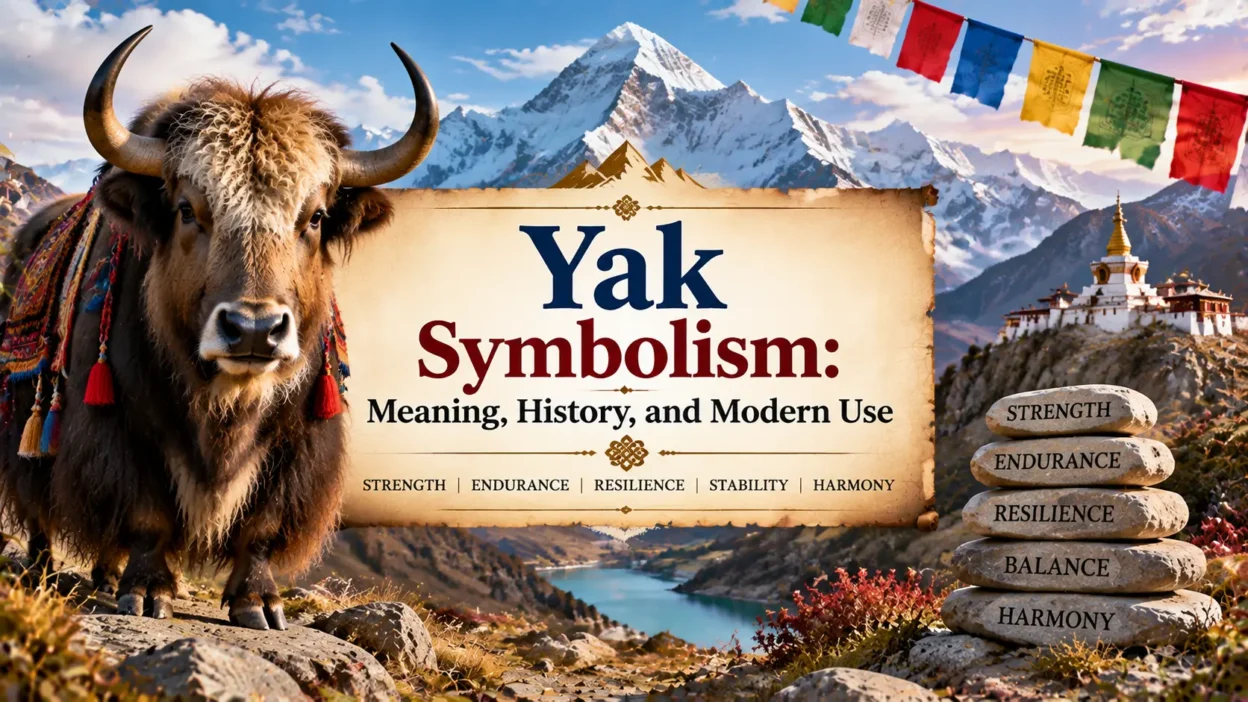
The yak is a large, long-haired cattle species known for its strength, endurance, and ability to survive in harsh mountain environments. Yak symbolism often represents resilience, stability, patience, and the ability to endure difficult conditions. While yaks are not native to the United States, their image has gained attention through global art, cultural studies, wildlife education, and symbolic design.
People have looked at animals as symbols for thousands of years because their traits often reflect human values. The yak’s ability to carry heavy loads, provide resources, and survive extreme climates has made it an important symbol in cultures connected to the Himalayan region and Central Asia. Today, many people interpret the yak as a reminder of inner strength, practical wisdom, and steady progress.
In modern American culture, the yak is usually understood through ideas of perseverance, self-reliance, and respect for nature. It appears in educational materials, wildlife imagery, creative designs, and personal symbolism where people want to express toughness without aggression.
Quick Answer
Yak symbolism commonly represents strength, endurance, and resilience in modern interpretations, especially because of the animal’s ability to survive challenging environments. Historically, yaks have also symbolized survival, livelihood, and spiritual connection in Himalayan and Central Asian cultures.
TL;DR
- Yaks symbolize endurance, strength, and survival.
- Himalayan cultures connect yaks with daily life and prosperity.
- Americans often view yaks as symbols of resilience.
- The animal represents patience and practical wisdom.
- Modern designs use yaks for nature-based meanings.
What the Yak Represents as a Symbol
The yak’s physical traits strongly influence its symbolic meanings. Unlike many domesticated animals, yaks live in some of the world’s highest and coldest regions. Their thick coats, strong bodies, and ability to travel across difficult terrain have shaped how people understand them.
The most common symbolic associations include:
| Context | Meaning in the USA | Common Associations | Notes |
|---|---|---|---|
| Personal growth | Resilience and patience | Overcoming challenges | Linked to endurance |
| Nature symbolism | Adaptation and survival | Mountains, wilderness | Represents environmental strength |
| Cultural traditions | Livelihood and stability | Family, resources, community | Important in Himalayan regions |
| Personal style | Strength and independence | Tattoos, art, designs | Often chosen for meaning |
The yak does not usually represent quick success or sudden change. Instead, it reflects slow, dependable progress and the ability to continue despite obstacles.
Ancient Roots and Early Symbolism of the Yak
Yaks have been part of human life for thousands of years, especially in regions around the Tibetan Plateau, Himalayas, Mongolia, and Central Asia. Communities living in these areas depended on yaks for transportation, food, clothing materials, and trade.
Because the animal supported daily survival, it became more than livestock. The yak represented security and connection between humans and the natural environment.
In Tibetan culture, yaks have been closely connected with mountain life. Their presence reflects adaptation to high-altitude environments where few animals can survive. The relationship between people and yaks developed around cooperation rather than simple ownership.
The symbolism grew from real experiences. A yak was valuable because it could carry supplies, provide milk and wool, and help families survive in difficult landscapes.
Yak Symbolism in Himalayan and Central Asian Traditions
In Himalayan cultures, the yak often represents survival, reliability, and community support. The animal’s importance comes from its practical role in human life.
Yak products have traditionally supported many aspects of daily living. Yak milk can be used for dairy products, hair can be used for textiles, and the animals can transport goods across mountain routes.
Some communities also connect yaks with spiritual ideas related to nature and respect for animals. In Buddhist-influenced regions, animals may be viewed as part of a larger relationship between humans and the natural world.
However, meanings vary between communities. The yak is not a universal religious symbol with one fixed interpretation. Its symbolism depends on local traditions, beliefs, and historical experiences.
What Yak Symbolism Means in the United States
In the United States, most people encounter yaks through zoos, documentaries, cultural education, farming communities, and artwork rather than everyday life. Because of this, American interpretations often focus on the animal’s visible qualities.
Many Americans associate the yak with:
- Resilience: The ability to survive difficult situations.
- Strength: Physical power and emotional toughness.
- Independence: Living successfully in remote environments.
- Connection to nature: Respect for wildlife and ecosystems.
The yak can represent a person who remains calm under pressure and continues moving forward without needing attention or recognition.
Unlike symbols connected with speed or dominance, the yak suggests steady effort. It represents the kind of strength that comes from endurance rather than force.
The Emotional and Psychological Meaning of the Yak
Animal symbols often work because people connect physical characteristics with personal qualities. The yak’s behavior creates several emotional associations.
A person who identifies with the yak may value:
- persistence during difficult periods
- emotional stability
- responsibility
- self-sufficiency
- calm determination
The yak can also represent a slower approach to life. In a culture that often celebrates speed and immediate results, the animal offers a different message: lasting progress requires patience.
Its mountain environment adds another layer. Mountains are commonly associated with challenges, goals, and personal journeys. A yak traveling through such landscapes becomes a symbol of continuing forward even when conditions are demanding.
Yak Symbolism in Nature and Environmental Awareness
Modern environmental discussions often use animals as reminders of ecological balance, and the yak fits naturally into this perspective.
The animal represents adaptation because it survives in extreme climates without requiring easy conditions. This makes it a symbol of environmental toughness and respect for species that have evolved with their surroundings.
For some people, the yak represents a connection to remote landscapes and traditional ways of living. It can remind viewers that human communities have long depended on cooperation with animals and nature.
As climate change affects mountain ecosystems, the yak may also represent concerns about protecting vulnerable environments and preserving traditional relationships between people and wildlife.
Yak Meaning in Tattoos and Personal Design
Animal tattoos often represent personal values, memories, or qualities people admire. A yak tattoo is less common than symbols like wolves, bears, or lions, but it carries unique meanings.
People may choose yak imagery to represent:
- overcoming hardship
- emotional strength
- connection with mountains or travel
- respect for traditional cultures
- patience and determination
The design style can influence the meaning. A realistic yak may emphasize nature and wildlife, while a decorative or artistic yak may focus more on cultural identity and creativity.
Because yaks are strongly connected with specific regions, respectful designs should avoid reducing the animal to a simple “exotic” image. Understanding its cultural background adds more meaning.
Yak Symbolism in Art, Decor, and Popular Culture
Yaks appear in artwork, educational displays, and cultural designs that highlight mountain life and global traditions.
In home decor, animal imagery often communicates personality traits. A yak image may suggest:
- a love of wilderness
- appreciation for traditional cultures
- admiration for endurance
- interest in mountain landscapes
In popular culture, yaks are sometimes shown as unusual or humorous animals because many audiences are unfamiliar with them. These portrayals can make the animal more recognizable, but they may overlook its cultural importance.
A balanced interpretation recognizes both the animal’s practical history and its modern symbolic appeal.
Positive and Negative Interpretations of Yak Symbolism
Most symbolic interpretations of the yak are positive, focusing on strength, survival, and dependability. However, symbols can change depending on context.
Positive meanings include:
- courage
- stability
- perseverance
- protection
- resourcefulness
Less positive interpretations may appear when the yak is used only to represent stubbornness or heaviness. Because yaks are large and strong animals, some people may associate them with being slow or difficult.
These interpretations usually reflect human assumptions rather than traditional symbolism. In many cultures connected to the yak, the animal is respected because of its usefulness and ability to support life.
How Yak Symbolism Has Changed Over Time
The meaning of the yak developed from practical survival into broader symbolic ideas.
Originally, the yak represented essential resources for mountain communities. Over time, it became associated with cultural identity, traditional lifestyles, and relationships between humans and animals.
Today, people outside yak-raising regions often focus less on survival and more on personal qualities. The yak has become a symbol of endurance, environmental awareness, and steady strength.
This shift shows how animal symbols evolve when they move between cultures. A symbol’s meaning often grows from its original role while gaining new interpretations in different societies.
Common Misunderstandings About Yak Symbolism
One common misunderstanding is assuming that every culture views the yak in exactly the same way. In reality, meanings differ depending on geography, history, and personal beliefs.
Another mistake is treating the yak only as a “strong animal symbol.” While strength is important, the animal also represents cooperation, sustainability, and everyday survival.
The yak is not mainly associated with aggression or dominance. Its symbolism comes from endurance, usefulness, and adaptation.
Modern Uses of Yak Symbolism
Today, yak imagery appears in several areas:
Education: Wildlife programs use yaks to teach about biodiversity and mountain ecosystems.
Fashion and design: Artists may use yak imagery to represent nature and strength.
Personal symbolism: Some people choose yak images to express resilience and patience.
Cultural projects: Museums and creative works may use yaks to highlight Himalayan traditions.
Digital culture: Animal symbols are often shared online to represent personality traits or interests.
The modern use of the yak reflects a growing interest in meaningful animal symbolism connected with nature and cultural understanding.
Frequently Asked Questions
What does a yak symbolize spiritually?
A yak can symbolize endurance, connection with nature, and respect for survival. In some Himalayan traditions, the animal is connected with the relationship between people, animals, and the environment.
What does a yak tattoo mean?
A yak tattoo often represents resilience, patience, strength, or a connection to mountain landscapes. The meaning depends on the person’s reason for choosing the design.
Is the yak a positive symbol?
Yes, the yak is generally viewed positively. It is commonly associated with reliability, survival, and the ability to handle difficult conditions.
How do Americans interpret yak symbolism?
Americans often interpret the yak as a symbol of perseverance, nature, and independence. Since yaks are less familiar in daily life, meanings usually come from wildlife education and global cultural awareness.
What cultures value the yak most?
The yak has especially important cultural and economic roles in Tibetan, Himalayan, Mongolian, and Central Asian communities. These traditions often view the animal as essential to mountain life.
Does the yak symbolize strength or stubbornness?
The yak is more commonly associated with strength and endurance. While some modern interpretations may connect large animals with stubbornness, traditional meanings focus more on usefulness and survival.
Conclusion
The yak represents a form of strength built through patience, adaptation, and steady effort. From Himalayan communities that depended on the animal for survival to modern audiences who admire its resilience, the yak carries meanings connected with endurance and connection to nature.
Yak symbolism continues to evolve as people encounter the animal through art, education, and personal expression. Its message is not about quick victories but about remaining capable, reliable, and prepared when challenges appear.