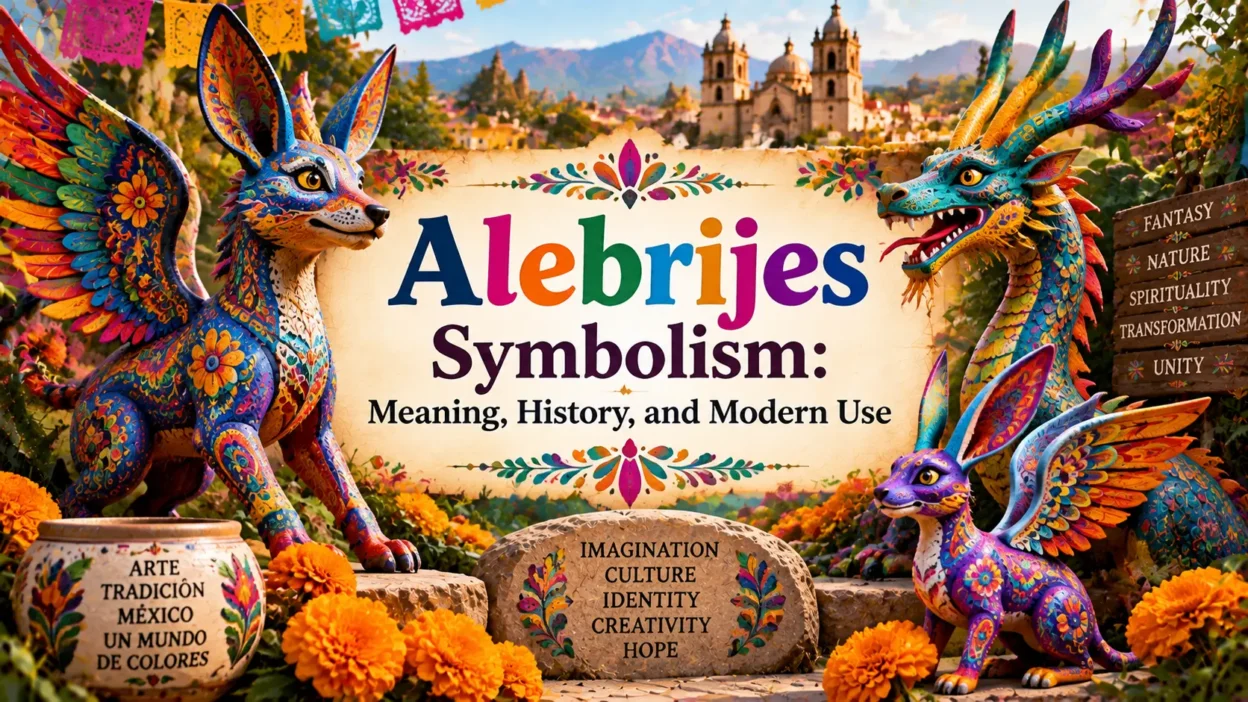
Alebrijes are colorful Mexican folk art creatures known for their unusual combinations of animals, bright patterns, and imaginative designs. Alebrijes symbolism often represents creativity, transformation, imagination, protection, and the connection between the natural and spiritual worlds. These handcrafted figures have become recognized in the United States as symbols of Mexican culture, artistic expression, and personal identity.
Unlike traditional animals from mythology, alebrijes are not ancient creatures passed down through centuries of folklore. They were created in the 20th century by Mexican artist Pedro Linares López, who developed a unique art form after experiencing a vivid dream while seriously ill. Over time, alebrijes grew from one artist’s imagination into an important part of Mexican folk art and contemporary cultural expression.
Today, people encounter alebrijes in museums, festivals, home decoration, tattoos, clothing designs, and popular culture. Their unusual appearance allows people to connect them with ideas such as individuality, courage, transformation, and the freedom to imagine something new.
Quick Answer
Alebrijes commonly symbolize creativity, transformation, and imagination in modern American culture, especially through Mexican art, cultural celebrations, and personal expression. Historically, they represent the artistic vision of Mexican craftspeople and the blending of real animals with dreamlike forms.
TL;DR
- Alebrijes symbolize imagination, creativity, and transformation.
- They originated from Mexican artist Pedro Linares’ dream-inspired creations.
- Bright colors often represent emotion, nature, and cultural identity.
- Americans often see alebrijes as symbols of Mexican heritage.
- Modern uses include art, tattoos, decor, and celebrations.
What Are Alebrijes and What Do They Look Like?
Alebrijes are handmade fantasy creatures that combine features from different animals into one imaginative figure. A single alebrije may have the body of a dragon, the wings of a bird, the horns of a goat, and the tail of a fish. The designs often include detailed patterns, painted scales, flowers, geometric shapes, and vivid colors.
Traditional alebrijes are usually made from materials such as paper, cardboard, or wood. In Oaxaca, Mexico, many artists create wooden alebrijes by carving local copal trees and carefully painting each piece by hand.
The creatures are not meant to represent a specific animal species. Their purpose is to show artistic imagination and create something that exists between reality and fantasy.
The unusual appearance is part of their meaning. By combining different forms of life, alebrijes suggest that identity does not always need to fit into one category. They celebrate originality and creative freedom.
What Alebrijes Symbolize in Modern Culture
In the United States, alebrijes are often understood as symbols of imagination, cultural pride, and personal transformation. Their popularity has grown through Mexican American communities, art exhibitions, cultural festivals, and global interest in handmade crafts.
Many people connect alebrijes with the idea of becoming something new. Because these creatures mix different animals together, they can represent personal growth, change, and the ability to create a unique path.
Common symbolic meanings include:
| Context | Meaning in the USA | Common Associations | Notes |
|---|---|---|---|
| Art | Creativity and imagination | Handmade expression, originality | Often displayed as unique artwork |
| Cultural identity | Mexican heritage and pride | Festivals, family traditions | Represents connection to Mexican culture |
| Personal growth | Transformation and change | New beginnings, self-discovery | Inspired by fantasy forms |
| Home decoration | Joy and color | Positive energy, artistic style | Used as conversation pieces |
| Tattoos | Individual identity | Strength, uniqueness | Personal meanings vary |
Alebrijes do not have one fixed meaning. Their symbolism depends on the artist, community, and person interpreting them.
The Dream Origins Behind Alebrijes
The history of alebrijes begins with Pedro Linares López, a Mexican artist and cartonero, a craftsperson who worked with papier-mâché. According to accounts of his life, Linares became seriously ill in the 1930s and experienced a dreamlike vision while unconscious.
In this vision, he found himself in a strange forest filled with unusual creatures. He saw animals that seemed impossible, including beings with combined features from different species. These creatures made sounds that Linares later remembered as “alebrijes.”
After recovering, Linares recreated these imaginary beings through his artwork. His creations gained attention in Mexico and internationally, eventually becoming recognized as a distinctive form of Mexican folk art.
The story of alebrijes shows how personal imagination can become a shared cultural symbol.
The Cultural Meaning of Alebrijes in Mexico
Alebrijes are strongly connected with Mexican craftsmanship and artistic traditions. Although the original concept came from Linares’ papier-mâché work, artisans in different regions developed their own approaches.
The town of San Martín Tilcajete in Oaxaca became especially known for wooden alebrijes. Local artists carve animal-inspired figures from copal wood and decorate them with detailed painted designs.
In Mexican culture, alebrijes are often appreciated as examples of creativity and skilled craftsmanship. They represent the ability of artists to transform ordinary materials into something extraordinary.
They also reflect a broader Mexican artistic tradition that values storytelling, color, symbolism, and connection with nature.
The Role of Colors in Alebrijes Symbolism
Color plays a major role in the appearance and interpretation of alebrijes. Artists use bright colors not only for beauty but also to create emotional meaning.
Common color associations include:
- Red: Energy, passion, strength, and action
- Blue: Calmness, spirituality, and connection with water or sky
- Green: Nature, growth, and renewal
- Yellow: Happiness, warmth, and optimism
- Black: Mystery, contrast, and protection
- White: Purity, balance, and simplicity
However, these meanings are not universal rules. Many artists choose colors based on personal inspiration, regional styles, or visual harmony.
The colorful patterns allow each alebrije to become a visual story rather than just a decorative object.
Alebrijes and the Connection Between Animals and Imagination
Animals have long carried symbolic meanings in cultures around the world. Alebrijes build on this idea by combining different animals into new forms.
A creature with eagle wings may suggest freedom or vision. A figure with feline features may suggest independence or strength. A combination of several animals can represent multiple qualities existing together.
Unlike traditional animal symbolism, alebrijes encourage people to move beyond fixed meanings. They show that creativity can transform familiar ideas into something unexpected.
This makes them especially appealing in modern culture, where many people value individuality and self-expression.
Alebrijes Symbolism in the United States
In the United States, alebrijes appear in many settings, especially where Mexican culture and contemporary art meet.
They are commonly seen during cultural events, including Día de los Muertos celebrations. In these settings, alebrijes may appear alongside traditional decorations, although they are not originally part of ancient Day of the Dead traditions.
Many American museums and cultural organizations display alebrijes as examples of Mexican folk art. They help audiences understand Mexican craftsmanship and the importance of creative storytelling.
Mexican American artists may also use alebrijes to express heritage, family connections, and experiences of living between cultures.
Emotional and Psychological Meaning of Alebrijes
Alebrijes often appeal to people because they represent ideas that are emotionally meaningful.
Their unusual forms can symbolize:
- Accepting differences
- Creating a personal identity
- Overcoming challenges
- Imagining new possibilities
- Combining different parts of oneself
A person may connect with an alebrije because it reflects their own journey. A creature made from many different animals can represent a person who has many interests, experiences, or identities.
From a psychological perspective, fantasy creatures can help people express ideas that are difficult to explain through ordinary symbols.
Alebrijes in Tattoos and Personal Expression
Alebrijes have become popular tattoo designs because they offer endless possibilities for customization. Each creature can be designed with different animals, colors, and patterns to create a personal symbol.
People may choose alebrije tattoos to represent:
- Creativity
- Mexican heritage
- Personal transformation
- Strength during difficult periods
- A connection to imagination
Because every alebrije is unique, tattoo versions often represent individuality rather than a single traditional meaning.
Artists usually adapt the design to match the person’s story, making each tattoo different.
Alebrijes in Home Decor, Fashion, and Modern Design
Today, alebrijes appear in many forms beyond traditional crafts. They can be found in paintings, clothing patterns, jewelry, digital artwork, and interior decoration.
In homes, alebrijes are often used as colorful artistic pieces that bring energy and personality into a space. Their detailed designs make them popular among collectors and people interested in handmade objects.
Fashion designers and graphic artists also use alebrije-inspired patterns because the creatures naturally combine bold colors and unusual shapes.
Their modern popularity shows how traditional crafts can evolve while maintaining cultural connections.
Common Misunderstandings About Alebrijes
Because alebrijes are often associated with spirituality and Mexican traditions, some people misunderstand their origins.
One common misconception is that alebrijes are ancient Aztec or Mayan spiritual creatures. While Mexico has many ancient animal symbols and spiritual traditions, alebrijes themselves were created in the 20th century.
Another misunderstanding is that every alebrije has a specific spiritual meaning. In reality, meanings vary depending on the artist, region, and viewer.
Respecting alebrijes means recognizing them as living folk art traditions rather than assigning meanings that are not supported by their history.
How Alebrijes Meaning Has Changed Over Time
Alebrijes began as one artist’s imaginative creation but later became part of a larger cultural and artistic movement.
Early alebrijes were closely connected with Pedro Linares’ papier-mâché sculptures. Later, Oaxacan artisans adapted the idea into carved wooden figures.
Today, alebrijes exist between traditional craft and modern art. They appear in galleries, public installations, entertainment, and personal collections.
Their meaning has expanded from dream-inspired creatures to symbols of creativity, cultural connection, and artistic freedom.
Alebrijes in Popular Culture
Alebrijes have gained international attention through films, exhibitions, and global interest in Mexican art.
A notable example is their appearance in the animated film Coco, where alebrije-inspired spirit creatures appear as guides in the afterlife. While the film uses creative interpretation, it introduced many viewers worldwide to the visual style of alebrijes.
This increased awareness helped more people recognize alebrijes as important examples of Mexican artistic imagination.
FAQ About Alebrijes Symbolism
What do alebrijes symbolize?
Alebrijes commonly symbolize creativity, imagination, transformation, and artistic freedom. Their mixed animal forms represent the idea that different qualities can exist together in one identity.
Are alebrijes spiritual symbols?
Alebrijes are not originally religious symbols, although some people interpret them spiritually. Their primary origin is Mexican folk art created through imagination and craftsmanship.
What do alebrijes represent in Mexican culture?
In Mexican culture, alebrijes represent artistic creativity, skilled craftsmanship, and the ability to turn ordinary materials into unique works of art.
What does an alebrije tattoo mean?
An alebrije tattoo often represents individuality, transformation, cultural connection, or personal creativity. The meaning depends on the design and the person wearing it.
Are alebrijes connected to Día de los Muertos?
Alebrijes are sometimes displayed during Día de los Muertos celebrations today, but they were not part of the original historical traditions of the holiday. Their association developed through modern cultural expression.
Why are alebrijes so colorful?
Artists use bright colors to create visual impact and express emotions, nature, and imagination. Color choices vary between artists and regions.
Do different animals in alebrijes have different meanings?
Some viewers connect animals with traditional symbolism, but alebrijes do not have a universal animal meaning system. Artists often create combinations based on creativity rather than fixed interpretations.
Conclusion
Alebrijes represent the ability of imagination to transform ordinary ideas into something completely new. Their unusual animal combinations, bright colors, and handmade designs have made them important symbols of creativity and Mexican artistic expression.
Today, alebrijes symbolism is understood in many ways, from cultural identity and craftsmanship to personal transformation and creative freedom. Whether displayed as art, worn as a tattoo, or used in modern design, alebrijes continue to show how imagination can become a meaningful part of culture.