
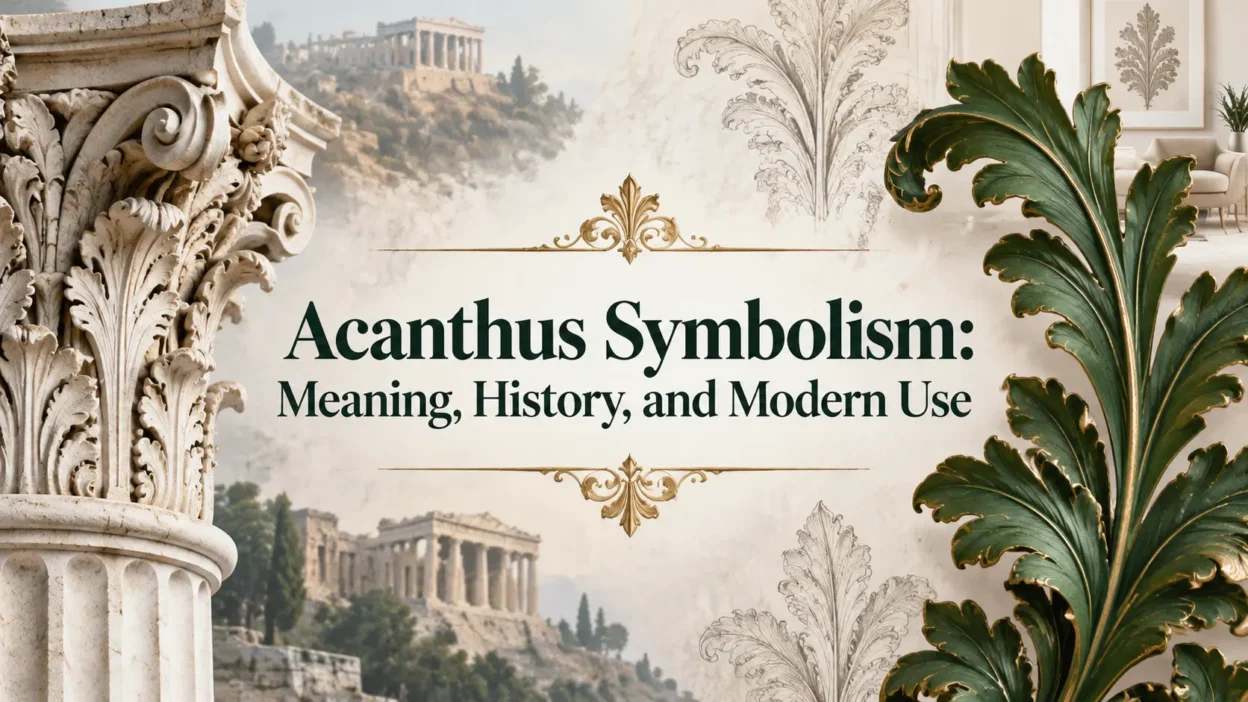
The acanthus symbolism represents honor, enduring life, artistic achievement, and refined beauty, especially through its long connection with architecture, decoration, and classical design. The acanthus plant may look like a simple leafy form, but its carved image has carried cultural meanings from ancient Mediterranean societies to modern American interiors, monuments, and creative work.
For thousands of years, artists have used acanthus leaves as decorative elements on buildings, furniture, books, jewelry, and artwork. Unlike many symbols tied to one belief system, the acanthus developed meaning through craftsmanship, nature, and human appreciation for beauty.
Today, Americans often recognize the acanthus pattern as a sign of elegance, tradition, and classical taste. It appears in historic buildings, home décor, tattoos, and modern designs that connect the present with older artistic traditions.
Quick Answer
Acanthus symbolism commonly represents honor, beauty, growth, and lasting achievement in modern American culture, especially in architecture, art, and decorative design. Historically, the acanthus leaf was associated with classical Greek and Roman craftsmanship, immortality, and the connection between nature and human creativity.
TL;DR
- Acanthus leaves symbolize beauty, honor, and artistic excellence.
- Ancient Greek and Roman artists popularized the design.
- Americans associate acanthus with classical architecture.
- The symbol appears in décor, tattoos, and design.
- Its meaning evolved from nature into artistic tradition.
What the Acanthus Plant Looks Like and Where It Appears
The acanthus is a leafy plant with large, curved leaves that feature deep cuts and flowing shapes. The design is naturally dramatic because the leaves create movement through their twisting edges and layered appearance.
The plant belongs mainly to the Mediterranean region, where ancient artists encountered it and adapted its shape into decorative patterns. Although the living plant itself is not commonly seen in everyday American life, its carved form remains familiar.
People often see acanthus designs in:
- Historic buildings
- Columns and capitals
- Furniture details
- Decorative artwork
- Jewelry
- Wallpaper patterns
- Tattoos
- Religious and civic architecture
The symbol became especially recognizable because artists transformed a natural leaf into a repeating artistic pattern.
What Acanthus Symbolizes in the United States
In the United States, acanthus imagery is mostly connected with classical beauty, tradition, and achievement. It does not usually carry one fixed meaning like a national symbol or religious emblem. Instead, its meaning depends on the context where it appears.
In American architecture and design, the acanthus leaf often suggests:
- Refinement
- Education
- Cultural heritage
- Stability
- Artistic skill
Many public buildings use classical decoration to communicate permanence and importance. Government buildings, universities, libraries, and museums often include acanthus details because the design connects modern institutions with ancient ideas of knowledge and civilization.
| Context | Meaning in the USA | Common Associations | Notes |
|---|---|---|---|
| Architecture | Tradition and permanence | Government buildings, museums, universities | Connects modern structures with classical design |
| Home décor | Elegance and craftsmanship | Furniture, wallpaper, interior details | Often used for a historic or luxury appearance |
| Tattoos | Growth and personal identity | Beauty, resilience, creativity | Meaning depends on personal interpretation |
| Art | Human creativity and nature | Sculpture, painting, design | Represents artistic heritage |
| Jewelry | Sophistication and refinement | Decorative patterns | Often chosen for classic style |
Ancient Roots and Early Symbolism of the Acanthus Leaf
The acanthus design became famous in ancient Greece, where artists used plant forms to decorate architecture. One of the most recognized examples appears in the Corinthian column style, which features detailed acanthus leaves carved around the top of columns.
According to ancient tradition, the Corinthian capital developed after an artist observed an acanthus plant growing around a basket placed on a grave. The story connects the plant with remembrance and artistic inspiration, although historians treat the exact origin as a traditional explanation rather than a confirmed historical event.
The Greeks valued the acanthus because it represented the beauty found in nature. Artists did not simply copy the plant; they refined its shape into an idealized form that represented order, creativity, and human achievement.
Later, Roman architects adopted the design and spread it throughout their empire. As Roman influence expanded, the acanthus became connected with impressive public buildings, wealth, and cultural sophistication.
The Connection Between Acanthus and Classical Architecture
The strongest historical association of the acanthus leaf comes from architecture. Greek and Roman builders used it to decorate Corinthian capitals, monuments, temples, and important structures.
The design worked well because the leaf shape created visual movement. The curved forms softened stone buildings while adding detail and complexity.
In American architecture, classical styles became popular during periods when designers wanted buildings to represent democracy, knowledge, and stability. Many courthouses, universities, and government structures borrowed Greek and Roman features.
Acanthus details in these places often communicate:
- Respect for history
- Intellectual tradition
- Civic importance
- Human creativity
The symbol became less about the plant itself and more about the values associated with classical civilization.
Religious and Cultural Interpretations of Acanthus
The acanthus leaf also appears in religious art and architecture, especially in European Christian traditions. Churches and religious buildings sometimes used plant imagery to represent creation, renewal, and the beauty of the natural world.
Unlike symbols such as the cross or dove, acanthus does not have a single official religious meaning. Its interpretation developed through artistic use rather than religious doctrine.
In some medieval and Renaissance artwork, decorative plants represented the connection between earthly beauty and spiritual reflection. The acanthus fit naturally into this style because its leaves suggested growth and life.
In the United States, religious buildings that include acanthus designs usually use it as an architectural decoration rather than a direct religious message.
Why Acanthus Represents Growth and Renewal
Because the acanthus is a living plant, many interpretations connect it with growth and continuation. Its leaves return each season, which helped people associate it with persistence and renewal.
This idea appears in several symbolic uses:
- A plant surviving across seasons suggests endurance.
- Growing leaves represent development.
- Decorative vines and leaves suggest ongoing life.
Modern Americans may interpret acanthus designs as reminders of personal growth, creativity, or the desire to build something lasting.
However, these meanings are modern interpretations rather than universal rules. The symbol’s message depends heavily on the person and the setting.
Acanthus Symbolism in Art, Design, and Decoration
Artists have used acanthus patterns for centuries because the shape adapts well to many materials. It can be carved into stone, painted on surfaces, woven into fabric, or engraved into metal.
Today, designers use acanthus motifs in:
- Luxury interiors
- Classic furniture
- Architectural restoration
- Graphic design
- Decorative arts
In American homes, acanthus patterns often create a traditional or elegant atmosphere. They are commonly associated with vintage styles, European-inspired decoration, and handcrafted details.
The design remains popular because it balances natural inspiration with organized artistic structure.
Acanthus Symbolism in Tattoos and Personal Expression
Acanthus tattoos are less common than floral designs like roses or lilies, but they appeal to people who appreciate historical and artistic symbolism.
A person may choose an acanthus tattoo to represent:
- Personal growth
- Respect for tradition
- Creativity
- Strength through change
- Appreciation for classical art
Because acanthus is strongly connected with architecture and craftsmanship, some people choose it as a symbol of their creative identity.
The meaning is usually personal rather than based on a strict cultural interpretation.
Emotional and Psychological Meaning of Acanthus Designs
Visual symbols influence emotions through shape, history, and personal association. Acanthus designs often create feelings connected with balance, order, and beauty.
The flowing curves of the leaves can feel natural and calming, while the detailed structure suggests skill and careful work.
People may respond emotionally to acanthus because it combines two ideas:
- The freedom of nature
- The discipline of human creativity
This combination makes it appealing in spaces designed to feel established, thoughtful, and refined.
How Acanthus Meaning Has Changed Over Time
The meaning of acanthus has shifted as cultures changed. Ancient Greeks and Romans mainly valued it as a decorative expression of nature and artistic excellence.
During later European periods, especially the Renaissance, artists revived classical designs and used acanthus patterns to show education and cultural connection.
In modern America, the symbol is usually separated from its ancient origins. Many people recognize the design as elegant decoration without knowing its history.
Its journey shows how symbols can move from practical art forms into broader cultural ideas.
Common Misunderstandings About Acanthus Symbolism
Acanthus is sometimes described online with exaggerated meanings that are not supported by strong historical evidence. Claims that it always represents one specific spiritual message or hidden meaning oversimplify its history.
The symbol has never had one universal interpretation.
A more accurate understanding is that acanthus represents different ideas depending on context:
- In architecture, it suggests classical tradition.
- In art, it reflects craftsmanship.
- In personal designs, it may represent growth or creativity.
Separating historical facts from modern personal meanings helps preserve the symbol’s real cultural background.
Modern Uses of Acanthus Symbolism in American Culture
Today, acanthus remains visible because classical design continues to influence American culture.
Modern examples include:
- Restoration projects preserving historic buildings
- Traditional furniture designs
- Decorative home products
- Fashion patterns
- Jewelry collections
- Artistic tattoos
Although many people may not know the name “acanthus,” they recognize the visual style. The symbol continues because it communicates elegance without depending on words.
FAQ About Acanthus Symbolism
What does acanthus symbolize?
Acanthus commonly symbolizes beauty, honor, creativity, and lasting achievement. Its meaning comes mainly from its role in classical art and architecture rather than from one specific belief system.
Why is the acanthus leaf used in architecture?
The acanthus leaf became popular because ancient Greek and Roman artists used it to decorate columns and important buildings. It helped create a connection between architecture, nature, and cultural achievement.
Does acanthus have a religious meaning?
Acanthus can appear in religious artwork and buildings, but it does not have one official religious meaning. Its interpretation usually depends on the artistic or architectural context.
What does an acanthus tattoo mean?
An acanthus tattoo may represent creativity, growth, tradition, or appreciation for classical art. The meaning often depends on the individual’s personal connection with the design.
Is acanthus symbolism positive or negative?
Acanthus is generally viewed positively because it is associated with beauty, craftsmanship, and endurance. Negative interpretations are uncommon and usually come from personal or unusual contexts.
Why is acanthus important in American design?
American designers use acanthus motifs because they connect modern spaces with classical traditions. The pattern often creates a feeling of history, elegance, and careful craftsmanship.
Conclusion
The acanthus leaf began as a natural form transformed by ancient artists into one of the most recognizable decorative patterns in Western design. Its meanings developed through architecture, art, and cultural appreciation rather than through a single fixed tradition.
Today, acanthus symbolism reflects ideas of beauty, creativity, tradition, and lasting achievement in American culture. Whether carved into buildings, placed in home décor, or chosen as personal artwork, the acanthus continues to represent the relationship between nature and human imagination.