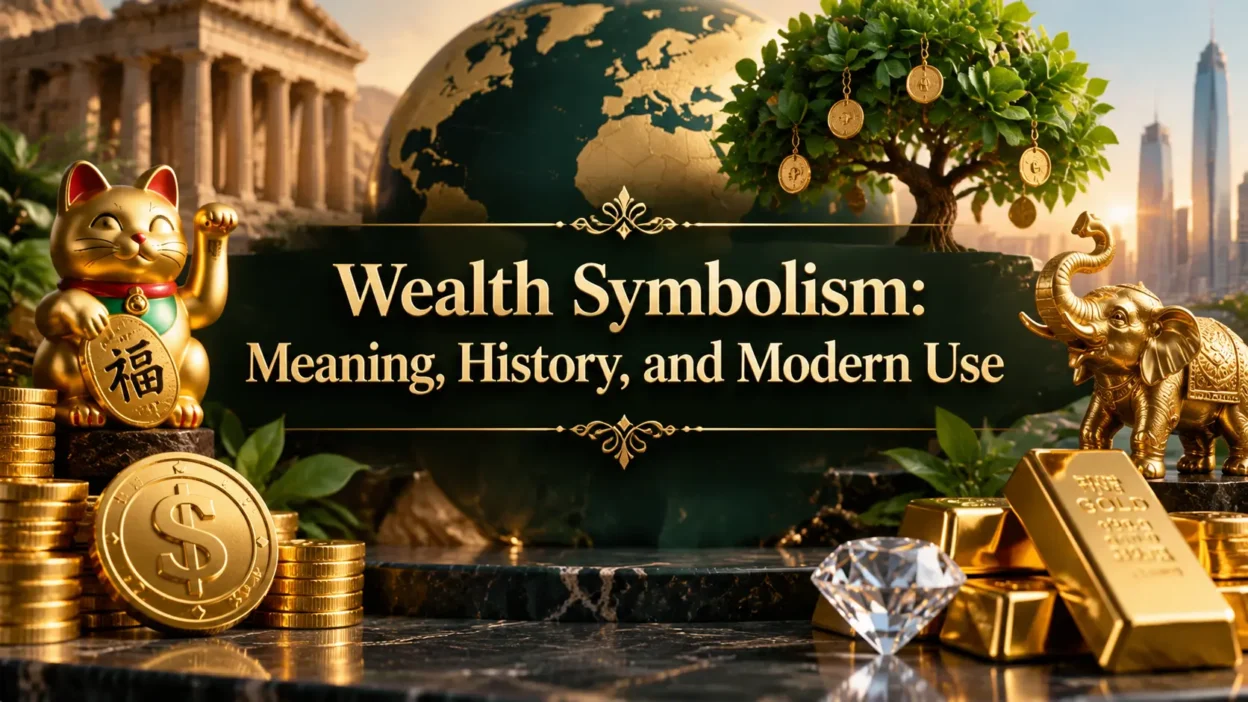
Wealth has always represented more than money or possessions. In many cultures, symbols connected with wealth express ideas about success, security, achievement, opportunity, and social status. Wealth symbolism helps people understand how objects, colors, animals, and designs communicate ideas about prosperity in everyday life.
In the United States, symbols of wealth appear everywhere, from business logos and home decoration to jewelry, fashion, architecture, and celebrations. Some symbols represent financial success directly, while others reflect deeper values such as hard work, independence, stability, or personal growth.
Quick Answer
Wealth symbolism commonly represents prosperity, financial success, security, and achievement in modern American culture. Historically, symbols of wealth have also been connected with abundance, social status, good fortune, and the desire for a successful future.
TL;DR
- Wealth symbols represent prosperity, success, and security.
- Gold became linked with value and social status.
- American culture connects wealth with achievement and independence.
- Nature symbols often represent abundance and growth.
- Modern designs use wealth symbols for identity and motivation.
What Wealth Symbolism Represents in Modern Culture
Today, wealth symbolism is often connected with ideas of achievement and personal success. In American culture, wealth symbols are commonly seen in business environments, luxury products, celebrations, and personal style.
For many people, wealth does not only mean having money. It can represent freedom, stability, education, career progress, and the ability to support family or communities.
A person may display wealth symbols because they appreciate beauty, want to celebrate accomplishments, or connect with traditional ideas of prosperity. However, interpretations can vary depending on personal beliefs and cultural background.
Common modern meanings include:
- Financial success
- Opportunity and growth
- Security and comfort
- Ambition and motivation
- Social recognition
Ancient Roots and Early Meanings of Wealth Symbols
The connection between symbols and wealth developed thousands of years ago. Ancient societies used specific materials, animals, and objects to represent abundance and prosperity.
Gold became one of the strongest wealth symbols because it was rare, durable, and visually attractive. Ancient civilizations including Egypt, Greece, Rome, and later European societies associated gold with rulers, power, and divine favor.
Agricultural symbols also became connected with wealth. Crops, grains, fruits, and fertile land represented survival and abundance because successful harvests determined a community’s future.
Other early wealth symbols included:
- Coins as signs of trade and prosperity
- Precious stones as markers of value
- Animals connected with strength and abundance
- Royal objects showing status and authority
These meanings continued changing as societies developed new ideas about success and prosperity.
How Americans Understand Wealth Symbols Today
In the United States, wealth symbolism often reflects the country’s focus on ambition, entrepreneurship, and personal achievement.
Many Americans view wealth symbols through the idea of the “American Dream,” where financial improvement is connected with effort, education, innovation, and opportunity.
Examples of modern American wealth symbols include:
| Context | Meaning in the USA | Common Associations | Notes |
|---|---|---|---|
| Gold | Value and achievement | Jewelry, awards, luxury | Often linked with success |
| Green Color | Money and growth | Currency, finance, nature | Connected with U.S. dollars |
| Mansion/Home | Stability and accomplishment | Comfort, security | Often shown in media |
| Diamond | Luxury and commitment | Jewelry, milestones | Associated with lasting value |
| Tree | Growth and abundance | Family, business, life | Represents long-term success |
Wealth symbols can appear in positive ways, such as celebrating hard work, or they can represent materialism when focused only on possessions.
Gold as One of the Strongest Wealth Symbols
Gold is one of the most recognized symbols of wealth worldwide. Its rarity and resistance to corrosion made it valuable across many civilizations.
In American culture, gold is commonly associated with achievement. Gold medals, awards, wedding rings, and luxury products often use gold because it suggests excellence and importance.
The color gold also carries symbolic meanings:
- Success
- Achievement
- Prestige
- Celebration
- Quality
Businesses frequently use gold in branding to create feelings of trust, luxury, and reliability.
However, gold does not always represent money alone. It can also symbolize emotional value, such as family heirlooms or memories passed through generations.
The Role of Money Symbols in Wealth Representation
Money-related symbols are among the most direct expressions of wealth. Currency, coins, wallets, and financial imagery often represent economic success.
In the United States, the dollar sign ($) is one of the most recognizable financial symbols. It appears in business, advertising, technology, and popular culture.
Money symbols can communicate:
- Financial goals
- Business success
- Investment ideas
- Economic confidence
At the same time, money symbols can have different meanings. Some people view them as signs of opportunity, while others associate them with greed or excessive focus on material possessions.
Nature Symbols Connected With Abundance and Prosperity
Many wealth symbols come from nature because growth and survival have always depended on natural resources.
Plants, trees, and crops often represent prosperity because they show the ability to produce and expand.
Examples include:
Trees: Often symbolize growth, stability, and long-term success.
Wheat: Represents harvest, nourishment, and abundance.
Fruits: Frequently symbolize fertility, prosperity, and good fortune.
Four-leaf clover: Commonly represents luck and the hope for positive opportunities.
In American homes and gardens, these symbols often appear in artwork, decorations, and landscaping because they create a feeling of growth and balance.
Animal Symbols Associated With Wealth and Prosperity
Animals have also carried wealth-related meanings across cultures. Their symbolic meanings often come from their behavior, appearance, or role in human life.
Some commonly recognized examples include:
Horses: Often represent power, success, and progress.
Elephants: Frequently symbolize wisdom, strength, and good fortune.
Fish: In many traditions, fish represent abundance because of their connection with plentiful resources.
Lions: Can symbolize leadership, authority, and achievement.
In modern America, animal wealth symbols appear in artwork, tattoos, company branding, and home decoration.
Color Symbolism Connected to Wealth
Colors influence how people perceive wealth and success. Designers often use certain colors because they create specific emotional reactions.
Green is strongly connected with wealth in the United States because of its relationship with paper currency. It also represents growth, renewal, and financial progress.
Other wealth-associated colors include:
- Gold: luxury and achievement
- Black: elegance and authority
- Purple: prestige and royalty
- Silver: modern success and sophistication
- White: cleanliness and refinement
Color meanings are not universal, but they often influence fashion, branding, and interior design choices.
Wealth Symbolism in Religion and Spiritual Traditions
Many religious traditions include symbols connected with blessings, abundance, and prosperity. These meanings usually focus on gratitude, generosity, and responsible use of resources rather than wealth alone.
For example, some traditions view abundance as a blessing that should be shared with others. Religious symbols related to harvest, food, and prosperity often emphasize community and gratitude.
In Christianity, ideas of abundance frequently connect with generosity and stewardship. In other traditions, prosperity symbols may focus on balance, good fortune, or harmony.
These interpretations show that wealth symbolism is often connected with values, not only possessions.
Wealth Symbols in Fashion, Jewelry, and Personal Style
Modern fashion frequently uses wealth symbols to communicate identity. Luxury brands often incorporate materials, colors, and designs that suggest exclusivity or craftsmanship.
Jewelry is one of the clearest examples. Gold necklaces, diamond rings, and watches may represent financial success, but they can also represent relationships, achievements, or personal milestones.
People may choose wealth-related designs because they connect with:
- Personal goals
- Confidence
- Success stories
- Family traditions
- Aspirations
A symbol’s meaning often depends on why a person chooses it.
Wealth Symbolism in Homes and Interior Design
Home design often includes symbols connected with prosperity and comfort. Many people decorate their homes with objects that represent growth, stability, or good fortune.
Common examples include:
- Plants representing growth
- Gold-colored decorations suggesting luxury
- Artwork showing nature and abundance
- Large windows symbolizing openness and opportunity
In American interior design, wealth symbolism is often less about showing status and more about creating an environment that feels comfortable, successful, and welcoming.
Wealth Symbolism in Business and Branding
Companies use wealth symbols carefully because visual identity influences customer perception.
Financial institutions, luxury brands, and professional services often use symbols connected with trust and success.
Common business choices include:
- Gold colors for premium services
- Strong animals for leadership
- Trees for growth
- Clean designs for reliability
These symbols help businesses communicate values quickly without using many words.
Emotional and Psychological Meaning of Wealth Symbols
Wealth symbols can influence emotions because people connect objects with personal goals and experiences.
For some individuals, a wealth symbol represents hope, independence, or motivation. Seeing a symbol of success may remind someone of their ambitions.
For others, wealth symbols may create concerns about inequality or materialism. The emotional response depends on personal experiences and cultural beliefs.
A symbol does not have one fixed meaning. Its interpretation changes based on context.
Common Misunderstandings About Wealth Symbols
Wealth symbols are sometimes misunderstood because people assume every symbol has the same meaning everywhere.
For example, gold may represent success in one situation but tradition or family connection in another. A luxury item may represent achievement for one person and unnecessary spending for another.
Modern discussions about wealth symbolism often separate:
- Healthy appreciation of success
- Cultural traditions
- Personal goals
- Excessive focus on status
Understanding context helps avoid oversimplified interpretations.
How Wealth Symbolism Has Changed Over Time
The meaning of wealth symbols has evolved as societies changed.
In ancient times, wealth symbols often showed survival, power, and social rank. Later, they became connected with trade, business, and personal achievement.
Today, wealth symbols are used in many ways:
- Celebrating accomplishments
- Expressing personal identity
- Representing goals
- Creating brand images
Modern interpretations are often less about showing ownership and more about communicating values and aspirations.
FAQ About Wealth Symbolism
What does wealth symbolism mean?
Wealth symbolism refers to objects, colors, animals, and designs that represent prosperity, success, abundance, or financial achievement. These meanings develop through cultural traditions and personal experiences.
What color symbolizes wealth in the United States?
Green is one of the strongest wealth-associated colors in the United States because it connects with money and growth. Gold is also widely associated with luxury, success, and achievement.
What objects symbolize wealth?
Common wealth symbols include gold, diamonds, coins, money signs, luxury items, and objects connected with growth or abundance. Their meanings depend on cultural and personal context.
What animals represent wealth and prosperity?
Animals such as elephants, horses, fish, and lions are often connected with prosperity, strength, success, or good fortune. Different cultures may interpret these animals differently.
Is wealth symbolism only about money?
No. Wealth symbolism can represent security, success, opportunity, family legacy, and personal growth. Many people connect wealth symbols with a successful and meaningful life rather than money alone.
Why do businesses use wealth symbols?
Businesses use wealth symbols to communicate trust, quality, success, and professionalism. Colors, materials, and images can influence how customers perceive a brand.
Do wealth symbols have negative meanings?
Some people associate wealth symbols with greed, inequality, or materialism. The meaning depends on how the symbol is used and the values of the person interpreting it.
Conclusion
Wealth symbolism represents ideas about prosperity, achievement, security, and opportunity. From gold and money symbols to plants, animals, and colors, these images show how societies express their hopes for success and abundance.
In the United States, wealth symbols often connect with ambition, independence, and personal progress. At the same time, their meaning depends on culture, personal values, and the situation where they appear.
Understanding wealth symbolism helps people see how everyday objects and designs communicate ideas about success, identity, and the future.