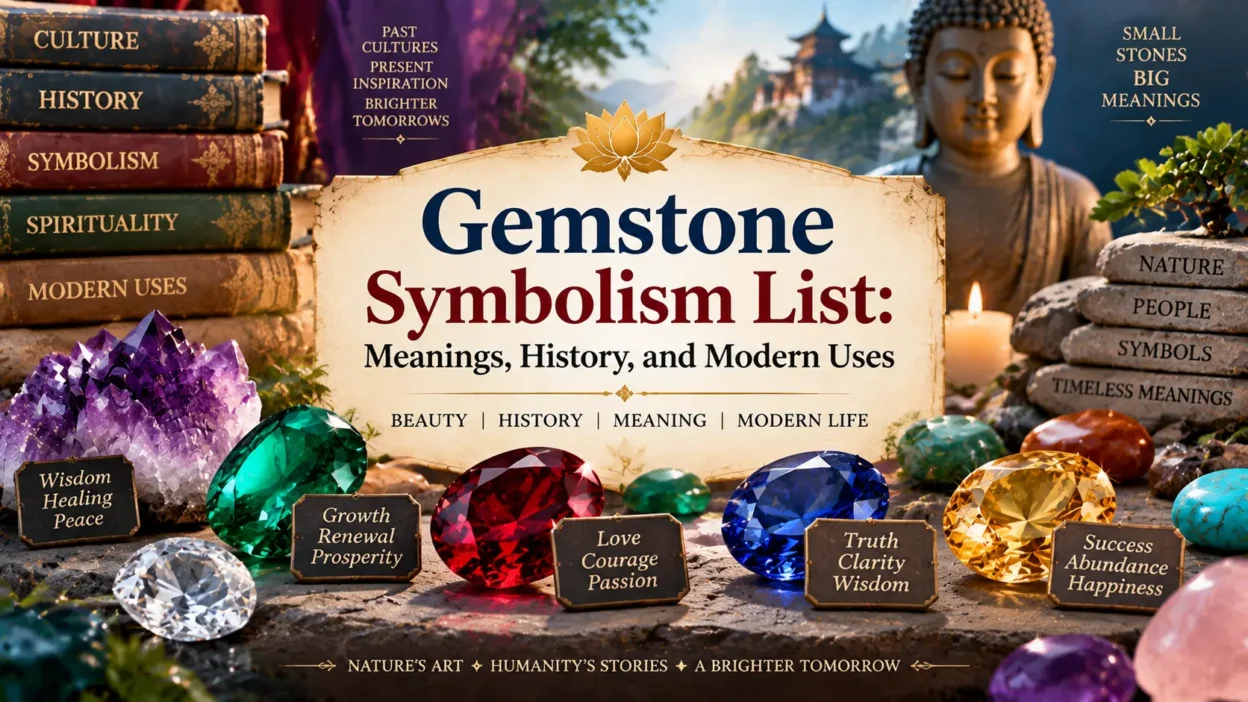
Gemstones have been valued for much more than their appearance. Across cultures, people have connected different stones with ideas such as love, protection, wisdom, strength, healing, and personal identity. A gemstone symbolism list helps explain why certain crystals and precious stones appear in jewelry, traditions, spiritual practices, art, and personal expression.
In modern American culture, gemstones are often chosen because their colors, shapes, and histories represent personal values or important life moments. People wear birthstone jewelry, select engagement rings, decorate homes with mineral collections, and choose tattoo designs based on the meanings associated with specific stones.
Although gemstone meanings vary between cultures and individuals, many symbolic associations developed from ancient traditions, religious practices, trade history, and human fascination with the natural world. Understanding these meanings provides a clearer picture of why gemstones continue to hold cultural importance today.
Quick Answer
A gemstone symbolism list explains how different gemstones are commonly associated with meanings such as love, protection, wisdom, courage, and transformation in modern American culture. Historically, gemstones have also represented status, spiritual beliefs, personal identity, and cultural traditions across civilizations.
TL;DR
- Gemstones often represent emotions, values, and personal identity.
- Diamonds commonly symbolize commitment and strength.
- Rubies are linked with passion and courage.
- Amethyst represents spirituality and reflection.
- Birthstones remain popular in American jewelry culture.
- Gem meanings change across cultures and time periods.
What Gemstones Symbolize in Modern American Culture
In the United States, gemstones are commonly connected with personal milestones and emotional messages. Their symbolism appears most clearly in jewelry choices, especially engagement rings, anniversary gifts, birthstone pieces, and memorial jewelry.
A diamond engagement ring often represents commitment and lasting partnership. A sapphire may be selected for loyalty and wisdom, while an emerald may represent renewal or growth. These meanings are not fixed rules, but they influence how people interpret and choose gemstones.
Modern gemstone symbolism is also connected with self-expression. Many people select stones based on color preference, family history, birth month, or the personal meaning they attach to the mineral.
| Gemstone | Common Meaning in the USA | Common Associations | Notes |
|---|---|---|---|
| Diamond | Commitment and strength | Marriage, durability, clarity | Popular in engagement jewelry |
| Ruby | Passion and courage | Love, confidence, energy | Often linked with intense red color |
| Sapphire | Wisdom and loyalty | Trust, honesty, protection | Famous for blue varieties |
| Emerald | Growth and renewal | Nature, balance, prosperity | Associated with green color |
| Amethyst | Reflection and spirituality | Calmness, awareness, creativity | Popular in decorative pieces |
Why Humans Connect Meaning With Gemstones
People have always searched for meaning in objects found in nature. Gemstones attract symbolic interpretations because they combine rarity, beauty, durability, and unusual colors. Their physical qualities often influenced the meanings people assigned to them.
For example, diamonds became connected with strength because of their hardness. Emeralds gained associations with nature because of their green color. Rubies became linked with passion because their red appearance reminded many cultures of blood, fire, and vitality.
Symbolism develops through human experience rather than through the stones themselves. A gemstone does not have a universal meaning shared by everyone. Instead, meanings are created through traditions, stories, beliefs, and personal connections.
Ancient Origins of Gemstone Symbolism
The symbolic use of gemstones dates back thousands of years. Ancient societies used stones in royal jewelry, religious objects, burial items, and protective ornaments.
In ancient Egypt, gemstones were placed in jewelry and amulets because people believed certain materials had connections with protection and spiritual order. Blue stones such as lapis lazuli were valued for their connection with the sky and divine concepts.
Ancient Greek and Roman cultures also attached meanings to gemstones. Some writers described stones as symbols of strength, status, or protection. These ideas later influenced European traditions surrounding birthstones and ceremonial jewelry.
Trade routes helped spread gemstones and their associated meanings between regions. As stones moved across continents, new cultures added their own interpretations.
Major Gemstone Categories and Their Symbolic Meanings
Gemstones are often grouped by their appearance, rarity, and mineral composition. Different categories developed different symbolic associations.
Precious Gemstones
Traditional precious gemstones include diamond, ruby, sapphire, and emerald. These stones became highly valued because of their rarity, durability, and historical connection with wealth.
Diamonds became symbols of endurance and commitment. Rubies became connected with passion and vitality. Sapphires developed associations with wisdom and loyalty. Emeralds became linked with renewal and natural beauty.
Semi-Precious Gemstones
Many other stones, including amethyst, turquoise, garnet, opal, and aquamarine, gained strong symbolic meanings despite traditionally being classified as semi-precious.
Amethyst is often associated with reflection and spiritual awareness. Turquoise has long been connected with protection and communication. Opal is often linked with creativity because of its changing colors.
Modern jewelry culture increasingly values these stones for their individuality rather than only their market category.
Diamond Symbolism: Commitment and Strength
Diamonds are among the most recognized symbolic gemstones in the United States. Their connection with engagement rings made them a major symbol of romantic commitment and long-term partnership.
The stone’s physical hardness contributed to associations with durability and endurance. Beyond romance, diamonds are also used to represent achievement, clarity, and personal strength.
Historically, diamonds appeared in royal collections and were viewed as signs of wealth and authority. Today, their meaning depends heavily on context. A diamond may represent marriage, celebration, professional success, or family heritage.
Ruby Symbolism: Passion and Courage
Rubies are known for their vivid red color, which has influenced their symbolic associations with love, energy, and courage.
In many traditions, red gemstones were connected with life force and emotional intensity. Ruby jewelry is often chosen for romantic occasions because the color naturally suggests affection and passion.
In modern American fashion, rubies are also used to express confidence and individuality. Their bold appearance makes them popular for statement jewelry and meaningful gifts.
Sapphire Symbolism: Wisdom and Loyalty
Sapphires are commonly associated with trust, wisdom, and loyalty. Their deep blue color has often been connected with calmness, honesty, and stability.
Blue sapphires have appeared in royal jewelry and ceremonial pieces for generations. In modern American culture, they are frequently used in engagement rings and heirloom jewelry because many people associate them with lasting relationships.
Sapphires also come in colors beyond blue, including pink, yellow, and white varieties. These different forms may carry additional personal meanings based on color preference.
Emerald Symbolism: Growth, Renewal, and Balance
Emeralds are widely recognized for their rich green color, which has influenced their connection with nature, renewal, and growth. In modern American culture, emeralds are often associated with fresh beginnings, prosperity, and emotional balance.
The gemstone’s connection with greenery and springtime helped shape many of its symbolic meanings. Green has long been linked with plants, life, and restoration, making emeralds a natural choice for jewelry representing new chapters or personal growth.
Historically, emeralds were valued by powerful rulers and wealthy families. Ancient cultures admired their rare color and included them in important jewelry and decorative objects. Over time, emeralds became connected with elegance, wisdom, and refinement.
Today, people often choose emerald jewelry for birthdays, anniversaries, and special celebrations. Some also select emeralds because the stone represents harmony with nature and a desire for personal renewal.
Amethyst Symbolism: Reflection and Spiritual Awareness
Amethyst is one of the most recognized purple gemstones and has long been associated with reflection, calmness, and spiritual traditions.
Its purple color contributed to connections with royalty, meditation, and inner awareness. Ancient societies often valued purple materials because they were difficult to obtain and were linked with status.
In the United States, amethyst is popular in jewelry, home decoration, and mineral collections. Many people appreciate it for its appearance and associate it with relaxation, creativity, and personal reflection.
Amethyst also appears in discussions about mindfulness and spiritual practices. These interpretations are cultural beliefs rather than scientific properties, but they influence how many people connect emotionally with the stone.
Birthstones and Their Role in American Traditions
Birthstones are one of the strongest examples of gemstone symbolism in the United States. Many Americans wear jewelry featuring the gemstone connected with their birth month as a personal symbol.
The modern birthstone tradition developed from earlier religious and cultural practices involving stones connected with calendars and special occasions. Over time, jewelry companies and cultural traditions helped establish the monthly gemstone system commonly used today.
| Birth MonthCommon BirthstoneCommon Symbolic Meaning | ||
|---|---|---|
| January | Garnet | Protection and loyalty |
| February | Amethyst | Reflection and creativity |
| April | Diamond | Strength and commitment |
| May | Emerald | Growth and renewal |
| July | Ruby | Passion and courage |
Birthstones are often given as birthday gifts, family keepsakes, and personalized jewelry. Their importance usually comes from emotional connection rather than the stone alone.
Gemstone Meanings Across Different Cultures
Gemstone symbolism changes depending on cultural background, religion, geography, and historical period. A stone associated with one idea in one culture may represent something different elsewhere.
In some Asian traditions, jade has strong associations with harmony, virtue, and protection. In many Middle Eastern cultures, turquoise has been valued for its beauty and protective symbolism. In European royal traditions, gemstones often represented power, inheritance, and social position.
Religious traditions have also influenced gemstone meanings. Certain stones appear in sacred texts, ceremonial objects, and religious artwork. However, interpretations differ widely, and no single meaning applies universally.
Understanding these differences helps prevent oversimplifying gemstone symbolism. A gemstone’s meaning often reflects the values of the people using it.
Emotional and Psychological Associations of Gemstones
People often choose gemstones because they create emotional connections. Color, texture, memories, and personal experiences influence how individuals interpret stones.
Blue gemstones such as sapphire and aquamarine are often associated with calmness because blue is commonly connected with peaceful environments like oceans and skies. Red stones such as ruby and garnet may suggest energy because red is visually intense.
Some people keep gemstones as reminders of goals, relationships, or important life events. A necklace inherited from a family member may represent connection and memory regardless of traditional gemstone meanings.
The emotional value of a gemstone often comes from the story attached to it.
Gemstones in Jewelry, Fashion, and Personal Identity
Jewelry remains one of the most common ways people express gemstone symbolism. Rings, necklaces, bracelets, and earrings allow individuals to display personal values, cultural traditions, or emotional connections.
Engagement rings often use diamonds or alternative gemstones to represent commitment. Family jewelry may preserve memories across generations. Birthstone necklaces allow people to celebrate personal identity.
Fashion has also expanded gemstone symbolism beyond traditional jewelry. Designers use gemstones and gemstone-inspired colors in clothing, accessories, and home decor.
For many people, gemstone choices communicate personality. Someone may choose an emerald because they love its color, while another person may select it because they connect with its associations of growth and renewal.
Gemstone Tattoos and Modern Symbolic Expression
Gemstone tattoos have become a popular way to combine visual beauty with personal meaning. People often choose gemstone designs because they represent qualities they want to express or remember.
A diamond tattoo may symbolize resilience or personal achievement. An amethyst tattoo may represent creativity or reflection. A ruby design may express passion or confidence.
Tattoo meanings are highly personal. While traditional symbolism can influence a design, many individuals create their own interpretation based on experiences, memories, or personal beliefs.
Modern tattoo culture often combines gemstones with flowers, animals, celestial symbols, and geometric patterns to create unique designs.
Gemstones in Home Decor and Everyday Life
Gemstones are also used in interior design and personal spaces. Decorative crystals, mineral collections, and gemstone-inspired artwork appear in many homes.
Some people display stones because they appreciate geology and natural beauty. Others choose them because of symbolic associations with qualities they value, such as calmness, creativity, or connection with nature.
Gemstone colors also influence design choices. Purple amethyst-inspired decor may create a feeling of elegance, while green emerald-inspired designs may bring a natural atmosphere into a room.
The use of gemstones in homes shows how symbolism extends beyond personal jewelry.
Common Misunderstandings About Gemstone Symbolism
One common misunderstanding is that gemstone meanings are universal facts. In reality, symbolic interpretations come from cultural traditions, personal beliefs, and historical associations.
Another misconception is that gemstones automatically create specific results in a person’s life. While many people enjoy spiritual or emotional connections with stones, scientific evidence does not confirm that gemstones can produce guaranteed physical or supernatural effects.
Gemstone symbolism is best understood as a cultural and personal language. The meaning often comes from what a stone represents to the person who chooses it.
How Gemstone Symbolism Has Changed Over Time
Gemstone meanings have evolved as societies changed. A stone once connected mainly with royalty may later become a popular personal accessory.
The diamond’s association with engagement rings is a relatively modern development compared with its much older history as a rare gemstone. Birthstone traditions also changed over time as jewelry culture adapted.
Today, gemstone symbolism combines ancient traditions with modern ideas of identity, fashion, and self-expression.
People increasingly choose gemstones based on personal stories rather than only traditional meanings. A stone may represent a memory, a goal, a relationship, or a personal value.
Frequently Asked Questions About Gemstone Symbolism
What is the meaning behind gemstones?
Gemstones are commonly used as symbols of emotions, values, traditions, and personal identity. Their meanings come from cultural history, color associations, and individual experiences.
Which gemstone symbolizes love?
Diamonds and rubies are often associated with love. Diamonds are commonly connected with commitment and marriage, while rubies are linked with passion and emotional intensity.
Do gemstones have the same meaning in every culture?
No. Gemstone meanings vary between cultures and historical periods. A gemstone may represent protection in one tradition and status or beauty in another.
What gemstone represents protection?
Several gemstones have been associated with protection in different traditions, including turquoise and certain varieties of quartz. These meanings come from cultural beliefs rather than scientific proof.
Why are birthstones important in American culture?
Birthstones provide a personal connection between people and gemstones. Many Americans wear them as birthday gifts, family symbols, or personalized jewelry.
Are gemstone meanings scientifically proven?
Gemstone symbolism is based on cultural traditions, history, and personal beliefs. Scientific research does not confirm that gemstones have guaranteed symbolic or supernatural effects.
Why do people wear gemstone jewelry?
People wear gemstone jewelry for many reasons, including beauty, personal expression, family traditions, celebrations, and emotional connections.
Conclusion
Gemstones carry meanings shaped by history, culture, color, and human experience. A gemstone symbolism list shows how different stones have come to represent ideas such as commitment, courage, growth, wisdom, and personal identity.
In the United States, gemstones remain important in jewelry, celebrations, fashion, tattoos, and home design. While their meanings are not universal rules, they continue to provide people with a way to express memories, values, and personal stories.
The lasting appeal of gemstones comes from the connection between the natural world and human meaning-making. A gemstone becomes symbolic not only because of its appearance, but because of the ideas and experiences people attach to it.