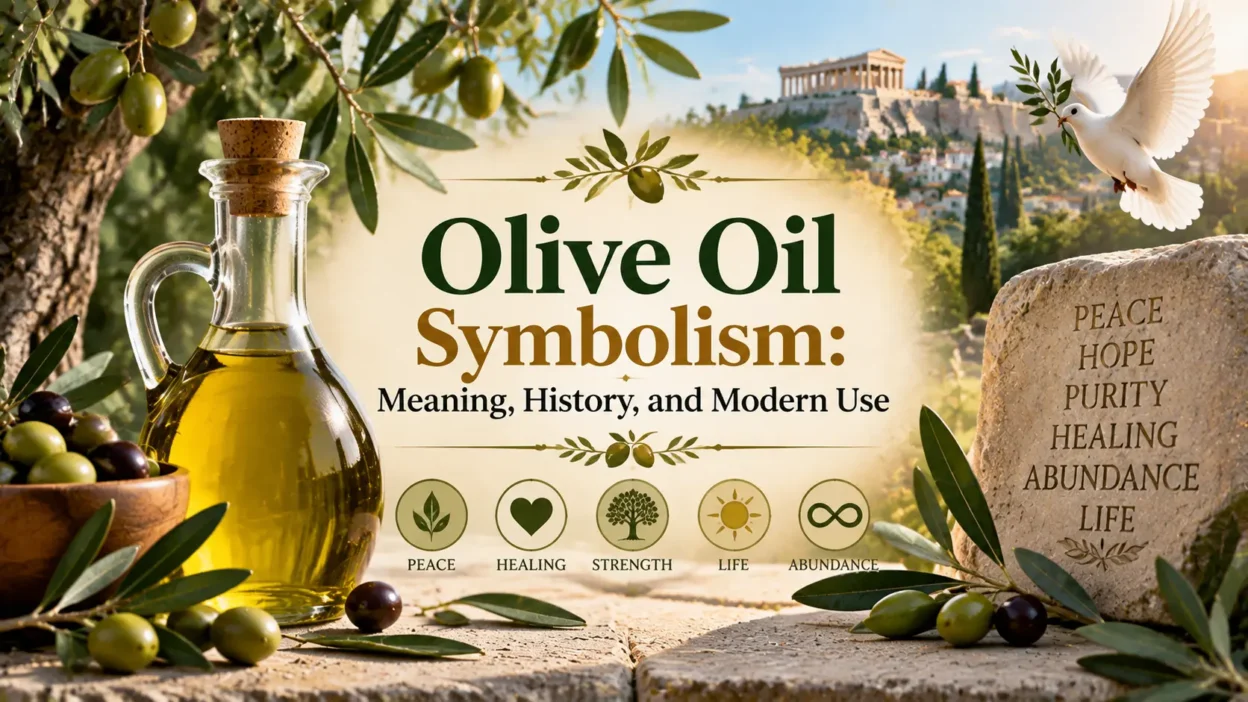
Olive oil has carried meaning far beyond cooking and daily life. In olive oil symbolism, this golden liquid is often connected with peace, healing, prosperity, wisdom, and sacred traditions. From ancient Mediterranean societies to modern American homes, olive oil has remained a symbol linked with care, celebration, and human connection.
People encounter olive oil in many settings today: kitchens, religious ceremonies, wellness practices, weddings, artwork, and cultural traditions. Its symbolism comes from the olive tree itself, a plant associated with endurance and renewal, as well as from the many ways different societies have used oil for nourishment, medicine, ceremony, and protection.
Understanding the meaning behind olive oil helps explain why it appears in religious stories, family traditions, decorative designs, and personal rituals. While interpretations differ across cultures, many people view olive oil as a symbol of life-supporting resources, harmony, and continuity.
Quick Answer
Olive oil commonly symbolizes peace, healing, prosperity, and nourishment in modern American culture, especially in food traditions, wellness practices, and spiritual contexts. Historically, it has also represented sacred blessings, victory, purity, and connection in Mediterranean and religious traditions.
TL;DR
- Olive oil symbolizes peace, healing, and abundance.
- Ancient cultures used it in sacred ceremonies.
- Americans associate it with health and hospitality.
- Religious traditions connect it with blessing and devotion.
- Olive oil appears in modern wellness and design.
- Its meaning comes from both nature and culture.
What Olive Oil Represents in Modern Culture
In the United States, olive oil is most commonly associated with health, natural living, hospitality, and quality. Many Americans view it as a symbol of a thoughtful lifestyle because it appears in Mediterranean-inspired diets, home cooking, and wellness discussions.
The symbolism often begins with its connection to nourishment. Unlike decorative objects that only represent an idea, olive oil has a practical role: it feeds people, preserves food, and supports everyday life. Because of this, it often represents care and generosity.
In homes, offering olive oil-based dishes to guests can communicate warmth and welcome. Sharing a meal prepared with olive oil can represent friendship, family connection, and appreciation.
Olive oil also carries associations with simplicity and tradition. Many people connect it with handmade products, natural ingredients, and slower ways of living.
| Context | Meaning in the USA | Common Associations | Notes |
|---|---|---|---|
| Cooking | Nourishment and care | Family meals, hospitality | Connected with sharing food |
| Wellness | Health and balance | Natural living, self-care | Linked with Mediterranean traditions |
| Religion | Blessing and devotion | Anointing, sacred rituals | Meaning varies by faith |
| Home Decor | Warmth and tradition | Rustic style, nature | Often used in Mediterranean themes |
| Gifts | Appreciation and abundance | Generosity, friendship | Common in food gift baskets |
The Olive Tree Connection Behind the Symbolism
To understand olive oil’s meaning, it is important to look at the olive tree. The oil comes from olives, the fruit of a tree known for surviving difficult conditions and producing harvests for generations.
The olive tree has long represented endurance because it can grow in dry climates and continue producing fruit for many years. This connection helped shape olive oil’s symbolic meanings of resilience, stability, and renewal.
In many cultures, the olive branch became a symbol of peace. Since olive oil comes from the same tree, it inherited many related associations. The oil became connected not only with physical nourishment but also with harmony and restoration.
The relationship between the tree and the oil shows how natural objects often gain symbolic meanings through human experience. People saw the olive tree survive, provide food, and support communities, so its products became linked with positive human values.
Ancient Roots and Early Symbolism of Olive Oil
Olive oil has a long history in Mediterranean civilizations, where it served many purposes beyond cooking. Ancient societies used it for lighting lamps, preparing medicines, caring for the body, and religious ceremonies.
In ancient Greece, olive oil was connected with athletic achievement, honor, and divine favor. Athletes were sometimes anointed with oil, and olive wreaths were given as symbols of victory.
Ancient Mediterranean communities also viewed olive oil as a valuable resource. Producing oil required farming knowledge, labor, and patience, which made it a symbol of prosperity and abundance.
Because olive oil played such an important role in daily life, its symbolic meaning developed naturally. A substance that provided food, light, and healing became associated with protection and well-being.
Olive Oil Symbolism in Religious Traditions
Olive oil holds important symbolism in several religious traditions, especially those connected to the Mediterranean region.
In Christianity, olive oil has been used in practices involving anointing, blessing, and sacred ceremonies. It can represent spiritual dedication, healing, and divine presence.
In Judaism, olive oil has historical importance through its connection with temple lamps and traditions involving light and devotion. The olive branch and olive oil both carry associations with peace and holiness.
In Islam, olives and olive oil are respected as important natural blessings. Olive trees are mentioned in Islamic tradition, and olive oil has been valued for food, care, and cultural practices.
Although religious interpretations vary, olive oil often represents a connection between physical life and spiritual meaning.
Why Olive Oil Represents Peace and Reconciliation
One of the most recognized meanings connected with olives is peace. The olive branch has been used internationally as a symbol of harmony, and olive oil shares this peaceful association.
The connection comes partly from ancient Mediterranean traditions where olive branches represented agreements and peaceful relationships. The olive tree’s long life also contributed to ideas of stability and cooperation.
In modern America, people may recognize olive branches more directly than olive oil as a peace symbol, but the connection remains. Olive oil’s relationship with the olive tree gives it a similar cultural background.
This meaning appears in artwork, logos, ceremonies, and messages about unity.
Healing and Protection Meanings of Olive Oil
Olive oil has historically been used for skin care, medicine, and body treatments, which helped create associations with healing and protection.
Ancient communities applied oils to the body for practical and ceremonial reasons. Over time, this practice contributed to the idea that oil could represent restoration and comfort.
Today, olive oil appears in natural skincare products, wellness routines, and home remedies. Many people associate it with gentle care and healthy living.
However, symbolic meanings should be separated from medical claims. Olive oil’s cultural connection with healing comes from historical use and tradition rather than serving as proof that every symbolic association has a scientific effect.
Prosperity and Abundance Symbolism
Olive oil has often represented wealth because olive production required land, farming skills, and successful harvests.
In agricultural societies, a strong olive harvest meant food security and economic value. Families who produced olive oil had a resource that could be stored, traded, and shared.
This history shaped the association between olive oil and abundance. Even today, gifting a bottle of high-quality olive oil can represent generosity and appreciation.
In American culture, this meaning appears in food gifts, celebrations, and home traditions where quality ingredients symbolize care and attention.
Olive Oil in American Homes and Lifestyle Culture
Olive oil has become strongly connected with American cooking and lifestyle choices. It appears in kitchens across the country and is often associated with fresh ingredients and mindful eating.
Many Americans connect olive oil with Mediterranean food traditions, family meals, and social gatherings. A bottle of olive oil on a kitchen counter can represent warmth, simplicity, and connection.
It also appears in rustic and farmhouse-inspired home designs. Images of olive branches, olive trees, and oil bottles are often used to create feelings of natural beauty and timeless style.
Emotional and Psychological Associations of Olive Oil
Symbols often gain meaning because of the emotions they create. Olive oil is connected with several emotional ideas:
- Comfort from shared meals
- Security from reliable nourishment
- Calmness from natural imagery
- Connection through family traditions
- Appreciation through gift-giving
The golden color of olive oil also influences perception. Gold tones are often associated with warmth, value, and sunlight, which can strengthen feelings of positivity.
These associations are cultural and personal rather than universal rules. Different people may connect olive oil with different memories and experiences.
Olive Oil in Weddings, Gifts, and Celebrations
Olive oil appears in celebrations because it represents sharing, abundance, and connection.
In some Mediterranean wedding traditions, olive branches or olive-related items symbolize peace and a lasting relationship. Modern couples may include olive branches in decorations because of their natural appearance and cultural associations.
Olive oil is also used as a thoughtful gift. A quality bottle can represent generosity, hospitality, and appreciation.
In American gift culture, olive oil is often included in food baskets, holiday packages, and housewarming gifts.
Olive Oil Symbolism in Art, Fashion, and Design
Artists and designers use olive imagery because it carries recognizable meanings.
Olive branches, trees, and oil bottles appear in:
- Home decorations
- Restaurant branding
- Jewelry designs
- Tattoos
- Mediterranean-inspired artwork
A person choosing an olive oil or olive branch design may be expressing ideas such as peace, connection to nature, heritage, or appreciation for tradition.
The meaning depends on personal intention. A tattoo featuring olives may represent family roots for one person and personal growth for another.
Common Misunderstandings About Olive Oil Symbolism
Because symbols travel across cultures, meanings can sometimes become simplified.
One misunderstanding is assuming olive oil has only a spiritual meaning. In reality, it has always had practical importance as food, medicine, and a trade product.
Another misunderstanding is treating every cultural association as universal. Olive oil carries different meanings depending on religion, location, family background, and personal experience.
Its symbolism is strongest when connected to real traditions rather than exaggerated claims.
How Olive Oil Symbolism Has Changed Over Time
The meaning of olive oil has expanded as societies changed.
Ancient communities mainly connected it with survival, trade, ceremony, and daily life. Religious traditions added meanings related to blessing and devotion.
Modern Americans often connect olive oil with health, cooking, sustainability, and lifestyle choices. The symbol has moved from ancient rituals into everyday homes while keeping many older associations.
This evolution shows how symbols adapt. Their meanings are not fixed; they grow as people continue using them.
FAQ About Olive Oil Symbolism
What does olive oil symbolize spiritually?
Olive oil can symbolize blessing, healing, peace, and devotion in several religious traditions. Its spiritual meaning depends on the specific faith and cultural practice.
What does olive oil represent in the Bible?
In biblical traditions, olive oil is often associated with anointing, sacred ceremonies, healing, and divine blessing. It appears in contexts connected with worship and spiritual dedication.
Why is olive oil associated with peace?
Olive oil shares its peaceful associations with the olive tree and olive branch. Ancient Mediterranean cultures connected olives with harmony and agreements.
Is olive oil a good symbol for a tattoo?
Yes, olive oil or olive branch tattoos can represent peace, family heritage, resilience, nature, or personal growth. The meaning depends on the person’s reason for choosing the design.
What does gifting olive oil symbolize?
Giving olive oil as a gift often represents hospitality, generosity, appreciation, and sharing something valuable with another person.
Does olive oil have a negative symbolic meaning?
Olive oil is generally associated with positive ideas, but interpretations can vary. Some discussions focus on historical conflicts over land and resources connected with olive production.
Conclusion
Olive oil has gained symbolic meaning because it has supported human life in practical and cultural ways for thousands of years. It represents nourishment, peace, healing, prosperity, and connection across many traditions.
In modern America, olive oil symbolism appears in cooking, wellness, design, gifts, and personal expressions. While its meanings differ across cultures, its connection to care and shared experiences remains widely recognized.
The story of olive oil shows how ordinary materials can become meaningful symbols when people connect them with memory, tradition, and values.