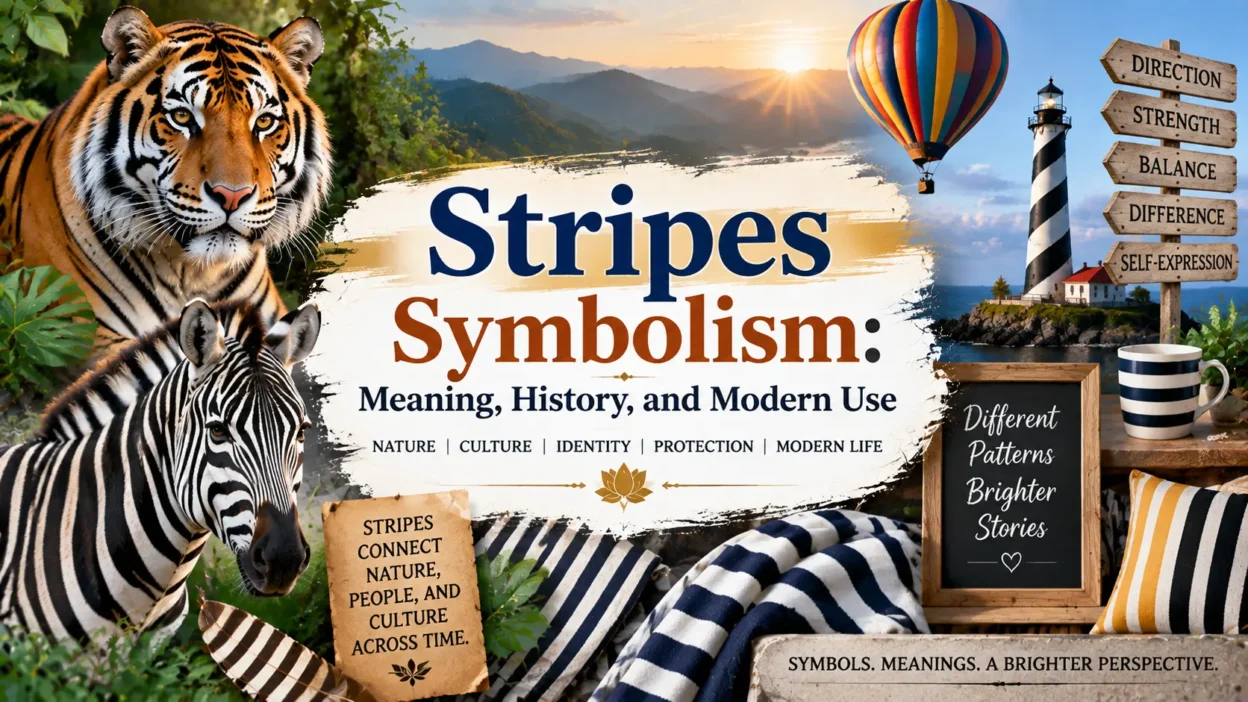
Stripes are among the most recognizable visual patterns in the world, appearing on flags, clothing, uniforms, artwork, architecture, and everyday objects. Stripes symbolism often represents ideas such as identity, movement, order, equality, and contrast, depending on the colors, direction, and cultural setting.
People notice stripes because they create strong visual structure. A simple pattern of lines can communicate belonging, authority, celebration, protest, or personal style without using words. In the United States, stripes appear in national symbols, sports culture, fashion, and design, making their meanings especially connected to identity and expression.
Understanding stripes requires looking beyond the pattern itself. The meaning changes based on context: a flag stripe carries a different message than a striped shirt, a prison uniform, or a decorative wall pattern.
Quick Answer
Stripes symbolism commonly represents identity, unity, order, and movement in modern American culture, especially in flags, fashion, sports, and design. Historically, stripes have also been used to show status, group membership, religious ideas, and social differences across cultures.
TL;DR
- Stripes often symbolize identity, unity, and organized structure.
- American flags use stripes to represent history and independence.
- Clothing stripes communicate style, personality, and social signals.
- Vertical and horizontal stripes create different visual meanings.
- Some cultures connect stripes with status or protection.
- Modern designs use stripes for branding and expression.
What Stripes Look Like and Where People See Them
Stripes are repeated lines, bands, or marks arranged in a pattern. They may appear horizontally, vertically, diagonally, or in curved forms. Their colors, thickness, spacing, and direction influence how people interpret them.
Common examples include:
- The stripes on the American flag
- Athletic uniforms
- Prison and military clothing
- Business logos
- Fashion patterns
- Road markings
- Interior design elements
- Warning signs
Unlike many symbols that depend on a specific object, stripes are a visual language. Their meaning comes from how humans organize and interpret patterns.
A narrow black-and-white stripe pattern may suggest simplicity or contrast, while colorful stripes may communicate celebration, diversity, or creativity.
What Stripes Commonly Mean in the United States
In the United States, stripes are strongly connected with national identity. The most familiar example is the American flag, where the thirteen stripes represent the original colonies that declared independence from Britain.
Beyond patriotism, stripes carry several common meanings in American culture.
| Context | Meaning in the USA | Common Associations | Notes |
|---|---|---|---|
| American flag | History and unity | Independence, states, national identity | One of the most recognized uses |
| Sports uniforms | Team identity | Competition, belonging, pride | Common in professional and school sports |
| Fashion | Personal expression | Style, confidence, simplicity | Meaning depends on colors and design |
| Warning patterns | Attention and caution | Safety, boundaries, awareness | Used in public spaces and workplaces |
| Decorations | Celebration and design | Energy, movement, creativity | Popular in homes and events |
Stripes often create a sense of connection because repeated lines suggest organization and cooperation. A group wearing matching stripes can visually communicate that members belong together.
Ancient Roots and Early Symbolism of Stripes
The use of striped patterns dates back thousands of years. Ancient societies used repeated lines in textiles, pottery, architecture, and artwork.
In some early cultures, stripes were decorative rather than symbolic. However, patterns often gained meaning through repeated social use. A certain striped garment might become associated with a profession, social position, or community.
Ancient Egyptian art, Roman clothing traditions, and Asian textile practices all included striped designs. The meanings varied widely depending on time and place.
Stripes became especially important in textiles because they were visually distinctive. They helped identify different fabrics, groups, and styles before modern printing methods existed.
How Colors Change Stripe Meanings
The meaning of stripes is closely connected to color symbolism. A striped pattern does not have one universal interpretation because colors influence the message.
Examples include:
- Red stripes: Often associated with energy, courage, passion, or warning.
- Blue stripes: Commonly linked with trust, calmness, and loyalty.
- Black stripes: May represent strength, formality, mystery, or contrast.
- White stripes: Often suggest simplicity, peace, or openness.
- Green stripes: Can connect with nature, growth, and renewal.
Color combinations also matter. Red, white, and blue stripes in America usually carry patriotic associations because of the national flag. The same colors arranged differently may have another meaning in a different context.
Stripes in American Flags and Public Symbols
The most important symbolic use of stripes in the United States appears in flags. The American flag uses horizontal stripes as a representation of the nation’s founding history.
Government buildings, military ceremonies, holidays, and public events frequently display striped flags. During celebrations such as Independence Day, stripes become connected with remembrance, citizenship, and shared national traditions.
Other American organizations also use stripes in their visual identity. Sports teams, emergency services, and community groups often use striped designs to create recognition and unity.
Stripes in Fashion and Personal Identity
Fashion has transformed stripes from a simple pattern into a way of expressing personality. Striped clothing can appear casual, professional, traditional, or artistic depending on the design.
Common interpretations include:
- Horizontal stripes may create a relaxed, classic appearance.
- Vertical stripes are often associated with structure and formality.
- Bold stripes can communicate confidence and creativity.
- Thin stripes may suggest simplicity or elegance.
In American fashion, striped shirts, sweaters, and accessories have remained popular because they are easy to combine with different styles.
A person wearing stripes may simply enjoy the design, but clothing choices can also communicate identity, mood, or cultural association.
Religious and Cultural Interpretations of Stripes
Across cultures, stripes have appeared in religious art, traditional clothing, and ceremonial objects. Their meanings are not identical everywhere.
Some traditions use repeated lines to represent balance, connection, or the relationship between different elements. In textiles, striped patterns may identify regional heritage or community traditions.
Religious interpretations depend heavily on the specific tradition. A striped object may have spiritual importance in one community while serving only a decorative purpose in another.
It is important to avoid assuming that every striped pattern has a hidden meaning. Many designs are created for artistic or practical reasons rather than symbolism.
Emotional and Psychological Meaning of Stripes
From a psychological perspective, stripes influence how people perceive shape, movement, and attention.
Repeated lines can create feelings of:
- Stability because of their organized structure
- Energy because of visual repetition
- Movement because the eye follows the pattern
- Contrast because lines separate areas
Designers use stripes to guide attention. A striped wall, logo, or advertisement can make an object appear more noticeable.
The emotional response depends on the colors, spacing, and surrounding environment. Thin neutral stripes may feel calm, while bright irregular stripes may feel energetic.
Stripes in Tattoos and Personal Expression
Striped tattoos have become popular because they can carry both personal and aesthetic meanings.
Some people choose stripes to represent:
- Strength and resilience
- Personal milestones
- Family connections
- Cultural identity
- Simplicity and minimalism
Black band tattoos, for example, may represent personal memories, commitments, or life experiences. However, tattoo meanings are individual, and the same design can represent different things for different people.
The placement, colors, and number of stripes often matter more than the pattern alone.
Modern Uses of Stripes in Design and Pop Culture
Today, stripes appear everywhere from branding to entertainment. Designers use them because they are simple, recognizable, and visually effective.
Modern examples include:
- Sports jerseys
- Fashion collections
- Product packaging
- Interior decoration
- Digital graphics
- Music and entertainment branding
Stripes are also common in online culture because they create clear visual patterns that work well in logos and profile images.
Their continued popularity comes from flexibility. A stripe pattern can look traditional, modern, playful, serious, or artistic depending on how it is used.
When Stripes Have Been Misunderstood or Misused
Although stripes often have positive meanings, some striped designs have been connected with negative historical associations.
For example, certain striped uniforms have been used to identify prisoners, forced laborers, or marginalized groups in different periods of history. These uses created painful associations that still influence how some people view specific striped clothing or patterns.
However, the meaning of stripes depends on context. A striped shirt, sports uniform, or national flag does not automatically carry the same meaning as a historical symbol of oppression.
Understanding the background prevents confusion and helps separate ordinary design from harmful uses.
How Stripe Symbolism Has Changed Over Time
The meaning of stripes has continuously evolved. A pattern that once marked social status or occupation may later become a popular fashion choice.
In earlier periods, stripes could identify groups or differences between people. In modern America, stripes are more often connected with personal expression, teamwork, national identity, and visual design.
Technology has also expanded their use. Digital design tools allow creators to experiment with stripe patterns in ways that were difficult in earlier textile traditions.
Today, stripes remain meaningful because they combine simplicity with strong visual impact.
Common Questions About Stripes Symbolism
What do stripes symbolize in general?
Stripes commonly symbolize order, identity, connection, and movement. Their meaning depends on colors, direction, cultural background, and the situation where they appear.
What do stripes symbolize on the American flag?
On the American flag, the thirteen stripes represent the original colonies that declared independence. They are closely associated with national history and unity.
What do striped tattoos mean?
Striped tattoos can represent personal experiences, strength, memories, or aesthetic preferences. Their meaning is usually determined by the person wearing the tattoo.
Are stripes considered positive or negative symbols?
Stripes can have both positive and negative associations. They may represent unity and creativity, but certain historical uses of striped clothing carry difficult meanings.
Why are stripes popular in fashion?
Stripes are popular because they are simple, adaptable, and visually appealing. They can create different impressions depending on color, size, and arrangement.
Do vertical and horizontal stripes have different meanings?
Yes. Vertical stripes are often associated with height, structure, and formality, while horizontal stripes may suggest stability, openness, or a relaxed style.
Are stripes important in other cultures?
Yes. Many cultures use striped textiles and patterns in traditional clothing, art, and ceremonies. The meanings vary widely based on local history and customs.
Conclusion
Stripes are a simple design element with a wide range of meanings. They can represent unity, identity, organization, creativity, and personal expression depending on where they appear.
In American culture, stripes symbolism is especially connected with flags, fashion, sports, and public identity. At the same time, historical examples show that symbols can change meaning as societies and circumstances change.
The lasting appeal of stripes comes from their ability to communicate ideas visually while leaving room for personal interpretation. A few lines arranged together can tell a story about belonging, style, history, or human creativity.