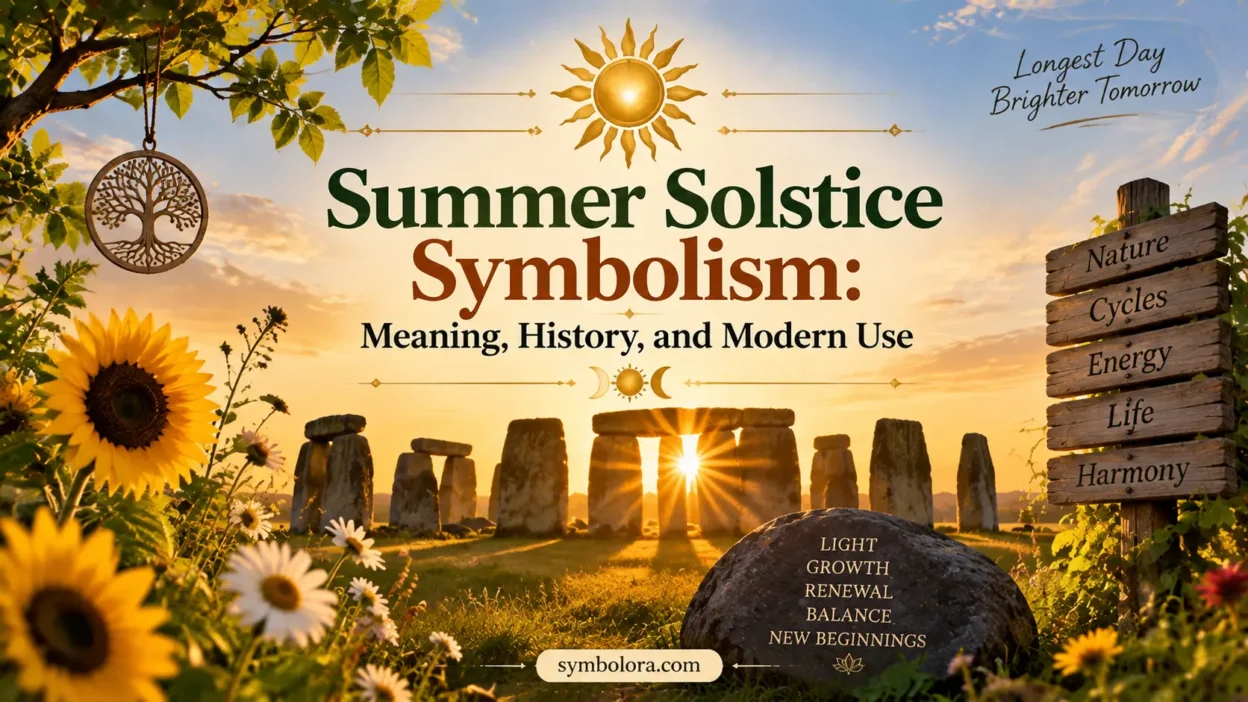
The summer solstice symbolism is commonly connected with light, growth, abundance, renewal, and the height of the natural year. As the longest day of the year in the Northern Hemisphere, the summer solstice has inspired celebrations, rituals, and seasonal traditions across many cultures, including modern American communities.
For many people in the United States, the summer solstice represents a moment to appreciate nature, reflect on personal growth, and recognize seasonal change. While ancient traditions often focused on agriculture, the sun, and spiritual cycles, today’s interpretations often include outdoor gatherings, wellness practices, environmental awareness, and personal reflection.
Quick Answer
Summer solstice symbolism commonly represents light, growth, abundance, and renewal in modern American culture, especially through seasonal celebrations, nature connections, and personal reflection. Historically, it has also been associated with the sun’s power, agricultural success, fertility, and cultural traditions marking the peak of summer.
TL;DR
- Represents sunlight, growth, and seasonal abundance.
- Originated from ancient solar and farming traditions.
- Marks the longest day in the Northern Hemisphere.
- Inspires modern American nature celebrations.
- Appears in rituals, art, and personal reflection.
- Symbolizes balance between light and change.
What the Summer Solstice Represents in Nature
The summer solstice occurs when the Earth’s tilt places the Northern Hemisphere closest to the sun, creating the longest period of daylight during the year. In the United States, it usually takes place around June 20 or June 21.
The physical event itself became symbolic because it marks a turning point. Although daylight reaches its peak, the days afterward gradually become shorter. This natural shift created associations with both achievement and transition.
Common symbolic meanings include:
| Context | Meaning in the USA | Common Associations | Notes |
|---|---|---|---|
| Nature | Growth and seasonal change | Gardens, forests, sunlight | Connected with outdoor life |
| Personal reflection | Renewal and goals | New beginnings, mindfulness | Often used for self-reflection |
| Culture | Community celebration | Festivals and gatherings | Celebrated in many forms |
| Agriculture | Abundance and harvest preparation | Crops, fertility, food | Linked to farming traditions |
| Spiritual practices | Balance and awareness | Sun rituals, meditation | Varies by belief system |
Ancient Roots and Early Solar Symbolism
The meaning of the summer solstice developed from humanity’s close relationship with the sun and seasonal cycles. Before modern calendars and technology, people depended on the movement of the sun to understand planting, harvesting, and changing weather patterns.
Ancient communities recognized the solstice as an important point in the yearly cycle. The sun appeared to reach its highest position, bringing the greatest amount of daylight. This naturally became associated with strength, vitality, and prosperity.
Many ancient cultures built monuments and created ceremonies connected to solar events. These traditions were not identical, but they often shared the idea that sunlight represented life, warmth, and agricultural success.
The solstice was especially important for farming societies because longer days provided more time for cultivation and reflected the productivity of the growing season.
The Sun as a Symbol of Life and Energy
Across cultures, the sun has often represented life because plants, animals, and humans depend on sunlight for survival. The summer solstice highlights this connection by placing the sun at the center of seasonal awareness.
Symbolically, the sun may represent:
- Vitality and strength
- Knowledge and clarity
- Hope and optimism
- Creativity and inspiration
- Growth and maturity
In American culture, these meanings appear in everyday expressions and imagery. Sun designs are common in artwork, jewelry, clothing, home decorations, and wellness spaces because they communicate warmth and positivity.
The sun’s symbolism is usually connected with encouragement rather than a single fixed meaning. Different people may interpret it through cultural traditions, personal experiences, or spiritual beliefs.
How Americans Interpret the Summer Solstice Today
In the United States, the summer solstice is not a federal holiday, but many people recognize it through seasonal activities and cultural events. Modern interpretations often focus less on ancient rituals and more on connection with nature and community.
Americans may associate the solstice with:
- Spending time outdoors
- Appreciating longer evenings
- Gardening and seasonal foods
- Environmental awareness
- Personal reflection
- Creative inspiration
Some communities organize sunrise gatherings, outdoor concerts, nature walks, or educational events. Others simply view the date as a reminder to slow down and notice seasonal changes.
The meaning is often personal. For one person, it may represent adventure and summer freedom. For another, it may symbolize gratitude, renewal, or a chance to set new intentions.
Agricultural Meaning: Growth, Fertility, and Abundance
Historically, the summer solstice was closely connected with farming. The long daylight hours supported crop development and represented a period of visible growth.
Agricultural symbolism connected the solstice with:
- Fertile land
- Successful crops
- Food abundance
- Preparation for future harvests
Many ancient celebrations included food, flowers, fires, and gatherings because communities were recognizing the relationship between human survival and natural cycles.
In modern America, these agricultural meanings appear in gardening movements, farmers’ markets, seasonal cooking, and interest in sustainable living. The solstice often reminds people where food comes from and how human life follows natural rhythms.
Summer Solstice Traditions Around the World
Different cultures have developed unique ways of recognizing the summer solstice. Some traditions focus on celebrations, while others emphasize spiritual reflection or seasonal balance.
Examples include:
- Northern European traditions: Some communities connect the solstice with midsummer festivals featuring bonfires, flowers, music, and gatherings.
- Indigenous traditions: Various Indigenous communities have their own seasonal ceremonies and relationships with the sun, land, and natural cycles.
- East Asian traditions: Some cultures observe seasonal changes through traditional calendars and agricultural practices.
These traditions differ widely, and no single interpretation represents all cultures. The shared theme is recognition of the sun’s role in shaping life on Earth.
Spiritual and Religious Interpretations
The summer solstice has appeared in many spiritual traditions, but interpretations vary greatly. Some modern spiritual groups view it as a time for reflection, gratitude, meditation, or connection with nature.
In contemporary practices, people may use the solstice as an opportunity to:
- Reflect on personal progress
- Release old habits
- Celebrate achievements
- Focus on future goals
Some modern pagan and nature-based communities observe the solstice through ceremonies inspired by historical seasonal traditions. These practices are personal expressions of belief rather than a universal religious meaning.
Emotional and Psychological Meaning of the Solstice
The summer solstice often carries emotional associations because it arrives during a season commonly linked with activity, travel, recreation, and social connection.
The symbolism may reflect feelings such as:
- Joy from increased outdoor activity
- Hope connected with growth and progress
- Appreciation for temporary moments
- Awareness of life’s changing cycles
The fact that the solstice represents both the peak of sunlight and the beginning of shorter days can also create a reminder that change is natural. Many people find meaning in recognizing both celebration and transition.
Why People Use Summer Solstice Symbols in Art and Design
Summer solstice imagery appears in many creative forms because it combines recognizable natural elements with seasonal ideas.
Common symbols include:
- Sun shapes
- Flowers
- Fire
- Green plants
- Circles representing cycles
- Golden colors
In home decor, these images often create feelings of warmth and openness. In artwork, they can represent creativity, nature, and seasonal beauty.
Designers and artists may use solstice-inspired themes without following any specific tradition. The symbols often work because they communicate ideas that many people understand intuitively.
Summer Solstice Symbolism in Tattoos and Personal Style
Some people choose summer solstice-inspired tattoos because they connect with nature, personal transformation, or seasonal memories.
Common tattoo elements include:
- Sun designs
- Sunflowers and seasonal plants
- Moon and sun combinations
- Fire imagery
- Nature scenes
A solstice tattoo may represent a personal milestone, appreciation for the outdoors, or a reminder of growth. The meaning depends on the individual rather than a universal definition.
Jewelry and clothing may also use solar imagery because it creates associations with warmth, confidence, and natural beauty.
Common Misunderstandings About the Summer Solstice
Because the solstice has connections with ancient traditions and modern spirituality, some interpretations become exaggerated or simplified.
Common misunderstandings include:
- Assuming every ancient culture celebrated it the same way
- Treating one spiritual interpretation as universal
- Claiming the solstice has a single hidden meaning
Historically, different societies developed their own beliefs around seasonal changes. Modern interpretations continue to evolve based on personal, cultural, and spiritual perspectives.
Understanding the solstice requires separating documented traditions from newer symbolic interpretations.
How the Meaning Has Changed Over Time
The symbolism of the summer solstice has shifted as societies changed. Ancient agricultural communities often viewed it through survival, farming, and seasonal planning.
Modern societies are less dependent on daylight for farming schedules, but the symbolic connection remains. Today, many people interpret the solstice through ideas of wellness, environmental awareness, creativity, and personal growth.
The meaning moved from a practical seasonal marker toward a broader cultural symbol connected with nature and human experience.
Modern Uses in American Culture and Digital Spaces
Today, summer solstice themes appear in many areas of American life. Social media posts often highlight sunrise photos, outdoor activities, seasonal recipes, and nature experiences around the event.
Modern uses include:
- Wellness events
- Photography themes
- Seasonal decorations
- Environmental campaigns
- Nature-based gatherings
- Creative projects
Digital culture has also helped spread awareness of seasonal events. People who may not follow historical traditions can still use the solstice as a meaningful moment to celebrate summer.
FAQ
What does the summer solstice symbolize spiritually?
The summer solstice is often viewed spiritually as a time of renewal, gratitude, and connection with nature. Specific meanings depend on individual beliefs and traditions.
Why is the summer solstice considered important?
The summer solstice is important because it marks the longest day of the year in the Northern Hemisphere. Historically, it helped communities track seasons and agricultural cycles.
What does a summer solstice tattoo mean?
A summer solstice tattoo may symbolize growth, sunlight, personal change, or appreciation for nature. The meaning usually depends on the person wearing it.
Is the summer solstice a religious holiday?
The summer solstice is not a single religious holiday. Some spiritual and cultural groups observe it, but traditions and beliefs vary widely.
What colors represent the summer solstice?
Common colors associated with the summer solstice include gold, yellow, green, orange, and red. These colors are often connected with sunlight, plants, warmth, and summer landscapes.
How do Americans celebrate the summer solstice?
Americans celebrate the summer solstice in different ways, including outdoor gatherings, festivals, nature activities, gardening, and personal reflection. Many people recognize it as a seasonal event rather than an official holiday.
Conclusion
The summer solstice represents a connection between sunlight, natural cycles, growth, and human reflection. Its meanings developed from ancient relationships with farming and the sun but continue to change as modern communities create new seasonal traditions.
Today, summer solstice symbolism reflects both historical ideas and personal interpretations. Whether viewed through nature, culture, creativity, or spirituality, the solstice remains a reminder that seasons change and moments of growth are worth recognizing.