Growth is one of the most common ideas people represent through symbols. From plants reaching toward sunlight to personal transformations shown in art and tattoos, symbolism for growth reflects the human desire to improve, adapt, and move forward.
In modern American culture, growth is often connected with personal development, healing, education, career progress, and life changes. People use growth-related symbols to represent milestones, new beginnings, overcoming challenges, and becoming a stronger version of themselves.
These symbols appear in many forms, including nature imagery, religious artwork, jewelry, tattoos, home decoration, and social media designs. Understanding their meanings helps explain why certain images continue to represent progress and change across different communities.
Quick Answer
Symbolism for growth commonly represents personal development, progress, renewal, and the ability to overcome challenges in modern American culture. Historically, growth symbols have been connected with nature, spirituality, fertility, and the ongoing cycle of life.
TL;DR
- Growth symbols represent progress and personal change.
- Plants and trees often symbolize renewal and strength.
- Americans connect growth with success and self-improvement.
- Many cultures link growth symbols with life cycles.
- Tattoos often represent personal journeys.
- Modern designs use growth imagery for motivation.
What Growth Symbols Represent in Modern American Culture
In the United States, symbols of growth are often connected with improvement and achievement. Many people view growth as a personal journey rather than a single destination.
A growing tree may represent stability and maturity, while a new leaf can suggest a fresh start. A flower opening may symbolize confidence, healing, or discovering new possibilities.
Growth symbolism appears frequently in areas such as:
- personal development
- education and learning
- career advancement
- emotional healing
- recovery after difficult experiences
- building stronger relationships
American culture often emphasizes the idea of becoming better over time. Because of this, growth symbols are commonly used in motivational artwork, journals, wellness spaces, and personal branding.
Ancient Roots of Growth Symbolism
The connection between growth and natural imagery began with early human observation of the world. People noticed that plants moved through cycles of planting, development, decline, and renewal.
Agricultural societies especially connected growth with survival. A successful harvest meant prosperity, stability, and the continuation of communities.
Ancient civilizations often used plants, trees, and crops as symbols of:
- fertility
- abundance
- renewal
- connection between humans and nature
The yearly return of spring became a powerful example of transformation. The natural world demonstrated that endings could lead to new beginnings.
The Tree as a Symbol of Strength and Development
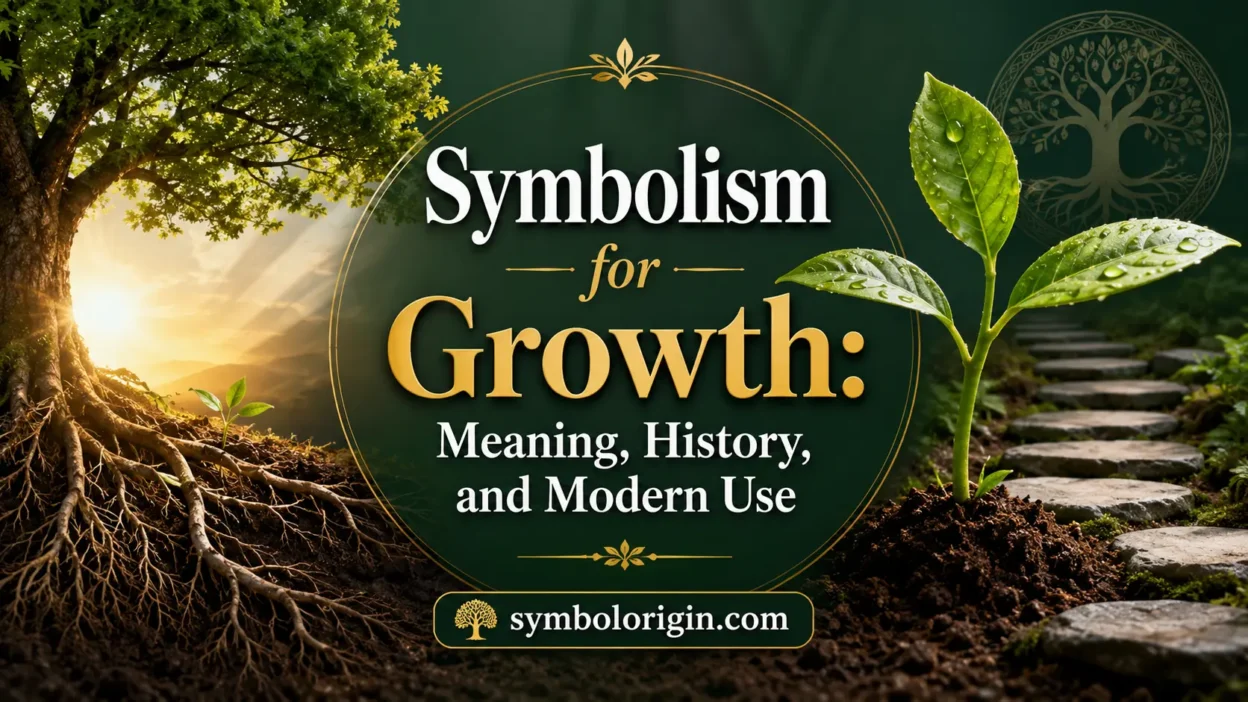
The tree is one of the most recognized growth symbols worldwide. Its roots represent foundation and connection, while its branches represent expansion and reaching toward new possibilities.
In American culture, trees are often associated with:
- family heritage
- personal strength
- environmental awareness
- long-term success
Family trees are a familiar example. They visually represent generations growing and connecting over time.
The tree also appears in tattoos and artwork because it combines several ideas at once: stability, growth, resilience, and continuity.
Flowers and Plants as Symbols of Renewal
Flowers represent growth because they transform from small beginnings into visible beauty. Their life cycle reflects patience, change, and renewal.
Different plants carry different meanings:
| Symbol | Meaning in the USA | Common Associations | Notes |
|---|---|---|---|
| Tree | Strength and development | Family, stability, wisdom | Often used for personal growth |
| Flower | Renewal and progress | Beauty, healing, new beginnings | Popular in tattoos and gifts |
| Seed | Potential and opportunity | Future goals, learning | Represents starting points |
| Leaf | Change and renewal | Seasons, transformation | Connected with life cycles |
| Butterfly | Personal transformation | Freedom, identity, change | Common in modern art |
Plants are especially common symbols during important life events. Flowers are used in weddings, celebrations, memorials, and personal expressions because they represent different stages of life.
Growth Symbolism in Religion and Spiritual Traditions
Many religious traditions use growth imagery to explain spiritual development and human transformation.
In Christianity, plants, trees, and seeds frequently appear as symbols of faith, patience, and spiritual maturity. The idea of planting and nurturing something until it grows is often used as a metaphor for developing character.
Other traditions also connect growth with spiritual understanding. Trees may represent a connection between the physical world and spiritual beliefs, while flowers may symbolize purity or enlightenment.
Although interpretations differ, many traditions share the idea that growth requires time, care, and commitment.
How Americans Use Growth Symbols in Everyday Life
Growth symbols are common in everyday American life because they communicate personal values without requiring words.
People use these symbols in:
- home decoration
- graduation gifts
- business logos
- motivational posters
- jewelry
- clothing designs
- personal artwork
A person may choose a growth symbol after a major life event, such as graduating, recovering from hardship, starting a new career, or entering a new stage of life.
These symbols allow people to display identity, goals, and personal experiences.
Emotional and Psychological Meaning of Growth Symbols
Growth symbols often represent hope and resilience. They remind people that change can happen gradually and that difficult periods may lead to improvement.
Psychologically, images connected with growth can encourage feelings of:
- motivation
- confidence
- patience
- acceptance of change
- optimism about the future
For many people, a growth symbol acts as a visual reminder of progress they have already made.
A small plant growing from the ground, for example, can represent the idea that meaningful change begins with small steps.
Growth Symbols in Tattoos and Personal Expression
Growth imagery is extremely popular in tattoo culture because tattoos often represent personal stories.
Common growth-related tattoo designs include:
- trees
- flowers
- butterflies
- vines
- leaves
- mountains
- rising suns
A person may choose these designs after overcoming challenges or reaching an important personal milestone.
However, tattoo meanings are always personal. The same symbol can represent healing for one person and ambition for another.
Growth Symbolism in Fashion, Design, and Decor
Modern design frequently uses growth imagery because it creates feelings of natural balance and progress.
Interior designers often include plants, botanical patterns, and nature-inspired artwork to create peaceful environments.
Businesses also use growth-related imagery. A tree, upward movement, or expanding shape may suggest:
- reliability
- development
- sustainability
- innovation
These symbols are common in industries related to education, health, environmental work, and personal improvement.
Growth Symbols in Digital Culture and Social Media
Digital culture has expanded how people use growth symbols. Online communities often use nature-based images to represent personal journeys and positive change.
People share growth imagery when discussing:
- new goals
- self-improvement
- fitness journeys
- career changes
- emotional healing
Social media has made symbolic communication more visual. A simple image of a growing plant or butterfly can express a personal transformation without a long explanation.
Cross-Cultural Meanings of Growth Symbols
Although growth symbols are interpreted differently around the world, many cultures connect them with renewal and life.
In some Asian traditions, plants and trees may represent harmony, balance, and spiritual connection. In European folklore, natural growth symbols often appear in stories about seasons, fertility, and transformation.
Indigenous cultures have also developed unique relationships with plants, animals, and landscapes, often viewing nature as connected with community and responsibility.
These meanings should be understood within their specific cultural contexts rather than treated as universal definitions.
Common Misunderstandings About Growth Symbolism
Growth symbols are sometimes presented as having one fixed meaning, but symbolism is flexible.
A tree does not always mean strength. A flower does not always represent beauty. The meaning depends on:
- cultural background
- personal experience
- historical context
- surrounding imagery
Another misunderstanding is that growth always represents positive change. In reality, growth can involve difficulty, loss, and adjustment.
Personal development often requires leaving behind old habits or identities.
How Growth Symbolism Has Changed Over Time
The meaning of growth symbols has evolved with society. Earlier cultures often focused on agricultural growth and survival, while modern interpretations frequently emphasize personal achievement and emotional development.
Today, growth symbolism is closely connected with ideas such as:
- self-discovery
- mental wellness
- lifelong learning
- adaptability
- personal goals
The symbol remains connected to change, but the reasons people choose it have expanded.
Why Growth Symbols Continue to Matter Today
Growth symbols remain popular because they reflect a universal human experience: change.
People naturally experience different stages of life, from childhood and education to careers, relationships, and personal challenges. Symbols provide a way to represent these transitions.
In the United States, where personal progress and self-improvement are often emphasized, growth imagery continues to appear in many forms.
Whether used in art, tattoos, celebrations, or personal spaces, these symbols help people express where they have been and where they hope to go.
Frequently Asked Questions
What does symbolism for growth usually mean?
Symbolism for growth usually represents progress, transformation, learning, and personal development. It can describe physical growth in nature or emotional and spiritual improvement in human life.
Why are trees common symbols of growth?
Trees symbolize growth because they develop slowly, have strong roots, and expand over time. They often represent stability, wisdom, family connections, and resilience.
What growth symbols are popular for tattoos?
Popular growth tattoos include trees, flowers, butterflies, leaves, and seeds. People often choose them to represent personal change, recovery, new beginnings, or important life experiences.
Is growth symbolism always positive?
Growth symbolism is usually positive, but it can also represent difficult transitions. Personal growth often includes challenges, mistakes, and periods of change.
How is growth symbolism used in American culture?
Americans commonly use growth symbols in artwork, graduation celebrations, wellness spaces, tattoos, and home design. These symbols often represent achievement, improvement, and future goals.
Do different cultures interpret growth symbols differently?
Yes. Different cultures connect growth symbols with various ideas, including spirituality, nature, fertility, balance, and transformation. Meanings depend on historical and cultural context.
Why do people connect nature with personal growth?
People connect nature with personal growth because plants and animals demonstrate cycles of change. Watching something develop over time provides a natural comparison to human learning and transformation.
Conclusion
Growth symbols represent the ongoing process of change, improvement, and development. From trees and flowers to seeds and butterflies, these images help people express progress and new possibilities.
Across American culture, symbolism for growth continues to appear in personal expression, design, celebrations, and everyday life because it reflects a shared human experience: becoming something new over time.
The most meaningful growth symbols are not valuable because they have one fixed definition. They matter because people connect them with their own journeys, memories, and hopes for the future.