
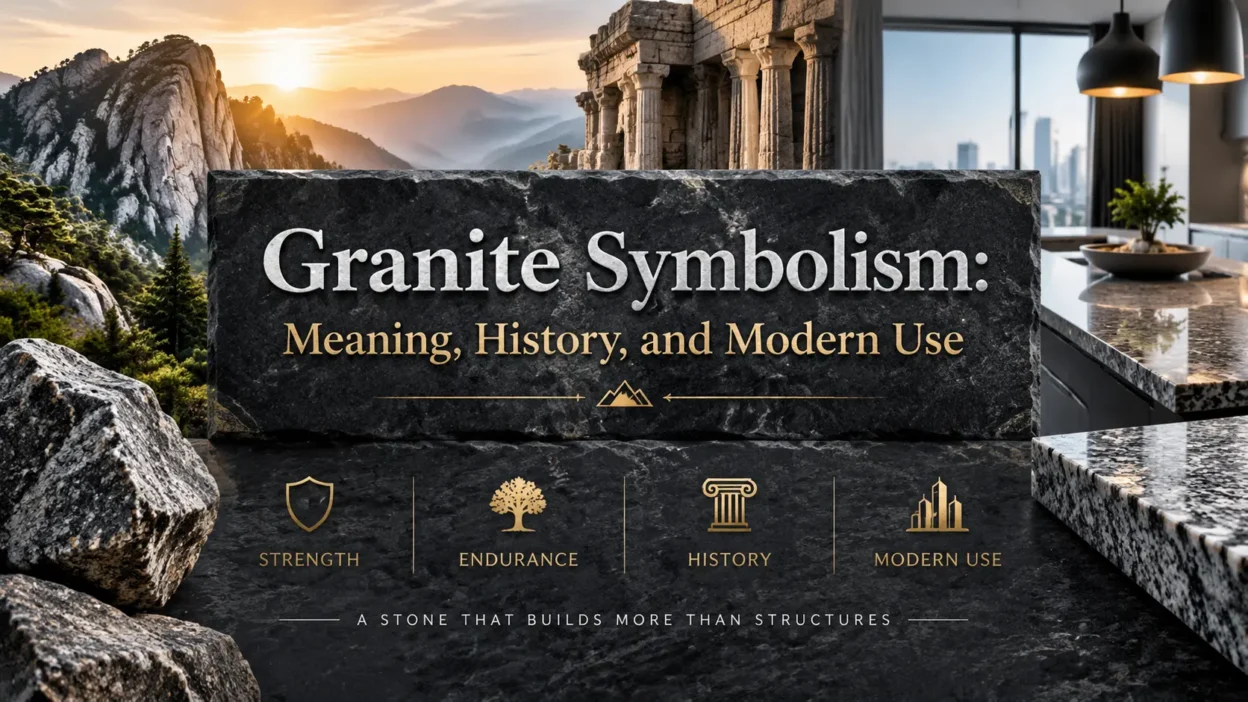
Granite is a natural stone known for its strength, durability, and distinctive patterns created by minerals formed deep within the Earth. In architecture, monuments, memorials, and interior design, granite symbolism often connects with ideas of stability, endurance, protection, and lasting value.
People have used granite for thousands of years because it can withstand weather, time, and pressure better than many other materials. In modern American culture, granite appears in places that represent permanence, including government buildings, cemeteries, family homes, and public monuments.
The meaning attached to granite comes from both its physical qualities and the human emotions connected to stone. Its solid structure often represents reliability, while its natural variations remind people of individuality and the passage of time.
Quick Answer
Granite symbolism commonly represents strength, stability, and endurance in modern American culture, especially in monuments, memorials, homes, and meaningful structures. Historically, granite has also symbolized permanence, protection, and humanity’s connection with the natural world.
TL;DR
- Granite represents strength, stability, and long-lasting support.
- Ancient cultures used stone for sacred and public structures.
- Americans associate granite with memorials and permanence.
- Granite colors can create different symbolic meanings.
- Modern designs use granite to express quality and reliability.
What Granite Represents in Modern American Culture
In the United States, granite is most commonly associated with durability and trust. Because the stone can survive harsh weather and remain unchanged for generations, many people connect it with ideas that should last.
Granite is often chosen for places where permanence matters. War memorials, courthouse buildings, universities, and historical landmarks frequently use granite because the material communicates seriousness and respect.
In homes, granite countertops and decorative stone features are often viewed as signs of quality and careful craftsmanship. Although modern homeowners may choose granite for practical reasons, the stone also carries an emotional message of stability and long-term investment.
The symbolism of granite in American life is closely connected with the belief that important memories, achievements, and values deserve something strong enough to preserve them.
The Physical Qualities Behind Granite’s Symbolic Meaning
Granite receives much of its symbolic meaning from its natural formation. It develops slowly beneath the Earth’s surface when molten rock cools and hardens over long periods.
The stone usually contains minerals such as quartz, feldspar, and mica, which create its recognizable patterns and colors. These natural features make every piece slightly different.
Several physical qualities influence how people interpret granite:
| Context | Meaning in the USA | Common Associations | Notes |
|---|---|---|---|
| Memorials | Remembrance and permanence | Respect, honor, memory | Used in graves and monuments |
| Homes | Strength and quality | Stability, investment, craftsmanship | Popular in kitchens and interiors |
| Public buildings | Authority and trust | History, tradition, responsibility | Seen in important structures |
| Natural landscapes | Connection with Earth | Endurance, resilience, nature | Represents geological time |
Because granite requires pressure and time to form, people often connect it with patience, resilience, and the ability to overcome challenges.
Ancient Roots and Early Symbolism of Granite
Humans have worked with stone since ancient times, but granite became especially important in civilizations that valued monumental construction.
Ancient Egyptians used granite for temples, statues, columns, and royal structures. The stone’s hardness made it suitable for objects intended to survive across generations. Many ancient builders associated granite with power, permanence, and connection to divine or royal authority.
In ancient societies, materials were often chosen based on their physical qualities. A fragile material could represent temporary things, while a strong stone suggested ideas that deserved protection.
Granite’s resistance to erosion helped it become connected with memory and legacy. Structures made from granite were not only functional but also statements about what communities wanted future generations to remember.
Granite Symbolism in Monuments and Memorials
One of the strongest modern associations with granite is remembrance. In the United States, granite is widely used for memorials because it represents something that remains after a person, event, or moment has passed.
Gravestones, military monuments, and public memorials often use granite because families and communities want a material that can preserve names and stories for many years.
The stone’s appearance also contributes to its meaning. A polished granite surface creates a sense of dignity, while rough granite can represent a closer connection to nature.
For many Americans, granite memorials communicate:
- respect for those who came before
- appreciation for sacrifice
- preservation of personal history
- hope that memories continue
This connection explains why granite remains common in cemeteries and remembrance spaces.
Emotional and Psychological Meaning of Granite
Granite often creates feelings of security because people naturally associate solid objects with reliability. Unlike temporary materials, stone suggests something dependable and established.
Psychologically, granite can represent:
- emotional strength
- inner stability
- confidence
- resilience during difficult periods
- commitment to lasting values
A person may choose granite jewelry, artwork, or home features because the material reflects qualities they admire. The symbolism does not come from the stone itself having a hidden meaning, but from human experiences connected with strength and endurance.
In personal symbolism, granite can represent the desire to remain steady despite change.
Granite in American Architecture and Design
Granite has played an important role in American architecture because it combines practical strength with a sense of importance. Many buildings made with granite are designed to communicate permanence, authority, and respect.
Government buildings, universities, churches, museums, and historic landmarks often feature granite because architects use the material to create a feeling of reliability. A granite foundation or entrance can visually suggest that the building represents something stable and long-lasting.
In residential design, granite became especially popular in American kitchens, bathrooms, fireplaces, and outdoor spaces. Homeowners often choose it because it is durable, but the material also creates an impression of elegance and connection with nature.
The symbolic message of granite in American design is often:
- “built to last”
- “carefully created”
- “valuable and dependable”
- “connected to natural beauty”
Unlike temporary design trends, granite often represents a preference for materials that age well and maintain their character over time.
Granite Color Meanings and Different Symbolic Associations
Granite naturally appears in many colors because of the minerals inside the stone. While the symbolism of granite comes mainly from its strength and durability, different shades can create additional emotional associations.
| Granite Color | Symbolic Meaning | Common Use |
|---|---|---|
| Gray Granite | Stability, balance, seriousness | Buildings, monuments, countertops |
| Black Granite | Strength, dignity, remembrance | Memorials and luxury designs |
| White Granite | Purity, simplicity, clarity | Modern interiors and decorative spaces |
| Pink Granite | Warmth, creativity, individuality | Homes and artistic designs |
| Blue Granite | Calmness, uniqueness, peacefulness | Decorative features |
These meanings are cultural interpretations rather than fixed rules. A person’s experience, background, and personal taste can influence how they view each granite color.
In American culture, darker granite shades are often chosen for memorials because they create a formal and respectful appearance. Lighter granite is frequently used in homes because it creates an open and clean atmosphere.
Granite Symbolism Across Different Cultures
Although granite symbolism is especially visible in American architecture and memorial traditions, other cultures have also valued granite for its strength and lasting nature.
Ancient Egyptians used granite in temples, statues, and royal monuments because the stone represented permanence and importance. Its ability to survive for thousands of years made it suitable for structures connected with rulers, beliefs, and collective memory.
In many Asian traditions, stone has been associated with balance, harmony, and connection with the natural world. Granite landscapes, mountains, and stone structures often represent endurance and the relationship between humans and the environment.
Indigenous cultures around the world have also viewed stone as a reminder of Earth’s history. Large rock formations and natural stone areas can represent ancestral connections, respect for nature, and the passing of generations.
While specific meanings differ between cultures, a common idea appears repeatedly: granite represents something that remains strong despite the changes around it.
Granite in Religious and Spiritual Symbolism
Granite is not usually considered a religious symbol by itself, but its qualities have influenced spiritual and sacred architecture.
Many religious buildings use stone because it represents permanence, devotion, and a physical connection between human effort and lasting values. Granite churches, temples, and sacred structures often communicate a sense of tradition and respect.
The stone’s connection with the Earth can also create symbolic associations with grounding and stability. For some people, natural stone represents humility because it comes from the planet rather than being manufactured.
However, granite does not have one universal spiritual meaning. Different religions and communities interpret stone based on their own beliefs and traditions.
Why Granite Appears in Tattoos and Personal Expression
Granite is less common as a tattoo symbol than animals, flowers, or celestial images, but it can carry meaningful personal symbolism when included in body art.
People who choose granite-inspired tattoos may connect the image with ideas such as:
- personal strength
- surviving hardship
- emotional protection
- family roots
- permanent memories
A granite mountain, stone texture, or rock design can represent overcoming challenges because mountains and solid stone formations are often associated with endurance.
Some people combine granite imagery with other symbols, such as trees, names, dates, or landscapes, to represent a lasting connection with a person, place, or life experience.
In modern tattoo culture, granite symbolism is usually personal rather than based on a traditional symbolic system.
Granite in Jewelry, Art, and Home Decor
Granite is not as commonly used in jewelry as gemstones, but small granite pieces and granite-inspired designs appear in decorative objects, sculptures, and artistic projects.
Artists may use granite because the material creates a contrast between human creativity and natural formation. A carved granite sculpture shows how people can shape something extremely durable while respecting the original character of the stone.
In home decor, granite is often connected with:
- sophistication
- reliability
- natural beauty
- craftsmanship
Many American homeowners see granite surfaces as more than functional materials. They can represent a carefully built environment designed for comfort and long-term use.
The Role of Granite in Modern American Identity
Granite has a strong connection with American ideas of heritage, achievement, and remembrance. Many public spaces use granite to honor important events, leaders, and communities.
The stone appears in:
- national monuments
- university buildings
- government structures
- memorial parks
- historic landmarks
These uses reflect a cultural preference for creating physical reminders of important values. A granite monument does not simply mark a location; it preserves a story.
In personal life, granite can symbolize the desire to build something lasting, whether that means a family home, a career, a relationship, or a personal legacy.
Common Misunderstandings About Granite Symbolism
Granite symbolism is sometimes misunderstood because people may assume every stone has a universal hidden meaning. In reality, symbolic interpretations come from cultural experiences and human associations.
Some common misunderstandings include:
Granite always represents strength.
Strength is the most common association, but granite can also represent memory, tradition, nature, and permanence depending on the context.
Granite has the same meaning in every culture.
Different societies may interpret stone differently based on their history, beliefs, and traditions.
Granite symbolism is only spiritual.
Granite symbolism is also found in architecture, design, family traditions, and public remembrance.
Understanding these differences helps separate genuine cultural symbolism from unsupported claims.
How Granite Symbolism Has Changed Over Time
The meaning of granite has evolved as human relationships with materials have changed.
In ancient times, granite was closely connected with rulers, sacred spaces, and monumental achievements. Its difficult production process made it a symbol of human effort and authority.
During later periods, granite became more associated with public buildings, memorials, and national identity. Communities used it to preserve history and honor important figures.
Today, granite has both traditional and everyday meanings. It remains connected with permanence and respect, but it is also part of modern homes, interior design, and personal choices.
The symbol has moved from royal monuments to ordinary spaces while keeping its central association with durability.
Granite Symbolism in Modern Pop Culture and Media
Granite does not appear as frequently in pop culture as symbols like roses, birds, or stars, but stone imagery continues to influence storytelling and visual design.
Films, artwork, and literature often use stone landscapes to represent:
- difficult challenges
- ancient history
- strength under pressure
- emotional toughness
Characters described as “solid as stone” often reflect qualities associated with granite, such as reliability and determination.
In digital culture, granite textures and stone aesthetics are also used in branding, architecture content, and design trends to communicate luxury, strength, and natural authenticity.
Frequently Asked Questions About Granite Symbolism
What does granite symbolize?
Granite commonly symbolizes strength, stability, endurance, and permanence. In modern American culture, it is often connected with memorials, architecture, and lasting achievements.
What does granite mean spiritually?
Granite does not have one universal spiritual meaning, but many people associate it with grounding, connection to nature, and stability because of its solid physical qualities.
Why is granite used for gravestones and memorials?
Granite is used for memorials because it is durable, weather-resistant, and capable of preserving names and messages for many generations.
What does black granite symbolize?
Black granite is often associated with dignity, remembrance, elegance, and seriousness. It is commonly used in memorials and formal designs.
Is granite a positive symbol?
Yes, granite is generally viewed positively because it represents reliability, strength, and lasting value. However, its meaning can change depending on the context.
What does a granite tattoo symbolize?
A granite tattoo may represent resilience, personal strength, overcoming challenges, or a permanent connection to a meaningful person or experience.
How is granite different from other stone symbolism?
Granite is usually connected with endurance and permanence because of its physical durability. Other stones may carry meanings related to beauty, rarity, spirituality, or transformation.
Conclusion
Granite symbolism represents strength, stability, endurance, and the human desire to preserve what matters. From ancient monuments to modern American homes, granite continues to communicate ideas of reliability and lasting importance.
The meaning of granite comes from both its natural qualities and the ways people have used it across generations. Whether placed in a memorial, building, artwork, or personal design, the stone reminds people of resilience and the value of creating something that can stand through time.
Understanding granite symbolism helps explain why this natural material remains meaningful in modern culture. Its message is simple: some things are valued because they endure.