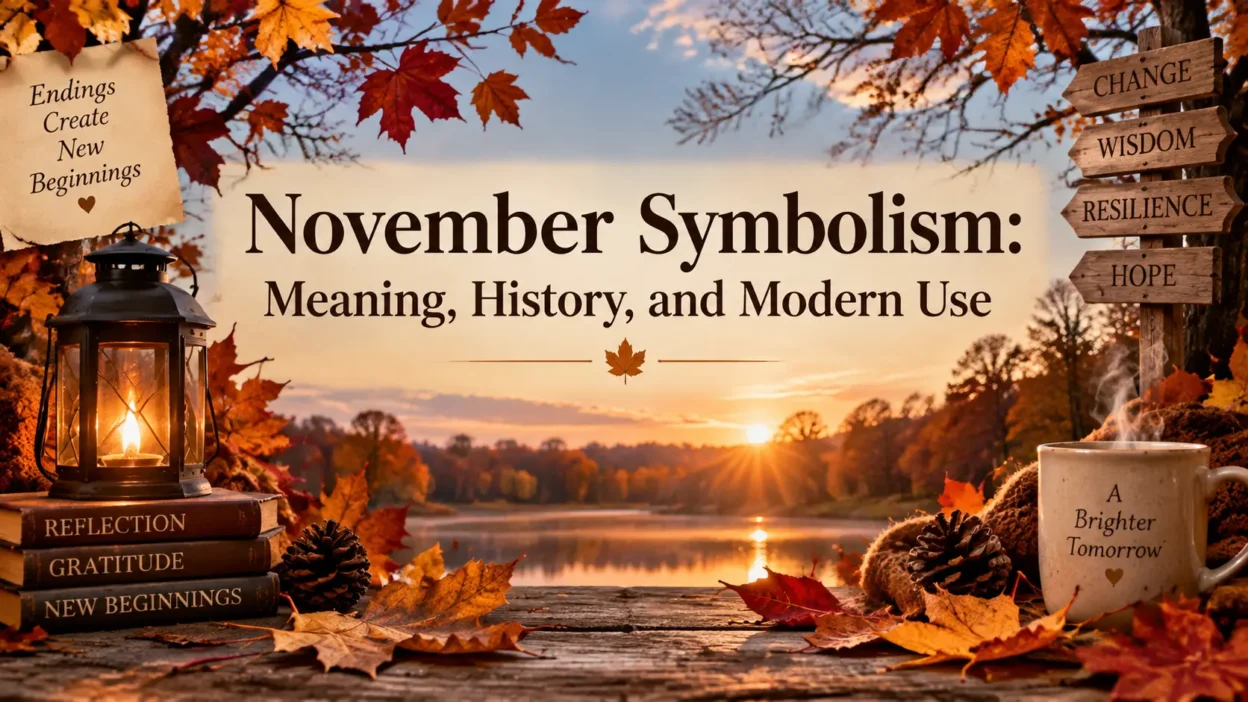
November is the month when autumn reaches its final stage in much of the United States. Trees lose their leaves, daylight becomes shorter, temperatures drop, and many people begin preparing for winter. Beyond its place on the calendar, november symbolism reflects ideas of gratitude, transition, remembrance, reflection, and preparation for change.
For many Americans, November carries emotional meaning because of traditions such as Thanksgiving, Veterans Day, family gatherings, and seasonal rituals. The month represents both endings and beginnings: the closing of the growing season and the quiet preparation for a new cycle.
The meaning of November developed from ancient seasonal observations, cultural traditions, religious practices, and modern experiences. Today, people often associate this month with appreciation, family connection, personal reflection, and the beauty of change.
Quick Answer
November commonly symbolizes gratitude, transition, reflection, and preparation in modern American culture, especially through Thanksgiving traditions and the shift from autumn toward winter. Historically, it has also represented harvest completion, remembrance, and the changing relationship between people and nature.
TL;DR
- November represents gratitude, reflection, and seasonal change.
- Ancient traditions connected it with harvest endings.
- Americans associate it strongly with Thanksgiving.
- The month symbolizes remembrance and honoring others.
- Autumn colors influence November’s emotional meaning.
- Modern use includes decor, celebrations, and personal reflection.
The Natural Appearance of November and Its Symbolic Meaning
November arrives during a period of noticeable change in the natural world. In many parts of the United States, forests become filled with bare branches, fallen leaves cover the ground, and the landscape moves from colorful autumn scenes toward winter’s quieter appearance.
This physical transformation gives November a strong connection with transition. The month shows that change is a natural part of life. Leaves falling from trees are often viewed as a reminder that letting go can create space for future growth.
The colder weather also encourages people to spend more time indoors, reconnect with family, and reflect on personal goals before the year ends. Because of this seasonal shift, November often represents a pause between activity and rest.
What November Commonly Means in the United States
In American culture, November has several widely recognized meanings. The strongest association is gratitude because of Thanksgiving, a national holiday centered around appreciation, family meals, and community.
The month also represents remembrance. Veterans Day on November 11 encourages Americans to honor military veterans and recognize their service. This gives November a connection with respect, sacrifice, and national memory.
| Context | Meaning in the USA | Common Associations | Notes |
|---|---|---|---|
| Thanksgiving | Gratitude and appreciation | Family, food, sharing | One of November’s strongest cultural symbols |
| Veterans Day | Honor and remembrance | Service, sacrifice | Recognizes military veterans |
| Late autumn | Transition and change | Falling leaves, cooler weather | Represents seasonal movement |
| Year-end reflection | Planning and personal growth | Goals, renewal | Prepares people for a new year |
| Nature imagery | Acceptance of cycles | Trees, harvest, winter | Shows change as natural |
November’s symbolism is not limited to one idea. It combines celebration, memory, nature, and emotional reflection.
Ancient Roots and Early Seasonal Symbolism
The symbolic meaning of November comes partly from humanity’s long relationship with seasonal cycles. Before modern calendars existed, many societies organized their lives around planting, harvesting, and weather changes.
November marked the end of many agricultural activities in the Northern Hemisphere. Crops had often been gathered, animals prepared for colder months, and communities focused on storing resources.
The month encouraged people to recognize the importance of preparation. Survival depended on planning ahead, saving food, and working together. These practical actions influenced later symbolic ideas about gratitude and reflection.
In ancient European traditions, late autumn was often viewed as a period when the boundary between the active growing season and winter became visible. While specific beliefs varied between cultures, many traditions used this period for remembering ancestors and recognizing life’s cycles.
How the Name November Influenced Its Meaning
The name November comes from the Latin word “novem,” meaning nine. In the early Roman calendar, November was the ninth month of the year.
Although it became the eleventh month after calendar reforms, the original name remained. This historical detail shows how calendars preserve older cultural systems even when society changes.
The month’s name itself does not create its symbolism, but its history connects November with ideas of time, tradition, and the continuation of human customs.
Thanksgiving and the Symbolism of Gratitude
For Americans, November is closely connected with Thanksgiving. Celebrated on the fourth Thursday of November, Thanksgiving has become one of the most important cultural events of the month.
The holiday emphasizes gratitude, family relationships, generosity, and shared experiences. Many people gather around a meal, express appreciation, and reflect on important relationships.
Common November symbols connected with Thanksgiving include:
- pumpkins
- cornucopias
- autumn leaves
- harvest foods
- candles
- family gatherings
These symbols represent abundance and appreciation rather than simply the season itself.
However, Thanksgiving history is complex. The holiday includes different interpretations related to Indigenous history, colonial experiences, and changing cultural perspectives. Modern Americans often approach the holiday with both celebration and awareness of its broader historical context.
November Symbolism in Nature and Seasonal Change
Nature plays a major role in how people understand November. The month arrives when many plants enter dormancy, animals adjust their behavior, and landscapes become quieter.
This natural change creates several symbolic connections:
- Falling leaves: letting go and accepting change
- Bare trees: simplicity and endurance
- Cool weather: preparation and patience
- Harvest remains: appreciation for resources
Unlike spring, which often represents beginnings, November represents a different stage of life. It highlights completion, wisdom, and the value of slowing down.
Many people find emotional comfort in November’s quieter atmosphere because it creates space for reflection.
November Colors and Their Emotional Associations
The colors connected with November often come from late autumn landscapes. These colors influence seasonal decorations, fashion, and artistic choices.
| Color | November Association | Emotional Meaning |
|---|---|---|
| Orange | Pumpkins and autumn leaves | Warmth and creativity |
| Brown | Soil, tree branches, harvest | Stability and connection |
| Gold | Fallen leaves and sunlight | Appreciation and success |
| Red | Autumn foliage and seasonal decor | Energy and emotional warmth |
| White | Early winter scenes | Peace and renewal |
These colors are common in American homes and celebrations during November because they reflect the visual character of the season.
November in Religious and Spiritual Traditions
Different religious communities connect November with remembrance, gratitude, and preparation.
In some Christian traditions, November includes days dedicated to remembering saints and deceased loved ones. These practices connect the month with memory, faith, and honoring previous generations.
Other spiritual interpretations focus on the natural cycle of endings and beginnings. The transition from autumn to winter can encourage people to think about personal growth, patience, and inner reflection.
However, November does not have one universal spiritual meaning. Interpretations depend on personal beliefs, cultural background, and individual experiences.
Emotional and Psychological Meaning of November
Many people experience November as an emotionally meaningful month because it combines social connection with seasonal change.
The month can symbolize:
- appreciation for what people have
- acceptance of life transitions
- connection with family and friends
- reflection before new goals
- comfort during colder seasons
Shorter daylight hours and colder temperatures can also influence moods. For some people, November creates a desire for quiet activities, personal reflection, and creating comfortable spaces at home.
The emotional meaning of November often depends on personal memories. A person may associate the month with family traditions, important events, or moments of personal change.
November Symbolism in American Holidays and Public Life
Two major American observances make November especially significant.
Veterans Day
Veterans Day on November 11 honors those who served in the U.S. military. The symbolism of the month becomes connected with respect, courage, and national appreciation.
Thanksgiving
Thanksgiving creates a strong connection between November and gratitude. It encourages people to recognize relationships, generosity, and shared experiences.
Together, these holidays give November a unique combination of celebration and remembrance.
Why November Appears in Art, Decor, and Design
November imagery appears frequently in American design because its symbols create feelings of warmth and comfort.
Common November-inspired designs include:
- autumn wreaths
- leaf patterns
- candles
- harvest displays
- rustic decorations
- seasonal artwork
Interior designers often use November themes to create cozy environments. Natural materials, warm colors, and simple decorations reflect the month’s connection with comfort and reflection.
November Symbolism in Tattoos and Personal Expression
Although less common than symbols like flowers or animals, November themes appear in tattoos and personal artwork.
People may choose November-inspired designs because the month represents:
- a birth month
- a meaningful memory
- personal transformation
- family traditions
- appreciation for a specific life period
Common designs include:
- autumn leaves
- pumpkins
- trees
- November birth flowers
- seasonal landscapes
For many people, these images represent personal experiences rather than a fixed symbolic meaning.
Modern Digital Culture and November Meaning
In modern online culture, November symbolism appears through seasonal posts, holiday content, and lifestyle trends.
Social media often uses November imagery to represent:
- gratitude challenges
- cozy seasonal aesthetics
- Thanksgiving celebrations
- autumn photography
- year-end reflection
The month has also become associated with preparing for the holiday season. Many people view November as a transition point between autumn traditions and winter celebrations.
Common Misunderstandings About November Symbolism
Some people assume that November only represents sadness because of shorter days and the end of autumn. While the month can involve reflection, its symbolism is not limited to loss.
November also represents appreciation, connection, and preparation.
Another misunderstanding is that every culture views November the same way. Symbolic meanings change depending on geography, religion, history, and personal experience.
The most accurate understanding of November combines many ideas: seasonal change, gratitude, remembrance, and renewal.
How November’s Meaning Has Changed Over Time
November’s symbolism has evolved as societies changed. Ancient communities focused heavily on harvest and survival, while modern Americans often emphasize holidays, family traditions, and personal reflection.
The month moved from being primarily connected with agricultural preparation to becoming a period associated with cultural celebrations and emotional connection.
Today, November represents both old traditions and modern experiences. It reminds people of nature’s cycles while also creating opportunities for gratitude and meaningful connection.
Frequently Asked Questions
What does November symbolize spiritually?
November often symbolizes reflection, gratitude, remembrance, and preparation for change. Spiritual interpretations vary, but many traditions connect the month with honoring the past and accepting natural cycles.
What does November symbolize in American culture?
In American culture, November is strongly associated with Thanksgiving, gratitude, family gatherings, and Veterans Day. It also represents the transition from autumn into winter.
What does a November birth month symbolize?
A November birth month is often associated with resilience, reflection, loyalty, and transformation because of the season’s connection with change and preparation.
Why is November considered a month of gratitude?
November is considered a month of gratitude mainly because Thanksgiving encourages people to appreciate relationships, resources, and shared experiences.
What do November colors symbolize?
November colors such as orange, brown, gold, and red often represent warmth, harvest, stability, and seasonal beauty. These colors reflect the natural appearance of late autumn.
Does November have a negative symbolic meaning?
November can symbolize endings because it marks the close of autumn, but this does not make it negative. Many people view endings as opportunities for reflection and preparation.
What does November represent in nature?
In nature, November represents transition, dormancy, and preparation. Plants, animals, and landscapes adjust as the environment moves toward winter.
Conclusion
November represents a balance between celebration and reflection. It marks the end of autumn while creating space for gratitude, remembrance, and preparation for what comes next.
The meaning of november symbolism comes from both ancient seasonal traditions and modern American experiences. From Thanksgiving gatherings to quiet moments surrounded by changing landscapes, November continues to represent appreciation, transition, and connection.
Rather than symbolizing only endings, November reminds people that every season has value. Change can bring reflection, and reflection can create opportunities for growth.