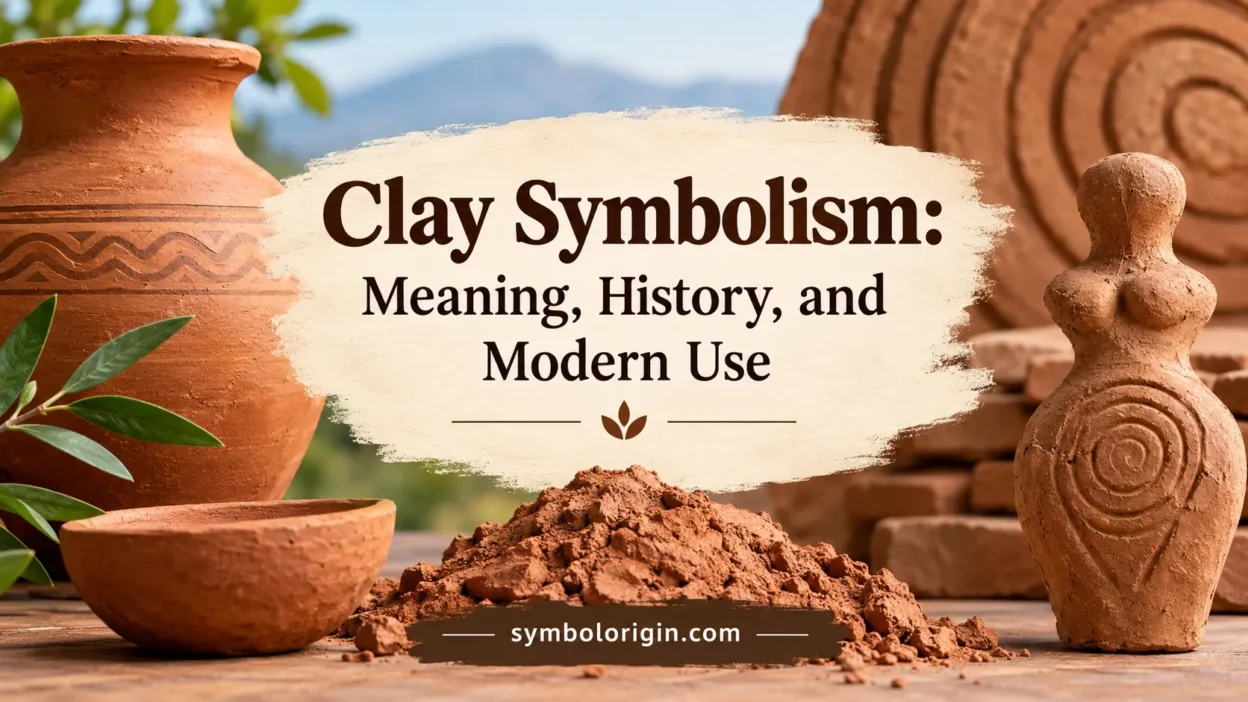
Clay is one of the oldest materials humans have shaped into tools, art, buildings, and meaningful objects. From handmade pottery to sculptures and memorial pieces, clay symbolism often reflects ideas of creation, connection, transformation, and human identity. Its ability to be molded and hardened has made it a symbol of change and lasting expression across many cultures.
In modern American culture, clay appears in classrooms, craft communities, home design, museums, and personal artwork. People often connect it with creativity, patience, nature, and the process of building something meaningful from simple beginnings. Understanding its symbolism reveals how an ordinary earth material became linked with human stories and traditions.
Quick Answer
Clay commonly symbolizes creation, growth, and transformation in modern American culture, especially through art, crafts, and personal expression. Historically, it has also represented human origins, connection to the earth, and the ability to shape new possibilities.
TL;DR
- Clay symbolizes creation, adaptability, and human creativity.
- Ancient cultures connected clay with origins and craftsmanship.
- Americans often view clay through art and handmade traditions.
- Clay pottery represents patience, skill, and personal expression.
- Religious traditions use clay to discuss human beginnings.
- Modern artists use clay for identity and storytelling.
What Is Clay and Why Does It Carry Symbolic Meaning?
Clay is a natural material made from fine particles of soil that become flexible when mixed with water. After shaping and heating, clay can become strong pottery, sculptures, bricks, and other lasting objects.
Its symbolic meaning comes from its unique qualities. Unlike stone or metal, clay begins as a soft substance that can be changed by human hands. This ability to transform makes it a natural symbol of creativity, learning, and personal development.
People encounter clay in many forms, including:
- Ceramic dishes and pottery
- Sculptures and handmade artwork
- Traditional crafts
- Construction materials
- School art projects
- Decorative objects
Because clay exists between earth and human imagination, many cultures have used it to represent the relationship between people and the natural world.
What Clay Commonly Symbolizes in the United States
In the United States, clay is most often connected with creativity, craftsmanship, and personal expression. Many Americans encounter clay through pottery classes, art programs, craft markets, and handmade goods.
Clay pottery is often appreciated because each piece can show the marks of the person who created it. Small differences in shape, texture, and design make handmade clay objects feel personal rather than mass-produced.
Common American interpretations include:
| Context | Meaning in the USA | Common Associations | Notes |
|---|---|---|---|
| Pottery | Creativity and craftsmanship | Handmade art, patience | Often valued for personal touch |
| Sculpture | Expression and storytelling | Identity, emotions | Used by professional artists |
| Home Decor | Warmth and nature | Simplicity, comfort | Clay colors create earthy designs |
| Education | Learning and exploration | Childhood creativity | Common in art classrooms |
| Memorial Art | Memory and connection | Respect, remembrance | Used for meaningful keepsakes |
Clay also connects with the growing appreciation for handmade products. Many people see clay artwork as a reminder of slower processes in a digital world.
Ancient Roots and Early Symbolism of Clay
Clay has been important since ancient civilizations because it was easy to find, shape, and preserve. Early communities used clay for storage containers, written records, religious objects, and artistic creations.
Ancient Mesopotamian societies used clay tablets to record information, laws, and stories. These objects show how clay became connected not only with physical creation but also with preserving human knowledge.
In ancient Egypt, clay and related earth materials were used in pottery, figurines, and everyday objects. Many cultures viewed earth-based materials as connected to life because they came directly from the ground.
The symbolic importance of clay developed from practical experience. Humans saw that they could take something simple from nature and transform it into something useful or meaningful.
Clay Symbolism in Creation Stories and Religion
Clay has a strong connection with religious symbolism, especially stories about human creation. Several traditions use earth or clay imagery to describe the relationship between humans and the natural world.
In Abrahamic traditions, including Christianity and Judaism, creation stories describe humans as being formed from the earth. This imagery represents humility, human connection to nature, and the idea that life comes from a greater creative force.
In some Islamic interpretations, references to humans being created from clay emphasize human origins and the connection between physical existence and spiritual purpose.
Clay imagery appears in other belief systems as well. In many traditions, earth materials represent beginnings, transformation, and the cycle between life and nature.
Why Clay Represents Transformation and Growth
One of clay’s strongest symbolic meanings comes from its ability to change shape. A lump of clay can become a bowl, statue, or artistic creation through time and effort.
This process often represents personal growth. People may compare life experiences to clay because challenges and choices can shape a person over time.
Clay symbolism is often connected with:
- Learning from experiences
- Adapting to change
- Developing skills
- Creating a new identity
- Turning ideas into reality
The symbolism does not suggest that change is always easy. Like pottery, personal growth often requires pressure, patience, and time.
The Emotional Meaning of Clay
Clay can carry emotional meanings because it involves touch, creativity, and physical connection. Working with clay is often considered a calming activity because shaping materials by hand allows people to focus on the present moment.
For many people, clay represents:
- Comfort
- Stability
- Connection to nature
- Self-expression
- Emotional release
Artists often use clay to communicate feelings that are difficult to express with words. A sculpture’s shape, texture, and imperfections can tell a personal story.
The handmade quality of clay also creates a sense of authenticity. Small cracks or uneven surfaces may be viewed as part of the object’s character rather than flaws.
Clay in Native American and Indigenous Traditions
Many Indigenous cultures in North America have long traditions of pottery and earth-based art. Clay objects can carry connections to community, history, environment, and cultural knowledge.
Traditional pottery often reflects local landscapes through natural materials, designs, and techniques passed between generations.
For many Indigenous artists, clay is not simply a material. It can represent a relationship with the land and the continuation of cultural practices.
However, Indigenous traditions vary widely among different nations and communities. Clay symbolism should be understood within each specific cultural context rather than treated as one single meaning.
Clay Symbolism in Art, Design, and Creativity
Modern artists continue to use clay because it allows both control and unpredictability. A creator can shape the material, but firing and natural changes during the process can affect the final result.
In contemporary American design, clay appears in:
- Handmade ceramics
- Minimalist home decor
- Artistic sculptures
- Jewelry designs
- Public installations
Earth-toned clay colors are often associated with natural spaces, warmth, and simplicity. Interior designers frequently use ceramic pieces to create a connection between indoor spaces and the outdoors.
Why People Choose Clay Tattoos and Personal Symbols
Clay-related tattoos are less common than symbols like animals, flowers, or celestial images, but some people choose clay imagery because of its personal meanings.
A clay symbol in tattoo culture may represent:
- Personal transformation
- Connection to nature
- Creativity
- Starting over
- Appreciation for handmade traditions
A person may choose a clay image after an important life change, creative journey, or period of personal development.
The meaning depends strongly on the individual. Unlike some widely recognized symbols, clay tattoos usually carry a personal story rather than one fixed interpretation.
Clay in Modern American Life and Popular Culture
Today, clay remains connected with creativity and human connection despite advances in technology. Pottery shows, craft communities, and social media have increased interest in handmade ceramics.
Online platforms often feature clay artists sharing:
- Pottery-making videos
- Sculpture processes
- Ceramic designs
- Creative experiments
This visibility has helped clay become associated with authenticity and the value of making things by hand.
Many people are drawn to clay because it represents something physical and real in an increasingly digital environment.
Common Misunderstandings About Clay Symbolism
Clay symbolism is sometimes simplified into only one idea, such as “creation.” While creation is an important meaning, clay represents many related concepts.
Another misunderstanding is that every culture views clay in exactly the same way. Different societies have developed unique meanings based on their environment, beliefs, and traditions.
Clay also does not automatically represent weakness because it begins as a soft material. Many interpretations focus instead on flexibility, growth, and the ability to become stronger through transformation.
How Clay Symbolism Has Changed Over Time
The meaning of clay has evolved alongside human societies. Early communities valued clay mainly for practical uses like storage and building materials. Over time, it became increasingly connected with art, religion, identity, and personal expression.
Today, clay represents both ancient connections and modern creativity. A handmade ceramic piece can carry thousands of years of human history while still fitting into a contemporary home.
Its meaning continues to change as artists and communities find new ways to use this adaptable material.
FAQ About Clay Symbolism
What does clay symbolize spiritually?
Clay often symbolizes human origins, creation, humility, and connection with the earth. In religious traditions, it may represent the relationship between physical life and spiritual purpose.
What does clay symbolize in art?
In art, clay commonly represents creativity, transformation, and personal expression. Artists use it because it can be shaped into forms that communicate ideas and emotions.
Is clay a symbol of change?
Yes, clay is often associated with change because it can be reshaped before becoming a finished object. This makes it a common symbol for growth and adaptation.
What does clay mean in a dream?
Dream interpretations vary, but clay dreams are sometimes connected with creativity, unfinished goals, or personal development. The meaning depends on the dream’s details and the person’s experiences.
Why is clay important in religious symbolism?
Clay appears in many religious traditions because it represents earth, creation, and human beginnings. Different faiths interpret this connection in their own ways.
What does a clay tattoo symbolize?
A clay tattoo may represent transformation, creativity, nature, or a personal journey. Its meaning usually depends on the person’s own story and design choice.
Conclusion
Clay has remained meaningful because it connects everyday life with creativity, nature, and human experience. From ancient pottery to modern artwork, it represents the process of turning simple materials into something valuable.
Clay symbolism reflects ideas of creation, transformation, and connection that continue to appear in American art, culture, and personal expression. Its meaning comes from both its physical qualities and the stories people create with it.
Whether shaped into pottery, sculpture, or a personal symbol, clay reminds people that change and creativity are ongoing parts of human life.