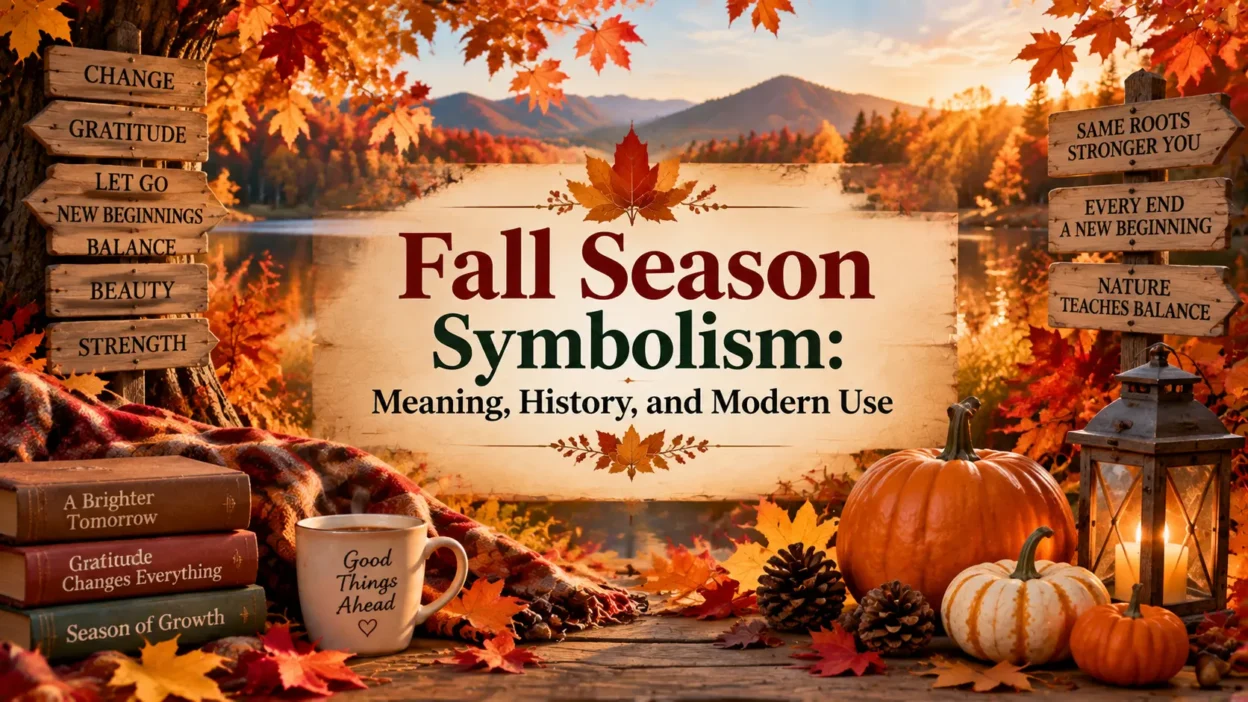
The fall season symbolism commonly represents change, harvest, gratitude, and reflection in modern American culture. As nature moves from summer’s growth into winter’s rest, autumn becomes a reminder of transformation, preparation, and appreciating the present moment.
Fall is one of the most visually recognizable seasons of the year. The changing leaves, cooler weather, shorter days, and harvest traditions create a unique emotional connection for many people. In the United States, autumn is linked with family gatherings, Halloween, Thanksgiving, outdoor activities, and seasonal decorations.
The meaning of fall goes beyond colorful trees and pumpkin displays. For centuries, people have connected this season with important ideas about life cycles, work, abundance, and change. Today, autumn imagery appears in homes, clothing, artwork, tattoos, photography, and popular culture because it represents experiences that many people share.
Understanding fall symbolism helps explain why this season often feels both comforting and meaningful. It reflects a natural truth: every stage of life includes growth, transition, endings, and new beginnings.
Quick Answer
Fall season symbolism commonly represents change, harvest, gratitude, and reflection in modern American culture, especially through autumn colors, Thanksgiving traditions, and seasonal decorations. Historically, fall has also represented preparation, natural cycles, and the balance between abundance and approaching winter.
TL;DR
- Fall symbolizes change, transition, and personal growth.
- Harvest traditions connect autumn with gratitude and abundance.
- Americans associate fall with family and seasonal celebrations.
- Autumn colors represent warmth, maturity, and transformation.
- Literature often uses fall as a symbol of life changes.
- Modern culture uses fall imagery for comfort and identity.
What Is Fall Season Symbolism?
Fall season symbolism comes from the meanings people attach to autumn’s natural changes. During this season, trees lose their leaves, temperatures become cooler, and many plants complete their growth cycles.
These visible changes have encouraged people to see fall as a symbol of transition. The falling leaf, for example, represents movement from one stage to another. It can suggest acceptance, aging, renewal, or letting go.
Unlike symbols created by a single culture or tradition, fall symbolism developed naturally through human observation of the environment. People noticed patterns in nature and connected them with their own experiences.
For many Americans today, fall represents a balance between endings and beginnings. The season shows that change is not always negative; it can create beauty, preparation, and opportunities for renewal.
Common Meanings of Fall Season Symbolism
Fall carries several important meanings that appear across American culture.
| Context | Meaning in the USA | Common Associations | Notes |
|---|---|---|---|
| Changing leaves | Transformation | Growth, life stages, new chapters | One of the strongest fall symbols |
| Harvest season | Gratitude and abundance | Farming, Thanksgiving, sharing | Connected to food traditions |
| Cooler weather | Reflection and comfort | Home, family, relaxation | Encourages slower routines |
| Shorter days | Transition | Rest, preparation, balance | Represents seasonal change |
| Autumn colors | Warmth and maturity | Fashion, décor, art | Creates a cozy atmosphere |
These meanings explain why fall appears so often in creative works and personal expressions.
Ancient Roots and Early Symbolism of Fall
The symbolic meaning of fall began with agriculture and survival. Before modern systems allowed year-round food production, autumn was a critical period for communities around the world.
Farmers depended on harvest time to collect crops and prepare supplies for winter. A successful harvest meant security, while a poor harvest could create serious challenges. Because of this connection, fall became associated with abundance, gratitude, and preparation.
Ancient cultures developed harvest festivals to celebrate the completion of farming seasons. These celebrations often included meals, community gatherings, music, and rituals of appreciation.
The natural changes of autumn also influenced symbolic thinking. Trees dropping their leaves showed people that nature moves through cycles. Growth, maturity, decline, and renewal became connected ideas.
Over time, fall symbolism expanded beyond farming. It became a way to describe emotional experiences, personal changes, and human relationships with time.
Fall Symbolism in American Culture
In the United States, fall has a strong cultural identity. Many Americans associate autumn with community traditions, family activities, and seasonal experiences.
One of the biggest influences is the connection between fall and holidays.
Halloween
Halloween gives fall a connection with imagination, folklore, and mystery. Pumpkins, costumes, candles, and nighttime decorations create a unique seasonal atmosphere.
The pumpkin became an important American fall symbol through the tradition of carving jack-o’-lanterns. Today, pumpkins represent creativity, celebration, and the arrival of autumn.
Thanksgiving
Thanksgiving connects fall with gratitude, family, and appreciation. The holiday takes place near the traditional harvest period, strengthening the relationship between autumn and thankfulness.
Foods such as corn, pumpkins, apples, and squash often appear during Thanksgiving because they represent seasonal harvest traditions.
Football and Community Events
For many Americans, fall is also connected with school sports, football games, fairs, and outdoor gatherings. These activities add meanings of teamwork, community, and shared experiences.
Why Falling Leaves Symbolize Change
The falling leaf is one of the most recognized symbols of autumn. Its meaning comes directly from nature’s seasonal process.
Leaves change color because trees prepare for colder months. As chlorophyll decreases, hidden colors appear, creating the familiar red, orange, and yellow landscape.
Symbolically, falling leaves often represent:
- accepting change
- completing a chapter
- releasing the past
- moving into a new stage
Many people find this symbolism comforting because it presents change as a natural part of life rather than something to fear.
In literature and personal expression, leaves often represent memories, aging, and the passage of time.
The Symbolism of Fall Colors
Autumn colors strongly influence how people emotionally experience the season.
Orange Symbolism
Orange represents warmth, energy, and creativity. In fall, it appears through pumpkins, leaves, and seasonal decorations.
In American culture, orange is especially connected with Halloween and harvest celebrations.
Red Symbolism
Red autumn leaves often symbolize passion, strength, and transformation. Their brief appearance before winter makes them a reminder that temporary moments can still hold meaning.
Yellow and Gold Symbolism
Yellow and gold represent brightness, value, and optimism. Golden leaves often create associations with sunlight and natural beauty.
Brown Symbolism
Brown represents stability, earth, and simplicity. It connects fall with forests, wood, soil, and natural materials.
Together, these colors create the warm visual identity associated with autumn.
Emotional and Psychological Meaning of Fall
Fall often creates feelings of comfort, reflection, and nostalgia. Many people associate the season with familiar experiences such as warm drinks, family meals, changing landscapes, and quiet evenings.
Psychologically, seasonal changes can encourage people to reflect on personal goals and life transitions. The movement from summer activity toward winter preparation creates a natural opportunity for slowing down.
Fall symbolism can represent:
- accepting personal changes
- appreciating current moments
- preparing for future challenges
- finding comfort during transitions
The season reminds people that change can include both loss and opportunity.
Fall Symbolism in Literature and Art
Writers and artists have used autumn imagery for centuries because the season naturally connects with human emotions.
In literature, fall often represents:
- maturity
- aging
- endings
- reflection
- temporary beauty
A character surrounded by autumn scenery may be experiencing a major life transition or personal realization.
Artists also use fall colors to create feelings of warmth, nostalgia, and peacefulness. Paintings, photographs, and films often include autumn landscapes to communicate emotional changes without directly explaining them.
Religious and Cross-Cultural Meanings of Fall
Different cultures and religions interpret autumn in various ways.
In some traditions, harvest seasons are connected with gratitude and giving thanks. Communities celebrate the food and resources provided by nature.
Some spiritual traditions view seasonal change as a reminder of life cycles, including birth, growth, decline, and renewal.
In Japanese culture, autumn has often been associated with beauty, reflection, and appreciation for temporary moments. In many European traditions, harvest festivals celebrate preparation and community.
Although interpretations differ, many cultures connect fall with similar themes: gratitude, change, and awareness of time.
Fall Symbolism in Modern Fashion, Décor, and Design
Today, autumn symbolism appears throughout everyday design.
Home Décor
Fall decorations often include:
- pumpkins
- dried leaves
- candles
- wooden materials
- warm colors
These elements create feelings of comfort and seasonal connection.
Fashion
Fall fashion uses earthy colors, layered clothing, and natural textures. Sweaters, jackets, boots, and scarves often represent warmth and preparation.
Social Media and Photography
Autumn images are popular online because they communicate cozy lifestyles, outdoor experiences, and seasonal memories.
Why People Choose Fall Symbols for Tattoos
Fall-inspired tattoos often represent personal meanings connected with change and growth.
Common designs include:
- falling leaves
- pumpkins
- autumn trees
- acorns
- forest scenes
A person may choose these symbols to represent a new chapter, acceptance of change, family memories, or a connection with nature.
The meaning depends on personal experience rather than a fixed definition.
Common Misunderstandings About Fall Symbolism
Some people view fall only as a symbol of endings because leaves fall and winter follows. However, autumn symbolism is usually more balanced.
Fall does represent endings, but it also represents preparation, beauty, and renewal. The falling leaf is not simply a sign of loss; it is part of a natural cycle.
Another misunderstanding is that autumn symbolism has one universal meaning. Different cultures and individuals interpret the season according to their own traditions and experiences.
How Fall Symbolism Has Changed Over Time
The meaning of fall has evolved with society.
Early communities focused on harvest, survival, and preparation. Modern societies often focus more on emotional experiences, holidays, and lifestyle.
Today, fall represents both traditional and personal meanings. It connects farming history with modern ideas about comfort, identity, creativity, and reflection.
The season continues to change because people continue to find new ways to relate to nature.
Frequently Asked Questions
What does fall season symbolism represent?
Fall season symbolism represents change, harvest, gratitude, and reflection. In modern American culture, it is strongly connected with holidays, family traditions, and seasonal transformation.
Why do leaves symbolize change?
Leaves symbolize change because they naturally transform before falling from trees. This process represents transition, acceptance, and moving into a new stage of life.
Is fall symbolism positive or negative?
Fall symbolism can represent both endings and new beginnings. While it includes ideas of decline and transition, it also represents beauty, preparation, and appreciation.
What does fall mean in American culture?
In American culture, fall is associated with Halloween, Thanksgiving, harvest traditions, family gatherings, sports, and seasonal comfort.
Why are pumpkins a symbol of fall?
Pumpkins became symbols of fall because they are harvested during autumn and became closely connected with Halloween and seasonal decorations.
What do fall colors symbolize?
Fall colors often symbolize warmth, maturity, transformation, and connection with nature. Orange, red, yellow, and brown create the visual identity of the season.
Conclusion
Fall season symbolism represents the natural process of change, appreciation, and preparation. In the United States, autumn connects old harvest traditions with modern experiences such as holidays, family gatherings, fashion, and seasonal design.
The meaning of fall comes from observing nature and recognizing similar patterns in human life. Leaves change, seasons shift, and people also move through different stages.
Fall season symbolism continues to remind people that change can bring reflection, beauty, and opportunities for growth. Its message is not only about endings but also about valuing each moment before the next season begins.