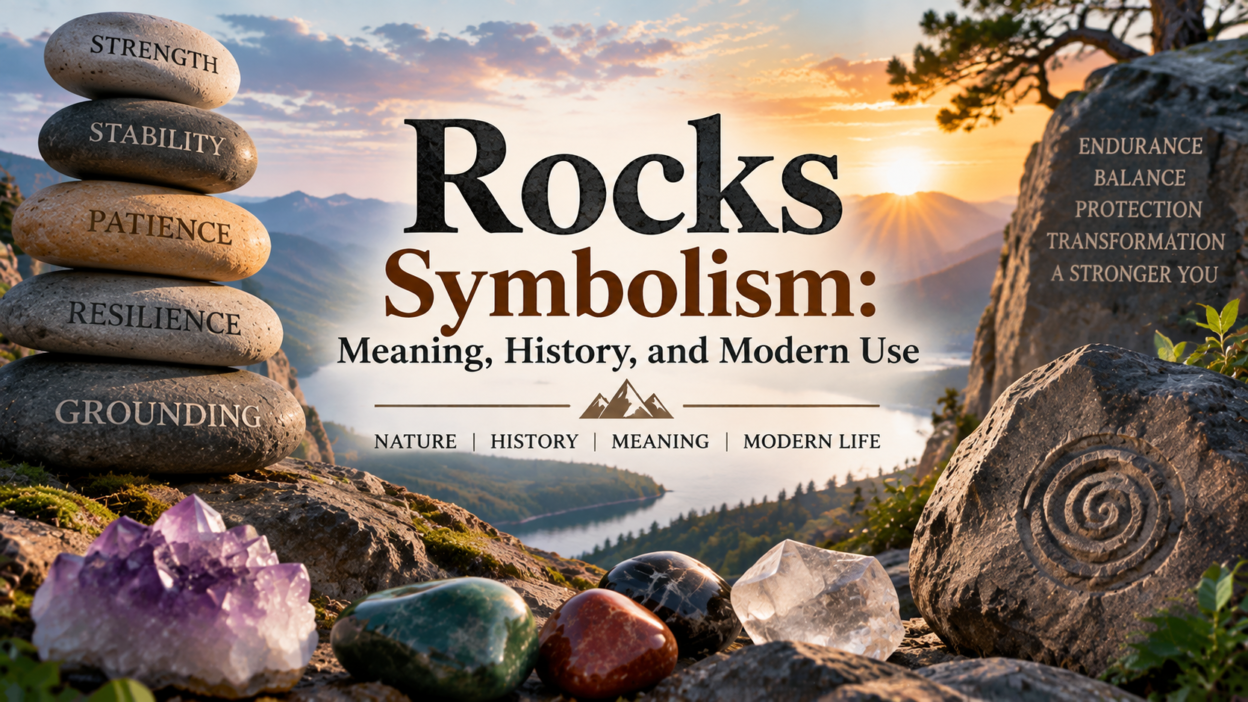
Rocks are among the most familiar objects found in nature, yet people have attached many meanings to them across cultures and generations. Rocks symbolism often represents strength, stability, endurance, protection, and connection with the natural world. From ancient monuments to modern homes and personal jewelry, rocks continue to carry ideas about permanence and resilience.
Unlike symbols created by humans, rocks exist naturally in landscapes, mountains, rivers, and deserts. Their long formation process and ability to withstand environmental changes have made them powerful images of patience, reliability, and survival. In the United States, people often associate rocks with foundations, memories, personal journeys, and a lasting connection to the earth.
Understanding the symbolism of rocks helps explain why they appear in architecture, memorials, gardens, artwork, spiritual practices, and personal objects. Their meanings are shaped by geology, cultural traditions, personal experiences, and the ways people interact with the natural environment.
Quick Answer
Rocks symbolism commonly represents strength, stability, and endurance in modern American culture, especially in homes, memorials, jewelry, and personal designs. Historically, rocks have also symbolized protection, permanence, spiritual connection, and the lasting relationship between humans and nature.
TL;DR
- Rocks symbolize strength, stability, and endurance.
- Ancient cultures used stones in sacred and protective spaces.
- Americans connect rocks with foundations and lasting memories.
- Different rocks carry unique meanings through color and history.
- Modern designs use rocks for identity and natural beauty.
What Rocks Symbolize in Modern American Culture
In the United States, rocks are commonly connected with ideas of reliability and permanence. A stone foundation supports a building, a monument preserves a memory, and a mountain represents a challenge that can be overcome. These everyday associations influence how many Americans understand rocks symbolically.
One of the strongest meanings of rocks is stability. People often describe dependable individuals as “solid as a rock,” showing how deeply this object is connected with trust and strength. The phrase reflects a cultural belief that rocks represent something that can be relied upon during difficult times.
Rocks also symbolize endurance. Because many rocks survive for thousands or millions of years, they represent the ability to withstand change. This meaning appears in memorial stones, family keepsakes, and landscape designs where people want to create something lasting.
Another common interpretation is connection to nature. In gardens, homes, and outdoor spaces, natural stones are often used to create a feeling of balance, simplicity, and harmony with the environment.
| Context | Meaning in the USA | Common Associations | Notes |
|---|---|---|---|
| Home design | Stability and foundation | Security, permanence | Stone features suggest durability |
| Memorials | Remembrance and respect | Legacy, memory | Granite and marble are commonly used |
| Jewelry | Personal meaning | Protection, identity | Often linked with specific stones |
| Nature spaces | Connection with earth | Balance, calmness | Used in gardens and landscapes |
| Personal growth | Strength through challenges | Resilience, patience | Inspired by mountains and natural formations |
The Natural Appearance That Gives Rocks Their Meaning
Rocks come in countless forms, from small river stones to massive mountain formations. Their appearance, texture, and environment influence the meanings people attach to them.
A smooth river rock often represents calmness and transformation because flowing water gradually changes its surface. Many people see these stones as reminders that time and experience can shape a person.
Large boulders and mountains are commonly associated with strength and permanence. Their size creates an impression of power and resistance against outside forces.
Sharp, rough rocks may symbolize challenges, protection, or untamed nature. Their uneven surfaces remind people that growth and survival often involve difficulty.
The natural variety of rocks also contributes to their symbolic importance. A simple stone found during a meaningful moment can become a personal symbol because of the memory attached to it.
Ancient Roots and Early Symbolism of Stones
Human relationships with rocks began long before written history. Early communities used stones as tools, shelters, weapons, and markers, making them closely connected with survival and human development.
Many ancient societies placed special importance on stones used in ceremonies and monuments. Large stone structures required cooperation, planning, and effort, which helped create associations between rocks and human achievement.
In many traditions, stones were viewed as connections between the physical world and spiritual beliefs. Standing stones, carved monuments, and sacred sites often represented ancestors, important events, or relationships with unseen forces.
Ancient builders also used stone because of its durability. A structure made from stone could outlast generations, making it a natural symbol of continuity and memory.
Rocks in Religious and Spiritual Traditions
Across many religions and spiritual traditions, rocks have represented foundations, sacred places, and spiritual strength.
In Christianity, stones and rocks frequently appear as symbols of faith and stability. Biblical references often use rock imagery to describe a firm foundation or a source of protection.
In Jewish traditions, stones have appeared in historical and religious contexts, including memorial practices where placing stones can represent remembrance and respect.
In Buddhism and other Asian traditions, natural stones may be used in gardens and meditation spaces because they represent balance, simplicity, and awareness of nature.
Indigenous cultures in North America have also developed diverse relationships with stones, often viewing certain landscapes and natural formations as connected to history, identity, and cultural memory. These meanings vary widely among different communities and should be understood within their specific traditions.
The Symbolism of Different Types of Rocks
Not all rocks carry the same meaning. Their appearance, origin, and cultural associations influence how people interpret them.
Granite is often connected with strength and permanence because it is widely used in buildings, monuments, and memorials.
Marble is associated with beauty, craftsmanship, and remembrance. Its use in sculptures and important structures has given it a connection with art and lasting achievement.
Quartz is often linked with clarity and personal reflection in modern spiritual communities, although these interpretations vary between individuals.
River stones commonly represent change, patience, and emotional balance because natural forces gradually shape them.
The symbolism of a rock often comes from both its physical characteristics and the stories people attach to it.
Rocks Symbolism in American Homes and Design
Stone has a strong presence in American architecture and interior design. From fireplaces and stone walls to countertops and garden paths, rocks are often chosen because they create a feeling of durability and natural beauty.
A stone fireplace can suggest warmth, family gatherings, and tradition. A stone walkway may represent a journey or connection between spaces.
Landscaping often uses decorative rocks to create peaceful outdoor environments. Zen-inspired gardens, modern landscapes, and natural yards use stones to introduce texture and a connection with the outdoors.
Many homeowners choose stone materials because they communicate quality and longevity. The symbolism comes from the idea that natural materials can create spaces that feel dependable and connected to the earth.
Why Rocks Appear in Memorials and Remembrance
One of the strongest modern uses of rocks is in memorials. Headstones, monuments, and engraved stones help preserve memories because stone can survive for generations.
Granite is especially common in American cemeteries because of its durability and ability to hold detailed inscriptions. A stone marker represents a physical connection between the present and the person or event being remembered.
People also create personal memorials using smaller stones. Painted rocks, garden stones, and engraved keepsakes can represent love, friendship, grief, or important life moments.
The lasting nature of stone makes it a natural choice for honoring people and preserving stories.
Rocks in Tattoos, Jewelry, and Personal Expression
Modern tattoo culture and jewelry design often use rock and stone imagery to communicate personal values.
A mountain tattoo may represent overcoming obstacles, adventure, or a love of nature. A gemstone design may represent beauty, identity, or a meaningful personal connection.
People sometimes carry stones as reminders of important goals or experiences. A small rock collected from a special location can become a personal symbol because of the memory attached to it.
In these situations, the meaning does not come only from cultural tradition. Personal experience plays a major role in deciding what a rock represents.
Rocks in Folklore and Traditional Beliefs
Rocks appear frequently in folklore because people have long associated unusual landscapes and natural formations with stories about origins, protection, and human experiences. Mountains, caves, cliffs, and unusual stones often became part of local legends because they stood out from ordinary surroundings.
In many cultures, special rocks were connected with ancestors, important events, or places considered meaningful. A stone marking a boundary, a large natural formation overlooking a village, or a rock connected with a traditional story could become a symbol of identity and shared memory.
European folklore includes many stories involving enchanted stones, standing stones, and stones with protective qualities. Some traditions viewed certain stones as guardians of important places, while others connected them with luck, healing, or spiritual practices.
Native American traditions include many different relationships with rocks and landscapes. For numerous Indigenous communities, specific geological features may hold cultural, historical, or spiritual importance connected to ancestral stories and traditional knowledge. These meanings are diverse and cannot be reduced to one universal interpretation.
In modern America, folklore surrounding rocks continues through stories about unusual formations, national parks, roadside attractions, and family traditions involving meaningful stones collected during travels.
The Emotional and Psychological Meaning of Rocks
People often respond emotionally to rocks because they represent qualities that humans value: security, patience, and permanence.
A person holding a smooth stone may associate it with calmness because its texture provides a physical connection with nature. Collecting rocks from meaningful locations can also preserve memories of places, relationships, or important life experiences.
Rocks can represent emotional strength during difficult periods. The image of standing firm like a rock reflects the idea of remaining stable despite challenges.
The symbolism also connects with human desire for permanence. Life changes constantly, but rocks appear steady and lasting. This contrast can create feelings of comfort and grounding.
However, the meaning of a rock depends on personal and cultural context. For one person, a stone may represent protection; for another, it may simply represent a beautiful piece of nature.
Cross-Cultural Meanings of Rocks Around the World
Although rocks share some common associations, different cultures interpret them in unique ways.
In ancient Egypt, stone was closely connected with monuments, temples, and efforts to preserve memory. The durability of stone made it suitable for structures designed to survive across generations.
In ancient Greece and Rome, marble became associated with art, architecture, and human achievement. Sculptures and buildings made from stone reflected ideas about beauty, order, and civilization.
In Japanese gardens, carefully placed rocks often represent mountains, islands, or natural landscapes. Their arrangement creates a sense of balance and thoughtful design.
In Celtic traditions, standing stones and stone circles have been connected with ceremonial spaces and cultural heritage, although interpretations vary among historians and communities.
Across these examples, rocks often represent a relationship between humans, time, and the natural world.
Rocks and Personal Identity in Modern Culture
Today, rocks are often used to express personal values and identity. A person may choose stone imagery because it reflects qualities they want to represent, such as strength, stability, adventure, or connection with nature.
Outdoor culture in the United States has helped strengthen associations between rocks and exploration. Hiking, climbing, and visits to national parks often create personal connections with mountains, cliffs, and geological landscapes.
Rock collecting is another example of personal symbolism. Many people keep stones because they remind them of vacations, childhood memories, family members, or important moments.
Social media has also changed how people share symbolic objects. Photos of unusual stones, crystal collections, and nature discoveries allow people to attach personal stories to natural materials.
Common Misunderstandings About Rock Symbolism
Because rocks appear in many spiritual and cultural discussions, their meanings are sometimes presented too broadly. There is no single universal meaning that applies to every rock or every tradition.
A common misunderstanding is assuming that all rocks automatically have spiritual properties. Some people use stones in spiritual practices, while others appreciate them for geological, artistic, historical, or personal reasons.
Another misunderstanding involves treating ancient traditions as if they all shared the same beliefs. Different societies developed their own relationships with stones based on their environment, religion, and history.
Modern crystal and stone practices have also introduced new interpretations. Some people believe certain stones have specific symbolic or emotional qualities, while others view these ideas as personal beliefs rather than established facts.
Understanding rock symbolism requires respecting both cultural traditions and individual interpretations.
How Rock Symbolism Has Changed Over Time
The meaning of rocks has evolved alongside human societies. Early humans depended on stones for survival tools and shelter, creating associations with safety and practical strength.
As civilizations developed, stone became connected with monuments, religion, art, and public memory. Buildings and sculptures showed how humans could transform natural materials into expressions of culture.
In modern times, rocks have gained additional meanings through design, personal expression, environmental awareness, and outdoor lifestyles.
Today, a stone may represent many things at once: a natural object, a family memory, an artistic material, a spiritual reminder, or a symbol of personal resilience.
The continued popularity of rock imagery shows how ancient symbols can adapt to modern experiences.
Modern Uses of Rocks in Art, Fashion, and Media
Rocks continue to appear in many forms of creative expression.
Artists use stones and rock textures to explore themes of nature, history, and human connection. Sculptors often choose stone because it combines natural origin with human craftsmanship.
Fashion and jewelry designers use stones because their colors, patterns, and textures create unique visual identities. Gemstones, polished stones, and mineral-inspired designs often carry personal meanings for wearers.
In movies, games, and literature, rocks and mountains frequently symbolize challenges, hidden places, strength, or discovery. A character climbing a mountain may represent personal growth, while a stone object may represent an important memory or responsibility.
Digital culture has also expanded the use of rock imagery. Nature photography, outdoor communities, and creative platforms frequently use stone landscapes as symbols of exploration and simplicity.
Positive and Negative Symbolism Associated With Rocks
Most interpretations of rocks are positive, focusing on strength, protection, and stability. However, rocks can also represent obstacles or emotional barriers depending on the context.
A rock wall may symbolize safety and protection, but it can also represent separation or difficulty.
A heavy stone may represent responsibility or burdens that someone carries.
In literature and everyday language, phrases involving rocks can have different meanings. Being “between a rock and a hard place” describes a difficult situation with limited choices.
These different meanings show that symbolism depends on how the object appears and how people use it within a story or experience.
Frequently Asked Questions About Rocks Symbolism
What does a rock symbolize spiritually?
A rock can symbolize stability, protection, grounding, and a connection with nature in many spiritual traditions. Specific meanings depend on the culture, belief system, and type of stone involved.
What does a rock tattoo symbolize?
A rock or mountain tattoo often represents strength, endurance, personal challenges, and connection with the outdoors. The meaning usually depends on the person’s own experiences and design choices.
Why are rocks used in memorials?
Rocks are used in memorials because they are durable and can preserve names, messages, and memories for long periods. Stone represents remembrance and lasting connection.
Do different rocks have different meanings?
Yes. Different rocks and minerals have developed different associations based on their appearance, cultural history, and personal use. These meanings can vary between traditions.
What do rocks symbolize in American culture?
In American culture, rocks often represent strength, foundations, resilience, nature, and lasting memories. They appear in architecture, memorials, outdoor activities, and personal designs.
Are rock meanings universal?
No. While some ideas like strength and permanence are common, rock symbolism changes across cultures, religions, and individual experiences.
Why do people keep special rocks?
People often keep special rocks because they remind them of meaningful places, relationships, experiences, or personal goals. The emotional value usually comes from the memory connected to the stone.
Conclusion
Rocks have remained meaningful symbols because they combine natural endurance with human experiences. They represent stability, memory, protection, and a connection to the earth, while their meaning changes depending on culture and personal interpretation.
From ancient monuments and sacred landscapes to modern homes, tattoos, and personal collections, rocks symbolism continues to appear in everyday life. Their importance comes not only from their physical strength but also from the stories people attach to them.
A simple stone can represent a foundation, a memory, a challenge overcome, or a connection to nature. The meaning of a rock is often shaped by the relationship between the object itself and the person who values it.