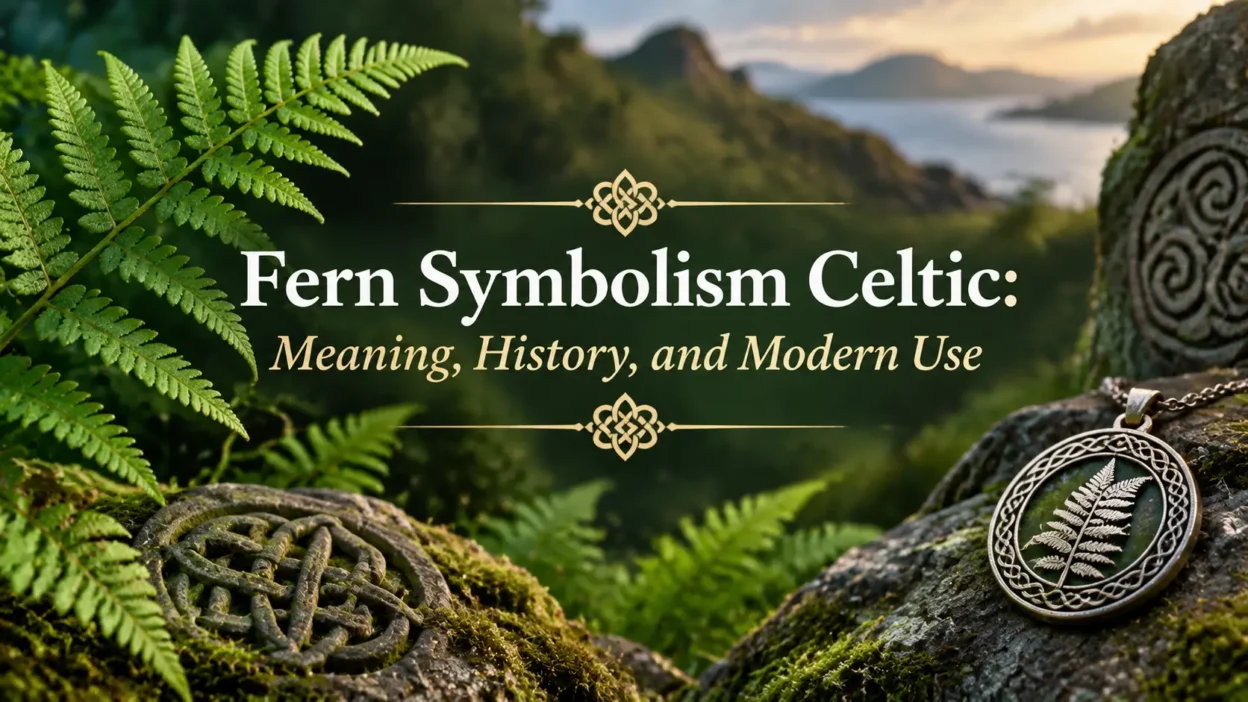
Ferns have long been admired for their delicate leaves, ability to grow in shaded forests, and connection to natural landscapes. Fern symbolism Celtic traditions often associate the plant with protection, resilience, growth, and a close relationship with the natural world. These meanings developed from Celtic relationships with forests, plants, folklore, and seasonal changes.
Today, many Americans encounter fern imagery in gardens, tattoos, home decoration, jewelry, and nature-inspired designs. While modern interpretations often focus on renewal and connection with nature, older Celtic associations add layers of cultural meaning linked to survival, mystery, and the landscape.
Quick Answer
Fern symbolism Celtic traditions commonly represent growth, protection, and resilience in modern interpretations, especially in nature-inspired art, tattoos, and personal designs. Historically, Celtic cultures connected ferns with forests, natural knowledge, survival, and the unseen qualities of the natural world.
TL;DR
- Ferns symbolize growth, protection, and natural resilience.
- Celtic traditions connected ferns with forests and folklore.
- Americans often view ferns as symbols of renewal.
- Fern tattoos represent personal growth and endurance.
- The plant appears in modern nature-based design.
- Some folklore meanings differ from historical evidence.
What the Fern Plant Represents
A fern is a leafy plant that grows from underground stems and produces spores instead of flowers or seeds. Its curved fronds create a recognizable pattern that appears in forests, gardens, botanical artwork, and decorative designs.
Unlike flowering plants that announce their presence with colorful blooms, ferns often grow quietly in shaded environments. This natural behavior has influenced many symbolic interpretations. Their ability to return year after year has made them associated with persistence, adaptation, and steady growth.
In symbolic art, a fern usually represents a connection to nature rather than wealth, status, or power. Its appearance often suggests simplicity, balance, and appreciation for the natural world.
What It Commonly Means in the United States
In modern American culture, fern imagery is usually connected with nature, personal growth, and peaceful living. Many people choose fern designs because they represent a desire for balance, renewal, and a connection with the outdoors.
The popularity of houseplants and botanical decoration has strengthened the fern’s association with calm spaces and environmentally conscious lifestyles. Interior designers often use fern patterns to create a natural atmosphere, while gardeners value ferns for their ability to thrive in shaded areas.
For many Americans, a fern does not carry one fixed meaning. Its symbolism depends on personal experience. Someone may see it as a reminder of a favorite woodland place, a family garden, or a period of personal change.
| Context | Meaning in the USA | Common Associations | Notes |
|---|---|---|---|
| Home decor | Calm and natural beauty | Plants, forests, peaceful spaces | Common in botanical designs |
| Tattoos | Growth and endurance | Change, healing, identity | Often personalized |
| Gardens | Adaptability and renewal | Shade, patience, nature | Linked with outdoor living |
| Jewelry | Connection to nature | Simplicity, elegance | Popular in nature-inspired styles |
| Art | Organic balance | Forests, environmental themes | Used in modern designs |
Ancient Roots and Early Celtic Connections
Celtic cultures developed strong relationships with landscapes, including forests, rivers, mountains, and plants. Trees and plants frequently appeared in Celtic stories, seasonal traditions, and beliefs about the natural world.
Ferns grew throughout Celtic regions, especially in woodland environments across Ireland, Scotland, Wales, and parts of western Europe. Because ferns appeared in places that felt remote or hidden, they became connected with ideas about forests, natural knowledge, and the boundaries between ordinary and mysterious spaces.
However, it is important to separate documented history from later folklore. Many popular claims about Celtic plants come from later storytelling traditions rather than written records from ancient Celtic societies. The fern’s association with Celtic culture is strongest through folklore, regional traditions, and modern interpretations of Celtic nature symbolism.
Ferns in Celtic Folklore and Traditional Beliefs
In European folklore, ferns were sometimes linked with unusual qualities because they reproduce through invisible spores rather than obvious flowers. This difference encouraged stories about hidden qualities and secret knowledge.
Some legends described fern seeds as magical objects connected with invisibility or special abilities. These stories became part of broader European folklore about plants that seemed different from ordinary flowering species.
Within Celtic-inspired interpretations today, ferns are often viewed as symbols of protection because forests were traditionally understood as places requiring respect and careful interaction. The plant’s ability to survive in difficult environments also contributed to associations with endurance.
Protection and Survival as Symbolic Themes
One of the strongest symbolic connections of the fern is survival. Ferns can grow in areas where many flowering plants struggle, including rocky landscapes and shaded forests.
This ability has made the plant a symbol of persistence. A fern does not need dramatic growth to succeed; it adapts quietly to its surroundings.
In Celtic-inspired art, this quality is often interpreted as a reminder that strength can appear through patience and flexibility. The fern represents a form of resilience based on adaptation rather than force.
The Role of Nature in Celtic Symbolism
Celtic symbolism frequently emphasized relationships between people and the natural environment. Landscapes were not simply backgrounds; they were meaningful parts of cultural identity and storytelling.
Plants, animals, and natural features often carried symbolic associations because they reflected cycles of life, seasonal changes, and human experiences. Ferns fit naturally into this worldview because they are closely tied to forests and changing environments.
Modern Celtic-inspired designs often use fern patterns alongside other natural symbols such as trees, animals, knots, and seasonal imagery. These combinations usually express appreciation for heritage and the natural world.
How Americans Use Fern Symbolism Today
Modern Americans use fern imagery in many personal and decorative ways. The meaning often depends on the context.
Common uses include:
- Tattoos: A fern tattoo may represent personal growth, overcoming challenges, or a connection with nature.
- Home design: Fern patterns create a peaceful, organic feeling in rooms and artwork.
- Wedding details: Botanical designs may symbolize a growing relationship and a shared future.
- Jewelry: Fern leaves are often used for subtle nature-inspired pieces.
- Outdoor culture: Hikers, gardeners, and environmental communities may appreciate fern imagery because of its connection to forests.
Unlike some symbols with strong religious or political meanings, ferns are generally viewed as flexible and personal in American culture.
Emotional and Psychological Meaning of Ferns
Plants often influence how people think about spaces and emotions. Ferns are commonly associated with calmness because they are connected with forests, gardens, and quiet environments.
A fern design can communicate qualities such as patience, humility, and renewal. Its appearance suggests gradual progress rather than sudden transformation.
For some people, fern imagery represents recovery after difficult periods. Since ferns return season after season, they can serve as a reminder of continuing growth and adaptation.
Fern Tattoos and Personal Identity
Fern tattoos have become popular among people who prefer botanical and nature-based designs. Their meaning is usually personal rather than universal.
Some common interpretations include:
- A new chapter in life
- Connection with family or homeland
- Appreciation for nature
- Strength after hardship
- Personal independence
Celtic-inspired fern tattoos may combine the plant with traditional patterns, animals, or landscape elements. These designs often blend historical interest with modern personal expression.
Fern Symbolism in Art, Fashion, and Design
Fern patterns appear frequently in botanical artwork, textiles, wallpapers, and decorative objects. Their detailed leaf structure makes them visually appealing while maintaining a simple natural appearance.
In fashion, fern motifs are often associated with earthy styles and outdoor-inspired aesthetics. Designers use fern shapes because they communicate organic beauty without being overly decorative.
In digital culture, fern imagery appears in nature photography, environmental discussions, and lifestyle content focused on gardening and outdoor living.
Religious and Spiritual Interpretations
Ferns do not have one universal religious meaning. Their symbolism varies depending on cultural background and personal beliefs.
Some modern spiritual communities connect ferns with renewal, natural balance, and protection. These interpretations are usually based on broader nature symbolism rather than a single established religious tradition.
In Celtic-inspired spirituality, ferns may appear as part of a larger appreciation for landscapes, seasons, and natural cycles. These modern interpretations should be understood separately from historical Celtic religious practices, which were not recorded in the same way as many later traditions.
Common Misunderstandings About Celtic Fern Symbolism
Many online discussions describe Celtic plants with highly specific meanings, but historical evidence is often limited. A symbol’s modern popularity does not always mean that ancient cultures assigned the exact same meaning.
The idea that every Celtic plant had one official meaning is inaccurate. Celtic regions contained different communities, languages, and traditions.
Today’s fern symbolism combines folklore, botanical appreciation, artistic interpretation, and modern personal meaning. Understanding this evolution helps avoid treating folklore as confirmed historical fact.
How Fern Meaning Has Changed Over Time
The fern’s symbolic journey reflects changing relationships between people and nature.
In older folklore, ferns were connected with forests, hidden knowledge, and unusual natural qualities. Later interpretations emphasized beauty, survival, and connection to landscapes.
In modern America, the fern is often a symbol of peaceful living, environmental awareness, and personal growth. Its meaning has shifted from folklore-based ideas toward broader themes that many people can relate to.
FAQ Section
What does fern symbolism Celtic mean?
Fern symbolism Celtic usually refers to associations between ferns, nature, protection, resilience, and woodland traditions. Many modern interpretations combine Celtic folklore with broader plant symbolism.
What does a fern tattoo symbolize?
A fern tattoo often represents growth, endurance, renewal, or a personal connection with nature. The meaning usually depends on the wearer’s experiences and design choices.
Are ferns considered Celtic symbols?
Ferns are connected with Celtic-inspired symbolism, especially through folklore and modern interpretations. However, there is limited historical evidence showing that ancient Celtic societies had one universal meaning for the fern.
What does a fern represent in American culture?
In the United States, ferns commonly represent nature, calmness, renewal, and environmental appreciation. They are widely used in gardens, decoration, and personal artwork.
Do ferns have a spiritual meaning?
Some people associate ferns with protection, balance, and renewal. These meanings come from personal beliefs and modern spiritual interpretations rather than one universal tradition.
Are Celtic fern meanings the same as historical Celtic beliefs?
Not always. Many Celtic fern meanings today come from a mixture of folklore, modern creativity, and cultural interpretation rather than direct historical records.
Conclusion
Ferns represent a connection between people and the natural world. Their ability to survive in changing environments has made them symbols of resilience, patience, and renewal.
Fern symbolism Celtic traditions add another layer by connecting the plant with woodland folklore, cultural imagination, and respect for landscapes. In modern American culture, the fern continues to appear in tattoos, design, and personal expressions because it reflects simple but meaningful ideas about growth and adaptation.
Whether viewed through folklore, art, or personal experience, the fern remains a symbol of quiet strength and a lasting relationship with nature.