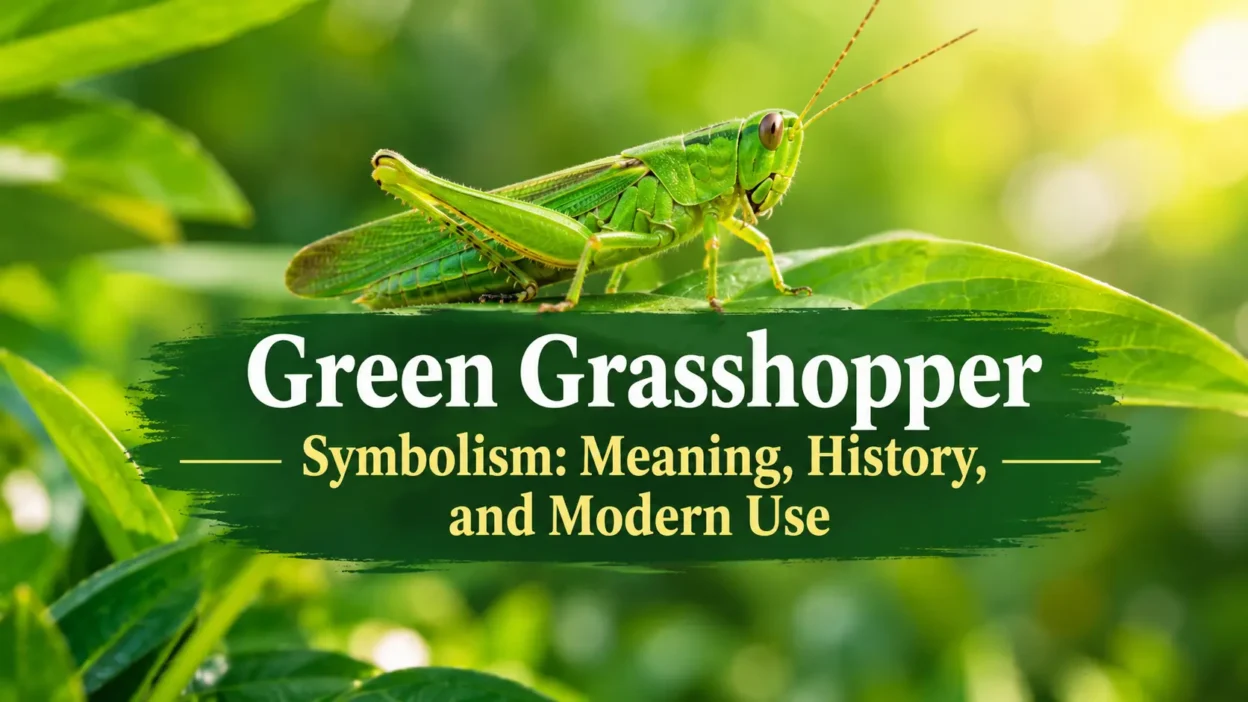
Small but noticeable, the green grasshopper has long captured human attention because of its unusual ability to jump great distances, blend into natural landscapes, and appear during seasonal changes. Green grasshopper symbolism is often connected with growth, opportunity, adaptability, and movement forward, especially when people interpret its presence in personal or artistic contexts.
Unlike many animal symbols that carry fixed meanings, the grasshopper has developed different interpretations across cultures. Its image can represent good fortune, survival, patience, creativity, or even caution depending on the historical setting and the way people encounter it.
In the United States, the green grasshopper is usually viewed through nature, personal expression, and cultural storytelling rather than strict religious tradition. People may choose the grasshopper for tattoos, artwork, gardens, and decorative designs because it reflects ideas of resilience, change, and connection with the natural world.
Quick Answer
Green grasshopper symbolism commonly represents growth, opportunity, adaptability, and progress in modern American culture, especially in nature-inspired designs and personal symbolism. Historically, it has also been associated with luck, abundance, survival, and seasonal change in different traditions.
TL;DR
- Green grasshoppers symbolize growth and personal progress.
- Many cultures connect grasshoppers with luck and abundance.
- Americans often view them as nature and resilience symbols.
- Their green color adds meanings of renewal and balance.
- Tattoos use grasshoppers to represent change and freedom.
What the Green Grasshopper Represents Physically
The green grasshopper is recognized by its bright or muted green body, long back legs, antennae, and ability to leap quickly from place to place. It commonly appears in fields, gardens, forests, and grassy areas across North America.
Its physical traits influence much of its symbolism. The ability to jump far beyond its body length often leads people to associate it with taking chances, moving ahead, and overcoming limitations. Its natural camouflage connects it with awareness, patience, and understanding one’s surroundings.
The color green adds another layer of meaning. In American culture, green is commonly associated with nature, renewal, health, money, and fresh beginnings. When combined with the grasshopper’s movement, the symbol often suggests growth while remaining connected to the environment.
What It Commonly Means in the United States
In modern American culture, the grasshopper is most often interpreted as a positive nature symbol. It represents movement, flexibility, and the ability to adjust when circumstances change.
Many people see the grasshopper as a reminder that progress does not always happen through large actions. Sometimes small steps, quick decisions, and awareness of opportunities create meaningful changes.
Common interpretations in the United States include:
| Context | Meaning in the USA | Common Associations | Notes |
|---|---|---|---|
| Nature symbolism | Growth and adaptation | Seasons, gardens, wildlife | Connected to outdoor life |
| Personal identity | Independence and change | Freedom, resilience | Often seen in tattoos |
| Color symbolism | Renewal and balance | Green landscapes, health | Influenced by color meanings |
| Decorative art | Positive natural imagery | Creativity, harmony | Used in home and garden designs |
| Folklore | Luck and opportunity | Good fortune, abundance | Varies by tradition |
The grasshopper is rarely viewed as a formal national or religious symbol in the United States. Instead, it remains a personal and artistic symbol shaped by individual interpretation.
Ancient Roots and Early Symbolism
Grasshoppers have appeared in human stories for thousands of years because agricultural societies closely observed insects that affected crops and seasonal patterns.
In some ancient traditions, grasshoppers represented abundance because they appeared alongside fertile landscapes and natural cycles. In other contexts, large groups of grasshoppers were associated with destruction because swarms could damage farmland.
This created two contrasting interpretations. The individual grasshopper could represent movement, survival, and natural balance, while a swarm could represent challenges or environmental disruption.
Early symbolism often depended on human relationships with farming. Communities that relied heavily on crops paid close attention to insects because their presence could influence food supplies and survival.
Grasshopper Symbolism in Folklore and Cultural Traditions
Across different cultures, grasshoppers have carried both positive and cautionary meanings.
In some Asian traditions, grasshoppers and related insects have been connected with good luck, vitality, and prosperity. Their ability to reproduce and thrive in nature contributed to associations with abundance.
Some Native American stories and teachings include insects as part of broader lessons about nature, survival, and relationships between living things. Meanings vary greatly among nations and should not be treated as a single shared interpretation.
European folklore also contains mixed views. Grasshoppers could represent freedom and cheerful movement, but agricultural communities sometimes feared them because of crop damage.
These different interpretations show that symbols are shaped by human experiences rather than having one universal definition.
Why Green Adds a Different Meaning
The color green significantly influences how people interpret the grasshopper symbol today.
Green is strongly connected with living systems, plants, renewal, and environmental awareness. In American design and psychology, green often creates associations with calmness, restoration, and connection to nature.
A green grasshopper may therefore communicate ideas such as:
- personal renewal after change
- connection with the outdoors
- patience during growth
- respect for natural cycles
The color also separates the grasshopper from ideas of destruction associated with historical crop concerns. A single green grasshopper usually feels more connected to nature and balance than to agricultural problems.
Emotional and Psychological Meaning
People often choose animal symbols because they represent qualities they want to express or remember. The grasshopper’s behavior creates several emotional associations.
Its jumping ability can represent confidence and willingness to move beyond familiar situations. Someone who identifies with the grasshopper may view life as a series of opportunities requiring flexibility and courage.
Its ability to remain still before sudden movement also creates a connection with timing. The grasshopper does not constantly move; it waits, observes, and acts when necessary.
For many people, this makes the symbol a reminder that progress can include both preparation and action.
Green Grasshopper Symbolism in Tattoos and Personal Style
Grasshopper tattoos are less common than butterfly, bird, or flower designs, which can make them more personal and distinctive.
People may choose a green grasshopper tattoo to represent:
- overcoming obstacles
- a love of nature
- personal transformation
- independence
- optimism during change
The design style can influence the meaning. A realistic grasshopper may emphasize connection with wildlife, while a colorful or artistic version may focus more on creativity and individuality.
Some people also combine grasshoppers with plants, leaves, flowers, or outdoor scenes to create a broader message about natural growth.
The Symbol in Home Decor and Art
In American homes and gardens, grasshopper imagery often appears in nature-inspired decorations, metal garden sculptures, paintings, and handcrafted designs.
The symbol fits well with outdoor spaces because it represents the small creatures that contribute to a healthy ecosystem. Garden designs featuring insects often reflect appreciation for biodiversity and natural beauty.
Artists may use the grasshopper because its shape is visually interesting. Its long legs, curved body, and bright coloring create a recognizable image that works well in decorative styles.
Modern Use in Digital Culture and Media
Today, animal symbols frequently appear online as ways to communicate personality, interests, or values. The grasshopper may appear in illustrations, logos, environmental discussions, and creative content.
Because the insect is associated with movement and adaptability, it can also represent innovation and the ability to adjust in changing environments.
However, modern interpretations are usually personal rather than based on a shared cultural rule. A grasshopper emoji, image, or design may simply represent nature, summer, humor, or an appreciation for insects.
Positive and Negative Interpretations
The green grasshopper is mostly associated with positive ideas, but its symbolism has always included different perspectives.
Positive meanings include:
- opportunity
- flexibility
- growth
- luck
- independence
Negative associations usually come from agricultural history, where grasshopper swarms could threaten crops and communities. In those situations, the insect represented environmental challenges rather than personal growth.
Modern symbolic use usually focuses on the individual grasshopper rather than destructive swarms, which has shifted the meaning toward personal and natural themes.
Religious and Spiritual Interpretations
The grasshopper does not have one universal religious meaning. Different belief systems have interpreted insects according to their own traditions and experiences with nature.
In some religious writings and stories, grasshoppers appear in discussions about abundance, hardship, or human dependence on the natural world. These references often relate to broader lessons rather than the insect itself being a central religious symbol.
In contemporary American spirituality, some people use grasshopper imagery as a personal reflection symbol connected with change, awareness, and growth.
How the Symbol’s Meaning Has Changed Over Time
The meaning of the grasshopper has shifted as human relationships with nature have changed.
Agricultural societies often viewed grasshoppers through the lens of survival because insects could directly affect food supplies. Modern Americans are less likely to encounter grasshoppers as a major agricultural threat, so the symbol has become more connected with nature appreciation and personal expression.
Today, the green grasshopper is more commonly seen as an image of adaptation and renewal rather than a warning.
Common Misunderstandings About the Symbol
One common misunderstanding is that every grasshopper sighting has a fixed spiritual message. Symbolism is shaped by culture, personal beliefs, and context rather than a universal rule.
Another misunderstanding is that grasshoppers always represent good luck. While many traditions connect them with fortune, other cultures have associated them with agricultural difficulties.
The meaning depends on how the symbol is used and the cultural background surrounding it.
FAQ About Green Grasshopper Symbolism
What does a green grasshopper symbolize spiritually?
A green grasshopper may symbolize personal growth, awareness, and adaptability in spiritual interpretations. These meanings are personal and vary depending on individual beliefs and traditions.
Is a grasshopper considered a symbol of good luck?
In many cultural traditions, grasshoppers are connected with luck and abundance. However, some historical farming communities viewed large grasshopper populations as a challenge because of crop damage.
What does a green grasshopper tattoo mean?
A green grasshopper tattoo often represents change, resilience, freedom, and connection with nature. The exact meaning depends on the person wearing the design.
What does seeing a grasshopper mean in American culture?
In American culture, seeing a grasshopper is usually viewed as a simple encounter with nature. Some people interpret it symbolically as a reminder of growth, patience, or opportunity.
Does the grasshopper have a religious meaning?
The grasshopper appears in some religious texts and traditions, but it does not have one universal religious meaning. Interpretations depend on the specific belief system.
Why is the grasshopper associated with change?
The grasshopper’s ability to jump and adapt to different environments has influenced its connection with movement and transformation. Its behavior naturally suggests flexibility and adjustment.
Conclusion
The green grasshopper has developed meanings connected with growth, movement, opportunity, and adaptation. Its symbolism comes from both its natural characteristics and the ways different societies have understood insects over time.
In modern America, green grasshopper symbolism is mainly viewed as a reflection of nature, resilience, and personal change. Whether used in art, tattoos, gardens, or personal reflection, the symbol represents the idea that progress can come through flexibility and thoughtful action.
The grasshopper remains a reminder that even small creatures can carry ideas about survival, renewal, and the ability to move forward.