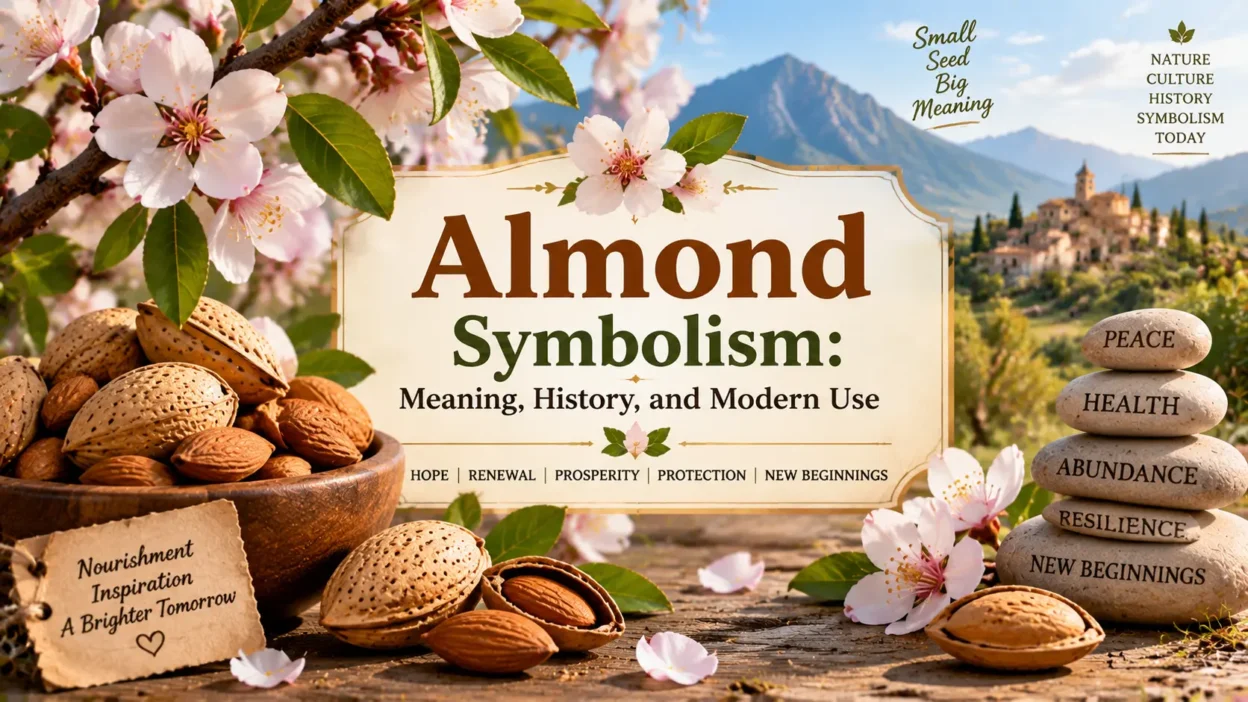
Almonds have long carried meanings connected with almond symbolism, including renewal, hope, protection, fertility, and hidden potential. From ancient Mediterranean traditions to modern American weddings, art, and personal expression, the almond has remained a symbol linked with growth and new beginnings.
The almond tree is especially interesting because it blooms earlier than many other fruit trees. Its early flowers often appear before the arrival of spring, making it a natural image of awakening, patience, and the promise of change. Today, people encounter almond symbolism in jewelry, decorations, religious art, food traditions, and personal designs.
Quick Answer
Almond symbolism commonly represents new beginnings, hope, growth, and renewal in modern American culture, especially in celebrations, designs, and personal expressions. Historically, almonds have also been associated with fertility, divine favor, protection, and the arrival of new life in Mediterranean and religious traditions.
TL;DR
- Almonds symbolize renewal, hope, and new beginnings.
- Ancient cultures connected almonds with fertility and abundance.
- Americans use almond imagery in weddings and decor.
- Almond blossoms represent beauty and early spring.
- Religious traditions often link almonds with promise.
- Modern designs use almonds for growth symbolism.
What the Almond Symbol Looks Like and Where It Appears
The almond symbol usually appears in two forms: the almond nut and the almond blossom. The nut has a hard outer shell that protects the edible seed inside, while the flower appears delicate with white or pale pink petals.
The almond tree is native to regions of the Middle East and Central Asia but became widely cultivated around the Mediterranean. Today, almonds are strongly associated with agriculture in the United States, especially California, which produces most of the country’s almonds.
People encounter almond imagery in many places:
- wedding decorations
- floral artwork
- religious paintings
- jewelry designs
- tattoos
- seasonal decorations
- food traditions
- home decor
The contrast between the hard shell and the valuable inner seed contributes to many symbolic interpretations. The almond can represent something valuable that develops beneath the surface.
What Almonds Commonly Mean in the United States
In the United States, almonds are most often connected with ideas of growth, celebration, health, and new opportunities. Their meaning usually comes from cultural associations rather than a single official interpretation.
Common American interpretations include:
| Context | Meaning in the USA | Common Associations | Notes |
|---|---|---|---|
| Weddings | Love and new beginnings | Marriage, commitment, celebration | Almond favors are traditional in some ceremonies |
| Blossoms | Renewal and beauty | Spring, hope, fresh starts | Often used in floral designs |
| Food culture | Health and nourishment | Wellness, abundance | Almonds are viewed as a nutritious food |
| Jewelry and tattoos | Personal growth | Strength, transformation | Meaning depends on the wearer |
| Home decor | Natural beauty | Calm, elegance, seasonal change | Often appears in botanical designs |
Many Americans recognize almond blossoms as a sign of spring because the flowers appear early in the growing season. This timing creates an association with optimism after periods of waiting or difficulty.
Ancient Roots and Early Symbolism of the Almond Tree
The almond tree developed symbolic importance in ancient Mediterranean and Near Eastern cultures because of its unusual growth cycle. It produces blossoms very early, sometimes while other trees remain dormant.
Ancient communities often connected early blooming with alertness, awakening, and the return of life after winter. The almond tree’s ability to produce fruit after early flowering made it a natural symbol of potential becoming reality.
In ancient Mediterranean societies, almonds were valued not only as food but also as agricultural resources. Their connection with fertility and abundance came from their role in farming and seasonal cycles.
The almond’s protective shell also influenced symbolic ideas. Many cultures viewed the hidden seed inside as a reminder that important things may require patience before they are revealed.
Almond Symbolism in Religious Traditions
Almond imagery appears in several religious traditions, especially those connected with Judaism and Christianity.
In biblical traditions, the almond tree appears in symbolic contexts. The Hebrew word connected with almond relates to ideas of watching or being awake, partly because the tree blooms early. This connection contributed to interpretations involving awareness, divine attention, and promise.
In Christian art, almond-shaped frames called mandorlas sometimes surround sacred figures. Although the mandorla is not always directly connected to almonds as objects, its almond shape became associated with holiness, transformation, and a connection between earthly and spiritual realms.
Religious interpretations vary by tradition, and not every use of almond imagery carries the same meaning. The symbol often depends on the cultural setting where it appears.
Almond Meaning in Weddings and Celebrations
One of the most recognizable uses of almonds in celebrations is the tradition of giving sugared almonds at weddings.
In several European traditions, including Italian wedding customs, guests receive candy-coated almonds as a symbol of wishes for the couple. The almond’s combination of sweetness and hardness has been interpreted as representing both happiness and the challenges of married life.
In American weddings, this tradition is less universal today but remains known among families who maintain European cultural customs.
Wedding almond symbolism often represents:
- love
- commitment
- family connection
- prosperity
- hopes for the future
Modern couples may use almond designs in invitations, favors, floral arrangements, or decorative themes because the symbol feels connected to beginnings and lasting relationships.
The Almond Blossom as a Symbol of Renewal
The almond blossom has a different emotional meaning from the almond nut. While the nut represents hidden value and protection, the flower often represents visible beauty and fresh starts.
Because almond blossoms appear before many spring flowers, they are commonly linked with:
- awakening
- optimism
- transformation
- courage after difficult periods
Artists frequently use almond blossoms to express the arrival of a new season. In American culture, spring flowers often carry similar associations with renewal, making almond blossoms easy to connect with ideas of personal growth.
The blossom can also represent fragile beauty because the flowers appear delicate even though they eventually produce a strong seed.
Emotional and Psychological Meaning of Almonds
Symbolically, almonds often represent the relationship between inner potential and outward appearance.
The shell suggests protection. It can represent emotional boundaries, resilience, or the need to protect something valuable while it develops.
The seed inside represents possibility. This idea connects with personal experiences such as:
- learning a new skill
- starting a new chapter
- recovering from challenges
- developing confidence
For some people, almond imagery serves as a reminder that growth does not always happen visibly. Like a seed developing inside a shell, personal change may happen quietly before others notice.
Almond Symbolism in Art, Fashion, and Design
Almond imagery appears frequently in decorative arts because its shape is simple, recognizable, and connected with nature.
Designers use almonds and almond blossoms in:
- botanical patterns
- luxury packaging
- tattoos
- clothing prints
- home decorations
- wedding stationery
The almond shape also appears in visual design through the mandorla form, which has influenced religious and artistic traditions.
In modern American design, almond imagery often creates a feeling of natural elegance. It may suggest simplicity, organic beauty, or connection with the natural world rather than a strict symbolic meaning.
Why People Choose Almond Tattoos
Almond tattoos are usually personal symbols rather than fixed cultural signs. People may choose almond imagery because they connect with ideas of growth, protection, or transformation.
Common interpretations include:
- surviving difficult experiences
- protecting personal values
- embracing change
- remembering a new beginning
- celebrating family or heritage
An almond blossom tattoo may focus more on beauty, renewal, and seasonal change, while an almond nut tattoo may emphasize strength and hidden potential.
Like most symbols used in tattoo culture, the meaning depends heavily on the person wearing it.
Almond Symbolism Across Different Cultures
Different cultures have developed their own interpretations of almonds.
In Mediterranean cultures, almonds have strong connections with agriculture, celebrations, and family traditions. Their use in weddings reflects wishes for happiness and prosperity.
In Middle Eastern traditions, almonds have long been valued as important foods and agricultural products. Their connection with abundance comes partly from their role in daily life and seasonal farming.
In parts of Europe, almond blossoms became associated with spring and artistic beauty. Their early flowering made them a symbol of hope after winter.
These meanings overlap, but they are not identical. A symbol’s meaning changes depending on the community using it.
Modern Uses of Almond Symbolism in American Culture
Today, almond imagery appears in many everyday settings. Most uses are subtle rather than explicitly symbolic.
Americans may encounter almond symbolism through:
- spring floral decorations
- wellness branding
- natural beauty products
- wedding themes
- garden designs
- personal artwork
The popularity of plant-based designs has also increased interest in botanical symbols. Almond blossoms fit this trend because they combine natural beauty with associations of renewal.
Social media has also influenced how people share symbolic meanings. A flower or tree image may represent personal growth, seasonal reflection, or lifestyle choices.
Common Misunderstandings About Almond Symbolism
Because symbols travel between cultures, almond meanings are sometimes simplified or exaggerated.
One common misunderstanding is that almonds have one universal meaning. In reality, interpretations depend on religion, location, history, and personal experience.
Another misunderstanding is assuming that every almond image contains a spiritual message. Many people use almond designs simply because they appreciate their appearance.
Some modern interpretations online may present symbolic meanings as fixed rules. However, symbolism is flexible. A symbol gains meaning through the people and cultures that use it.
How Almond Symbolism Has Changed Over Time
The meaning of almonds has shifted from practical agricultural importance to broader emotional and cultural associations.
Ancient communities often focused on the almond tree’s unusual growth pattern, early blossoms, and value as food. Religious traditions added layers connected with awareness, promise, and sacred imagery.
Modern Americans often view almonds through themes of health, nature, beauty, and personal growth. While older meanings remain, new interpretations continue to develop through art, design, and individual expression.
Frequently Asked Questions
What does almond symbolism represent?
Almond symbolism commonly represents renewal, hope, growth, protection, and new beginnings. Its meaning comes from the almond tree’s early blossoms, valuable seed, and long connection with agriculture and cultural traditions.
What does an almond blossom symbolize?
An almond blossom usually symbolizes spring, renewal, beauty, and fresh opportunities. Because almond trees bloom early, the flowers are often connected with the arrival of positive change.
What do almonds symbolize in weddings?
In wedding traditions, almonds often symbolize love, prosperity, happiness, and the balance between sweet and difficult experiences in marriage. Sugared almonds are especially connected with European wedding customs.
Are almonds a religious symbol?
Almonds and almond-shaped imagery appear in some religious traditions, especially Jewish and Christian contexts. Their meanings may include awareness, promise, holiness, or transformation depending on the tradition.
What does an almond tattoo mean?
An almond tattoo can symbolize personal growth, resilience, protection, or a new beginning. The meaning depends on the person’s own experiences and reasons for choosing the design.
Are almond symbols always positive?
Most almond symbolism is associated with positive ideas such as growth, renewal, and abundance. However, meanings can vary depending on cultural context and personal interpretation.
Conclusion
Almond symbolism represents ideas that come from both nature and human experience. The almond tree’s early blossoms, protective shell, and valuable seed have helped create associations with renewal, hope, growth, and hidden potential.
In modern American culture, almonds appear in celebrations, designs, tattoos, and everyday products, often expressing beauty, health, and personal transformation. Understanding the history behind the symbol allows people to appreciate how a simple tree and seed can carry many layers of meaning.
Almond symbolism continues to evolve because people use symbols to connect nature, memory, culture, and personal stories in meaningful ways.