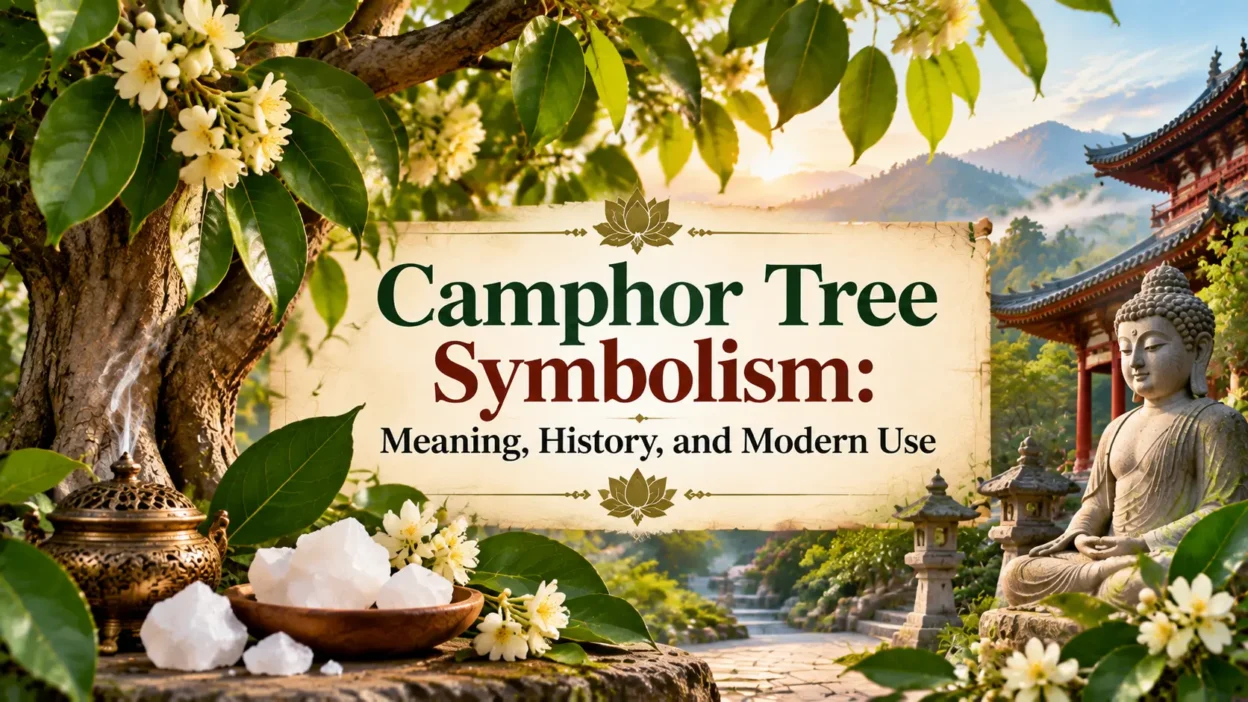
The camphor tree symbolism is connected with ideas of purification, protection, healing, renewal, and spiritual practice. Known for its aromatic leaves and valuable essential oil, the camphor tree has held cultural importance in many societies, while its meanings continue to appear in modern wellness, design, and personal expression.
People often notice the camphor tree because of its strong fragrance, evergreen leaves, and long lifespan. In many traditions, plants that remain green throughout the year become associated with endurance and continuity. The camphor tree’s connection with cleansing rituals and traditional medicine has shaped how different cultures understand its symbolic role.
In the United States, the camphor tree is less commonly recognized as a major cultural symbol compared with trees like the oak or pine. However, interest in botanical symbolism, natural wellness, gardening, aromatherapy, and global traditions has brought more attention to its meanings.
Quick Answer
Camphor tree symbolism commonly represents purification, protection, and renewal in modern American interpretations, especially in wellness, spiritual practices, and natural design. Historically, it has also been associated with healing rituals, sacred offerings, and cleansing traditions across Asia.
TL;DR
- Camphor trees symbolize cleansing and spiritual renewal.
- Ancient cultures valued camphor for healing practices.
- Evergreen leaves connect it with endurance.
- American use focuses on wellness and natural living.
- Religious traditions use camphor in rituals.
- Modern designs reflect purity and protection.
What the Camphor Tree Looks Like and Where It Appears
The camphor tree is a large evergreen tree recognized by its glossy green leaves, spreading branches, and distinctive aromatic scent. Scientifically known as Cinnamomum camphora, it belongs to the laurel family and naturally grows in parts of East Asia, including China, Japan, Taiwan, and other regions.
The tree can reach impressive sizes, often developing a broad canopy and thick trunk as it matures. When its leaves or wood are crushed, they release camphor, a fragrant compound historically used for medicine, ceremonies, and household purposes.
In the United States, camphor trees are mainly associated with warmer climates, especially areas such as Florida, California, and other regions where ornamental trees can survive. Many Americans encounter camphor through camphor oil, scented products, traditional remedies, or cultural practices rather than through the tree itself.
What It Commonly Means in the United States
The camphor tree does not have one universally fixed meaning in American culture. Instead, its symbolism is usually shaped by broader ideas connected with plants, fragrance, cleansing, and natural healing.
Modern U.S. interpretations often connect the tree with:
| Context | Meaning in the USA | Common Associations | Notes |
|---|---|---|---|
| Wellness | Cleansing and restoration | Aromatherapy, relaxation | Linked with camphor oil traditions |
| Home design | Natural harmony | Green spaces, botanical decor | Represents connection with nature |
| Spiritual practice | Purification | Meditation and rituals | Often influenced by Asian traditions |
| Gardening | Longevity | Evergreen growth | Symbolizes lasting life |
| Personal symbolism | Renewal | Change and fresh starts | Used in creative expression |
Because the camphor tree stays green year-round and produces a strong natural fragrance, many people associate it with freshness, clarity, and a renewed environment.
Ancient Roots and Early Symbolism
The symbolic history of the camphor tree developed alongside the human use of camphor itself. For thousands of years, communities in Asia collected camphor from trees and used it for practical, medicinal, and ceremonial purposes.
In traditional Chinese practices, camphor was valued for its fragrance and believed cleansing qualities. The wood was also used for making objects because of its durability and pleasant scent.
In Japan, camphor trees became culturally significant because of their size, age, and connection with sacred spaces. Some ancient camphor trees near temples and shrines became respected landmarks, representing stability, protection, and continuity.
The tree’s symbolic meanings grew from direct experiences with it. Its strong aroma suggested purification, its evergreen nature suggested survival, and its long life suggested endurance.
Camphor Tree Symbolism in Religious and Spiritual Traditions
Camphor has an important role in several religious traditions, particularly in parts of Asia. The symbolism usually comes from the act of burning or offering camphor rather than from the tree alone.
In Hindu traditions, camphor is commonly burned during worship ceremonies. The flame produced by burning camphor is associated with offering, devotion, and the removal of impurities. Because camphor burns cleanly and leaves little residue, it has become connected with ideas of spiritual purification.
In some Buddhist traditions, camphor’s fragrance and cleansing associations have contributed to its ceremonial use. The scent can represent a purified environment and a focused mind during spiritual practices.
These meanings should be understood within their specific cultural settings. The symbolism is not simply about the material itself but about the religious actions and beliefs surrounding its use.
Why Evergreen Growth Influences Its Meaning
Trees that remain green throughout the year often develop symbolic associations with life, resilience, and stability. The camphor tree follows this pattern.
Its evergreen leaves help explain why it is sometimes viewed as a symbol of:
- endurance during difficult periods
- continuous growth
- emotional strength
- connection between past and present
Unlike seasonal plants that disappear during colder months, evergreen trees maintain visible life. This quality has made them meaningful symbols in many cultures.
For modern audiences, the camphor tree can represent the ability to remain steady while adapting to changing circumstances.
Healing and Purification Associations
Camphor’s historical use strongly influenced its symbolic meaning. The compound extracted from the tree has been used in traditional medicine, household practices, and aromatic preparations.
Because of this history, the tree became associated with:
- cleansing spaces
- protecting against unwanted influences
- supporting recovery
- creating a fresh environment
In modern America, camphor appears in products such as topical preparations, aromatic items, and traditional remedies. While symbolic interpretations often focus on cleansing and renewal, these meanings should be separated from medical claims about effectiveness.
The symbolism comes from cultural history and human experience with the scent and traditional uses of camphor.
Emotional and Psychological Meaning of the Camphor Tree
Plants often gain symbolic meaning because of the emotions they create. The camphor tree’s fragrance and appearance can influence how people perceive it.
Psychologically, people may associate camphor with:
- freshness after cleaning
- calm environments
- memories connected with traditional practices
- a feeling of natural protection
Aromatic plants often become connected with memory because scent can trigger strong emotional responses. For some people, the smell of camphor may remind them of family traditions, religious ceremonies, or childhood experiences.
The emotional meaning depends heavily on personal background and cultural exposure.
Camphor Tree Symbolism in American Culture Today
The camphor tree does not hold the same widespread symbolic status in the United States as native trees with stronger cultural recognition. However, it appears in several modern contexts.
American interpretations often connect the tree with:
- sustainable living
- botanical appreciation
- wellness culture
- meditation spaces
- international cultural traditions
Gardeners may value camphor trees for their evergreen appearance and shade. Designers may use botanical themes involving camphor to create feelings of freshness and natural balance.
As interest grows in global traditions, Americans are increasingly exposed to symbolic meanings from other cultures, including those connected with camphor.
Modern Uses in Tattoos, Art, and Personal Expression
Tree symbolism is common in tattoos and artwork because trees naturally represent growth, identity, and personal journeys. Although camphor tree tattoos are less common than oak, cherry blossom, or pine designs, they can carry specific meanings.
A camphor tree design may represent:
- personal renewal
- connection with heritage
- spiritual cleansing
- resilience
- appreciation for nature
Artists may include leaves, branches, or aromatic imagery to suggest calmness and restoration.
The meaning depends on the individual. A tattoo does not have one universal interpretation, and personal experience often shapes its symbolism.
Camphor Tree Symbolism in Home Decor and Design
Botanical designs frequently use plants to create emotional atmospheres. The camphor tree fits naturally into themes focused on freshness, nature, and simplicity.
In interior design, camphor-inspired elements may suggest:
- clean spaces
- natural beauty
- peaceful environments
- connection with outdoor life
Green botanical imagery is often used to make spaces feel more comfortable and balanced. The camphor tree’s association with fragrance adds another layer because scent and visual design can work together to shape a room’s atmosphere.
Common Misunderstandings About the Symbol
Because camphor has spiritual and traditional uses, some modern interpretations exaggerate its meaning. The tree is sometimes presented online as having universal mystical powers, but these claims vary greatly between cultures and are not shared traditions.
Another misunderstanding is assuming that every use of camphor carries religious meaning. In many cases, camphor is simply used for practical purposes, fragrance, or traditional household applications.
Understanding the symbol requires separating cultural traditions from modern personal interpretations.
How Camphor Tree Meaning Has Changed Over Time
The meaning of the camphor tree has evolved as people’s relationships with plants have changed.
Historically, camphor was valued mainly for medicine, ritual, preservation, and practical uses. Over time, its symbolic meanings expanded to include ideas of wellness, environmental connection, and personal renewal.
In modern society, people often interpret plant symbols through individual experiences. A camphor tree may represent spiritual devotion for one person, while another may see it as a symbol of natural beauty and resilience.
Symbolism changes because cultures change.
Frequently Asked Questions
What does a camphor tree symbolize spiritually?
A camphor tree is often associated with purification, protection, and spiritual renewal. These meanings are especially connected with traditions where camphor is used in ceremonies and offerings.
What does a camphor tree tattoo mean?
A camphor tree tattoo can represent renewal, resilience, nature connection, or personal transformation. The meaning depends on the person wearing the design and their cultural background.
Is the camphor tree considered sacred?
In some Asian traditions, certain old camphor trees are respected as sacred or culturally important because of their age and connection with religious spaces. The tree is not considered sacred in every culture.
Why is camphor associated with cleansing?
Camphor became linked with cleansing because of its strong fragrance and historical use in rituals, household practices, and traditional preparations.
What does the camphor tree represent in American culture?
In the United States, the camphor tree is usually connected with natural wellness, botanical beauty, and global cultural traditions rather than having one dominant national meaning.
Is camphor tree symbolism positive or negative?
Most traditional interpretations are positive, focusing on purification, endurance, and renewal. However, meanings can change depending on cultural context and personal beliefs.
Conclusion
The camphor tree represents a combination of natural endurance, cleansing traditions, and cultural memory. Its evergreen growth, distinctive fragrance, and historical uses have shaped how different communities understand its symbolic role.
In modern America, camphor tree symbolism is mainly connected with wellness, renewal, nature, and appreciation for global traditions. While the tree may not be one of the most widely recognized symbols in the United States, its meanings continue to appear wherever people value plants as sources of beauty, tradition, and personal reflection.
The lasting importance of the camphor tree comes from the relationship between people and nature: a simple tree can carry different meanings depending on the history, beliefs, and experiences of those who encounter it.