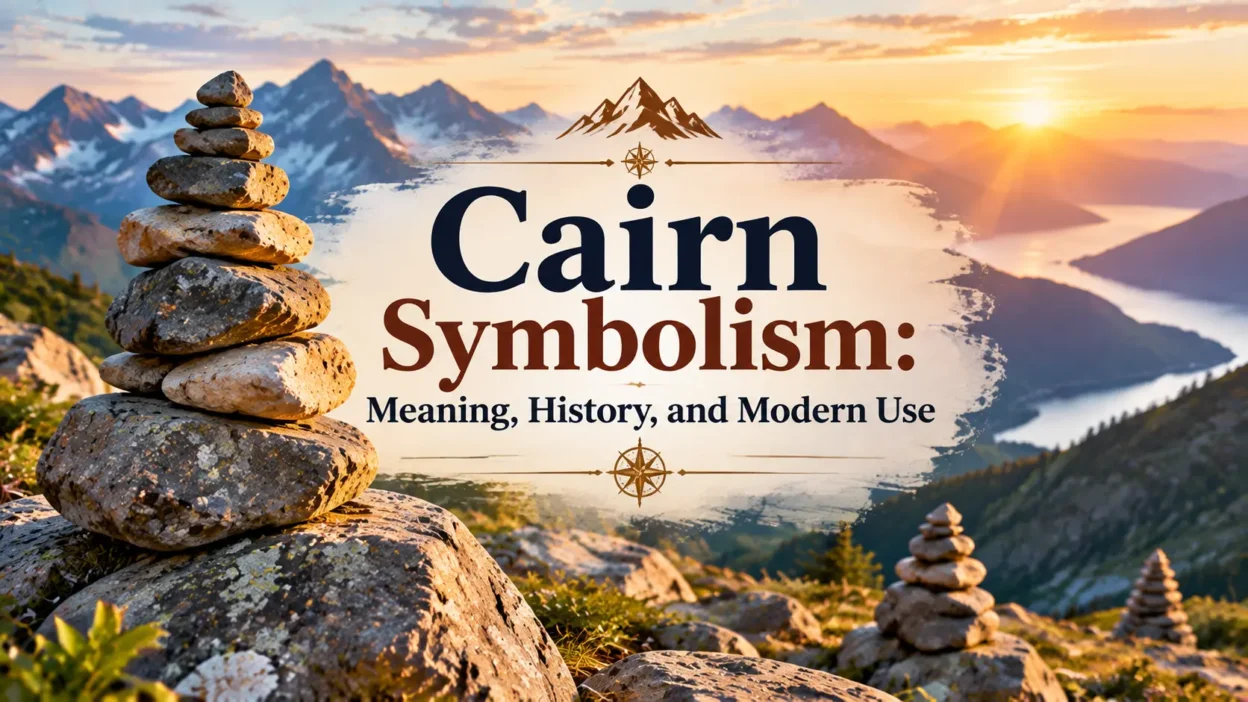
Across mountains, forests, deserts, and coastal landscapes, carefully stacked stones often catch the eye of travelers. These small stone structures, known as cairns, may appear simple, but they carry meanings connected to direction, memory, human presence, and respect for the natural world. A pile of stones placed intentionally can tell a story about a journey, mark an important location, or represent a connection between people and places.
Cairn symbolism commonly represents guidance, remembrance, stability, and a human connection with the landscape. In modern American culture, cairns are often associated with hiking trails, personal reflection, and honoring meaningful places, while older traditions used them as landmarks, memorials, and ceremonial structures.
From ancient stone markers in Europe to trail signs in U.S. national parks, cairns have served practical and symbolic purposes for thousands of years. Their meaning changes depending on where they appear and why they were created. A cairn on a mountain path may represent safe passage, while one built as a memorial may represent respect for someone or something remembered.
Understanding cairn symbolism requires looking beyond the stones themselves. It involves exploring human relationships with nature, travel, memory, spirituality, and the desire to leave meaningful signs behind.
Quick Answer
Cairn symbolism commonly represents guidance, remembrance, balance, and connection with nature in modern American culture, especially in hiking, outdoor spaces, and personal reflection. Historically, cairns have also been used as navigation markers, memorials, and sacred or cultural landmarks.
TL;DR
- Cairns symbolize guidance and safe journeys.
- Ancient cultures used cairns as landmarks and memorials.
- Americans often connect cairns with hiking and nature.
- Stone stacks can represent memory and human presence.
- Modern cairns appear in art, gardens, and personal rituals.
What Is a Cairn and Where Are They Found?
A cairn is a human-made pile or stack of stones arranged intentionally. Unlike ordinary rocks scattered naturally across a landscape, cairns show signs of human placement and purpose. Some are small stacks made from a few stones, while others are large structures containing hundreds or thousands of stones.
Cairns appear in many environments, including:
- Mountain trails
- Coastal areas
- Deserts
- Forests
- Archaeological sites
- Parks and gardens
In the United States, many people encounter cairns while hiking in places such as national parks, wilderness areas, and mountain regions. Trail cairns help hikers recognize routes where signs or painted markers may not be practical.
The physical simplicity of a cairn contributes to its symbolic appeal. Stones are natural, durable materials, and arranging them creates a visible connection between human intention and the environment.
What It Commonly Means in the United States
In modern American culture, cairns are most strongly connected with direction, exploration, and respect for nature. Outdoor enthusiasts often see them as reminders that others have traveled the same path before.
A cairn along a hiking trail can communicate:
- “This is the correct route.”
- “Others have safely passed here.”
- “Pay attention to this landscape.”
Beyond practical use, many Americans view cairns as symbols of personal journeys. Someone may create or photograph a cairn during a meaningful hike because the stones represent progress, patience, or a moment of reflection.
Cairns also appear in gardens, meditation spaces, and outdoor artwork. In these settings, they often represent calmness, balance, and harmony between human creativity and the natural world.
However, not every stone stack in nature has a symbolic purpose. Some modern trail organizations discourage unauthorized cairn building because unnecessary stone movement can disturb ecosystems or confuse hikers.
Ancient Roots and Early Symbolism of Cairns
Cairns have existed for thousands of years, making them one of the oldest forms of human-made landscape markers. Ancient communities used stone structures because rocks were widely available and could survive for generations.
Early cairns served practical purposes, including:
- Marking important locations
- Identifying boundaries
- Guiding travelers
- Covering burial sites
- Recording cultural events
In parts of Europe, especially regions such as Scotland and Ireland, cairns became closely associated with ancestry and memory. Some large stone structures marked graves or important historical places.
The word “cairn” comes from the Scottish Gaelic word càrn, meaning a heap or mound of stones. Over time, the term became widely used in English to describe these stone formations.
Ancient cairns demonstrate how humans have long used landscapes as a form of communication. A carefully placed group of stones could preserve information long after the people who created it were gone.
Cairns as Symbols of Guidance and Direction
One of the most recognized meanings of cairns is guidance. For travelers crossing difficult terrain, a simple stone marker could provide essential information.
Before modern maps, GPS devices, and trail signs, cairns helped people navigate areas where paths were unclear. Mountain travelers, explorers, and local communities relied on visible stone markers to identify safe routes.
This association with guidance has continued into modern times. Hikers often interpret a trail cairn as a symbol of support from previous travelers.
Symbolically, this creates a broader meaning:
- A reminder that people have faced similar challenges.
- A sign that progress is possible.
- A connection between past and present travelers.
Because of this, cairns are often used as metaphors for life journeys. They represent moments of direction during uncertain periods and the idea that small signs can help people move forward.
The Connection Between Cairns and Memory
Another important meaning of cairns is remembrance. Throughout history, people have used stone structures to honor individuals, events, or meaningful locations.
Unlike temporary objects, stones suggest permanence. A person who builds a memorial cairn may choose stones because they represent endurance and lasting memory.
Memorial cairns can represent:
- Respect for someone who has passed away
- Recognition of an important event
- Appreciation for a special place
- A personal connection with nature
In the United States, cairns sometimes appear in outdoor memorial spaces or private gardens. They can provide a quiet way for people to express remembrance without using traditional monuments.
The symbolism comes from the idea that memories, like stones, can be collected and preserved over time.
Cairn Symbolism in Native American and Indigenous Contexts
The meaning of stone structures varies greatly among Indigenous cultures across North America. It is important not to assume that all cairns share the same spiritual meaning.
Many Indigenous communities have used stone arrangements, rock features, and landscape markers for different purposes, including travel, cultural practices, resource management, and ceremonial activities. The meaning of a specific stone structure depends on the community, location, and historical context.
Modern interpretations should avoid treating all stone piles as universal spiritual symbols. Respect for Indigenous traditions requires recognizing that landscapes often contain cultural knowledge connected to specific peoples and places.
In some areas of the United States, visitors are encouraged to learn about local traditions and avoid disturbing existing stone structures.
Cairn Symbolism Across Cultures
| Context | Meaning in the USA | Common Associations | Notes |
|---|---|---|---|
| Hiking trails | Guidance and navigation | Safety, exploration, travel | Often marks routes |
| Memorial cairns | Remembrance | Honor, respect, memory | Used for meaningful places |
| Ancient Europe | Heritage and ancestry | Burial sites, history | Connected to old traditions |
| Gardens and art | Balance and creativity | Calm, mindfulness | Decorative modern use |
| Spiritual practices | Reflection | Nature connection | Meaning varies by tradition |
Emotional and Psychological Meaning of Cairns
Beyond their physical purpose, cairns often carry emotional meanings connected to human experiences. A carefully arranged stack of stones can represent patience, focus, and the ability to create order from simple materials.
Psychologically, cairns may appeal to people because they reflect several human needs:
- Finding direction during uncertain moments
- Creating a visible reminder of personal progress
- Feeling connected to the natural world
- Leaving a meaningful trace without causing permanent change
The act of stacking stones can also become a reflective activity. Some people build small cairns while spending time outdoors because the process encourages attention, patience, and awareness of surroundings.
The balanced appearance of stacked stones may represent emotional stability. Each stone depends on the position of the others, creating an image of cooperation and harmony. For many people, this becomes a visual reminder that small choices and experiences contribute to a larger life story.
However, these interpretations are personal rather than universal. A cairn’s meaning depends on the person who creates or views it and the cultural setting where it appears.
The Role of Cairns in Spiritual and Reflective Practices
Cairns have sometimes been connected with spiritual reflection because humans have long used natural landscapes as places for contemplation. Mountains, forests, and remote areas often encourage feelings of quietness and connection.
In some traditions, stone arrangements have been used near sacred landscapes or important cultural locations. Their purpose may involve honoring ancestors, marking special places, or recognizing a relationship between humans and nature.
In modern America, some people include cairns in outdoor meditation spaces, gardens, or personal rituals. A small stone stack may serve as a reminder to slow down, appreciate the present moment, or reflect on personal goals.
It is important to distinguish personal reflection from specific religious meanings. Not every cairn represents a spiritual practice, and interpretations vary widely between communities.
Why Cairns Appear in Hiking and Outdoor Culture
Outdoor recreation has played a major role in shaping the modern meaning of cairns in the United States. Hikers, climbers, and wilderness travelers often recognize cairns as practical tools that help people navigate challenging environments.
In places where trails cross rocky landscapes, snow-covered areas, or open terrain, cairns can help identify the correct route. Their visibility makes them useful where traditional signs cannot be installed.
For outdoor communities, cairns can symbolize:
- Adventure
- Exploration
- Shared knowledge
- Respect for wilderness
A hiker who sees a cairn may feel connected to previous travelers who passed through the same landscape. The stones become a quiet conversation between generations of explorers.
At the same time, responsible outdoor practices emphasize that people should not create unnecessary cairns. Moving rocks can damage habitats, disturb natural landscapes, and confuse other hikers when unofficial stone piles appear near trails.
Cairn Symbolism in Tattoos and Personal Style
Cairn tattoos have become a way for people to express ideas related to travel, resilience, memory, and connection with nature. Because the design is simple, it can carry personal meaning without appearing overly detailed.
Common reasons people choose cairn-inspired tattoos include:
- Celebrating a memorable journey
- Representing personal growth
- Honoring a loved one
- Expressing a love of hiking or adventure
- Remembering an important place
A mountain scene with a cairn may symbolize exploration, while a small minimalist stone stack may represent stability or a personal milestone.
Unlike some symbols with fixed meanings, cairn tattoos are highly individual. The story behind the tattoo often matters more than the design itself.
Cairns in Home Decor, Gardens, and Art
Modern designers often use cairn-inspired shapes in decorative spaces because the stacked form creates a feeling of balance and simplicity.
Cairn designs appear in:
- Garden sculptures
- Landscape decorations
- Photography
- Paintings
- Meditation spaces
- Interior design objects
In home environments, cairn imagery is often associated with calmness and natural beauty. The arrangement of stones can create a visual connection with outdoor spaces even inside a home.
Artists also use cairns to explore themes such as human presence, environmental awareness, and the relationship between temporary human actions and permanent natural materials.
Cairn Symbolism in Photography and Digital Culture
Cairns frequently appear in outdoor photography shared online. Images of stone stacks on mountains, beaches, and forests often represent adventure, travel experiences, and peaceful moments.
On social media, cairn images are commonly connected with:
- Hiking memories
- Scenic locations
- Personal achievements
- Nature appreciation
A photograph of a cairn can communicate a story without words. It may suggest that someone reached a destination, discovered a quiet place, or experienced a meaningful moment outdoors.
However, digital popularity has also created challenges. Some people build decorative cairns specifically for photographs, which can unintentionally harm natural environments or mislead other visitors about official trail markers.
Common Misunderstandings About Cairn Symbolism
Because cairns appear in many cultures and settings, people sometimes assign meanings that are not historically accurate.
One common misunderstanding is that every stone stack has a spiritual or mystical purpose. In reality, many cairns were created for practical reasons such as navigation or marking locations.
Another misunderstanding is that creating a cairn anywhere in nature is harmless. In protected areas, unauthorized stone stacking can disturb ecosystems, affect wildlife habitats, and create confusion for hikers.
Understanding cairns requires looking at their context:
- Who created it?
- Where is it located?
- What purpose does it serve?
- Does it belong to a cultural or historical tradition?
A respectful approach recognizes both the symbolic value and the environmental responsibility connected with these structures.
How Cairn Meaning Has Changed Over Time
The meaning of cairns has evolved as human relationships with landscapes have changed.
In ancient societies, cairns were often practical tools for survival. They helped people navigate unfamiliar areas, identify locations, and preserve memories.
Over time, they gained additional meanings connected to heritage, remembrance, and cultural identity.
Today, cairns exist in several forms:
- Official trail markers
- Historical monuments
- Memorial structures
- Artistic creations
- Personal symbols
The modern interpretation combines old and new ideas. A cairn can still guide a traveler physically while also representing emotional or personal guidance.
Its continued presence shows how simple objects can develop new meanings as societies change.
Positive and Negative Associations of Cairns
Cairns generally have positive associations, but their meaning depends on context.
| Positive Associations | Possible Concerns |
|---|---|
| Guidance and safety | False trail markers |
| Memory and respect | Environmental disturbance |
| Connection with nature | Cultural misunderstanding |
| Exploration and adventure | Unauthorized construction |
| Balance and reflection | Loss of natural landscapes |
For many people, cairns represent helpful signs and meaningful connections. For conservation groups, the concern is protecting natural environments and ensuring that symbolic actions do not damage the places people value.
Both perspectives are important when discussing modern cairn use.
Modern Uses of Cairn Symbolism in American Culture
Today, cairn symbolism appears in many areas of American life. It is especially common among people interested in outdoor recreation, environmental awareness, and personal storytelling.
Modern uses include:
- Hiking and wilderness navigation
- Landscape design
- Jewelry designs
- Tattoo artwork
- Photography themes
- Memorial practices
- Nature-inspired branding
The symbol remains popular because it combines simplicity with meaning. A few stones arranged together can suggest a journey, a memory, or a relationship with the world around us.
Unlike symbols tied to one specific tradition, cairns continue to adapt. Their meaning depends on the setting and the intention behind them.
Frequently Asked Questions About Cairn Symbolism
What does a cairn symbolize?
A cairn commonly symbolizes guidance, remembrance, stability, and connection with nature. Its meaning depends on whether it is used as a trail marker, memorial, artwork, or personal symbol.
What does a cairn tattoo mean?
A cairn tattoo often represents personal journeys, outdoor experiences, resilience, or memories connected to important places. The meaning is usually personal rather than fixed.
Are cairns spiritual symbols?
Some people view cairns as symbols of reflection or connection with nature, but not all cairns have spiritual meanings. Many were created for practical purposes such as navigation.
Why do hikers use cairns?
Hikers use cairns as visual markers that help identify routes in areas where signs may be difficult to place. They can improve navigation in rocky or remote landscapes.
Are people allowed to build cairns in nature?
Rules vary by location, but many protected areas discourage creating personal cairns because they can disturb ecosystems or confuse hikers. Visitors should follow local guidelines.
Do cairns have the same meaning in every culture?
No. Cairn meanings differ across cultures and locations. Some traditions connect them with history and memory, while others use stone arrangements for practical or cultural purposes.
Conclusion
Cairns are simple stone structures, but their meanings come from the relationship between people, places, and experiences. They can represent guidance for travelers, memories of important moments, and respect for the landscapes where they stand.
In modern America, cairn symbolism is often connected with outdoor exploration, reflection, and personal meaning. While many people appreciate cairns as meaningful signs in nature, understanding their cultural and environmental context helps preserve their value.
A cairn reminds us that even small actions can leave a visible mark, and that human stories are often connected to the places we move through and remember.