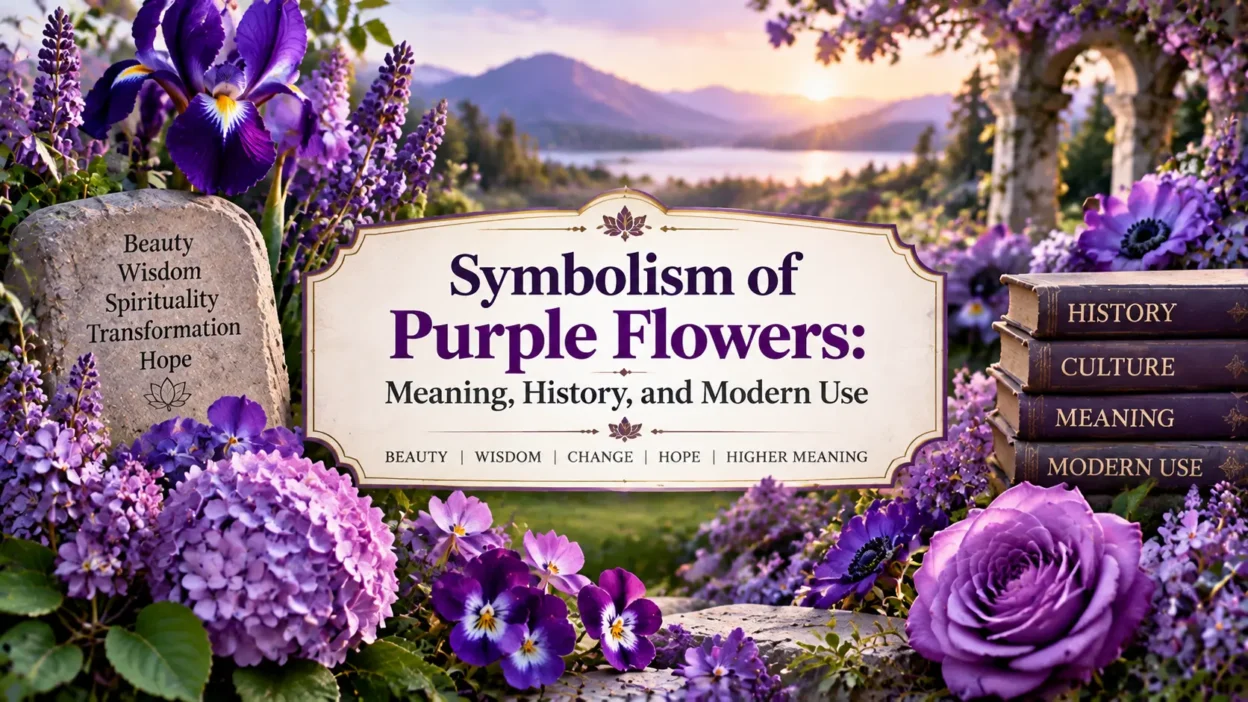
Purple flowers have long attracted attention because of their unusual color and the feelings they often create. In gardens, artwork, celebrations, and personal gifts, symbolism of purple flowers is commonly connected with admiration, creativity, dignity, and spiritual reflection. Their meaning can change depending on the flower type, cultural background, and situation where they appear.
Purple is often viewed as a color that combines the calm qualities of blue with the energy of red. Because of this balance, purple flowers are frequently associated with imagination, respect, and emotional depth. In the United States, people often choose purple blooms for weddings, memorial arrangements, home decoration, and meaningful gifts.
Understanding why purple flowers carry these meanings requires looking at their history, cultural connections, and modern uses.
Quick Answer
Symbolism of purple flowers commonly represents admiration, creativity, dignity, and spiritual reflection in modern American culture, especially in gifts, gardens, and celebrations. Historically, purple flowers were also connected with royalty, honor, and sacred traditions because purple dye was once rare and valuable.
TL;DR
- Purple flowers symbolize admiration, creativity, and respect.
- Ancient societies linked purple with royalty and status.
- Americans use purple blooms for gifts, weddings, and remembrance.
- Different purple flowers carry unique meanings.
- Purple shades influence emotional and visual perception.
- Modern designs use purple flowers for elegance and individuality.
What Purple Flowers Look Like and Where People See Them
Purple flowers appear in many shapes, sizes, and natural shades. Some have soft lavender tones, while others display deep violet or rich plum colors. Popular examples include lavender, violets, purple irises, lilacs, orchids, hydrangeas, and purple roses.
People encounter purple flowers in many everyday settings:
- home gardens
- wedding arrangements
- floral bouquets
- religious ceremonies
- memorial displays
- paintings and decorative designs
- fashion and interior decoration
The variety of purple flowers means their symbolism is not limited to one single meaning. A small violet may suggest modesty, while a purple iris may represent wisdom and hope.
What Purple Flowers Commonly Mean in the United States
In modern American culture, purple flowers often communicate feelings that are elegant, thoughtful, and personal. Unlike bright red flowers, which are commonly associated with romantic love, purple blooms usually express admiration, respect, or appreciation.
Common meanings include:
| Context | Meaning in the USA | Common Associations | Notes |
|---|---|---|---|
| Gifts | Admiration and appreciation | Respect, affection | Often given to someone special |
| Weddings | Elegance and individuality | Beauty, creativity | Popular in modern floral designs |
| Memorials | Remembrance and honor | Peace, reflection | Used in sympathy arrangements |
| Gardens | Creativity and calm | Imagination, beauty | Chosen for visual appeal |
| Spiritual settings | Reflection and connection | Faith, meditation | Depends on tradition |
Purple flowers are often chosen when someone wants to express a meaningful emotion without using traditional romantic symbols.
Ancient Roots of Purple as a Symbolic Color
The symbolic importance of purple began partly because the color itself was difficult to produce in ancient times. Natural purple dyes were rare and expensive, especially the famous Tyrian purple dye created from sea snails in the Mediterranean region.
Because of its high cost, purple became associated with:
- rulers
- wealth
- authority
- social status
Ancient leaders and royal families often used purple clothing as a visible sign of power. Over time, the connection between purple and importance influenced how people viewed purple flowers.
A flower with purple petals could appear unusual and special, which helped create associations with beauty, honor, and distinction.
How Purple Flowers Became Connected With Royalty and Honor
Purple has maintained a connection with royalty across many cultures. In Europe, monarchs and religious leaders often used purple clothing and decorations to represent authority and importance.
This association influenced floral symbolism. Purple flowers became linked with qualities such as:
- respect
- achievement
- elegance
- admiration
Today, most people do not view purple flowers as symbols of political power. Instead, the meaning has shifted toward personal appreciation and refined beauty.
For example, giving someone purple orchids may communicate admiration for their uniqueness, while purple roses may suggest enchantment or appreciation.
Religious and Spiritual Meanings of Purple Flowers
Purple flowers have appeared in many religious and spiritual traditions, although meanings vary widely.
In some Christian traditions, purple is connected with reflection, preparation, and sacred periods such as Lent. Purple decorations may appear in churches during important religious seasons.
Some spiritual practices associate purple with:
- meditation
- wisdom
- inner reflection
- personal transformation
However, purple flowers do not have one universal spiritual meaning. Their interpretation depends on the specific belief system and cultural context.
A purple flower placed in a spiritual setting may represent devotion or contemplation, while the same flower in a garden may simply represent beauty and creativity.
The Meaning of Purple Flowers in American Culture
In the United States, purple flowers are used in many personal and public settings. Their meaning often depends on the event and the relationship between people.
Weddings
Purple flowers are popular in weddings because they create a feeling of elegance and uniqueness. Lavender, purple roses, and orchids are often included in bouquets and decorations.
They may represent:
- admiration between partners
- individuality
- creativity in the celebration
Memorials and Sympathy
Purple flowers are also used in remembrance arrangements. Their calm appearance can communicate respect and peaceful reflection.
People may choose purple blooms when they want a memorial arrangement to feel gentle and dignified.
Gifts and Personal Expressions
A bouquet of purple flowers can express appreciation without carrying the strong romantic message often associated with red flowers.
They may be given for:
- congratulations
- friendship
- gratitude
- encouragement
Different Purple Flowers and Their Individual Meanings
Although color creates a general symbolism, each flower type has its own traditional associations.
Purple Lavender
Lavender is commonly linked with calmness, relaxation, and purity. Its fragrance has made it popular in gardens, personal care products, and home decoration.
Purple Iris
The iris has often been associated with wisdom, hope, and communication. Its unique shape has made it a popular flower in art and garden design.
Purple Orchid
Purple orchids are frequently connected with luxury, admiration, and beauty. Their unusual appearance makes them a common choice for elegant gifts.
Purple Violet
Violets are often associated with modesty, humility, and quiet beauty. Their small size contrasts with their strong cultural symbolism.
Purple Lilac
Lilacs are often linked with youthful memories, renewal, and springtime. Their fragrance makes them especially meaningful in gardens.
Color Psychology Behind Purple Flowers
Color psychology examines how colors influence human feelings and perceptions. While responses to color vary among individuals and cultures, purple is often viewed as a color connected with imagination and sophistication.
Purple flowers may create impressions of:
- creativity
- calmness
- mystery
- elegance
- individuality
The shade also matters. Light purple often feels softer and more peaceful, while dark purple may appear more dramatic and luxurious.
This difference explains why lavender flowers may feel relaxing, while deep violet flowers may appear more formal.
Purple Flowers in Tattoos, Fashion, and Personal Identity
Purple flowers have become popular symbols in tattoos and personal artwork. People often choose them because they can represent personal growth, creativity, memories, or important relationships.
A purple flower tattoo may symbolize:
- overcoming change
- appreciation for beauty
- connection to nature
- individuality
In fashion and design, purple flowers are often used to create a style that feels artistic or sophisticated. They appear in clothing patterns, accessories, home decor, and digital artwork.
Unlike symbols with fixed meanings, floral tattoos are highly personal. The meaning usually comes from the person’s own experience.
Purple Flowers in Different Cultures Around the World
Purple flowers carry different meanings across cultures, and their symbolism often reflects local traditions, religious beliefs, and historical experiences.
In many European traditions, purple has been connected with nobility, respect, and spiritual reflection because of its historical association with royal families and religious ceremonies. Purple flowers in these settings may represent dignity, honor, or remembrance.
In Japan, flowers often carry carefully developed meanings through the tradition of hanakotoba, the language of flowers. Some purple flowers, such as irises, may be connected with qualities like good news, courage, and protection. The meaning depends on the specific flower rather than color alone.
In parts of China, purple has traditionally been associated with spirituality, harmony, and higher status. Purple flowers may appear in artistic designs where they represent beauty, elegance, or a connection to refined taste.
In some Middle Eastern and Mediterranean cultures, flowers are often valued for their beauty, fragrance, and role in celebrations. Purple blooms may be appreciated for their visual appeal and associations with luxury or grace.
Because flower meanings change between societies, it is important to avoid treating purple flowers as having one universal definition. The same flower can represent celebration in one culture and remembrance in another.
Why People Choose Purple Flowers for Gifts
Purple flowers are popular gifts because they communicate emotions that are meaningful but not overly direct. They can express appreciation, respect, and admiration without creating the same romantic expectation often linked with red roses.
People may choose purple flowers for occasions such as:
- birthdays
- graduations
- promotions
- thank-you gifts
- friendship celebrations
- congratulations
A bouquet of purple flowers can feel personal because the color suggests thoughtfulness and uniqueness. For someone who prefers uncommon choices, purple blooms can represent individuality and creativity.
The type of flower also changes the message. Purple orchids may feel elegant and luxurious, while purple lavender may communicate calmness and care.
Purple Flowers in Weddings and Romantic Symbolism
Purple flowers have become increasingly common in modern wedding designs because they offer a balance between traditional beauty and personal style.
Couples often use purple blooms in:
- bridal bouquets
- table arrangements
- ceremony decorations
- invitations
- wedding photography themes
In romantic settings, purple flowers may represent admiration, devotion, and a unique connection between two people. They usually communicate a different feeling than red flowers, which are more strongly connected with passionate romance.
Different shades create different moods:
- Soft lavender can create a gentle and peaceful atmosphere.
- Bright violet can add energy and creativity.
- Deep purple can create a formal and luxurious appearance.
Modern weddings often focus less on traditional flower meanings and more on personal expression. A couple may choose purple flowers simply because the color represents their personality or favorite aesthetic.
Purple Flowers in Home Decor and Design
Purple flowers are widely used in interior design because they add color while maintaining a sense of elegance. Designers often use them to create spaces that feel artistic, peaceful, or welcoming.
Common uses include:
- fresh flower arrangements
- painted floral artwork
- wallpaper patterns
- seasonal decorations
- outdoor landscaping
In American homes, purple flowers can create a connection with nature while adding a distinctive visual element. Lavender, for example, is often used in gardens and home products because of its appearance and fragrance.
The symbolic meaning in decor is usually flexible. A person may choose purple flowers because they represent creativity, relaxation, beauty, or simply because they complement the room.
Purple Flowers in Pop Culture and Digital Expression
Modern culture has expanded how people use flower symbolism. Purple flowers appear frequently in photography, social media posts, branding, and digital artwork.
Online, purple flowers are often used to express:
- creativity
- peaceful moods
- personal style
- appreciation of nature
Artists and designers use purple floral imagery because it can create a feeling that is both natural and imaginative. The color stands out visually while avoiding some of the stronger associations connected with traditional colors like red or black.
In digital spaces, flower meanings are often personal rather than based on strict cultural rules. A purple flower emoji, illustration, or photograph may simply represent beauty, kindness, or a positive feeling.
Common Misunderstandings About Purple Flower Symbolism
Although purple flowers have many positive associations, their meanings are sometimes simplified too much.
One common misunderstanding is that every purple flower represents the same idea. In reality, a lavender plant, purple rose, and purple iris each have different histories and associations.
Another misunderstanding is that flower symbolism has fixed rules. Floral meanings are traditions and interpretations, not scientific facts. People often choose flowers based on personal memories, relationships, or preferences.
Some people also assume that purple flowers always represent spirituality or mystery. While these meanings exist in certain traditions, many people today simply view purple blooms as attractive and elegant.
Understanding the context behind a flower choice is more important than relying on a single symbolic definition.
How the Meaning of Purple Flowers Has Changed Over Time
The meaning of purple flowers has evolved as societies changed. In ancient times, purple was strongly connected with wealth and authority because producing purple dye was difficult and expensive.
Later, purple became connected with religious traditions, artistic expression, and emotional symbolism. As flower availability increased, purple blooms became accessible to more people instead of remaining symbols of elite status.
Today, purple flowers represent a mixture of older and newer ideas:
- historical connections with dignity
- cultural connections with reflection
- modern connections with creativity and individuality
The symbolism continues to change because people use flowers in new ways. A purple flower can carry traditional meaning while also representing a very personal experience.
Positive and Negative Associations of Purple Flowers
Purple flowers are mostly viewed positively, but their interpretation can depend on context.
Positive associations include:
- admiration
- creativity
- elegance
- respect
- wisdom
- imagination
In some situations, purple may also be connected with sadness, mourning, or separation. This is especially true when flowers are used in memorial settings.
However, a mourning arrangement does not mean the flower itself represents sadness. Instead, the flower helps communicate respect, remembrance, and sympathy.
The meaning comes from the situation, cultural tradition, and personal intention behind the flowers.
The Role of Purple Flowers in Modern American Life
Today, purple flowers appear in many parts of American life. They are grown in gardens, used in celebrations, included in artwork, and shared as personal gifts.
Their popularity comes from their flexibility. Purple flowers can feel:
- romantic without being traditional
- elegant without being formal
- natural without being ordinary
Gardeners often choose purple flowers because they attract attention while blending well with many other colors. Florists use them because they can fit many occasions, from joyful celebrations to respectful memorials.
Modern Americans often view flowers less through strict symbolism and more through personal meaning. A purple flower arrangement may represent a shared memory, a favorite color, or a thoughtful gesture.
Frequently Asked Questions About Purple Flower Symbolism
What does the symbolism of purple flowers mean?
Symbolism of purple flowers commonly represents admiration, creativity, respect, and elegance. The meaning can change depending on the flower type, cultural background, and occasion where the flowers are used.
What do purple flowers mean in a relationship?
Purple flowers in a relationship often represent admiration, appreciation, and a unique emotional connection. They can express affection while feeling different from traditional romantic flowers like red roses.
Are purple flowers good for weddings?
Yes, purple flowers are popular for weddings because they create an elegant and personal atmosphere. Many couples choose them to represent individuality, beauty, and admiration.
Do purple flowers have religious meanings?
Purple flowers can have religious meanings in some traditions, especially where purple represents reflection, devotion, or sacred periods. However, interpretations vary between religions and cultures.
What do purple flower tattoos symbolize?
Purple flower tattoos often represent creativity, personal growth, beauty, or meaningful memories. The exact meaning usually depends on the person’s experience and the specific flower chosen.
Are purple flowers associated with sadness?
Purple flowers can appear in mourning arrangements, which may connect them with remembrance or sympathy. However, they are also widely associated with positive ideas such as admiration, creativity, and elegance.
Which purple flower has the strongest symbolism?
There is no single purple flower with the strongest universal meaning. Flowers such as lavender, iris, violet, orchid, and purple rose each have different traditional associations.
Conclusion
Purple flowers represent a combination of admiration, creativity, dignity, and personal expression. Their meanings developed from historical connections with rare purple dyes, royal traditions, religious symbolism, and changing cultural interpretations.
In modern America, symbolism of purple flowers is often understood through personal moments such as gifts, weddings, gardens, memorials, and creative design. While traditions provide common interpretations, the meaning of a purple flower ultimately depends on the person, place, and purpose behind it.
Whether chosen for beauty, emotion, or memory, purple flowers continue to offer a meaningful way for people to express ideas that words sometimes cannot.