Peppermint is more than a refreshing herb used in candies, teas, and seasonal treats. Across cultures, peppermint symbolism has developed around ideas of freshness, comfort, healing, clarity, and renewal. In modern American culture, peppermint often represents a clean start, uplifting energy, and the simple pleasures connected with holidays and everyday wellness.
The familiar scent of peppermint can instantly bring memories of winter celebrations, family traditions, and calming routines. From peppermint tea after a long day to candy canes hanging on Christmas trees, this plant has become connected with emotional experiences as much as physical uses.
Understanding peppermint symbolism helps explain why this small green herb appears so often in traditions, personal expressions, decorations, and wellness practices. Its meaning comes from a combination of historical uses, cultural associations, and the feelings people attach to its distinctive aroma and flavor.
Quick Answer
Peppermint symbolism commonly represents freshness, renewal, comfort, and mental clarity in modern American culture, especially through holidays, wellness traditions, and personal rituals. Historically, peppermint has also been associated with healing, protection, hospitality, and purification in different cultures.
TL;DR
- Peppermint symbolizes freshness and emotional renewal.
- Ancient cultures valued peppermint for healing uses.
- Americans connect peppermint with Christmas traditions.
- The herb represents comfort and mental alertness.
- Peppermint appears in wellness, design, and personal style.
- Modern meanings focus on positivity and cleanliness.
What Peppermint Looks Like and Where People Encounter It
Peppermint is a fragrant herb with bright green leaves, square stems, and a strong cooling scent caused by its natural oils. It is a hybrid plant created from watermint and spearmint, and it has become one of the most recognizable mint varieties worldwide.
People commonly encounter peppermint in teas, chewing gum, breath products, essential oils, desserts, candles, and seasonal decorations. Its association with freshness comes directly from the physical experience of peppermint: a cool sensation, a sharp aroma, and a feeling of cleanliness.
In the United States, peppermint is especially visible during the winter holiday season. Candy canes, peppermint bark, and peppermint-flavored drinks have made it strongly connected with Christmas celebrations and cozy family moments.
What Peppermint Commonly Represents in the United States
In American culture, peppermint is often connected with positive ideas that reflect comfort and renewal. Unlike symbols that carry complicated or conflicting meanings, peppermint usually communicates simple and familiar emotions.
Common symbolic meanings include:
- Freshness: Peppermint’s cooling sensation makes it a natural symbol of cleanliness and a fresh beginning.
- Comfort: Many people associate peppermint tea and sweets with relaxation and familiar traditions.
- Clarity: Its sharp scent is often linked with alertness and focus.
- Celebration: Seasonal peppermint treats connect the herb with holidays and shared experiences.
- Healing: Traditional uses of peppermint contribute to its association with wellness.
These meanings are not fixed rules. A person’s experience with peppermint often shapes what it represents to them personally.
Ancient Roots and Early Symbolism of Peppermint
Mint plants have been valued for thousands of years, although the exact peppermint variety developed later than many other mint species. Ancient civilizations used different forms of mint for practical purposes, including cooking, medicine, and ceremonial practices.
In ancient Greece and Rome, mint plants were connected with hospitality and pleasant environments. Fresh mint leaves were sometimes used to scent spaces, flavor foods, and create welcoming surroundings.
Historical references to mint also appear in traditional medicine systems. People used mint varieties for digestive comfort, soothing preparations, and aromatic purposes. These practical uses helped create symbolic connections between mint and ideas of restoration and well-being.
Peppermint itself became widely recognized after its development in Europe, where it gained popularity as both a medicinal herb and a flavoring ingredient.
Healing and Purification Symbolism of Peppermint
One of peppermint’s strongest symbolic associations comes from its traditional connection with healing. For generations, people have used peppermint in teas, oils, and herbal preparations.
Because of these uses, peppermint often represents:
- Recovery after difficulty
- Physical and emotional refreshment
- Cleansing and renewal
- A return to balance
In symbolic language, purification does not necessarily mean a religious ritual. It can also describe the feeling of removing stress, clearing the mind, or creating a healthier routine.
In American wellness culture, peppermint appears frequently in products designed around relaxation, self-care, and personal improvement. The scent often creates a feeling of a reset, which explains why it remains popular in candles, bath products, and aromatherapy-inspired designs.
Peppermint Symbolism During American Holidays
Few plants are as closely tied to American holiday traditions as peppermint. During Christmas especially, peppermint represents celebration, nostalgia, and family connection.
Candy canes are one of the most recognizable examples. Although their exact origins are debated, they became widely associated with Christmas traditions in the United States during the 19th and 20th centuries.
Today, peppermint appears in:
| Context | Meaning in the USA | Common Associations | Notes |
|---|---|---|---|
| Christmas traditions | Celebration and nostalgia | Candy canes, holiday treats | Strong seasonal connection |
| Wellness products | Refreshment and care | Tea, oils, bath products | Linked with relaxation |
| Home decor | Clean and welcoming atmosphere | Candles, scents | Creates cozy environments |
| Food culture | Comfort and enjoyment | Desserts, drinks | Often connected with sharing |
For many Americans, peppermint does not simply represent a flavor. It represents memories of gatherings, winter evenings, and traditions passed between generations.
The Emotional Meaning of Peppermint
Symbols often gain meaning because of the emotions they create. Peppermint’s symbolism comes partly from the way people physically and emotionally experience it.
The scent of peppermint can remind people of:
- Childhood memories
- Holiday celebrations
- Calm personal routines
- Fresh starts
- Moments of comfort
Psychologically, familiar scents can trigger strong memories because smell is closely connected with areas of the brain involved in emotion and memory. This explains why peppermint can create a feeling of familiarity even when someone encounters it unexpectedly.
For some people, peppermint represents motivation and energy because its sharp aroma feels stimulating. For others, it represents relaxation because peppermint tea or seasonal treats are connected with quiet moments.
Peppermint in Spiritual and Cultural Traditions
Peppermint does not have one universal spiritual meaning, but plants from the mint family have appeared in various cultural practices connected with cleansing, protection, and hospitality.
In some traditions, mint plants have been valued for their fresh scent and association with positive environments. The idea of using aromatic plants to create pleasant spaces appears across many cultures.
Modern spiritual interpretations sometimes connect peppermint with:
- Clearing negative thoughts
- Creating emotional balance
- Encouraging personal growth
- Refreshing one’s mindset
However, these meanings are personal interpretations rather than universally accepted beliefs. Peppermint’s strongest shared symbolism remains connected with freshness, comfort, and renewal.
Why Peppermint Appears in Tattoos and Personal Style
Although peppermint tattoos are less common than symbols like roses, butterflies, or animals, they have gained attention among people who prefer botanical designs with personal meaning. A peppermint tattoo often represents freshness, resilience, comfort, or a connection to simple pleasures.
People may choose peppermint imagery because it reminds them of:
- A favorite childhood memory
- Holiday traditions
- A personal wellness journey
- A love of nature and herbs
- A desire for renewal after change
The visual style also plays an important role. A realistic peppermint plant tattoo can emphasize nature and herbal traditions, while a candy cane or peppermint swirl design may represent joy, playfulness, and nostalgia.
Unlike symbols associated with status or power, peppermint usually communicates a softer personal message. It suggests someone who values comfort, positivity, and meaningful everyday experiences.
Peppermint in Modern Design, Fashion, and Pop Culture
Peppermint has become a recognizable design element because its appearance and scent are easy to associate with freshness. Brands, artists, and designers often use peppermint imagery to create feelings of cleanliness, sweetness, and seasonal warmth.
In American consumer culture, peppermint appears in:
- Holiday packaging
- Restaurant menus
- Beauty products
- Seasonal advertisements
- Home fragrances
- Winter-themed decorations
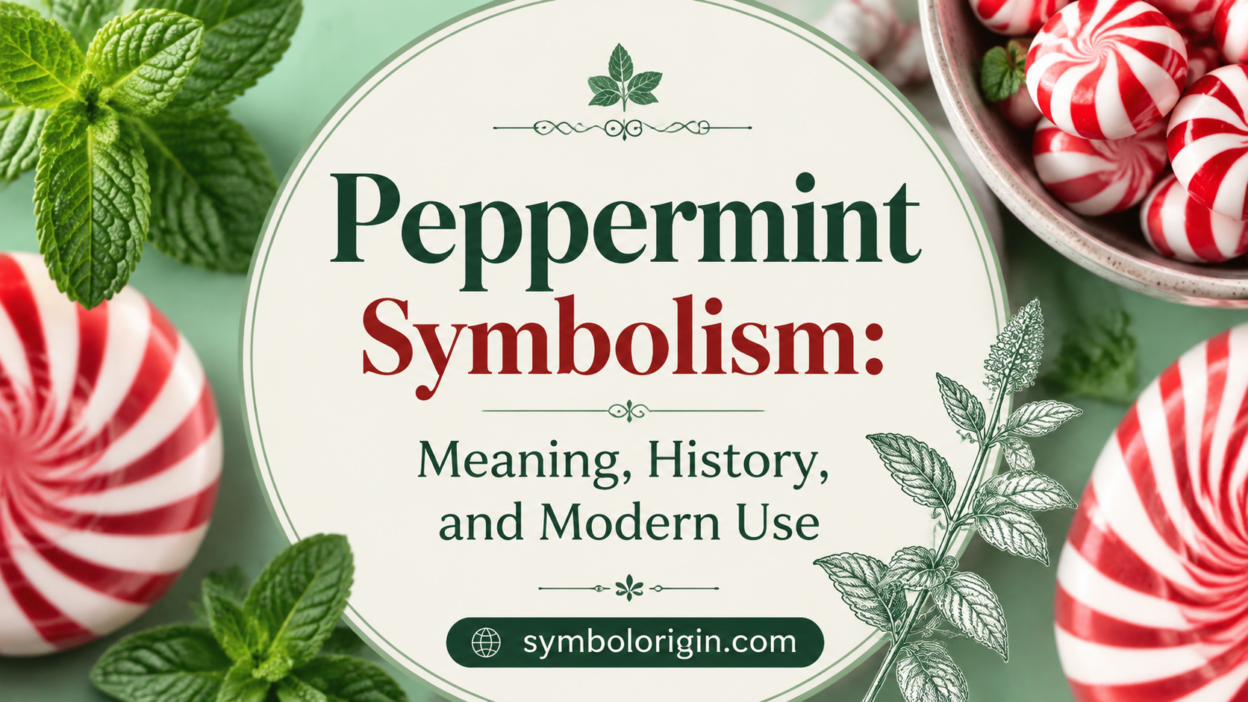
The red-and-white peppermint candy pattern has become especially recognizable. Its simple contrast creates a cheerful visual style often connected with Christmas markets, family celebrations, and festive environments.
In pop culture, peppermint is usually used as a symbol of comfort or seasonal happiness rather than a complex metaphor. It often appears in movies, advertisements, and stories when creators want to create a warm, familiar atmosphere.
The Color Symbolism Connected With Peppermint
Peppermint symbolism is influenced not only by the plant itself but also by the colors commonly associated with it. The traditional peppermint image often includes green leaves and red-and-white candy patterns.
Each color contributes to the overall meaning:
| Color | Symbolic Meaning | Connection to Peppermint |
|---|---|---|
| Green | Growth, nature, renewal | Represents the living herb and freshness |
| White | Cleanliness, simplicity, peace | Reflects purity and cooling sensations |
| Red | Energy, warmth, celebration | Appears in candy cane traditions |
Green gives peppermint a connection with plants, health, and natural balance. White reinforces ideas of cleanliness and simplicity. Red adds a festive quality that makes peppermint strongly connected with holiday celebrations in the United States.
Together, these colors create an image that feels both refreshing and comforting.
Peppermint in Home Decor and Everyday Spaces
Peppermint has a strong place in home environments because scent plays an important role in how people experience a space. Candles, diffusers, soaps, and seasonal decorations often use peppermint because it creates a feeling of freshness.
In home design, peppermint-inspired elements may communicate:
- A welcoming atmosphere
- Seasonal celebration
- Clean organization
- Cozy winter memories
During the holiday season, peppermint decorations often appear alongside snowflakes, evergreen branches, and other winter symbols. The combination creates an environment associated with warmth during colder months.
Outside of holidays, peppermint scents are also used in kitchens, bathrooms, and wellness spaces because many people associate them with cleanliness and a refreshed feeling.
Peppermint and Psychological Associations
The symbolic meaning of peppermint is closely connected to human perception. The strong aroma and cooling sensation can influence how people emotionally respond to it.
Many people associate peppermint with:
- Alertness
- Focus
- Energy
- Calm routines
- Emotional refreshment
This explains why peppermint is frequently used in products marketed for concentration, relaxation, and self-care. While individual reactions vary, the general cultural association is that peppermint creates a sense of waking up or starting fresh.
The symbolism comes from both experience and tradition. People do not only recognize peppermint as a plant; they recognize the feelings connected with encountering it.
Common Misunderstandings About Peppermint Symbolism
Because plants often receive symbolic interpretations, peppermint is sometimes given meanings that go beyond historical evidence. Some modern sources describe peppermint as having specific spiritual powers or guaranteed effects, but these ideas are personal beliefs rather than widely established cultural meanings.
Common misunderstandings include:
Peppermint always means healing
Peppermint has a long connection with traditional wellness practices, but its symbolism is broader. It can also represent celebration, comfort, and memory.
Peppermint has one universal meaning
Different cultures and individuals may interpret plants differently. A person’s experiences often influence what peppermint represents to them.
Peppermint symbolism is only connected to Christmas
Although peppermint has a strong holiday association in America, it is also connected with tea culture, wellness, gardening, and everyday comfort.
Understanding these differences helps separate cultural symbolism from modern personal interpretations.
How Peppermint Symbolism Has Changed Over Time
Peppermint’s meaning has developed alongside human use of the plant. Earlier associations focused heavily on practical uses, including flavoring, medicine, and creating pleasant environments.
Over time, additional meanings developed:
- Traditional herbal use created connections with healing.
- Holiday customs created associations with celebration.
- Modern wellness culture emphasized freshness and balance.
- Personal expression transformed peppermint into a symbol of identity and memory.
In today’s United States, peppermint represents a combination of old and new meanings. It carries historical connections to plants and remedies while also reflecting modern ideas about comfort, self-care, and seasonal enjoyment.
Peppermint Symbolism in Modern American Culture
Today, peppermint is one of the most familiar plant-based symbols in American life. It appears in homes, stores, restaurants, beauty products, and holiday traditions.
Modern interpretations commonly include:
- A reminder to slow down and enjoy simple moments
- A symbol of seasonal happiness
- A representation of freshness and renewal
- A connection to family traditions
- An expression of personal comfort
Unlike symbols that require specialized knowledge, peppermint communicates quickly. Most people understand the feeling associated with peppermint before they understand its history.
That immediate recognition is one reason it remains popular in American culture.
Frequently Asked Questions About Peppermint Symbolism
What does peppermint symbolize?
Peppermint commonly symbolizes freshness, comfort, renewal, and clarity. In American culture, it is especially associated with holidays, wellness routines, and positive memories.
What does peppermint symbolize spiritually?
Some people interpret peppermint as a symbol of cleansing, emotional balance, and renewal. These meanings come from personal spiritual traditions rather than one universal belief system.
What does a peppermint tattoo mean?
A peppermint tattoo may represent personal renewal, happy memories, comfort, or a connection to nature. The meaning depends on the person’s own experiences and design choices.
Why is peppermint associated with Christmas?
Peppermint became connected with Christmas through traditions involving candy canes, holiday desserts, and seasonal decorations. Over time, it became a familiar symbol of winter celebrations in the United States.
Is peppermint a symbol of healing?
Peppermint is often associated with healing because people have traditionally used mint plants in wellness practices. Symbolically, it can represent recovery, refreshment, and restoration.
Does peppermint have a negative symbolic meaning?
Peppermint is generally viewed positively. However, like any symbol, its meaning can change depending on context, personal experiences, or cultural interpretation.
What does peppermint represent in modern culture?
In modern culture, peppermint represents comfort, freshness, celebration, and small moments of enjoyment. It appears in food, design, wellness products, and seasonal traditions.
Conclusion
Peppermint represents a blend of natural freshness, emotional comfort, and cultural tradition. From ancient herbal practices to modern American holiday celebrations, its meaning has developed around ideas of renewal, hospitality, and everyday enjoyment.
Today, peppermint symbolism reflects more than a simple herb or flavor. It represents memories, seasonal connections, personal wellness, and the feeling of beginning again with a refreshed perspective.
Whether seen in a candy cane, a cup of tea, a home fragrance, or a personal design choice, peppermint continues to symbolize the familiar comforts that people carry into their daily lives.