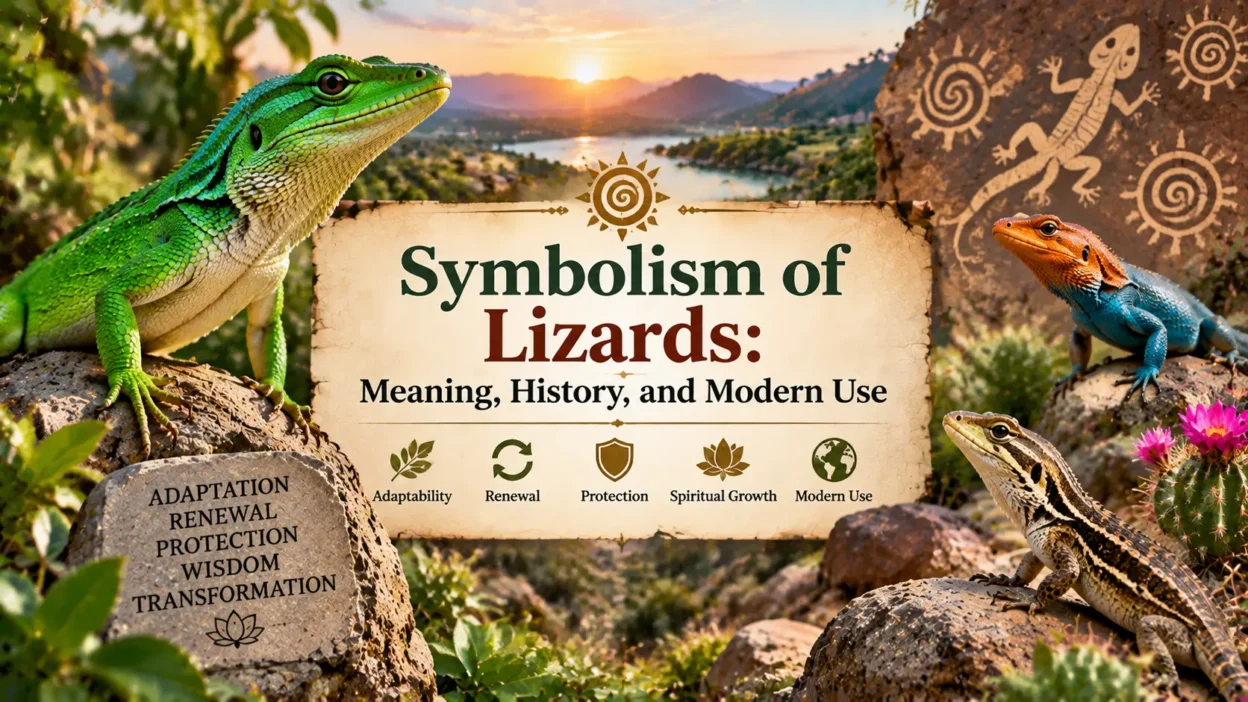
Lizards are small reptiles that appear in deserts, forests, gardens, homes, artwork, and stories around the world. Their ability to survive harsh environments, regrow tails, and adapt to changing conditions has made them meaningful symbols in many cultures. The symbolism of lizards often connects with survival, renewal, transformation, and adaptability, while different traditions have given these creatures additional meanings.
In modern American culture, lizards appear in tattoos, jewelry, home decorations, nature photography, and popular media. Some people choose lizard imagery because they admire its connection to resilience and change, while others appreciate its link to nature and independence. Understanding the symbol requires looking at both ancient traditions and modern interpretations.
Quick Answer
The symbolism of lizards commonly represents adaptability, survival, renewal, and personal transformation in modern American culture, especially in tattoos, art, and nature-inspired designs. Historically, lizards have also been associated with regeneration, protection, spiritual awareness, and connection to the natural world in different cultures.
TL;DR
- Lizards symbolize adaptation and survival skills.
- Tail regeneration shaped ideas of renewal.
- Ancient cultures linked lizards with protection.
- Americans use lizards in tattoos and art.
- Meanings vary across cultures and traditions.
What Lizards Represent as Symbols
Lizards are often connected with the ability to adjust to difficult situations. Many species survive extreme heat, limited food supplies, and changing environments. Because of this, people commonly view lizards as symbols of flexibility and endurance.
Their physical traits also influence their symbolic meaning. A lizard can hide, escape predators, change behavior, and in many species regenerate a lost tail. These natural abilities have encouraged associations with recovery, healing, and starting again after challenges.
Unlike symbols that carry one fixed meaning, lizards represent different ideas depending on the culture, setting, and personal experience. For some people, they represent independence and instinct. For others, they represent patience and awareness.
The Physical Traits That Created Lizard Symbolism
The meaning of lizards comes largely from observing their natural behavior. Their bodies and survival methods have shaped human interpretations for thousands of years.
One of the strongest connections comes from tail regeneration. When some lizards lose their tails, they can grow a replacement. Although the new tail is not always identical, the process represents recovery and adaptation.
Lizards are also known for:
| Context | Meaning in the USA | Common Associations | Notes |
|---|---|---|---|
| Tattoos | Personal growth | Change, resilience, independence | Often chosen after major life changes |
| Nature imagery | Connection with wildlife | Balance, survival | Popular in outdoor themes |
| Jewelry and art | Individual expression | Freedom, uniqueness | Often decorative rather than religious |
| Ancient symbolism | Protection and renewal | Regeneration, awareness | Meanings differ by culture |
Their ability to blend into surroundings has also contributed to ideas of observation, patience, and quiet strength.
Ancient Roots and Early Symbolism of Lizards
Lizard symbolism appears in many ancient cultures because humans have long observed these reptiles in their daily environments.
In some ancient Mediterranean traditions, lizards were linked with renewal because people noticed their ability to survive injuries and regenerate parts of their bodies. Their connection with sunlight also influenced interpretations, especially in regions where lizards frequently appeared on warm stones and walls.
Ancient Egyptian culture sometimes associated reptiles with protection and survival. Lizards appeared in artistic representations, although their meanings varied depending on the context.
In Indigenous traditions across different regions, reptiles often carried connections to land, weather, and natural cycles. Specific meanings depended on the individual community rather than a universal belief.
Lizard Symbolism in American Culture
In the United States, lizards are usually understood through nature, personal identity, and artistic expression rather than a single traditional meaning.
Many Americans associate lizards with:
- resilience during difficult periods
- connection to outdoor environments
- personal transformation
- independence
- appreciation for unusual forms of beauty
The popularity of reptiles in nature documentaries, wildlife photography, and environmental education has also shaped modern views. Lizards are often seen as examples of adaptation rather than creatures with supernatural meaning.
In desert regions of the American Southwest, lizards are especially connected with the landscape. Their presence represents survival in dry environments and the ability of life to exist under challenging conditions.
Spiritual and Cultural Interpretations Around the World
Different societies have developed unique interpretations of lizards.
In some Aboriginal Australian traditions, reptiles are connected with ancestral stories, land creation, and natural forces. Specific lizard species may hold important cultural meanings within particular communities.
In parts of Polynesia, lizards and geckos have appeared in traditional stories and beliefs. Some traditions viewed certain reptiles as connected with ancestors or spiritual protection.
In Hindu and other South Asian traditions, reptiles can appear in mythology and religious stories. However, meanings differ widely depending on the specific creature, region, and belief system.
These examples show that lizard symbolism is not universal. The same animal can represent protection in one culture and caution or mystery in another.
Why Lizards Symbolize Transformation and Renewal
Transformation is one of the most common meanings connected with lizards.
The strongest reason is their ability to regenerate tails. Humans often interpret this natural process as a reminder that recovery is possible after loss or hardship.
This symbolism appears in modern personal expression. Someone who chooses a lizard tattoo may associate it with:
- overcoming a difficult experience
- entering a new stage of life
- becoming stronger after challenges
- accepting personal change
The meaning usually comes from the person’s own story rather than from a fixed rule about what lizards represent.
Lizard Symbolism in Tattoos and Personal Style
Lizard tattoos are popular among people who want an image connected with nature and individuality.
Common interpretations include:
Adaptability: A reminder to adjust when circumstances change.
Regeneration: A symbol of rebuilding after setbacks.
Freedom: A connection with wild animals and natural environments.
Individuality: Lizards are less common than traditional tattoo symbols, making them appealing to people seeking something distinctive.
Design choices also affect meaning. A colorful tropical lizard may suggest creativity and connection with nature, while a realistic desert lizard may emphasize survival and endurance.
Emotional and Psychological Meaning of Lizards
Symbols often reflect personal feelings, and lizards are frequently connected with emotional qualities related to survival.
People may associate lizards with:
- staying calm under pressure
- observing before acting
- protecting oneself
- accepting change
- recovering after hardship
Because lizards often remain still before quickly reacting, some people interpret them as symbols of awareness and patience.
However, symbolism does not mean that a lizard automatically represents a specific personality trait. The meaning depends on the person using the symbol.
Lizards in Art, Design, and Modern Media
Lizards appear in many creative fields, including illustration, fashion, jewelry, and digital art.
Artists often use lizards because their shapes are visually distinctive. Their scales, colors, and unusual movements make them interesting subjects.
In home décor, lizard designs are commonly used in:
- outdoor garden decorations
- tropical-themed rooms
- nature-inspired artwork
- handmade crafts
In movies, games, and fantasy stories, lizard-like creatures may represent intelligence, adaptation, mystery, or other fictional qualities. These portrayals are creative interpretations rather than traditional symbolism.
Positive and Negative Meanings Associated With Lizards
Lizards have both positive and negative associations depending on cultural context.
Positive meanings include:
- survival
- renewal
- flexibility
- awareness
- connection with nature
Negative interpretations sometimes come from fear of reptiles. In some societies, people associate lizards with coldness, secrecy, or danger because of their appearance and movement.
These negative views often come from cultural attitudes toward reptiles rather than from the animal’s actual behavior. Most lizards are harmless and play important roles in ecosystems by controlling insect populations.
Common Misunderstandings About Lizard Symbolism
One common misunderstanding is that every lizard symbol has a hidden spiritual message. In reality, meanings change based on culture, personal beliefs, and context.
Another misconception is that lizards always represent something mystical. Many modern uses are simply artistic or connected with appreciation for wildlife.
It is also inaccurate to treat all reptiles as having the same symbolism. Lizards, snakes, turtles, and other reptiles have developed different meanings in human cultures.
How Lizard Symbolism Has Changed Over Time
The meaning of lizards has shifted as human relationships with nature have changed.
In ancient societies, people often connected animals with spiritual forces, protection, and natural cycles. Today, many people approach lizard imagery through personal identity, environmental awareness, and artistic preference.
Modern interpretations focus more on:
- resilience
- adaptation
- individuality
- environmental connection
This shift reflects a broader change in how Americans view animals—not only as symbols but also as important parts of the natural world.
The Role of Lizards in Environmental Awareness
Modern conservation efforts have influenced how people see reptiles. Lizards are now often viewed as valuable wildlife rather than simply unusual creatures.
They help ecosystems by controlling insect populations and supporting food chains. Their presence can indicate healthy habitats.
For many nature enthusiasts, lizards symbolize biodiversity and the importance of protecting natural environments.
Common Questions About Lizard Symbolism
What does a lizard symbolize spiritually?
A lizard can symbolize renewal, awareness, adaptability, and personal growth in some spiritual interpretations. However, spiritual meanings vary greatly between cultures and individual beliefs.
What does a lizard tattoo usually mean?
A lizard tattoo often represents transformation, survival, independence, or connection with nature. The meaning usually depends on the wearer’s personal experience and design choice.
Are lizards considered good luck symbols?
In some cultures, certain reptiles are associated with protection or positive forces. In others, lizards have neutral or negative associations. There is no single worldwide meaning.
What does a lizard symbolize in Native American traditions?
Meanings differ among Indigenous nations because each community has its own stories and traditions. Some reptile symbolism connects with nature, survival, and the relationship between animals and the land.
Why are lizards associated with transformation?
Lizards are associated with transformation mainly because some species can regenerate lost tails. This natural ability became a symbol of recovery and adaptation.
What does seeing a lizard mean?
A person may interpret seeing a lizard in a personal or spiritual way, but there is no universal meaning. Scientifically, it simply indicates that a lizard is present in that environment.
Are lizards positive or negative symbols?
Lizards can represent positive ideas such as survival and renewal, but some cultures associate reptiles with caution or mystery. The meaning depends on cultural background and personal interpretation.
Conclusion
Lizards have become symbols of adaptation, survival, renewal, and connection with nature because of their unique abilities and behavior. Across cultures, people have interpreted these reptiles in different ways, from protective figures to reminders of personal change.
In modern America, the symbolism of lizards is often connected with tattoos, art, wildlife appreciation, and personal identity. Whether used as decoration or as a meaningful image, lizards continue to represent the ability to adjust, recover, and exist in changing environments.