
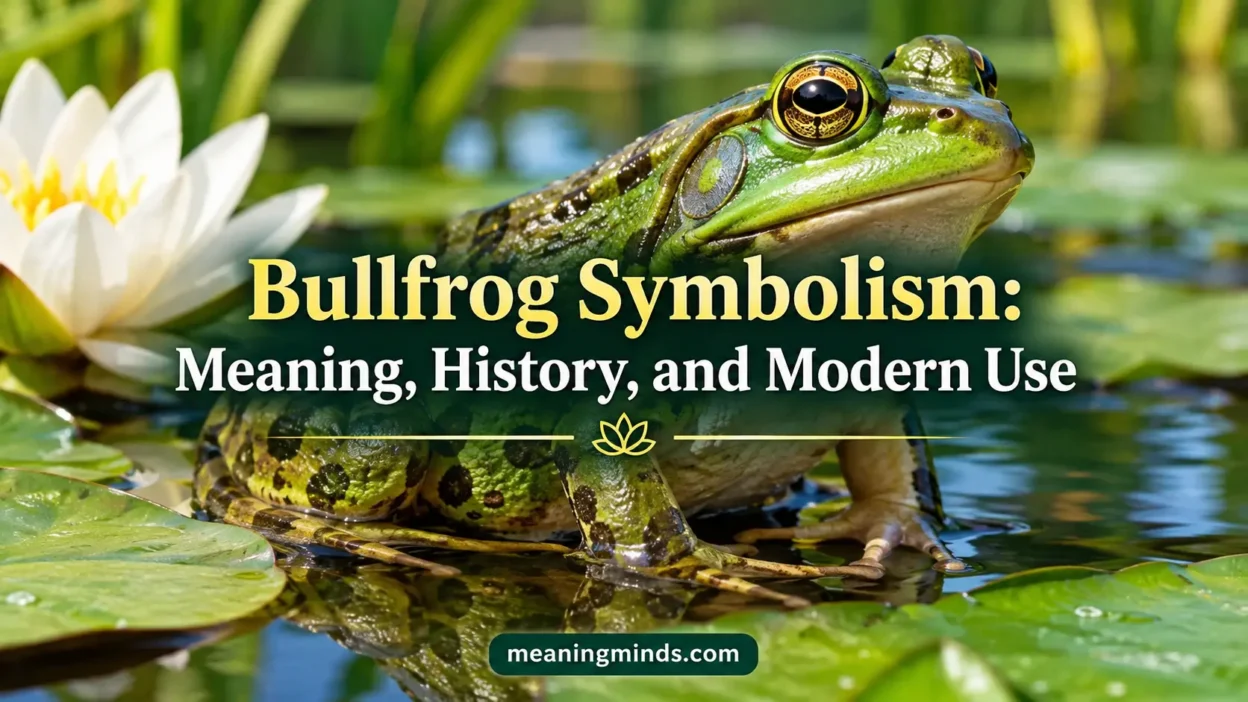
Bullfrogs are often recognized in American culture as symbols of adaptation, transformation, resilience, and connection with nature. Their loud calls, strong presence, and ability to survive in changing environments make bullfrog symbolism an interesting subject in folklore, art, personal expression, and modern design.
Unlike many animals that became symbols through mythology or religion, the bullfrog gained much of its meaning from everyday human observation. People noticed how bullfrogs move between water and land, survive seasonal changes, and announce their presence with powerful calls. These natural traits helped shape ideas about renewal, confidence, patience, and environmental awareness.
Quick Answer
Bullfrog symbolism commonly represents adaptability, transformation, and resilience in modern American culture, especially through its connection with nature, survival, and personal growth. Historically, bullfrogs have also been associated with fertility, abundance, renewal, and communication in different cultural traditions.
TL;DR
- Bullfrogs symbolize adaptation and survival in changing environments.
- Their life cycle represents transformation and personal growth.
- American culture connects them with wetlands and natural balance.
- Folklore often links frogs with rain, fertility, and renewal.
- Bullfrog tattoos express resilience and connection to nature.
- Modern meanings focus on patience, confidence, and change.
What a Bullfrog Represents in Nature
The American bullfrog is one of the largest frogs found in North America. It is known for its deep, booming call that sounds similar to a bull’s roar, which explains its name. These frogs usually live near ponds, lakes, marshes, and slow-moving waterways.
Their physical characteristics contribute to their symbolic meanings. Bullfrogs have powerful legs that allow them to jump long distances, strong bodies that help them survive, and a unique ability to live both in water and on land.
Because of these traits, many people associate bullfrogs with:
- flexibility during change
- strength in difficult conditions
- awareness of surroundings
- patience and timing
- connection with natural cycles
The bullfrog is not usually viewed as a symbol of speed or aggression. Instead, it represents steady survival and the ability to adjust when circumstances change.
What It Commonly Means in the United States
In the United States, bullfrog symbolism is closely connected with outdoor life, wetlands, and rural traditions. Many Americans encounter bullfrogs while fishing, camping, hiking, or spending time near ponds and lakes.
The bullfrog’s loud nighttime call often creates associations with peaceful countryside environments and memories of summer evenings. For some people, hearing a bullfrog represents a connection to childhood experiences, family trips, and natural landscapes.
Common American interpretations include:
| Context | Meaning in the USA | Common Associations | Notes |
|---|---|---|---|
| Nature | Adaptation and survival | Wetlands, wildlife, ecosystems | Reflects environmental balance |
| Personal growth | Transformation | Change, maturity, renewal | Inspired by the frog life cycle |
| Art and design | Natural connection | Rustic decor, outdoor themes | Often used in nature-inspired styles |
| Tattoos | Strength and resilience | Individual journeys, overcoming challenges | Personal meanings vary |
| Folklore | Rain and abundance | Fertility, good fortune | Found in many traditions |
Ancient Roots and Early Frog Symbolism
Frogs have carried symbolic meanings in human cultures for thousands of years. Although the bullfrog itself is mainly associated with North America, frog symbolism existed long before modern interpretations developed.
Ancient societies often noticed that frogs appeared after rainfall and were connected with water sources. Because water represented life, farming, and survival, frogs became linked with ideas of fertility and renewal.
In several cultures, frogs were viewed as signs of:
- seasonal change
- new beginnings
- agricultural success
- life cycles
The bullfrog inherited some of these broader frog meanings because it shares many of the same natural behaviors.
Transformation and the Meaning of Change
One of the strongest meanings connected with bullfrogs comes from their life cycle. A bullfrog begins life as an egg, develops into a tadpole, and eventually becomes an adult frog.
This dramatic transformation makes frogs common symbols of personal change. The journey from water-based tadpole to land-and-water adult reflects the idea that growth requires adjustment.
For many people, the bullfrog represents:
- leaving behind an earlier stage of life
- accepting personal development
- becoming stronger through experience
- adapting to new situations
In modern American culture, this meaning appears in artwork, tattoos, and personal stories about overcoming challenges.
Bullfrog Symbolism in American Folklore
American folklore has many connections between frogs and natural events, especially rain and farming. In agricultural communities, frogs were often noticed when weather patterns changed because their activity increased before or after rainfall.
This connection helped create associations between frogs and:
- successful harvests
- natural cycles
- good fortune
- environmental awareness
Bullfrogs also appear in stories, songs, and regional traditions. Their recognizable sound makes them a memorable part of rural landscapes, especially in areas with ponds and wetlands.
Unlike some animal symbols that represent danger or mystery, bullfrogs are usually connected with familiar environments and everyday experiences.
The Connection Between Bullfrogs and Resilience
Bullfrogs are highly adaptable animals. They can survive in different freshwater environments and adjust to seasonal changes. This ability contributes to their symbolism of resilience.
People who connect with bullfrog symbolism may see the animal as a reminder to:
- remain strong during difficult periods
- adjust when circumstances change
- use available resources wisely
- stay patient while progress develops
The bullfrog does not represent instant success. Instead, it reflects endurance and steady survival.
This interpretation makes the bullfrog meaningful for people who value persistence and long-term growth.
Bullfrog Symbolism in Native American Traditions
Frog symbolism appears in many Native American traditions, although meanings differ between individual nations and communities. Frogs are often connected with water, rain, renewal, and relationships between humans and the natural world.
Because water is essential for life, frog figures sometimes represent:
- cleansing
- fertility
- seasonal renewal
- communication with natural forces
It is important to recognize that Native American cultures are diverse, and no single interpretation applies to all Indigenous communities.
The bullfrog specifically is more commonly associated with North American wildlife symbolism rather than one universal Indigenous meaning.
Emotional and Psychological Meaning of the Bullfrog
Animals often become symbols because humans recognize parts of themselves in nature. The bullfrog’s behavior can inspire several emotional interpretations.
A bullfrog may represent confidence because of its strong call and noticeable presence. It does not hide its existence; it announces itself clearly.
Psychologically, people may associate the bullfrog with:
- self-expression
- confidence
- emotional flexibility
- comfort with personal identity
- acceptance of change
For someone going through a major life transition, the bullfrog can represent the ability to move forward without losing connection to one’s roots.
Bullfrog Symbolism in Tattoos and Personal Style
Bullfrog tattoos have become a way for people to express personal experiences, values, and connections with nature. Unlike traditional symbols that carry one fixed meaning, a bullfrog tattoo often reflects the story of the person wearing it.
Many people choose bullfrog designs because the animal represents qualities they admire, such as:
- resilience after difficult experiences
- personal transformation
- independence
- connection with the natural world
- confidence and self-expression
A bullfrog tattoo may also represent a major life transition. Since frogs change from tadpoles into adults, the image can symbolize moving from one stage of life into another.
In American tattoo culture, bullfrogs may appear in realistic wildlife styles, traditional tattoo designs, cartoon forms, or nature-inspired artwork. Some designs include water elements, lily pads, plants, moon imagery, or forest backgrounds to strengthen themes of growth and environmental connection.
The meaning depends heavily on personal interpretation. For one person, a bullfrog may represent survival; for another, it may simply celebrate childhood memories near lakes, ponds, or outdoor places.
Bullfrog Meaning in Dreams and Popular Culture
Dream interpretations involving bullfrogs vary widely because dreams are personal experiences rather than universal messages. However, many symbolic interpretations connect bullfrogs with change, awareness, and emotional adjustment.
A bullfrog appearing in a dream may be interpreted as:
- a reminder to adapt to a new situation
- a sign of personal growth
- an invitation to express yourself more openly
- a connection with natural instincts
A loud bullfrog call in a dream may represent communication or the need to pay attention to something important. Because bullfrogs are known for their noticeable voices, they are sometimes linked with speaking up or being recognized.
In popular culture, frogs often appear as playful, humorous, or nature-related characters. While famous fictional frogs are not always bullfrogs specifically, they contribute to the broader cultural image of frogs as friendly, recognizable, and connected with personality.
The bullfrog’s distinctive appearance and sound make it useful in storytelling, advertising, children’s media, and environmental education.
Environmental Symbolism and Conservation
Beyond personal symbolism, bullfrogs have an important connection with environmental awareness. As amphibians, frogs are sensitive to changes in water quality, habitat conditions, and climate patterns.
This makes the bullfrog a reminder of the relationship between humans and ecosystems.
Environmental meanings associated with bullfrogs include:
- protection of wetlands
- respect for wildlife
- awareness of habitat changes
- balance between human activity and nature
In the United States, wetlands provide important habitats for many species. Bullfrogs are often recognized as part of these ecosystems, although their role can vary depending on location.
The bullfrog also raises discussions about introduced species. In some areas outside its native range, American bullfrogs have affected local ecosystems by competing with native wildlife. This shows that animal symbolism can include both positive appreciation and ecological complexity.
A balanced interpretation recognizes the bullfrog as both a symbol of natural strength and a reminder of responsible environmental management.
Positive and Negative Interpretations of Bullfrog Symbolism
Most interpretations of bullfrogs focus on positive qualities, but symbols can develop different meanings depending on culture and personal experience.
Positive meanings often include:
- renewal
- adaptability
- confidence
- patience
- abundance
- emotional growth
The bullfrog’s ability to survive different conditions makes it a symbol of endurance. Its strong voice can represent courage and honest expression.
However, some people may view frogs differently. In certain contexts, frogs have been associated with:
- unpleasant environments because they live near muddy water
- unwanted change
- excessive noise because of their calls
- discomfort with unfamiliar situations
These interpretations usually come from personal attitudes toward frogs rather than a widespread bullfrog meaning.
The symbolism of an animal depends on the relationship people have with it. Someone who enjoys nature may see a bullfrog as a sign of life and renewal, while someone uncomfortable with amphibians may have a different reaction.
Common Misunderstandings About Bullfrog Symbolism
One common misunderstanding is that every animal symbol has a single official meaning. In reality, symbolism changes across cultures, communities, and individual experiences.
A bullfrog does not automatically represent luck, wealth, spirituality, or any other specific idea. Those meanings may appear in certain traditions, but they are not universal.
Another misunderstanding is confusing general frog symbolism with bullfrog symbolism. Many frog meanings come from broad cultural ideas about amphibians, while bullfrogs have additional associations based on their specific behavior and environment.
It is also important not to assume that someone who uses a bullfrog image believes in a particular spiritual meaning. A bullfrog design may simply represent:
- a favorite animal
- a childhood memory
- outdoor interests
- artistic preference
- environmental values
Modern symbolism is often personal rather than fixed.
How Bullfrog Meaning Has Changed Over Time
Bullfrog symbolism has evolved as human relationships with nature have changed. Earlier interpretations often focused on practical observations, such as frogs appearing near water and signaling seasonal changes.
In farming communities, frogs were connected with rainfall and healthy ecosystems. Their presence near fields and waterways made them familiar signs of natural cycles.
Today, bullfrog symbolism includes additional meanings connected with:
- personal identity
- environmental awareness
- artistic expression
- emotional growth
- outdoor lifestyles
Modern audiences often view animals less through strict folklore rules and more through personal connection.
The bullfrog has moved from being simply a creature of ponds and wetlands to becoming a symbol used in tattoos, artwork, conservation messages, and lifestyle design.
Modern Uses in Decor, Media, and Identity
Bullfrog imagery appears in many modern creative spaces. Its recognizable shape and connection with nature make it popular in decorative and artistic designs.
Common modern uses include:
Home Decor
Bullfrog artwork can appear in:
- nature-themed rooms
- outdoor spaces
- rustic decorations
- wildlife collections
These designs often create a feeling of connection with forests, lakes, and peaceful outdoor environments.
Clothing and Accessories
Bullfrog images may appear on:
- shirts
- hats
- jewelry
- handmade items
These designs often appeal to people who enjoy wildlife, humor, or outdoor culture.
Digital Culture
Online communities use frog imagery in memes, illustrations, and creative expressions. While many internet frog images are not specifically bullfrogs, they have helped increase interest in frog symbolism among younger audiences.
Personal Identity
For some people, the bullfrog represents a personal philosophy: stay adaptable, accept change, and remain connected to nature.
The modern meaning of the bullfrog is less about superstition and more about personal values and relationships with the natural world.
Frequently Asked Questions About Bullfrog Symbolism
What does a bullfrog symbolize spiritually?
A bullfrog is often associated with transformation, renewal, and adaptation in spiritual interpretations. These meanings usually come from the frog’s life cycle and connection with water, which many cultures view as a symbol of cleansing and new beginnings.
What does a bullfrog tattoo mean?
A bullfrog tattoo can symbolize resilience, personal growth, confidence, or a connection with nature. The meaning depends on the wearer’s personal experiences and the design elements included.
Are bullfrogs considered a symbol of good luck?
In some traditions, frogs are connected with good fortune, fertility, and abundance. However, bullfrog meanings vary, and there is no single universal belief that every bullfrog represents luck.
What does a bullfrog represent in Native American symbolism?
Frog symbolism appears in various Native American traditions and is often connected with water, renewal, and natural cycles. Specific meanings differ among Indigenous nations and should not be treated as one shared interpretation.
Why are frogs connected with transformation?
Frogs are connected with transformation because they change from aquatic tadpoles into land-dwelling adults. This life cycle has made them symbols of growth and change in many cultures.
Is seeing a bullfrog a sign of something?
Seeing a bullfrog can have different meanings depending on personal beliefs. Some people view it as a reminder of nature, patience, and adaptation, while others simply see it as an interesting wildlife encounter.
Are bullfrogs positive or negative symbols?
Bullfrogs are generally viewed positively as symbols of resilience, change, and natural connection. However, meanings can differ based on cultural background, personal experiences, and environmental perspectives.
Conclusion
Bullfrogs represent more than a familiar animal found near ponds and wetlands. Their ability to adapt, transform, and survive has helped create associations with growth, resilience, and connection with nature.
In modern American culture, bullfrog symbolism is often understood through personal expression, environmental awareness, artwork, and identity. Whether used in tattoos, decoration, storytelling, or conservation messages, the bullfrog continues to represent the ability to adjust while staying connected to one’s surroundings.
The meaning of the bullfrog ultimately depends on the person interpreting it, but its connection with change and survival remains one of its strongest symbolic themes.