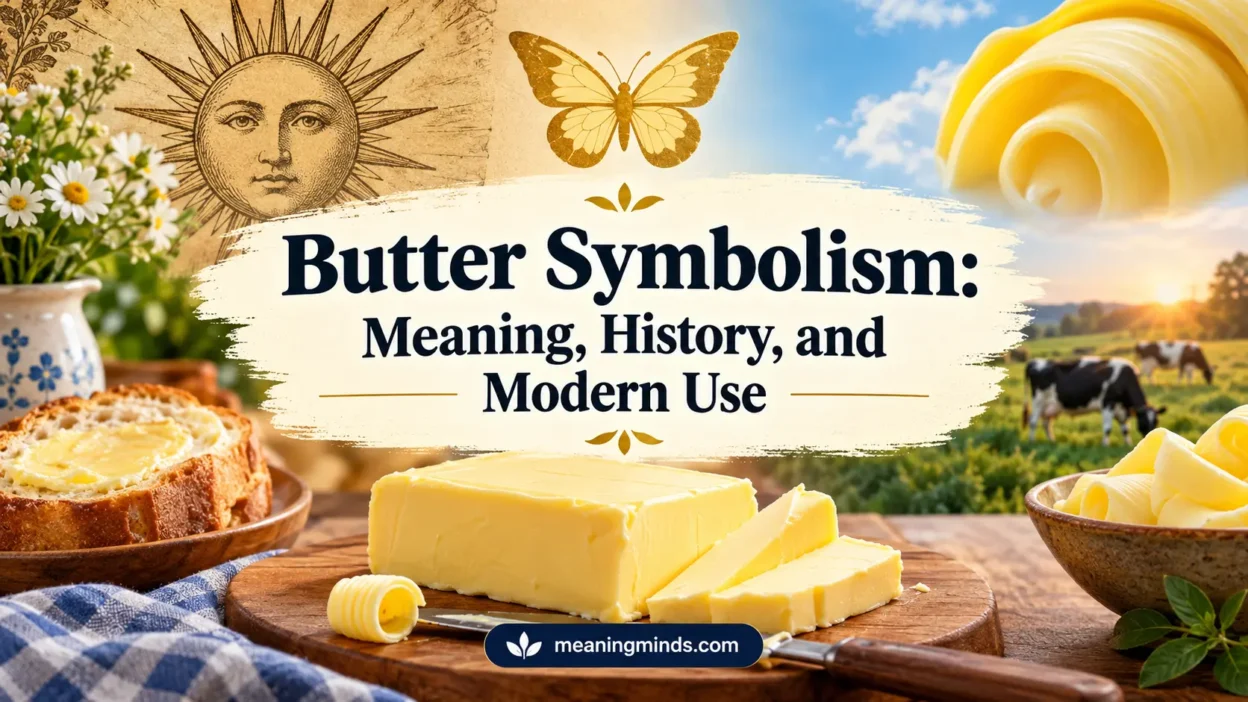
Butter is a familiar food found in kitchens, restaurants, celebrations, and family traditions around the world. Beyond its role as an ingredient, butter symbolism reflects ideas connected to comfort, nourishment, prosperity, hospitality, and everyday abundance. In the United States, butter often represents warmth, home cooking, and the simple pleasures associated with sharing food.
Although butter may seem like an ordinary household item, its meaning developed through centuries of agricultural life, religious customs, and cultural traditions. Different societies viewed butter as a valuable product because it required time, skill, and access to healthy livestock. These associations helped transform butter from a basic food into a symbol connected with care, generosity, and celebration.
Quick Answer
Butter commonly symbolizes comfort, nourishment, and abundance in modern American culture, especially through home cooking, family meals, and hospitality. Historically, it has also represented prosperity, purity, and sacred offerings in various cultural and religious traditions.
TL;DR
- Butter symbolizes comfort, nourishment, and hospitality.
- Ancient cultures valued butter as a sign of abundance.
- Americans connect butter with home, cooking, and tradition.
- Religious traditions used butter in sacred practices.
- Butter imagery appears in modern food and lifestyle culture.
What Butter Represents as a Symbol
Butter is made by churning cream until the fat separates from the liquid. Its golden color, smooth texture, and rich taste have helped shape many symbolic meanings.
In everyday life, butter is often associated with care because it appears in foods people prepare for family and guests. A warm piece of bread with butter, homemade baked goods, or a holiday meal can create feelings of comfort and connection.
The symbol does not usually represent one single idea. Instead, its meaning changes depending on the situation. In one setting, butter may suggest luxury and abundance. In another, it may represent simplicity, tradition, and memories of home.
The Main Meanings Behind Butter Symbolism
Comfort and Emotional Warmth
One of the strongest modern meanings of butter is comfort. Many people connect butter with familiar foods from childhood, family recipes, and special occasions.
In American culture, foods containing butter often appear during moments of celebration or togetherness. Cookies during holidays, pancakes at family breakfasts, and homemade dishes at gatherings all connect butter with emotional memories.
Because of this association, butter can symbolize:
- Home and family connection
- Childhood memories
- Care and affection
- Emotional satisfaction
The meaning comes less from the ingredient itself and more from the experiences surrounding it.
Nourishment and Care
Butter has long represented nourishment because it provides energy and richness in food. Before modern food systems, dairy products were important sources of calories and nutrition for many communities.
Symbolically, butter can represent the act of providing for others. A person who prepares a meal with care may use butter as part of an expression of love, generosity, or hospitality.
This interpretation appears in many cultures where food preparation is connected with family responsibility and social bonding.
Wealth, Prosperity, and Abundance
Historically, butter was not always an everyday product. Producing it required healthy animals, land, time, and labor. For farming communities, having enough butter could indicate stability and resources.
Because of this, butter became linked with:
| Context | Meaning in the USA | Common Associations | Notes |
|---|---|---|---|
| Home cooking | Comfort and care | Family meals, tradition | Connected with memories and relationships |
| Farming traditions | Prosperity | Agriculture, livestock, self-sufficiency | Represents productive resources |
| Celebrations | Abundance | Holidays, gatherings, special foods | Suggests generosity |
| Religious customs | Purity and offering | Ritual practices | Meaning varies by tradition |
| Modern lifestyle | Enjoyment | Food culture, baking | Often linked with pleasure |
In older agricultural societies, butter could represent having enough resources to share with others.
Ancient Roots and Early Symbolism of Butter
Butter has been used for thousands of years, especially in regions where people raised cattle and other dairy animals. Early communities discovered that churning cream created a valuable food that could last longer than fresh milk.
In ancient cultures, dairy products often represented prosperity because livestock was connected to survival and economic strength.
Butter in Ancient India
In Hindu traditions, clarified butter known as ghee became especially significant. Ghee was used in religious ceremonies, including offerings made during sacred rituals.
Because of its connection with purity, nourishment, and spiritual practices, butter and ghee developed meanings related to devotion and sacred giving.
Butter in European Traditions
European farming communities viewed butter as an important household resource. Making butter required labor, so it often represented the rewards of farming and domestic work.
Butter also became connected with celebrations, feasts, and seasonal traditions because dairy production followed agricultural cycles.
Butter in Northern Regions
In colder climates, dairy preservation was important for survival. Stored butter represented preparation, security, and the ability to maintain resources through difficult seasons.
Butter Symbolism in the United States
In the United States, butter symbolism is closely connected with food culture and personal memories. Americans commonly associate butter with:
- Homemade cooking
- Family recipes
- Holiday traditions
- Baking
- Hospitality
- Comfort foods
Butter appears frequently in American celebrations, including Thanksgiving meals, holiday baking, and community gatherings.
A plate of buttered rolls at a family dinner or a homemade pie made with butter can communicate warmth and generosity without words.
Butter and American Farm Culture
Agriculture has played an important role in American history, and dairy farming shaped many regional food traditions. Butter became a symbol of farm life, hard work, and self-sufficiency.
In rural communities, producing dairy products represented a connection between people, animals, and the land.
Today, butter still appears in discussions about traditional cooking, local farming, and handmade foods.
Butter as a Symbol of Hospitality
Offering food to guests is one of the oldest expressions of welcome, and butter often appears in these situations.
A host serving bread, baked goods, or a carefully prepared meal may use butter as part of creating a comfortable environment.
In American homes, butter can communicate:
- “You are welcome here.”
- “This meal was prepared with care.”
- “There is enough to share.”
Its symbolism comes from generosity rather than the product alone.
Emotional and Psychological Meaning of Butter
Food symbols often connect with memory and emotion, and butter is strongly tied to sensory experiences.
The smell of melted butter, the taste of baked goods, or the appearance of a golden crust can trigger feelings connected with familiar places and people.
Psychologically, butter may represent:
Security
Because butter is associated with meals and nourishment, it can symbolize having basic needs met.
Familiarity
Traditional recipes often pass through generations, making butter part of family identity.
Pleasure
The rich taste and texture of butter connect it with enjoyment and celebration.
Care
Preparing food with butter can represent effort and attention toward others.
Butter in Folklore and Cultural Traditions
Butter appears in various folk traditions, often connected with luck, prosperity, and protection.
Some European folklore included beliefs about butter-making, dairy animals, and household prosperity. In farming societies, successful dairy production was important for survival, so people developed customs and stories around protecting their resources.
Butter-related folklore often reflected concerns about:
- Good harvests
- Healthy livestock
- Household stability
- Community well-being
These traditions show how ordinary objects can gain symbolic meaning through daily life.
Butter Symbolism in Religion and Spiritual Traditions
Butter has played a role in several religious traditions, especially where dairy products represent purity, nourishment, or offerings. Its symbolic meaning usually comes from the value people placed on milk, livestock, and the process of transforming natural resources into something useful.
Butter and Hindu Traditions
In Hindu culture, ghee, a clarified form of butter, holds important religious meaning. It is commonly used in rituals, including offerings made during sacred ceremonies.
Ghee is associated with:
- Purity
- Devotion
- Spiritual offering
- Prosperity
Because it comes from milk, which has cultural importance in many Hindu traditions, ghee represents a connection between nature, nourishment, and religious practice.
Butter in Buddhist Traditions
In some Himalayan Buddhist communities, butter has a ceremonial role. Butter lamps are used in certain Buddhist practices as symbols of wisdom, clarity, and spiritual awareness.
The flame created with butter represents light overcoming darkness and understanding overcoming confusion.
Butter in Other Cultural Practices
Across different cultures, dairy products have appeared in rituals and celebrations because they represent valuable resources. The meaning is often connected with gratitude, sharing, and respect for natural resources.
Butter Symbolism in Modern American Life
Today, butter is less likely to be viewed as a sacred object and more commonly represents lifestyle, food traditions, and personal experiences.
Modern American meanings of butter include:
Home and Family
Butter is strongly connected with homemade meals. Many Americans associate it with family kitchens, holiday gatherings, and recipes passed between generations.
A family recipe that includes butter may represent history and personal identity.
Celebration and Indulgence
Butter is common in desserts, pastries, and special meals. Because these foods are often prepared for celebrations, butter can symbolize enjoyment and treating yourself.
Tradition and Nostalgia
Butter remains connected with older cooking methods and traditional recipes. Many people view it as a link between modern life and earlier generations.
Butter Symbolism in Art and Design
Butter is not one of the most common symbols in visual art, but when it appears, it often communicates ideas related to everyday life, comfort, and simplicity.
Artists may use butter imagery to represent:
- Domestic life
- Food memories
- Childhood experiences
- Rural traditions
- Human connection
Still-life paintings featuring food often explore themes of abundance and daily living. Butter may appear alongside bread, fruits, dairy products, or kitchen objects to create a feeling of warmth and familiarity.
In modern design, butter imagery is often used by:
- Food brands
- Bakery businesses
- Kitchen product companies
- Farm-related businesses
The symbol usually creates feelings of freshness, tradition, and trust.
Butter Symbolism in Tattoos and Personal Expression
Butter tattoos are uncommon compared with animals, flowers, or traditional symbols, but they can carry personal meanings.
A person choosing a butter tattoo may connect it with:
Childhood Memories
Butter may remind someone of family breakfasts, baking with relatives, or a specific comfort food.
Humor and Personality
Because butter is an unusual tattoo choice, some people use it to show creativity, playfulness, or a unique sense of humor.
Appreciation for Food Culture
Food lovers, chefs, and bakers may choose butter imagery as a symbol of their passion for cooking.
Simplicity and Joy
A small butter tattoo can represent finding happiness in ordinary moments.
The meaning depends heavily on the individual because butter does not have a universal tattoo interpretation.
Butter Symbolism in Dreams
Dream interpretations vary widely, and there is no scientific evidence that dreams have fixed symbolic meanings. However, many cultural interpretations associate butter dreams with themes connected to comfort and resources.
Common traditional interpretations include:
Seeing Butter
Some people interpret seeing butter in a dream as a sign of satisfaction, nourishment, or receiving support.
Melting Butter
Melting butter may be interpreted as a change, transition, or something becoming temporary.
Sharing Butter or Food
Sharing butter may symbolize generosity, connection, or caring relationships.
These interpretations are cultural beliefs rather than proven meanings.
Positive Meanings Associated With Butter
Butter generally carries positive associations in many cultures.
Common positive meanings include:
Comfort
Butter represents familiar experiences, especially meals connected with family and home.
Abundance
Historically, butter represented having enough resources to produce and share food.
Generosity
Offering butter with bread or a meal reflects hospitality.
Creativity
For bakers and cooks, butter represents the ability to create something enjoyable from simple ingredients.
Connection
Butter-based foods often appear during gatherings, helping create shared experiences.
Possible Negative Associations of Butter
Although butter usually has positive symbolism, some interpretations can be more complicated.
Excess and Overindulgence
Because butter is rich and associated with luxury foods, it can sometimes represent excess or lack of moderation.
Changing Food Values
Modern conversations about health and nutrition have created debates around butter. Some people associate it with traditional eating, while others connect it with concerns about diet.
Loss of Tradition
In some contexts, butter may represent older ways of living that have changed with industrial food systems.
These meanings depend on personal views and cultural context.
Common Misunderstandings About Butter Symbolism
Butter Does Not Have One Universal Meaning
A common mistake is assuming every culture views butter the same way. Symbolic meanings change based on religion, geography, and personal experiences.
Religious Meanings Are Not the Same Everywhere
Butter and ghee may have important meanings in certain traditions, but those meanings should not be applied to all cultures.
Modern Symbolism Is Often Personal
Today, someone may associate butter with family memories, cooking, or humor rather than historical traditions.
Butter Is More Than a Luxury Symbol
While butter once represented valuable resources, modern interpretations often focus more on comfort and everyday life.
How Butter Symbolism Has Changed Over Time
Butter’s symbolic meaning has shifted as societies changed.
In agricultural communities, butter represented survival, farming success, and household resources. Producing butter required animals, land, and labor, making it a valuable product.
As food systems developed, butter became easier to access. Its symbolism moved away from simple economic value and toward emotional associations.
Today, butter often represents:
- Homemade traditions
- Personal memories
- Food creativity
- Comfort and celebration
The symbol has moved from a sign of material resources to a sign of personal and cultural experiences.
Butter in Popular Culture and Digital Spaces
Modern media often uses food imagery to communicate emotions and identity. Butter may appear in cooking videos, advertisements, memes, and lifestyle content.
Online, butter imagery is commonly connected with:
- Baking communities
- Recipe sharing
- Comfort food culture
- Traditional cooking
Food creators often use butter as a visual sign of richness, homemade quality, and enjoyable experiences.
Butter Symbolism in Holidays and Celebrations
Butter plays a practical and symbolic role in many American celebrations.
During holidays, butter appears in:
- Cookies
- Cakes
- Pies
- Bread
- Holiday dishes
These foods often represent generosity and family connection.
For many people, holiday foods made with butter are less about the ingredient itself and more about memories created around the table.
Frequently Asked Questions About Butter Symbolism
What does butter symbolize in American culture?
Butter commonly symbolizes comfort, home cooking, hospitality, and family traditions in American culture. It is often connected with meals, baking, and shared experiences.
What does butter represent spiritually?
In some spiritual traditions, butter and ghee represent purity, devotion, and sacred offerings. These meanings depend on the specific religious tradition.
Is butter a symbol of wealth?
Historically, butter could represent prosperity because producing it required livestock and resources. Today, it is more commonly associated with comfort and enjoyment.
What does a butter tattoo symbolize?
A butter tattoo may represent childhood memories, cooking, humor, or appreciation for food culture. The meaning usually depends on the person wearing it.
Why is butter connected to hospitality?
Butter has long been offered with bread and meals, making it associated with welcoming guests and sharing resources.
Does butter have a negative symbolic meaning?
Butter is usually positive, but it can sometimes represent excess or changing attitudes toward traditional foods. These interpretations depend on context.
What does butter symbolize in dreams?
Some cultural interpretations connect butter dreams with comfort, support, and abundance. Dream symbolism is personal and does not have scientifically proven meanings.
Conclusion
Butter represents more than a common kitchen ingredient. Its symbolism connects with comfort, nourishment, hospitality, tradition, and the human desire to share food with others.
From ancient farming communities to modern American kitchens, butter has carried meanings shaped by agriculture, family life, religion, and personal memories. While different cultures interpret it in different ways, its connection with care and abundance remains common.
Understanding butter symbolism shows how ordinary objects can reflect larger human experiences. A simple ingredient can represent family traditions, cultural values, and the moments people create around food.