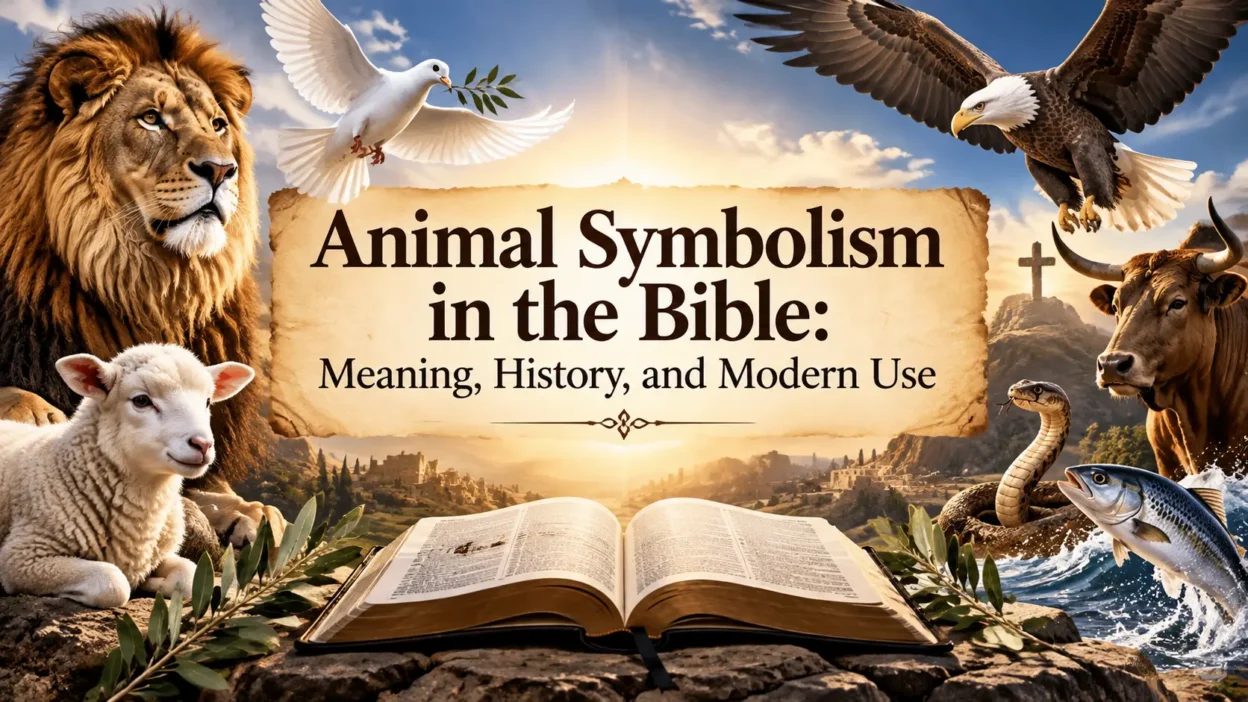
Animals appear throughout biblical stories, teachings, poetry, and visions. From the dove representing peace to the lamb representing sacrifice, animals often carry meanings beyond their physical presence. Animal symbolism in the Bible helps readers understand spiritual ideas, human qualities, moral lessons, and cultural beliefs connected to the natural world.
For many Americans today, biblical animals remain familiar symbols in churches, artwork, tattoos, books, jewelry, and holiday traditions. These images connect religious stories with ideas such as hope, protection, humility, strength, and renewal. Understanding their original context helps separate traditional meanings from modern interpretations.
Quick Answer
Animal symbolism in the Bible commonly represents spiritual ideas such as peace, sacrifice, wisdom, strength, and human character in modern American religious culture. Historically, biblical animals were used to communicate moral lessons, describe relationships with God, and explain important beliefs through familiar images.
TL;DR
- Biblical animals represent spiritual lessons and human qualities.
- Ancient cultures connected animals with survival and religious meaning.
- Americans use biblical animals in faith, art, and personal expression.
- Different animals carry positive and cautionary meanings.
- Context determines each animal’s biblical interpretation.
Why Animals Carry Meaning in Biblical Stories
Animals played practical and symbolic roles in ancient biblical societies. People depended on livestock for food, clothing, farming, transportation, and religious offerings. Because animals were part of everyday life, biblical writers often used them as familiar examples to explain larger ideas.
A shepherd understood the value of a sheep. A farmer recognized the importance of an ox. A traveler knew the dangers connected with wild animals. These everyday experiences made animal references easier for ancient audiences to understand.
Biblical symbolism does not mean every animal has only one fixed meaning. The same animal can represent different ideas depending on the story, surrounding verses, and cultural setting.
For example, a lion can represent strength and authority, but it can also represent danger or an enemy. A snake can symbolize evil in some passages, while it can represent healing when connected with the bronze serpent story.
Common Meanings of Biblical Animals in the United States
In modern American culture, biblical animals often appear in religious education, church artwork, home decoration, and personal symbols. Many people recognize certain animals immediately because their meanings have been passed through generations.
The following examples show common interpretations:
| Animal | Meaning in the USA | Common Associations | Notes |
|---|---|---|---|
| Dove | Peace and hope | Holy Spirit, reconciliation | Often seen in Christian art |
| Lamb | Innocence and sacrifice | Jesus, humility | Connected with Easter traditions |
| Lion | Strength and leadership | Courage, authority | Also linked with protection |
| Eagle | Renewal and vision | Freedom, spiritual growth | Popular in religious artwork |
| Serpent | Temptation and warning | Sin, danger, transformation | Meaning depends on context |
These meanings are common, but readers often look at the entire biblical passage before deciding what an animal represents.
Ancient Roots and Early Symbolism
Animal symbolism in biblical texts developed from the traditions of ancient Israel and surrounding cultures. People living in the ancient Near East used animals in stories, religious practices, royal images, and poetry.
Sheep and goats were especially important because they were central to farming communities. Shepherding became a strong image for leadership and care. This connection explains why biblical writers often compared God or leaders to shepherds who guide and protect their people.
Birds also carried important meanings. A dove appearing after the flood became associated with restoration and a new beginning. Birds flying freely also became natural images for movement, freedom, and communication between heaven and earth.
Some animal meanings came from older cultural associations, while others developed specifically through biblical stories. Over time, these interpretations became part of Jewish and Christian traditions.
The Role of Animals in Biblical Teachings
Animals in the Bible often help explain human behavior. They are not only symbols of nature but also tools for teaching lessons about choices, responsibility, and faith.
Jesus frequently used animals in his teachings because people could understand these examples easily. References to sheep, birds, and other creatures helped explain ideas about trust, care, and spiritual awareness.
For example, comparing people to sheep was not meant as an insult. In ancient farming communities, sheep represented dependence on guidance and protection. A shepherd’s relationship with a flock reflected ideas about care and responsibility.
Animal examples also encouraged people to observe the natural world. Biblical writers often used animals to show qualities humans should develop, such as patience, wisdom, courage, or humility.
The Dove as a Symbol of Peace and Divine Presence
The dove is one of the most recognized biblical animals. In American religious culture, it is commonly connected with peace, purity, and the presence of the Holy Spirit.
The dove became especially meaningful because of its role after the flood story, where it returned carrying an olive leaf. This image became associated with restoration and the end of hardship.
In Christianity, the dove is also linked with the baptism of Jesus, where the Spirit is described in a form resembling a dove. Because of this connection, churches often use dove imagery during ceremonies, artwork, and religious education.
Modern Americans may also use dove symbols outside formal religious settings. A dove on a memorial item, wedding decoration, or piece of jewelry often communicates peace, love, or remembrance.
The Lamb and Its Connection to Sacrifice
The lamb represents one of the most important animal symbols in the Bible. Its meaning comes from ancient sacrifice traditions and later Christian interpretations connected with Jesus.
In ancient Israel, lambs were used in religious offerings. Their association with innocence and sacrifice influenced later Christian beliefs about Jesus as the “Lamb of God.”
For many Americans, lamb imagery appears most often around Easter. Churches, decorations, children’s books, and religious artwork frequently use lambs to represent kindness, forgiveness, and renewal.
The symbol also carries emotional meaning. A lamb appears gentle and vulnerable, which connects it with ideas of compassion and care rather than power or dominance.
The Lion as a Symbol of Strength and Authority
The lion is one of the most recognizable animals in biblical symbolism. In many passages, it represents strength, courage, royalty, and authority. Because lions were viewed as powerful predators in the ancient world, writers used their image to describe both human and divine qualities.
One of the most important biblical references is the “Lion of Judah.” This title became connected with leadership, kingship, and the lineage of David. In Christian tradition, it is also associated with Jesus and his role as a spiritual leader.
In the United States, lion imagery appears frequently in Christian artwork, church decorations, jewelry, and family designs. Many people choose lion symbols because they represent courage, protection, and confidence.
However, the lion does not always have a positive meaning. In some biblical passages, a roaring lion represents danger or an enemy seeking to destroy. This shows why biblical symbolism depends heavily on context rather than a single definition.
The Eagle as a Symbol of Renewal and Spiritual Vision
The eagle carries several meanings in biblical literature, including strength, protection, renewal, and rising above challenges. Its ability to fly high made it a natural image for freedom and a broader perspective.
One well-known biblical reference compares renewed strength to rising on wings like eagles. This passage has influenced how many believers understand the eagle as a symbol of endurance and hope during difficult times.
American culture already connects the eagle with freedom and national identity, especially through the bald eagle as the national bird of the United States. Because of this overlap, eagle symbolism often blends religious, cultural, and patriotic meanings.
In churches and religious artwork, eagles may represent spiritual growth and confidence in God’s protection. In personal designs such as tattoos or jewelry, an eagle often communicates independence, resilience, and overcoming obstacles.
The Serpent: Warning, Wisdom, and Complex Meanings
The serpent is one of the most complicated animal symbols in the Bible. Many people immediately connect snakes with temptation because of the story of Adam and Eve. In that context, the serpent represents deception and disobedience.
However, biblical references to snakes are not always negative. In one story, Moses creates a bronze serpent that becomes connected with healing and restoration. This shows that the same animal can represent different ideas depending on the situation.
For modern American audiences, serpent imagery is often interpreted through Christian teachings about temptation and moral choices. At the same time, some people view snakes as symbols of transformation because of their ability to shed their skin.
The serpent demonstrates an important principle of biblical interpretation: symbols should be understood within their original story rather than separated from their context.
Other Important Animal Symbols Found in the Bible
Many animals appear throughout biblical texts, each carrying different meanings shaped by their role in stories and traditions.
The following examples show how different creatures communicate different ideas:
| Animal | Biblical Meaning | Modern Interpretation |
|---|---|---|
| Fish | Provision and faith | Christianity, abundance, community |
| Horse | War, power, movement | Strength and action |
| Sheep | Guidance and care | Humility and belonging |
| Goat | Judgment and separation | Moral choices |
| Raven | God’s provision | Survival and unexpected help |
Some animals became major religious symbols, while others remained important because of specific stories or teachings.
How Americans Use Biblical Animal Symbols Today
In the United States, biblical animal symbols appear in many areas of everyday life. Their use extends beyond church settings and often reflects personal beliefs, family traditions, or cultural identity.
Common examples include:
Religious artwork:
Church paintings, stained-glass windows, crosses, and devotional materials often feature lambs, doves, fish, and lions.
Home decoration:
Some Americans display biblical animal images as reminders of faith, family values, or personal inspiration.
Jewelry and gifts:
Animal symbols appear on necklaces, bracelets, rings, and religious gifts. A dove pendant may represent peace, while a lion design may represent courage.
Public celebrations:
Biblical animals are especially common during religious holidays such as Easter, where lambs and other symbols represent renewal and sacrifice.
These uses show that biblical animals continue to function as visual language. They allow people to express beliefs and values without using words.
Biblical Animals in Tattoos and Personal Expression
Animal tattoos inspired by biblical symbolism have become increasingly common among people who want to represent faith, identity, or personal experiences.
A dove tattoo may represent peace, spiritual guidance, or a new beginning. A lion tattoo may express courage, leadership, or a connection with the Lion of Judah. A lamb tattoo may symbolize innocence, sacrifice, or devotion.
The meaning of a tattoo usually depends on the person’s story. Two people may choose the same animal for completely different reasons.
Modern tattoo culture also combines biblical symbols with other artistic traditions. For example, an eagle may include religious elements, while a serpent design may represent both biblical themes and personal transformation.
Because tattoos are permanent, many people choose animals that represent qualities they want to remember or values they want to display.
Emotional and Psychological Meaning of Biblical Animals
Animal symbols often work because humans naturally connect certain qualities with living creatures. People observe animal behavior and use those observations to understand themselves.
A dove appears gentle and peaceful, making it a natural symbol of harmony. A lion appears strong and protective, making it a symbol of bravery. A lamb appears vulnerable, connecting it with innocence and care.
From a psychological perspective, symbols help people express complex ideas quickly. A single animal image can communicate emotions, memories, beliefs, and personal goals.
For many Americans, biblical animals provide a connection between personal identity and spiritual tradition. They can serve as reminders of faith, family history, or important life lessons.
Differences Between Biblical Meaning and Modern Interpretations
Over time, some animal meanings have changed as cultures changed. A symbol that had one meaning in ancient biblical settings may carry additional meanings today.
For example, the eagle originally represented strength and renewal in biblical writings. In modern America, it also represents national freedom because of its connection with the United States.
The serpent provides another example. Biblical stories often connect it with temptation, but modern audiences may also associate snakes with healing, change, or nature.
Understanding these differences prevents oversimplification. A symbol can have multiple layers without one interpretation canceling another.
Common Misunderstandings About Biblical Animal Symbols
One common misunderstanding is that every animal in the Bible has a universal meaning. In reality, biblical symbolism changes based on the passage, historical setting, and cultural background.
Another misunderstanding is assuming that an animal always represents either good or evil. Many biblical symbols contain both positive and cautionary meanings.
For example, a lion can represent Christ’s authority but also represent danger. A snake can represent temptation but also healing. The surrounding message determines the meaning.
Modern interpretations should respect the original religious context while recognizing how symbols continue to develop in new cultures.
How Biblical Animal Symbolism Has Changed Over Time
Biblical animal meanings have evolved as they moved from ancient communities into modern religious and cultural life.
Early biblical audiences understood animals through farming, survival, and religious practices. Later Jewish and Christian traditions added theological interpretations that shaped how generations viewed these symbols.
During the medieval period, animal symbolism became common in Christian art and storytelling. Churches used animals to teach religious ideas to people who might not read written texts.
Today, biblical animals appear in digital art, social media, fashion, tattoos, and personal decoration. Their meanings continue to adapt while maintaining connections to older traditions.
Frequently Asked Questions
What is the most common animal symbol in the Bible?
The lamb is one of the most recognized biblical animal symbols because of its connection with sacrifice, innocence, and Jesus in Christian tradition. The dove is also widely recognized because of its association with peace and the Holy Spirit.
What does a lion symbolize in the Bible?
A lion often symbolizes strength, authority, courage, and leadership. It can also represent danger or an enemy in certain passages, so its meaning depends on context.
Are biblical animal symbols still used in America today?
Yes. Americans use biblical animal symbols in churches, artwork, jewelry, tattoos, home decoration, and religious celebrations. Many people choose them to express faith or personal values.
What does a dove symbolize in Christianity?
A dove commonly represents peace, purity, and the Holy Spirit. Its biblical meaning comes from stories involving Noah’s flood and the baptism of Jesus.
Why are animals used so often in biblical stories?
Animals were part of everyday life in ancient societies, making them familiar examples for teaching spiritual and moral lessons. Their behaviors helped writers communicate complex ideas clearly.
Can the same biblical animal have different meanings?
Yes. Many biblical animals have multiple meanings depending on the passage and historical context. The serpent and lion are examples of symbols with both positive and negative interpretations.
Conclusion
Animals in biblical stories represent ideas that connect nature, faith, human behavior, and moral lessons. From the peace of the dove to the strength of the lion, these symbols continue to influence religious art and personal expression.
Animal symbolism in the Bible remains meaningful because people still use these images to communicate beliefs, emotions, and values. While interpretations have changed across cultures and generations, the original stories continue to shape how these symbols are understood today.
The lasting importance of biblical animals comes from their ability to connect everyday creatures with larger questions about identity, purpose, and human choices.