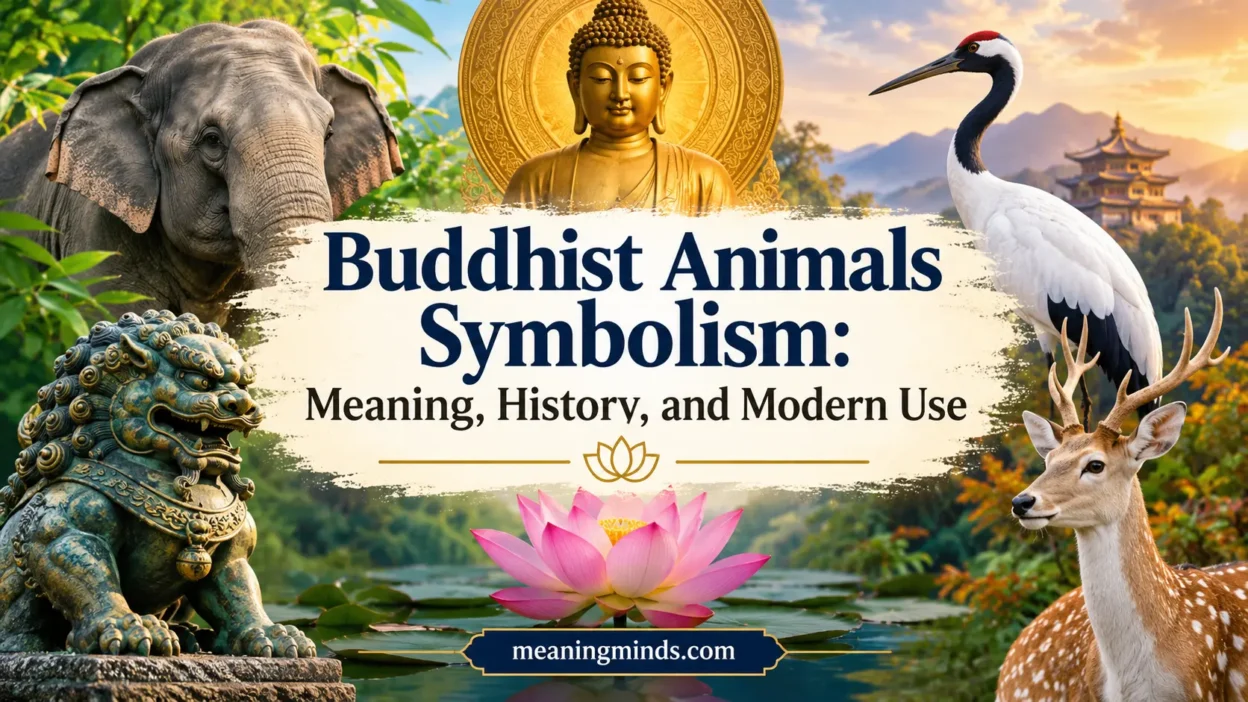
Animals have always appeared in Buddhist stories, artwork, teachings, and traditions because they help explain human behavior, compassion, wisdom, and the relationship between all living beings. Buddhist animals symbolism refers to the meanings connected with animals in Buddhist cultures, where creatures often represent qualities such as kindness, patience, awareness, strength, and spiritual growth.
In modern American culture, Buddhist animal symbols are often seen in meditation spaces, tattoos, jewelry, artwork, and personal decorations. While some people use these symbols for spiritual reasons, others appreciate them as reminders of personal values, emotional balance, or respect for nature.
Quick Answer
Buddhist animals symbolism commonly represents compassion, wisdom, mindfulness, and respect for all living beings in modern American culture. Historically, Buddhist traditions used animals in stories and teachings to explain moral lessons, spiritual qualities, and the journey toward enlightenment.
TL;DR
- Buddhist animals represent compassion, wisdom, and spiritual lessons.
- Animals appear often in Buddhist stories and artwork.
- The elephant symbolizes strength, patience, and mental clarity.
- The deer represents peace, harmony, and gentle behavior.
- The lotus-associated animals reflect spiritual growth and purity.
- Americans use Buddhist animal symbols in art, tattoos, and meditation spaces.
Why Animals Hold Meaning in Buddhist Traditions
Buddhism teaches that all living beings are connected through existence and experience. Animals are not viewed only as creatures of nature; they are often used as examples to explain human emotions, choices, and spiritual development.
Many Buddhist teachings use animal stories because animals provide simple and memorable examples. A calm deer can represent peaceful behavior, while a strong elephant can represent a disciplined mind. These examples make complex ideas easier to understand.
Unlike symbols that always have one fixed meaning, Buddhist animal meanings can change depending on the country, tradition, artwork, and context. A creature may represent different qualities in Tibetan Buddhism, Zen Buddhism, or other Buddhist communities.
Ancient Roots of Animal Symbolism in Buddhism
Animal symbolism developed from early Buddhist teachings, including stories about the Buddha’s previous lives. These stories, known as Jataka tales, describe the Buddha appearing in different animal forms before his final human birth.
The Jataka stories often show animals demonstrating virtues such as generosity, courage, honesty, and compassion. For example, an animal may sacrifice its own comfort to help others, teaching the importance of selflessness.
These stories helped spread Buddhist values across Asia because people could understand moral lessons through familiar animals and natural scenes.
Animals in Buddhist Teachings and Stories
Animals appear throughout Buddhist literature as teachers, examples, and symbols. They are often connected with human qualities rather than supernatural powers.
Some common lessons include:
- A gentle animal may represent compassion.
- A powerful animal may represent inner strength.
- A wise animal may represent awareness.
- A peaceful animal may represent harmony.
These meanings encourage people to reflect on their own actions and emotions. The animal itself is not always the focus; the quality it represents is usually more important.
What Buddhist Animal Symbols Mean in the United States
In the United States, Buddhist animal symbols are often understood through a combination of religious interest, mindfulness practices, and appreciation for Eastern art.
Many Americans encounter Buddhist animal imagery through:
- Meditation centers
- Yoga communities
- Home decorations
- Jewelry designs
- Tattoos
- Nature-inspired artwork
- Books and films about spirituality
For some people, these symbols represent Buddhist beliefs. For others, they serve as reminders of values such as kindness, patience, and living with greater awareness.
| Animal Symbol | Meaning in the USA | Common Associations | Notes |
|---|---|---|---|
| Elephant | Wisdom and strength | Patience, stability, leadership | Connected with Buddha’s birth stories |
| Deer | Peace and gentleness | Harmony, compassion, calmness | Associated with Buddha’s first teaching |
| Lion | Courage and confidence | Protection, authority, truth | Represents Buddha’s teachings |
| Snake | Transformation and protection | Change, awareness, renewal | Linked with Buddhist legends |
| Fish | Freedom and abundance | Movement, happiness, spiritual progress | Common in Asian Buddhist art |
Elephant Symbolism in Buddhism
The elephant is one of the most recognized animals in Buddhist traditions. It often represents wisdom, patience, strength, and mental discipline.
In Buddhist stories, elephants are connected with important events in the Buddha’s life. The white elephant is especially meaningful because Buddhist tradition describes Queen Maya, the Buddha’s mother, having a dream involving a white elephant before his birth.
The elephant’s calm nature also became a symbol of controlling the mind. Just as a trained elephant can become steady and focused, Buddhist teachings encourage people to develop awareness and self-control.
In modern America, elephant imagery is popular in meditation spaces and home decor because many people associate it with stability, intelligence, and peaceful energy.
Deer Symbolism and the Meaning of Peace
The deer holds an important place in Buddhist symbolism because of its connection with the Deer Park in Sarnath, India, where the Buddha delivered his first teaching after enlightenment.
Deer often represent:
- Peaceful communication
- Gentleness
- Compassion
- Harmony
Their quiet and non-aggressive nature makes them a symbol of balanced living.
In the United States, deer imagery is often connected with nature appreciation, calm environments, and spiritual reflection. Buddhist-inspired deer designs are commonly used in artwork and meditation spaces.
Lion Symbolism: Courage and Spiritual Authority
The lion represents confidence, courage, and the strength of truth in Buddhist traditions. The Buddha’s teachings are sometimes described as a “lion’s roar” because they were believed to have a strong and fearless message.
Lion imagery can be found in Buddhist temples and artwork across Asia. It often represents protection and the courage needed to follow a spiritual path.
Modern audiences may interpret the Buddhist lion as a reminder to speak honestly, remain confident, and overcome fear.
Snake Symbolism in Buddhist Traditions
Snakes have complex meanings in Buddhism. They can represent protection, transformation, and awareness, but interpretations vary depending on the cultural setting.
One famous Buddhist story describes the serpent-like Naga king Mucalinda protecting the Buddha from a storm while he meditated. Because of this story, snakes can symbolize protection and support.
However, snakes may also represent challenges or hidden dangers in some traditions. Their meaning depends heavily on the story and artwork where they appear.
In modern American culture, Buddhist snake symbols are often chosen for tattoos because they represent personal transformation and change.
Fish Symbolism in Buddhism
Fish are common symbols in Buddhist art, especially the pair of golden fish found among the Eight Auspicious Symbols in some Buddhist traditions.
Fish can represent:
- Freedom from limitations
- Happiness
- Movement through life
- Spiritual progress
Because fish move freely through water, they are often connected with the idea of moving beyond obstacles.
In the United States, fish symbolism may appear in Buddhist-inspired artwork, jewelry, and meditation designs. Many people connect it with personal growth and adaptability.
Monkey Symbolism in Buddhist Stories
Monkeys appear in Buddhist stories as symbols connected with the restless nature of the mind. Their energetic movement can represent distraction, curiosity, or uncontrolled thoughts.
Some Buddhist teachings compare the human mind to a monkey because thoughts can jump quickly from one idea to another.
At the same time, monkeys can also represent intelligence, creativity, and learning ability.
Modern interpretations often focus on mindfulness practices that help people calm the “monkey mind” and develop greater awareness.
Bird Symbolism in Buddhist Traditions
Birds frequently appear in Buddhist artwork because they represent freedom, perspective, and spiritual movement.
Birds may symbolize:
- Freedom from attachment
- Awareness
- A higher viewpoint
- Peaceful transformation
The ability of birds to move between earth and sky makes them natural symbols of connection between ordinary life and spiritual understanding.
In American meditation and wellness spaces, bird imagery is often used to represent emotional freedom and personal growth.
Dragon Symbolism in Buddhism
Dragons hold an important place in many Buddhist traditions, especially in East Asian cultures. Unlike the Western image of dragons as dangerous monsters, Buddhist dragons are often connected with protection, wisdom, and natural forces.
In Chinese and Japanese Buddhist traditions, dragons are frequently shown near temples, water sources, and sacred spaces. They are sometimes associated with rain, rivers, and the balance of nature because ancient communities depended on water for farming and survival.
Buddhist dragons are also connected with guardianship. In artwork, they may appear as protectors of Buddhist teachings or sacred objects. Their presence represents the idea that wisdom and compassion should be protected and respected.
In modern American culture, Buddhist dragon imagery is often used in tattoos and artwork because people associate it with transformation, strength, protection, and personal growth. However, the meaning can vary depending on whether the design comes from Buddhist traditions, general Asian mythology, or modern fantasy culture.
Horse Symbolism in Buddhism
The horse is another meaningful animal in Buddhist traditions, often representing movement, determination, and spiritual progress.
One of the most important Buddhist horses is Kanthaka, the horse associated with Prince Siddhartha before he became the Buddha. According to Buddhist stories, Kanthaka carried Siddhartha when he left his royal life to search for enlightenment.
Because of this story, the horse became connected with:
- Commitment to a spiritual path
- Courage to accept change
- Freedom from attachment
- Personal transformation
The horse’s ability to travel long distances also makes it a symbol of progress and the journey toward greater understanding.
In the United States, horse symbolism is already strongly connected with freedom, independence, and adventure. When combined with Buddhist ideas, the horse can represent inner growth and the courage to create positive change.
Turtle Symbolism in Buddhism
The turtle represents patience, longevity, stability, and careful progress in many Buddhist-influenced cultures.
Because turtles move slowly and steadily, they are often associated with patience and thoughtful action. Their protective shell can symbolize safety, self-awareness, and the importance of creating inner balance.
Some Buddhist traditions use turtle imagery to express ideas about long life and harmony with nature. The turtle’s connection with water and earth also reflects the relationship between living beings and the natural world.
In modern American settings, Buddhist turtle symbols are often chosen for home decorations and tattoos because people connect them with calmness, resilience, and emotional stability.
Buddhist Animal Symbolism in Tattoos and Modern Design
Buddhist animal symbols have become popular in modern design, especially in tattoos, jewelry, clothing, and home decoration. Many people choose these images because they represent personal values rather than only religious beliefs.
Common reasons people select Buddhist animal tattoos include:
- A reminder of personal growth
- Connection with mindfulness practices
- Appreciation for Buddhist art
- Respect for nature
- Representation of life experiences
Popular Buddhist-inspired animal tattoo designs include:
Elephant tattoos often represent wisdom, patience, and strength.
Dragon tattoos may represent transformation, protection, and courage.
Deer tattoos commonly express peace, gentleness, and harmony.
Fish tattoos may symbolize freedom and movement.
Bird tattoos can represent emotional freedom and a broader perspective.
However, the meaning of a tattoo depends on the person wearing it. A Buddhist animal image does not automatically show religious identity. Some people choose these designs because of cultural appreciation, artistic beauty, or personal symbolism.
Buddhist Animals in Art, Jewelry, and Home Decor
Beyond tattoos, Buddhist animal symbols appear in many forms of modern design.
People may see Buddhist-inspired animal imagery in:
- Wall art
- Meditation rooms
- Statues
- Necklaces and bracelets
- Clothing patterns
- Garden decorations
For many Americans, these designs create a peaceful atmosphere. An elephant statue, deer artwork, or dragon decoration may serve as a visual reminder of patience, compassion, or personal reflection.
Interior design often uses these symbols because they connect natural imagery with emotional themes. A person may choose a turtle design to represent stability or a bird image to represent freedom.
Cultural Differences and Misunderstandings
Buddhist animal symbols can sometimes be misunderstood when they move between cultures. A symbol that has a specific religious meaning in one region may gain a different meaning in another.
For example, dragons are viewed differently in Western fantasy compared with Buddhist traditions. In many Western stories, dragons are enemies or creatures to defeat. In many Buddhist and East Asian traditions, dragons can represent protection and positive forces.
Another misunderstanding involves using Buddhist symbols only as decorative objects. While many people appreciate their beauty, some Buddhist communities view certain images as sacred and believe they should be treated respectfully.
Understanding the original cultural background helps people appreciate these symbols more accurately.
How Buddhist Animal Meanings Have Changed Over Time
Buddhist animal symbolism has evolved as Buddhism spread across different countries and cultures.
In ancient India, animals were often used in teaching stories to explain ethics and human behavior. As Buddhism traveled to China, Japan, Tibet, Korea, and Southeast Asia, local cultures added their own artistic styles and interpretations.
Over time, Buddhist animal symbols moved beyond temples and religious texts. They became part of:
- Traditional artwork
- Architecture
- Literature
- Personal expression
- Modern wellness culture
Today, people may encounter Buddhist animal imagery in both religious and non-religious settings. A symbol may still carry traditional meanings while also becoming a personal reminder of values such as kindness, patience, or awareness.
Buddhist Animal Symbolism and Modern American Spirituality
In the United States, interest in Buddhist ideas has grown through meditation, mindfulness practices, yoga communities, and wellness movements.
Many Americans connect Buddhist animal symbols with:
- Emotional balance
- Peaceful living
- Self-reflection
- Compassion toward others
- Respect for nature
These interpretations often focus less on religious practice and more on personal meaning. For some people, an animal symbol becomes a daily reminder of how they want to approach life.
The meaning depends on individual beliefs, cultural understanding, and personal experiences.
Common Misunderstandings About Buddhist Animal Symbols
Some people assume every Buddhist animal symbol has a single universal meaning. In reality, meanings can differ across Buddhist schools and cultures.
A few common misunderstandings include:
Every animal has a fixed meaning.
Animal symbolism often changes depending on the story, artwork, and cultural setting.
Buddhist symbols are only religious symbols.
Many people use them for artistic or personal reasons without practicing Buddhism.
All Asian animal symbols are Buddhist.
Some animals may come from broader Asian mythology, folklore, or cultural traditions.
Modern interpretations always match ancient meanings.
Contemporary uses can add new meanings that were not part of older traditions.
Why Buddhist Animal Symbols Remain Popular Today
Buddhist animal symbols continue to attract attention because they connect simple natural images with human experiences.
An elephant can remind someone to stay patient. A deer can represent peaceful behavior. A bird can suggest freedom and perspective.
These symbols remain meaningful because animals are familiar parts of human life. They help people think about qualities they value and the way they want to interact with the world.
Frequently Asked Questions
What do Buddhist animal symbols represent?
Buddhist animal symbols commonly represent qualities such as compassion, wisdom, patience, courage, and spiritual awareness. Their meanings often come from Buddhist stories, teachings, and cultural traditions.
Which animal is the most important symbol in Buddhism?
The elephant is one of the most recognized Buddhist animals because of its connection with wisdom, strength, and stories about the Buddha’s birth. Other important animals include deer, lions, dragons, fish, and horses.
What does a Buddhist elephant symbolize?
A Buddhist elephant usually symbolizes wisdom, patience, strength, and control of the mind. The white elephant has a special connection with Buddhist birth traditions.
Are Buddhist animal tattoos religious?
Buddhist animal tattoos can be religious, cultural, or personal. Some people choose them to express Buddhist beliefs, while others select them because of their artistic meaning or personal connection.
What does a dragon symbolize in Buddhism?
In Buddhism, dragons often symbolize protection, wisdom, and natural balance. Their meaning differs from many Western dragon stories where dragons are often shown as enemies.
Why are deer important in Buddhism?
Deer are important because the Buddha’s first teaching is traditionally associated with Deer Park in Sarnath. They symbolize peace, gentleness, and harmony.
Can anyone use Buddhist animal symbols?
People from different backgrounds may appreciate Buddhist animal symbols, but it is important to understand their cultural and religious context. Respectful use includes learning about the traditions behind the images.
Conclusion
Buddhist animals symbolism represents a connection between nature, human qualities, and spiritual reflection. Animals in Buddhist traditions are not simply decorative images; they often communicate lessons about compassion, awareness, patience, and personal growth.
In modern American culture, these symbols appear in tattoos, artwork, jewelry, and meditation spaces. Some people use them as religious expressions, while others see them as reminders of values they want to practice in daily life.
Understanding the history and cultural background of buddhist animals symbolism allows people to appreciate these images with greater respect and a clearer view of what they represent. Each animal carries a different message, but together they reflect the Buddhist idea that all living beings are connected.