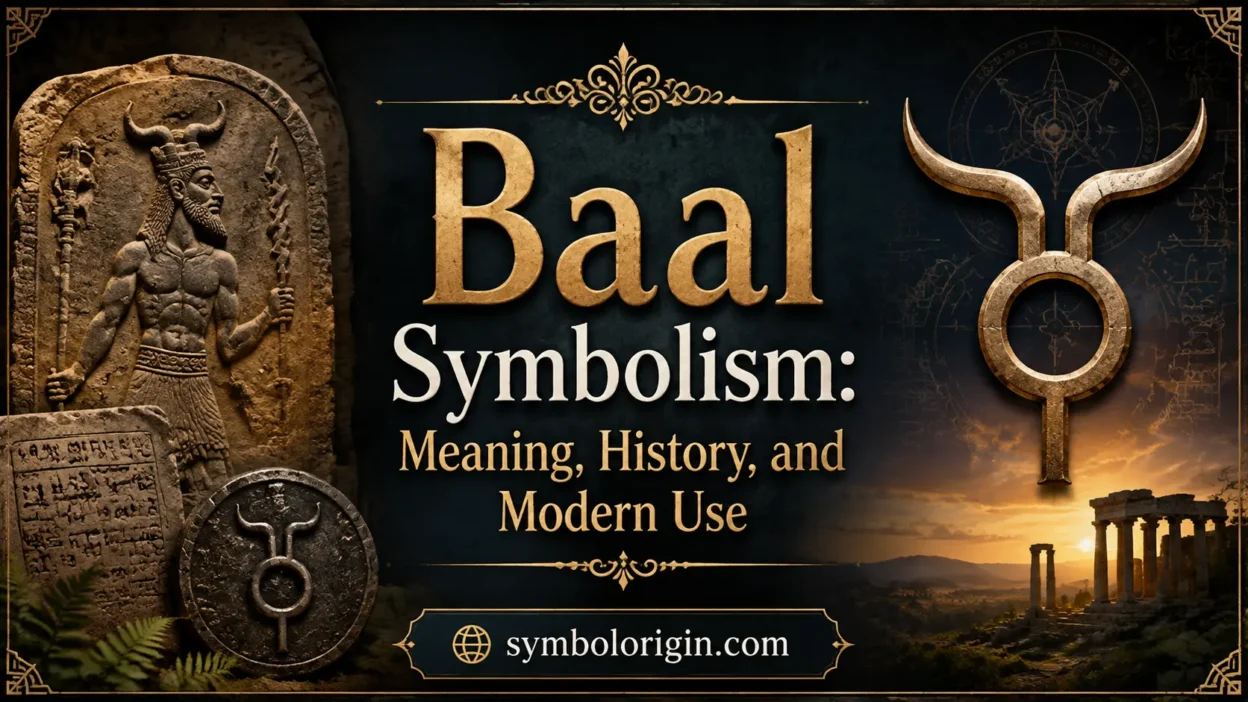
Baal symbolism refers to the meanings associated with Baal, an ancient Near Eastern deity whose image and stories have been interpreted through religion, mythology, history, and modern culture. Unlike many symbols that developed from a single tradition, Baal’s symbolism changed significantly across different societies, especially as religious beliefs and political conflicts influenced how people viewed him.
In ancient cultures of the Levant, Baal was connected with natural forces, especially storms, rain, fertility, and agricultural success. For communities that depended on seasonal weather, these ideas represented survival and prosperity. However, later religious traditions often portrayed Baal differently, especially in biblical writings where the figure became associated with rival worship and religious conflict.
Today, people encounter references to Baal in historical studies, religious discussions, literature, art, fantasy media, and popular culture. Understanding Baal requires separating his original ancient meaning from later interpretations that developed over thousands of years.
Quick Answer
Baal symbolism commonly represents storms, fertility, power, and authority in ancient Near Eastern traditions. Historically, Baal was viewed as a storm and fertility deity, while later cultures often interpreted him through religious conflict and mythology.
TL;DR
- Baal symbolized storms, rain, and agricultural fertility.
- Ancient Levant cultures viewed Baal as a powerful deity.
- Biblical traditions often portrayed Baal as a false god.
- Americans usually encounter Baal through history or fiction.
- Modern meanings vary from mythology to symbolism.
What Baal Represents as a Symbol
Baal was not originally a single universal symbol with one fixed meaning. His symbolism developed from the needs, beliefs, and experiences of ancient communities that worshiped him.
The name “Baal” means “lord” or “master” in ancient Semitic languages. The title was used for various local deities, although the most famous Baal was the storm god associated with the Canaanite religious tradition.
The strongest symbolic associations connected with Baal include:
- Storms and thunder
- Rain and water
- Fertility and farming
- Strength and kingship
- Protection of communities
For agricultural societies, storms were not simply natural events. Rain determined whether crops grew or failed. Because of this, a storm deity represented both fear and hope.
Ancient Roots and Early Symbolism
Baal’s origins are connected to the ancient Levant, a region that includes parts of modern-day Israel, Lebanon, Syria, and surrounding areas. Archaeological evidence shows that Baal worship existed among several ancient peoples, including the Canaanites.
Ancient texts describe Baal as a powerful figure who controlled storms and battled forces connected with chaos and drought. His victories represented the return of order, rain, and agricultural growth.
In these traditions, thunder and lightning were often viewed as signs of divine activity. A storm was not just weather; it represented the presence and strength of a deity responsible for maintaining life.
Baal’s symbolism therefore reflected a close relationship between nature, survival, and religious belief.
Baal Symbolism in Canaanite Religion
Within Canaanite religion, Baal held an important position among the gods. He was often connected with the sky, storms, and fertility.
Ancient stories describe Baal’s conflicts with other divine figures, including battles representing struggles between order and chaos. These myths reflected the agricultural cycles familiar to ancient societies.
A successful rainy season meant healthy crops, stronger communities, and economic stability. As a result, Baal became associated with prosperity and renewal.
However, religious practices connected with Baal varied by location and time period. Ancient worship was not identical across every community, and historians continue to study how different groups understood him.
Biblical Interpretations and Religious Conflict
One of the biggest reasons Baal became widely known outside ancient history is his appearance in biblical texts. In these writings, Baal is often presented as a competing deity whose worship conflicted with the worship of Yahweh.
These accounts shaped later Jewish and Christian interpretations of Baal. Over time, the name became associated with idolatry, false worship, and spiritual opposition.
Because of this history, Baal carries different meanings depending on cultural perspective. For historians, Baal is an ancient religious figure. For many religious communities, Baal represents a warning against abandoning their faith traditions.
Understanding this difference is important because the original ancient symbolism and later religious interpretations are not the same.
Baal Symbolism in the United States
In modern American culture, Baal is rarely used as a common everyday symbol. Most Americans encounter the figure through religious education, mythology studies, historical discussions, books, movies, video games, or fantasy storytelling.
Academic and cultural interest usually focuses on Baal as an example of ancient mythology and how societies explained natural forces.
Common American interpretations include:
| Context | Meaning in the USA | Common Associations | Notes |
|---|---|---|---|
| History | Ancient Near Eastern deity | Canaanite religion, archaeology | Studied academically |
| Religion | Rival or false worship figure | Biblical discussions | Depends on faith tradition |
| Literature | Mythological character | Ancient stories, symbolism | Used creatively |
| Pop culture | Fantasy figure | Games, films, fiction | Often fictionalized |
In American culture, Baal is generally understood as a historical or fictional symbol rather than a common personal symbol.
The Connection Between Baal and Nature
One of the most important aspects of Baal symbolism is the relationship between divine power and the natural world.
Ancient communities depended heavily on rainfall and farming cycles. A storm deity represented the forces that could bring both destruction and renewal.
Thunderstorms could damage homes and crops, but rainfall could also restore fields after dry periods. This created a complex image of power: something that could be dangerous while also providing life.
This connection explains why Baal was associated with both fear and hope.
Emotional and Psychological Meanings Associated With Baal
Although Baal originated as a religious figure, modern symbolic interpretations often examine what he represents psychologically.
Some people interpret Baal as a symbol of:
- Human desire to control nature
- The search for protection during uncertainty
- The relationship between power and responsibility
- Fear of forces beyond human control
Ancient gods often reflected human attempts to understand difficult experiences. Storms, droughts, and changing seasons were realities that shaped human imagination.
Baal’s symbolism shows how people created stories around natural events to explain their place in the world.
Baal in Art, Literature, and Popular Culture
Modern references to Baal often appear in creative works rather than religious settings.
Writers, artists, and game creators may use Baal as a symbol because the name carries historical associations with ancient power and mythology.
In fantasy settings, Baal is sometimes transformed into:
- A powerful ruler
- A supernatural character
- A villain
- A mysterious ancient force
These modern versions often differ significantly from the historical Baal worshiped in ancient societies.
Popular culture frequently combines different mythological traditions, so fictional portrayals should not always be treated as accurate representations of ancient beliefs.
Why Baal Appears in Modern Discussions
Interest in Baal continues because people remain curious about ancient religions, mythology, and cultural change.
Several factors keep the figure relevant:
- Growth of interest in ancient history
- Documentaries about archaeology
- Religious discussions
- Fantasy entertainment
- Studies of mythology
Baal represents a broader question: how symbols change when they move from one culture to another.
A figure once connected with farming and storms can later become a symbol of religious conflict, historical study, or fictional storytelling.
Common Misunderstandings About Baal
Because Baal has been interpreted by many cultures, several misunderstandings exist.
One common mistake is assuming that every reference to Baal has the same meaning. In reality, ancient worship traditions, biblical interpretations, and modern fictional uses are different contexts.
Another misunderstanding is treating Baal only as a negative figure. While later religious traditions often criticized Baal worship, historians also recognize his importance in understanding ancient Near Eastern societies.
The meaning depends on whether someone is discussing history, religion, mythology, or fiction.
The Evolution of Baal’s Meaning Over Time
Baal’s symbolism changed dramatically over thousands of years.
In ancient agricultural communities, Baal represented natural power and fertility. As religious traditions changed, he became a symbol connected with religious disagreement.
Later, writers and artists transformed Baal into a character used in storytelling and imagination.
This evolution demonstrates how symbols are not fixed forever. Their meanings depend on the people, cultures, and historical moments interpreting them.
Baal Symbolism in Tattoos and Personal Expression
Baal is not among the most common tattoo symbols in the United States, but some people may choose imagery connected with Baal because of an interest in mythology, ancient history, or dark fantasy themes.
A Baal-inspired design might represent:
- Interest in ancient civilizations
- Curiosity about mythology
- Exploration of historical symbols
- Appreciation for dramatic artistic imagery
The meaning of such a tattoo depends heavily on the person wearing it. A historical researcher, fantasy fan, and religious critic may all interpret the same image differently.
Controversies and Misuse of Baal Symbolism
Baal has sometimes been surrounded by exaggerated claims and modern misconceptions. Some interpretations connect Baal with ideas that go beyond historical evidence.
Accurate understanding requires separating ancient sources from later speculation.
Historically, Baal was part of the religious landscape of the ancient Near East. Later communities developed their own interpretations based on their beliefs and traditions.
When discussing Baal symbolism today, context matters more than assumptions.
Frequently Asked Questions
What does Baal symbolize?
Baal traditionally symbolizes storms, rain, fertility, and agricultural prosperity in ancient Near Eastern traditions. Later interpretations connected him with religious conflict and opposing worship traditions.
Is Baal considered a good or bad symbol?
The answer depends on cultural perspective. Historians view Baal as an ancient deity, while some religious traditions interpret him negatively because of biblical conflicts.
Why was Baal important in ancient cultures?
Baal was important because ancient societies depended on rainfall and farming. A storm deity represented the natural forces necessary for survival.
Is Baal still worshiped today?
Modern references to Baal are mostly historical, academic, or fictional. Ancient Baal worship does not play the same widespread cultural role it once did.
What does a Baal tattoo mean?
A Baal tattoo may represent interest in mythology, ancient history, fantasy, or symbolic exploration. Its meaning depends on the individual’s intention.
Why is Baal mentioned in the Bible?
Baal appears in biblical texts because ancient Israelites interacted with neighboring cultures that worshiped different deities. These references often describe religious disagreements.
Conclusion
Baal symbolism reflects the changing relationship between humans, nature, religion, and culture. Originally connected with storms, rain, fertility, and agricultural life, Baal became a figure with different meanings as traditions evolved.
Today, baal symbolism is mainly explored through history, mythology, religion, and creative expression. Understanding Baal requires looking at both his ancient role and the later interpretations that shaped his reputation.
The story of Baal shows how symbols can transform over time, carrying different meanings for different generations while remaining connected to the cultures that created them.