Anubis symbolism represents ideas connected with protection, transition, judgment, and the relationship between life and death. In ancient Egypt, Anubis was one of the most important deities associated with funerary traditions, guiding the deceased through the journey into the afterlife and protecting sacred burial practices.
Today, Anubis remains one of the most recognizable figures from Egyptian mythology. His distinctive jackal-headed appearance appears in museums, artwork, tattoos, jewelry, video games, movies, and modern spiritual discussions. While some people view him as a symbol of death, his original role was more closely connected with care, preservation, and safe passage.
Understanding Anubis requires looking beyond modern images of darkness or mystery. Ancient Egyptians did not view death only as an ending; they saw it as a transformation into another stage of existence. Because of this belief, Anubis became a symbol of guidance, responsibility, and respect for those moving between worlds.
In modern American culture, Anubis is often interpreted through mythology, personal identity, art, and popular media. His image can represent strength during difficult changes, curiosity about ancient civilizations, or an appreciation for Egyptian history.
Quick Answer
Anubis symbolism commonly represents protection, transformation, guidance, and the transition between life and death in modern culture. Historically, Anubis was an ancient Egyptian deity connected with mummification, burial rituals, and guiding souls into the afterlife.
TL;DR
- Anubis symbolizes protection and safe passage.
- Ancient Egyptians connected him with burial rituals.
- His jackal form represented guardianship and preservation.
- Americans often view Anubis as a mythological symbol.
- Tattoos use Anubis to express transformation and resilience.
- Modern media has reshaped his public image.
What Is Anubis and What Does He Look Like?
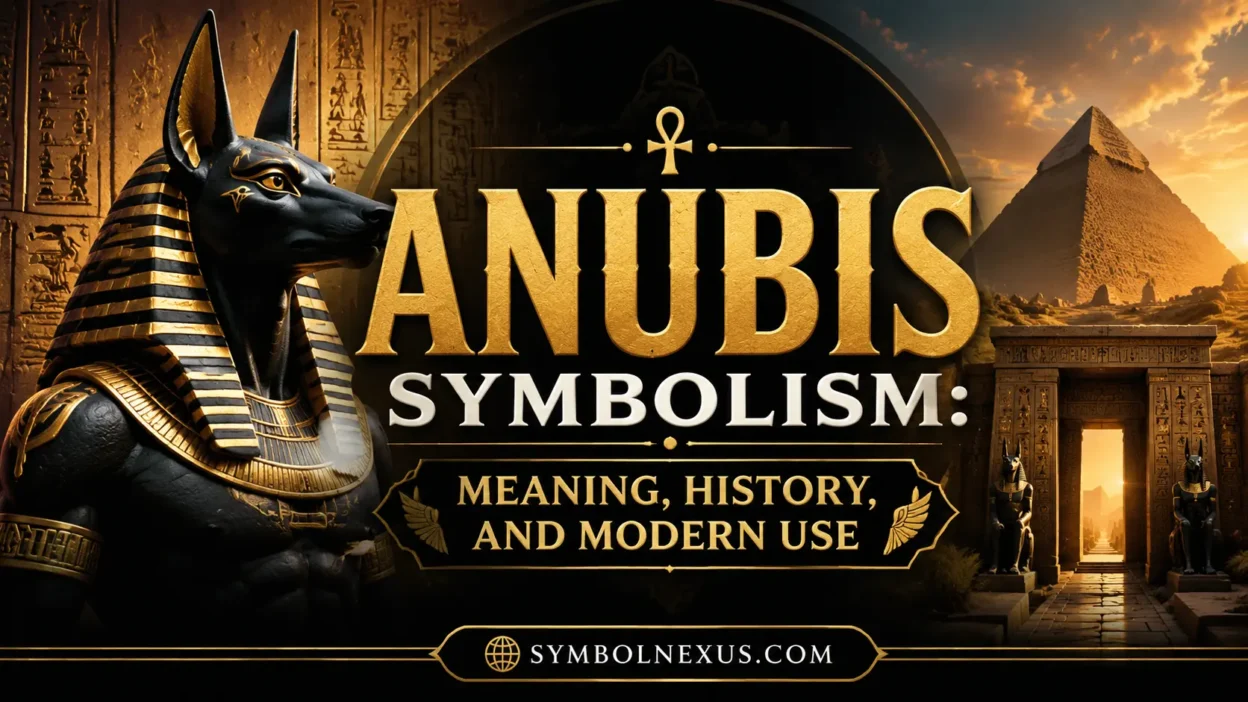
Anubis is an ancient Egyptian deity usually shown as a human figure with the head of a jackal or wild canine. His most recognizable form features a black-colored animal head, upright ears, and a human body wearing traditional Egyptian clothing.
The black color associated with Anubis was not simply meant to represent darkness or evil. In Egyptian symbolism, black was connected with the fertile soil of the Nile River and the process of regeneration. Since Egyptians believed death could lead to renewal in the afterlife, the color carried ideas of restoration and rebirth.
Images of Anubis appeared on tomb walls, coffins, funerary objects, and religious artwork. These depictions were designed to provide protection and support for the deceased rather than create fear.
Today, people usually encounter Anubis through museum exhibits, documentaries, fantasy artwork, historical illustrations, and entertainment media. His appearance has become one of the strongest visual symbols associated with ancient Egypt.
Ancient Egyptian Origins of Anubis Symbolism
Anubis has roots that reach back to the earliest periods of ancient Egyptian civilization. Archaeological evidence shows that worship of Anubis existed before many later Egyptian religious traditions became fully developed.
Early Egyptians observed jackals and wild dogs near desert burial areas. Because these animals were sometimes seen near graves, they became connected with cemeteries and protection. Instead of viewing the animals only as threats, Egyptians developed religious associations that transformed the jackal into a guardian figure.
Anubis became especially important during periods when burial rituals and beliefs about the afterlife grew more complex. Egyptians believed proper preparation of the body was necessary for the deceased to continue their existence after death. As a result, Anubis became strongly linked with mummification and funerary ceremonies.
Over time, his role became connected with guiding the dead and maintaining balance during the judgment process. His symbolism reflected Egyptian concerns about preserving life, honoring ancestors, and ensuring a safe transition after death.
Anubis as a Guardian of the Dead
One of Anubis’s most important symbolic roles was that of a guardian. Ancient Egyptians believed that the journey after death required protection and guidance.
Anubis was associated with watching over tombs and protecting the physical remains of the deceased. This role explains why his image was frequently placed in burial locations.
Unlike modern ideas that often associate death symbols with fear, Egyptian beliefs treated guardianship of the dead as an act of care. Anubis represented the responsibility of protecting someone during one of the greatest transitions imaginable.
In this sense, Anubis symbolizes:
- Safety during uncertain times
- Respect for ancestors
- Protection of memories
- Support through major life changes
This protective interpretation remains one reason why Anubis continues to appear in modern artwork and personal symbolism.
The Role of Anubis in Mummification and Burial Rituals
Anubis is closely connected with mummification, one of ancient Egypt’s most significant practices. Egyptians preserved bodies because they believed physical preservation helped maintain the connection between the body and the soul.
Priests involved in funerary ceremonies sometimes wore masks representing Anubis. These rituals symbolically placed the god in the role of protector and caretaker.
The connection between Anubis and mummification created several symbolic meanings:
| Context | Meaning in Ancient Egypt | Modern Interpretation | Notes |
|---|---|---|---|
| Burial rituals | Protection of the deceased | Respect for endings and memories | Connected with funerary traditions |
| Mummification | Preservation and preparation | Care and restoration | Not a symbol of destruction |
| Judgment rituals | Moral balance | Personal reflection | Linked with accountability |
| Tomb protection | Guardian role | Security and guidance | Common in modern artwork |
Anubis represented the careful process of preparing someone for their next journey rather than representing death itself.
Anubis and the Judgment of the Soul
Ancient Egyptian beliefs included the idea that the deceased would face judgment after death. Anubis played a significant role in this process.
In Egyptian mythology, Anubis was associated with weighing the heart of the deceased against the feather of Ma’at, the principle representing truth, balance, and justice. This ceremony symbolized whether a person had lived according to moral order.
The image of the weighing scale created a lasting association between Anubis and:
- Justice
- Honesty
- Accountability
- Moral responsibility
This aspect of Anubis symbolism remains meaningful today because many people connect his image with self-reflection and the consequences of personal choices.
The Difference Between Anubis and the Symbol of Death
A common misunderstanding is that Anubis represents death in a negative sense. Modern movies and fantasy stories sometimes portray him as a dark or frightening figure, but ancient Egyptian beliefs were more complex.
Anubis was not considered a destroyer or a symbol of evil. His role was closer to a protector, guide, and caretaker. He helped maintain order during a difficult transition.
The difference is important:
- Death alone represents an ending.
- Anubis represents the process of moving through change.
- Fear focuses on loss.
- Anubis focuses on protection and preparation.
This explains why many modern interpretations view Anubis positively.
Anubis Symbolism in Modern American Culture
In the United States, Anubis appears mainly through popular culture, art, education, and personal expression. Most Americans encounter him through museums, books about mythology, movies, video games, and fantasy settings rather than religious practice.
Modern interpretations often connect Anubis with:
- Ancient wisdom
- Personal transformation
- Strength during challenges
- Curiosity about history
- Interest in Egyptian mythology
Many people choose Anubis imagery because they appreciate its connection to change and resilience. For some, the symbol represents moving through difficult experiences while remaining protected.
American tattoo culture has also contributed to Anubis’s popularity. People often select the image because it represents personal growth, overcoming hardship, or fascination with ancient civilizations.
Why People Choose Anubis Tattoos
Anubis tattoos are popular because the figure combines strong visual design with meaningful symbolism. The jackal-headed form creates an instantly recognizable image that connects with ancient history.
Common meanings behind Anubis tattoos include:
- Transformation after hardship
- Protection from negative experiences
- Respect for Egyptian culture
- Acceptance of change
- Interest in mythology
The meaning depends heavily on the individual. A tattoo does not automatically represent one belief system; many people choose Anubis simply because they admire the artwork or historical connection.
Responsible use of Egyptian symbols requires understanding their origins rather than treating them only as decorative designs.
Anubis in Movies, Games, and Popular Media
Modern entertainment has played a major role in shaping how people understand Anubis. Films, television shows, and video games often use Egyptian mythology because its symbols create dramatic visual worlds.
However, fictional portrayals sometimes change traditional meanings. Some stories present Anubis as a villain, monster, or supernatural threat.
These portrayals are creative interpretations rather than accurate representations of ancient Egyptian beliefs. Historically, Anubis was associated with protection, ritual, and spiritual transition.
Popular culture has made Anubis more recognizable worldwide, but it has also created misunderstandings about his original role.
Cultural Meaning Beyond Ancient Egypt
Although Anubis originated in ancient Egyptian religion, his image has influenced global interest in mythology and history.
In different modern communities, Anubis may represent:
- A connection to ancient civilizations
- Interest in archaeology
- Exploration of human beliefs about death
- Personal transformation
Unlike symbols tied to a single modern religious tradition, Anubis is usually approached today as a historical and mythological figure.
Respectful interpretation involves recognizing the difference between ancient Egyptian beliefs and modern creative uses.
Common Misunderstandings About Anubis Symbolism
Several misconceptions surround Anubis because modern culture often simplifies ancient mythology.
One misunderstanding is that Anubis represents evil. Ancient Egyptian traditions did not describe him as an evil figure. His purpose was protection and guidance.
Another misconception is that every use of Anubis imagery has a spiritual meaning. In reality, many people use the symbol because of artistic interest, historical curiosity, or appreciation of mythology.
Understanding the original context helps separate historical symbolism from fictional interpretations.
How Anubis Symbolism Has Changed Over Time
The meaning of Anubis has evolved as cultures changed their understanding of ancient Egypt.
In ancient Egypt, he represented burial protection and the journey after death. Later civilizations became interested in Egyptian mythology through archaeology, literature, and museums.
Today, Anubis has become a global symbol appearing in:
- Art
- Fashion
- Tattoos
- Entertainment
- Educational materials
Modern interpretations often focus less on burial rituals and more on themes of change, protection, and personal growth.
Frequently Asked Questions
What does Anubis symbolize today?
Anubis commonly symbolizes protection, transformation, guidance, and the ability to move through major life changes. Modern interpretations often focus on personal meaning rather than ancient religious practice.
Is Anubis a good or evil symbol?
Anubis was not considered an evil figure in ancient Egyptian beliefs. He was associated with protecting the dead, preserving bodies, and guiding souls through judgment.
What does an Anubis tattoo mean?
An Anubis tattoo may represent transformation, resilience, protection, or an interest in Egyptian mythology. The meaning depends on the person wearing it.
Why does Anubis have a jackal head?
The jackal form developed because ancient Egyptians observed these animals around desert burial areas. The association helped create Anubis’s role as a guardian of graves and funerary traditions.
Is Anubis still worshiped today?
Anubis is mainly studied and appreciated as part of ancient Egyptian mythology today. Some modern spiritual groups may reference Egyptian deities, but his primary presence is cultural and historical.
Does Anubis represent death?
Anubis is connected with death-related rituals, but his symbolism focuses more on protection, preparation, and transition than death itself.
Conclusion
Anubis symbolism reflects humanity’s long-standing interest in protection, change, and the journey between different stages of existence. In ancient Egypt, Anubis served as a guardian of burial traditions and a guide connected with judgment and the afterlife.
In modern American culture, Anubis is often understood through mythology, art, tattoos, and entertainment. While fictional portrayals sometimes emphasize darkness, the original meaning centers on care, responsibility, and safe passage.
The continued interest in Anubis shows how ancient symbols can take on new meanings while still preserving connections to their historical roots.