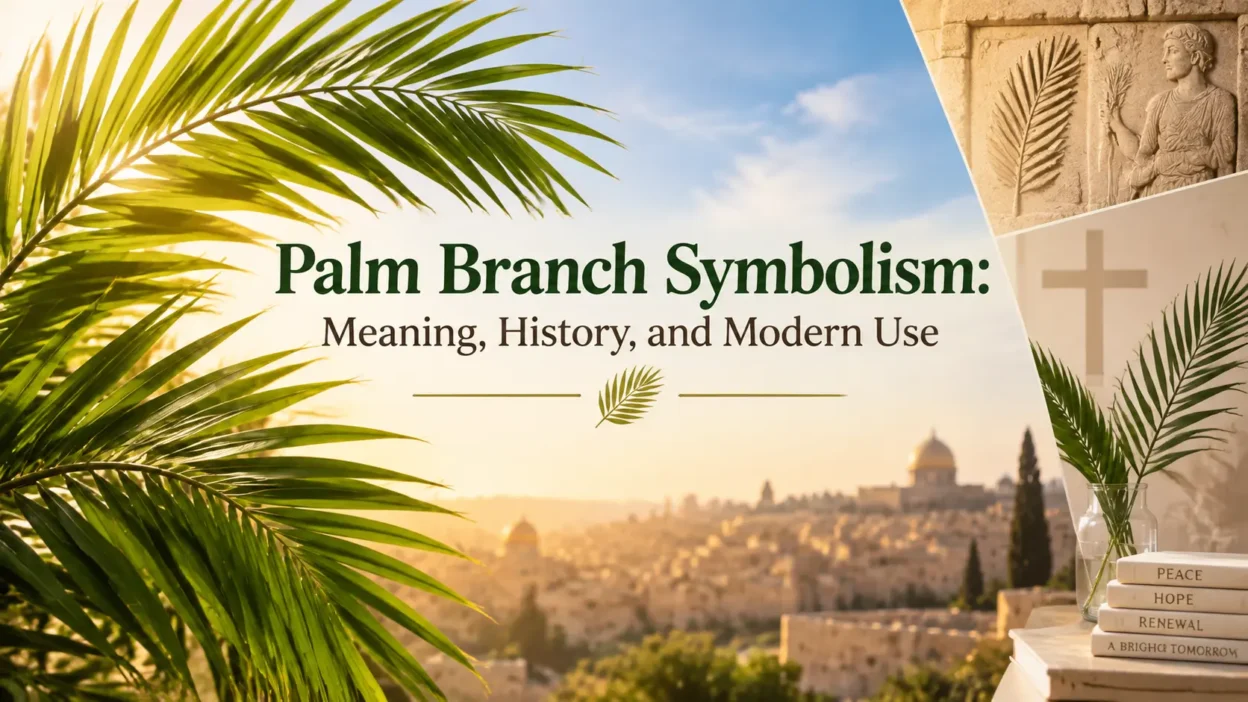
A palm branch is a recognizable symbol often connected with victory, peace, celebration, and religious traditions. In modern American culture, palm branch symbolism is most commonly understood as a sign of triumph, hope, and spiritual devotion, especially through its connection with Palm Sunday and ancient traditions.
People encounter palm branches in churches, artwork, ceremonies, tattoos, jewelry, and decorative designs. While the symbol has strong religious roots, its meaning has expanded over time to represent achievement, renewal, and moments of important change.
The palm tree itself has long been admired because it survives in challenging environments and produces valuable resources. Because of these qualities, different cultures have connected palm branches with endurance, honor, and positive outcomes.
Quick Answer
Palm branch symbolism commonly represents victory, peace, and celebration in modern American culture, especially in religious ceremonies, artwork, and personal designs. Historically, palm branches were used as signs of triumph, honor, and sacred recognition in ancient Mediterranean and Middle Eastern traditions.
TL;DR
- Palm branches symbolize victory, peace, and celebration.
- Ancient cultures used palms to honor successful leaders.
- Christianity connects palms with Palm Sunday traditions.
- Americans often view palms as signs of hope.
- Modern designs use palms for achievement and renewal.
What a Palm Branch Represents
A palm branch is the long leaf structure that grows from a palm tree. Its tall shape, green color, and connection with warm climates have made it a meaningful image across many societies.
The most common meanings associated with palm branches include:
- Victory after struggle
- Peace and reconciliation
- Religious faith
- Celebration and honor
- Growth and renewal
- Survival and resilience
Unlike symbols that have one fixed meaning, palm branches change depending on cultural setting. A palm branch in a church service may represent faith and devotion, while the same image on a tattoo may represent personal success or overcoming hardship.
The symbol often carries a positive message because palm trees are associated with life, shelter, and abundance.
What It Commonly Means in the United States
In the United States, palm branches are most strongly connected with Christianity, especially Palm Sunday, a holiday observed by many Christian communities before Easter.
During Palm Sunday services, churches often distribute palm leaves to remember the biblical story of Jesus entering Jerusalem, where crowds welcomed him by placing palm branches in his path. In this setting, the palm represents honor, recognition, and the beginning of an important spiritual event.
Outside religious settings, Americans also associate palm branches with:
- Tropical relaxation
- Vacation imagery
- Personal achievement
- Peaceful environments
- New beginnings
Palm designs appear in home decorations, clothing, logos, and artwork because they create feelings of calm and optimism.
| Context | Meaning in the USA | Common Associations | Notes |
|---|---|---|---|
| Christianity | Faith and victory | Palm Sunday, Easter | Represents spiritual honor |
| Decorations | Relaxation and warmth | Beaches, travel, summer | Common in modern design |
| Tattoos | Personal success | Strength, overcoming challenges | Often carries individual meaning |
| Art and logos | Growth and peace | Nature, balance | Used for positive messages |
Ancient Roots and Early Symbolism
Palm branches have a long history that reaches back thousands of years. Ancient civilizations in the Mediterranean and Middle East viewed palm trees as valuable sources of food, materials, and shade.
Because palm trees could thrive in dry climates, they became associated with survival and prosperity. Civilizations that depended on desert landscapes often saw the palm as a sign of life appearing in difficult conditions.
In ancient Mesopotamia and Egypt, palm imagery appeared in art and religious settings. The tree was connected with fertility, abundance, and divine favor.
The ancient Greeks and Romans also used palm branches as symbols of victory. Athletes, military leaders, and honored individuals were sometimes shown with palm branches to represent success and achievement.
This connection between palms and victory continued into later cultures, influencing how people understand the symbol today.
Palm Branches in Religious Traditions
The strongest religious association of palm branches comes from Christianity.
According to Christian tradition, crowds welcomed Jesus into Jerusalem by waving palm branches before his crucifixion. This event became known as the entry into Jerusalem and is remembered during Palm Sunday.
For many Christians, the palm represents:
- Recognition of a sacred figure
- Hope during difficult times
- Spiritual victory
- The promise of renewal
Palm branches also appear in Christian artwork, stained glass, paintings, and religious ceremonies. They may symbolize faithful endurance and the belief that suffering can lead to redemption.
However, palm symbolism is not limited to Christianity. Palm imagery appears in several religious and cultural traditions where it often represents life, blessing, and achievement.
Palm Branches as Symbols of Victory
One of the oldest meanings of the palm branch is victory.
In ancient societies, presenting someone with a palm branch was similar to giving a medal or trophy today. It showed that a person had achieved something important.
This meaning developed because palm trees were seen as strong survivors. Their ability to remain green in harsh environments made them natural symbols of endurance.
Today, victory symbolism appears in many forms:
- Sports artwork
- Awards and trophies
- Military designs
- Graduation decorations
- Achievement tattoos
A palm branch can represent winning a competition, reaching a personal goal, or overcoming a difficult period.
Peace and Reconciliation Meanings
Although palm branches are strongly connected with victory, they also represent peace.
The reason is that victory and peace are often connected. After a conflict ended, societies historically hoped for stability and harmony.
In modern America, palm branches may appear in peace-themed artwork and messages because their gentle appearance creates a feeling of calm.
The symbol can communicate ideas such as:
- Letting go of conflict
- Creating harmony
- Finding emotional balance
- Moving toward a better future
A palm branch does not usually represent passive peace. Instead, it often suggests peace achieved after challenges.
Palm Branch Symbolism in Tattoos and Personal Style
Palm branch tattoos have become popular because they combine natural beauty with personal meaning.
People may choose palm branch designs to represent:
- A major life achievement
- A fresh start
- Travel memories
- Inner strength
- Personal growth
A single palm leaf tattoo may represent simplicity and balance, while a larger palm tree design may symbolize stability and a connection with nature.
In American tattoo culture, symbols often become personal rather than following one traditional meaning. Someone may choose a palm branch because it reminds them of a meaningful place, a personal victory, or a new chapter in life.
The Emotional and Psychological Meaning of Palm Branches
Symbols often influence emotions because people connect images with memories and experiences.
Palm branches can create feelings of:
- Hope
- Freedom
- Calmness
- Confidence
- Celebration
The green color of palm leaves also contributes to their meaning. Green is commonly associated with growth, renewal, and nature.
For many people, palm imagery reminds them of beaches, vacations, and peaceful environments. For others, it represents faith and spiritual encouragement.
The meaning depends on personal experience, but the overall emotional message is usually positive.
Palm Branches in American Holidays and Public Life
Palm branches have a visible role in American religious life, especially during Easter season.
Many churches use real or artificial palms during Palm Sunday services. Some communities also create decorations, displays, and educational activities around the tradition.
Beyond religion, palm imagery appears in American culture through:
- Beach-themed events
- Travel branding
- Summer decorations
- Clothing patterns
- Home design
Because palm trees are strongly connected with warm climates, they often represent relaxation and escape in American popular culture.
Cross-Cultural Meanings of Palm Branches
Different cultures have developed their own interpretations of palm branches.
In ancient Rome, palms represented victory and honor. Successful individuals could be associated with palm imagery after achievements.
In Jewish traditions, palm branches appear as part of the holiday of Sukkot. The lulav, which includes a palm branch, is used in religious practice and represents connection with faith and nature.
In Islamic cultures, palm trees have also held importance because of their connection with nourishment, survival, and sacred history.
Across cultures, the palm often carries themes of life, blessing, and success.
Modern Uses in Fashion, Design, and Media
Today, palm branches are common in visual design because they combine natural beauty with recognizable symbolism.
Designers use palm imagery in:
- Clothing patterns
- Jewelry
- Wall art
- Logos
- Wedding decorations
- Social media graphics
A palm branch design can create a tropical feeling, but it can also communicate deeper ideas like achievement and renewal.
In weddings, palm-inspired decorations may suggest a peaceful future or a fresh beginning. In home design, palm prints often create a relaxing atmosphere.
Common Misunderstandings About Palm Branch Symbolism
Because palm branches appear in many cultures, their meanings are sometimes oversimplified.
One misunderstanding is that palm branches only represent religion. While Christianity gives the symbol an important meaning, palm imagery existed long before Christian traditions.
Another misunderstanding is that every palm design has the same message. A palm branch tattoo, church symbol, and vacation logo may all use the same image but communicate different ideas.
The meaning depends on the cultural and personal context surrounding the symbol.
How Palm Branch Meaning Has Changed Over Time
The meaning of palm branches has expanded from ancient victory symbols into a broader representation of hope and positive change.
Originally, palms were strongly connected with honor, success, and sacred recognition. Religious traditions later added meanings related to faith and spiritual victory.
In modern America, palm branches combine these older meanings with newer associations such as travel, relaxation, and personal growth.
The symbol remains popular because it can represent both public celebration and private experiences.
FAQ About Palm Branch Symbolism
What does a palm branch symbolize in Christianity?
A palm branch symbolizes victory, honor, and faith in Christianity. It is especially connected with Palm Sunday, which remembers Jesus’ arrival in Jerusalem.
What does a palm branch tattoo mean?
A palm branch tattoo can represent personal victory, growth, peace, or a meaningful life experience. The exact meaning depends on the person who chooses the design.
Are palm branches always religious symbols?
No. Palm branches have religious meanings in some traditions, but they also represent victory, nature, travel, and renewal in secular settings.
Why are palm branches associated with victory?
Ancient cultures used palm branches to honor successful people, including leaders and competitors. Over time, the image became connected with achievement and triumph.
What does a palm branch represent in American culture?
In the United States, palm branches often represent faith, celebration, relaxation, and new beginnings. Their meaning changes depending on whether they appear in religious, decorative, or personal contexts.
Is palm branch symbolism positive or negative?
Palm branches are generally viewed as positive symbols. They are usually connected with success, peace, hope, and renewal rather than negative ideas.
Conclusion
Palm branches carry meanings that connect ancient traditions with modern life. They represent victory, peace, faith, and renewal across many cultures and continue to appear in ceremonies, artwork, and personal expressions.
In the United States, palm branch symbolism is especially recognized through religious traditions like Palm Sunday, but its meaning has grown to include personal achievement, relaxation, and fresh beginnings.
Whether used in a church, tattoo, decoration, or piece of art, the palm branch remains a symbol of progress, hope, and the ability to move forward after challenges.