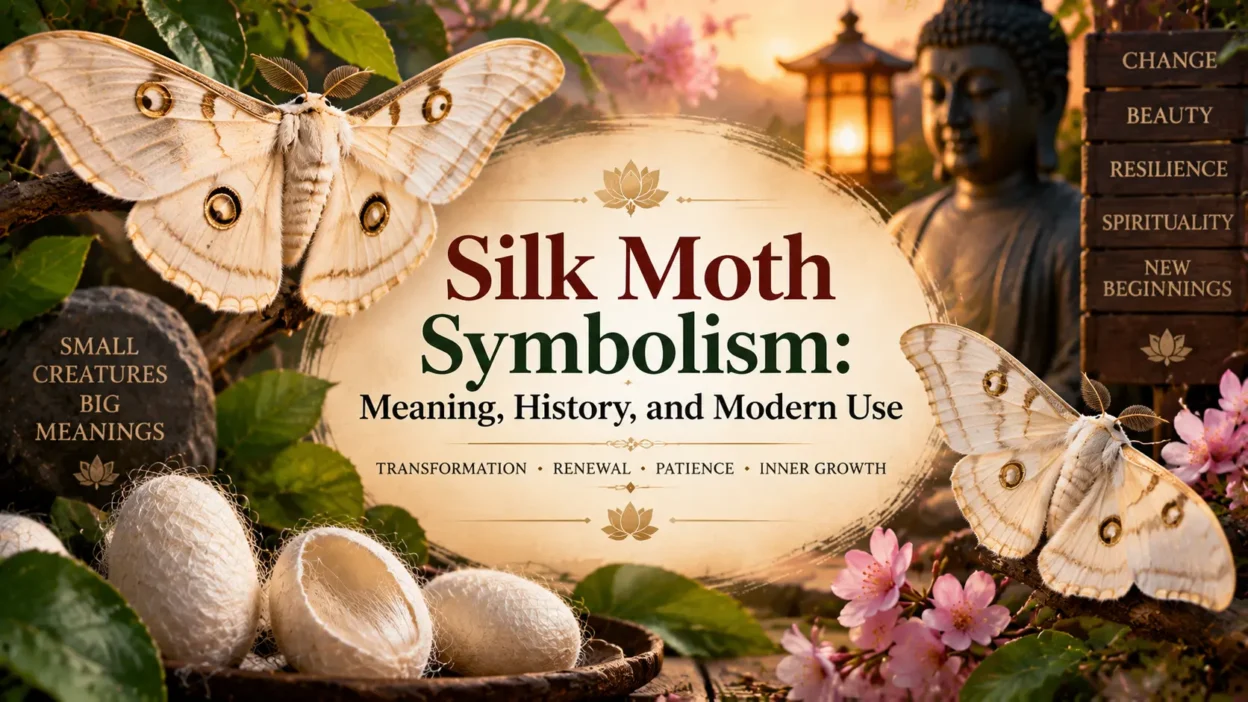
A silk moth is more than an insect associated with fabric production. Across cultures, it has become connected with transformation, patience, creativity, and the relationship between nature and human craftsmanship. Silk moth symbolism explores how this small creature gained meaning through ancient silk traditions, artistic expression, and modern interpretations in the United States.
Unlike butterflies, which often dominate conversations about transformation, silk moths carry a quieter symbolism. Their connection to silk, careful cultivation, and nighttime activity gives them associations with dedication, hidden beauty, and gradual change.
Quick Answer
Silk moth symbolism commonly represents transformation, creativity, patience, and natural beauty in modern American culture, especially in art, fashion, and personal symbolism. Historically, silk moths have also been linked to craftsmanship, prosperity, and cultural traditions surrounding silk production.
TL;DR
- Silk moths symbolize transformation and patient growth.
- Silk production shaped their historical cultural importance.
- Americans often connect them with creativity and nature.
- Moth imagery appears in art, tattoos, and design.
- Different cultures view moths through varied traditions.
What Is a Silk Moth?
Silk moths are moth species associated with the production of silk, especially the domesticated silkworm moth. The most famous example is the silkworm moth, a species raised for thousands of years because its larvae create silk fibers used in textiles.
Adult silk moths typically have soft, rounded bodies, broad wings, and muted natural colors. Many species are active at night, which separates them from the brightly colored butterflies that appear during the day.
People usually encounter silk moth symbolism through:
- textile traditions
- paintings and decorative arts
- jewelry designs
- tattoos
- nature-inspired fashion
- cultural references to silk and craftsmanship
The moth’s physical life cycle also shapes its symbolic meaning. It begins as a caterpillar, creates a cocoon, and emerges as a completely different form, making it naturally connected to change and renewal.
What Silk Moths Commonly Mean in the United States
In modern American culture, silk moths are usually understood as symbols of transformation, creativity, and appreciation for natural processes.
Many people view the moth as a reminder that growth does not always happen quickly or visibly. The period inside the cocoon represents preparation, development, and personal change before a new stage begins.
Silk moth imagery can also represent:
- artistic expression
- handmade craftsmanship
- connection with nature
- quiet resilience
- appreciation for traditional skills
Because silk is considered a valuable and carefully produced material, silk moths may also suggest refinement, patience, and the results of careful work.
| Context | Meaning in the USA | Common Associations | Notes |
|---|---|---|---|
| Tattoos | Personal growth and transformation | Change, resilience, identity | Often chosen for life transitions |
| Fashion | Elegance and creativity | Silk, beauty, craftsmanship | Connected with textile history |
| Home Decor | Natural inspiration | Art, calmness, organic design | Used in prints and patterns |
| Art | Imagination and nature | Creativity, symbolism | Common in illustrations |
| Personal Identity | Quiet strength | Patience, self-development | Represents gradual progress |
Ancient Roots and Early Silk Symbolism
The history of silk moth symbolism begins with the development of silk production in ancient China. Silk became one of the world’s most valuable materials, and the silkworm moth became closely connected with wealth, craftsmanship, and cultural achievement.
Ancient Chinese traditions associated silk with refinement and status because producing silk required careful attention and specialized knowledge. The insect behind this material became part of a larger cultural relationship between humans, agriculture, and artistic creation.
Silk traveled across trade networks, including routes connecting Asia with Europe and other regions. As silk fabrics spread, the symbolism surrounding silk also evolved. The moth became less about the insect itself and more about the ideas connected to what it produced: beauty, skill, patience, and prosperity.
Transformation and the Meaning of the Cocoon
One of the strongest symbolic ideas connected with silk moths comes from metamorphosis.
The moth’s journey from caterpillar to adult reflects a visible process of change. Unlike sudden transformations, the silk moth’s development happens slowly through stages.
This makes the insect a symbol of:
- personal development
- rebuilding after difficult periods
- hidden preparation
- becoming something new
In American culture, cocoon imagery often appears in discussions about personal growth. It can represent a temporary stage where someone learns, changes, or prepares before moving forward.
The cocoon does not represent an ending. Instead, it represents a transition.
Silk Moths, Creativity, and Human Craftsmanship
Silk moths have a unique connection with creativity because their existence is tied to one of humanity’s oldest textile arts.
Silk production requires knowledge, patience, and attention to detail. For this reason, silk moth imagery often appears in creative spaces as a symbol of artistic dedication.
Artists and designers may use silk moths to represent:
- imagination
- handmade work
- artistic patience
- respect for natural materials
In the United States, where handmade crafts and sustainable design have gained attention, silk moth imagery fits naturally with themes of traditional skills and environmentally conscious creativity.
Emotional and Psychological Meanings
Symbolic interpretations of silk moths often focus on emotional themes rather than fixed meanings.
For many people, the insect represents a peaceful approach to change. Its connection with the night and slow development can suggest reflection, patience, and inner growth.
Common emotional associations include:
Patience
The silk moth’s life cycle reminds people that meaningful changes often require time.
Quiet Strength
Unlike symbols associated with dominance or power, the moth represents a softer form of resilience.
Creativity
The connection to silk-making links the insect with imagination and artistic expression.
Renewal
The transformation process can represent starting again after personal challenges.
These meanings vary depending on personal experience, cultural background, and individual interpretation.
Silk Moth Symbolism in Other Cultures
Although meanings differ across societies, silk moths and moth-related imagery have appeared in many cultural traditions.
In China, silk production became deeply connected with cultural identity, craftsmanship, and prosperity. Silk itself represented refinement and achievement.
In Japan, silk farming became an important traditional practice, and silk-related imagery became associated with patience, skill, and seasonal cycles.
In some European traditions, moths were viewed differently. Because moths appear at night and move toward light sources, they sometimes became connected with mystery, attraction, or the unseen aspects of life.
These interpretations show that moth symbolism is not universal. The same creature can represent beauty and creativity in one tradition while carrying different meanings elsewhere.
Silk Moths in American Art, Fashion, and Design
In the United States, silk moth imagery appears mostly in creative and decorative settings rather than formal religious symbolism.
Designers often use moth illustrations because they combine natural beauty with unusual visual qualities. Their detailed wings, soft textures, and connection to transformation make them appealing subjects for artwork.
Common modern uses include:
- botanical-style illustrations
- vintage-inspired designs
- clothing patterns
- home decoration
- stationery
- nature photography
- handmade crafts
Silk moths fit well with modern interest in natural aesthetics, sustainability, and appreciation for traditional craftsmanship.
Why People Choose Silk Moth Tattoos
Silk moth tattoos often carry personal meanings connected to change and creativity.
Someone may choose a silk moth tattoo to represent:
- overcoming a difficult period
- entering a new stage of life
- personal artistic identity
- connection with nature
- appreciation for patience and growth
Unlike some insect tattoos that are chosen for dramatic symbolism, silk moth tattoos often communicate a calmer message. The design can represent transformation without focusing on struggle or conflict.
Tattoo meanings remain personal, and the same image can represent different experiences for different people.
Silk Moths in Jewelry and Personal Style
Silk moth designs also appear in jewelry, accessories, and fashion because of their delicate appearance.
A silk moth pendant or decorative pattern may symbolize:
- elegance
- individuality
- creativity
- appreciation for natural forms
The insect’s association with silk adds another layer of meaning. It connects personal style with craftsmanship and traditional textile knowledge.
Modern fashion often uses insect imagery to celebrate biodiversity and unusual forms of beauty.
Common Misunderstandings About Silk Moth Symbolism
Because moths are often associated with darkness and nighttime, some people assume they always represent negative ideas. This interpretation is incomplete.
While some traditions have connected moths with mystery or the unknown, silk moth symbolism is often focused on creation, transformation, and craftsmanship.
Another misunderstanding is confusing moth symbolism with butterfly symbolism. Both insects undergo metamorphosis, but they carry different cultural associations.
Butterflies are often linked with visible beauty and freedom, while silk moths are more commonly connected with patience, hidden development, and artistic creation.
How Silk Moth Meaning Has Changed Over Time
The meaning of silk moths has changed as societies changed their relationship with nature and technology.
In ancient silk-producing cultures, the insect was closely connected with valuable materials and skilled labor. In modern America, where silk production is less central to everyday life, the moth has shifted toward artistic and personal symbolism.
Today, silk moths are often appreciated as symbols of:
- sustainable creativity
- natural beauty
- personal transformation
- respect for traditional knowledge
The modern interpretation focuses less on economic value and more on personal meaning and environmental awareness.
FAQ About Silk Moth Symbolism
What does a silk moth symbolize spiritually?
Silk moths are often interpreted as symbols of transformation, patience, and personal growth. Spiritual meanings vary widely depending on individual beliefs and cultural traditions.
What does a silk moth tattoo mean?
A silk moth tattoo commonly represents change, creativity, resilience, or appreciation for nature. Many people choose it to mark personal growth or a new life chapter.
Are silk moths considered lucky symbols?
In some traditions connected with silk production, silk-related imagery has been associated with prosperity and success. However, beliefs about luck depend on cultural background.
How is silk moth symbolism different from butterfly symbolism?
Butterflies often symbolize visible transformation and freedom, while silk moths are more associated with patience, craftsmanship, and gradual development.
What do silk moths represent in American culture?
In the United States, silk moths are mainly connected with creativity, nature, design, and personal transformation rather than formal cultural traditions.
Are moths always negative symbols?
No. Although some cultures associate moths with darkness or mystery, many modern interpretations view them as symbols of beauty, adaptation, and change.
Conclusion
Silk moth symbolism represents transformation, creativity, patience, and the relationship between nature and human craftsmanship. From ancient silk traditions to modern American art and personal expression, the insect has developed meanings connected with both practical history and individual identity.
Today, silk moths appear in tattoos, fashion, and design because they represent a quieter form of change. They remind people that growth can happen gradually and that careful creation often produces lasting beauty.