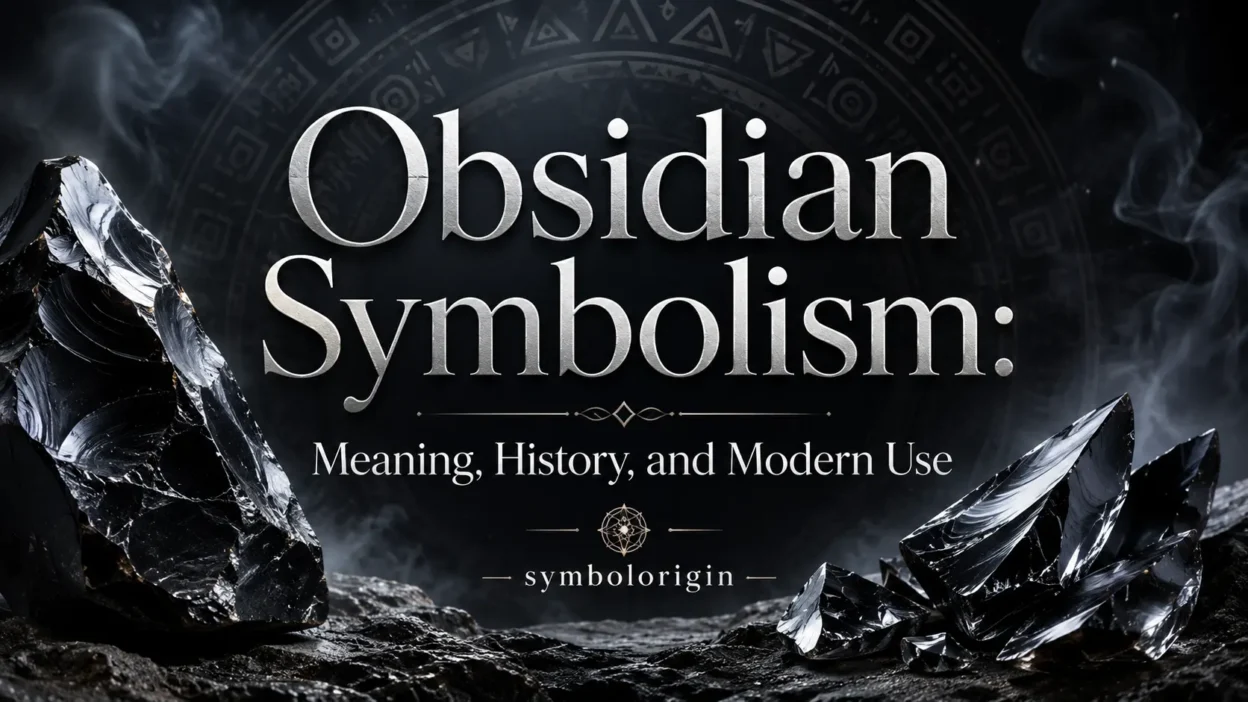
Obsidian is a naturally occurring volcanic glass known for its dark color, reflective surface, and exceptionally sharp edges. Obsidian symbolism grows directly from these physical traits: darkness suggests privacy and protection, reflection suggests self-examination, and sharpness suggests truth, discernment, and decisive boundaries.
People have valued obsidian for practical and ceremonial purposes for thousands of years. It was shaped into cutting tools, projectile points, ornaments, polished mirrors, and ritual objects. Because useful deposits occurred only in certain volcanic regions, the material also traveled through extensive exchange networks.
In the United States today, obsidian appears in jewelry, tattoos, home decor, museum collections, fantasy entertainment, and contemporary spiritual practices. Its meaning depends heavily on context. A polished mirror may suggest self-knowledge, while an arrowhead can represent survival, skill, ancestry, or cultural heritage.
Quick Answer
Obsidian symbolism commonly represents protection, truth, resilience, and firm personal boundaries in modern American culture. Historically, the volcanic glass was also associated with skilled toolmaking, long-distance exchange, ritual sacrifice, reflective mirrors, divine vision, and political authority in several ancient societies.
TL;DR
Obsidian commonly represents protection, truth, resilience, and firm boundaries.
Its dark reflection connects it with privacy and self-examination.
Ancient societies used it for tools, trade, ceremony, and mirrors.
Americans now use it in jewelry, tattoos, decor, and spiritual practice.
Historical meanings differ widely across cultures and communities.
What Obsidian Is and Why Its Appearance Matters
Obsidian forms when silica-rich lava cools so rapidly that mineral crystals do not have enough time to develop. The result is dense volcanic glass, usually black, dark brown, or gray. Thin pieces may appear translucent when held to strong light.
Unlike ordinary stone, obsidian breaks with smooth, curved surfaces called conchoidal fractures. These fractures can produce narrow, sharp edges, which made the material valuable for knives, scrapers, spear points, and other cutting implements.
Its visual qualities also influence its modern meaning. A polished piece can look like a dark mirror, while a freshly broken surface resembles frozen liquid. That combination of opacity, reflection, and sharpness encourages associations with concealed knowledge, honest self-appraisal, and the ability to cut through confusion.
Not all obsidian is uniformly black. Mahogany obsidian contains reddish-brown patterns, snowflake obsidian has pale mineral formations, and some specimens display gold, silver, rainbow, or fire-like optical effects. These variations often affect personal interpretation, but they belong to the same general family of volcanic glass.
What Obsidian Commonly Means in the United States
In contemporary American symbolism, obsidian most often communicates protection. People may wear it as a pendant, display it near an entrance, or choose it for a tattoo as a reminder to guard their emotional space.
It is also associated with truth. This interpretation comes partly from its glasslike surface and partly from the clean edge it creates when fractured. Symbolically, it represents seeing a difficult reality clearly and removing what no longer serves a useful purpose.
Resilience is another common meaning. Obsidian begins as molten rock, emerges through volcanic activity, and hardens after rapid cooling. Modern users therefore connect it with surviving periods of pressure, disruption, or dramatic personal change.
The material can also signify independence, seriousness, mystery, and controlled strength. These meanings are especially common in minimalist jewelry, dark interior design, alternative fashion, and tattoo culture.
Obsidian Meanings by Context
Context Common Meaning in the USA Typical Associations Important Note
Jewelry Protection and boundaries Confidence, privacy, resilience Usually a personal modern interpretation
Tattoos Survival and truth Transformation, courage, self-control Design details change the message
Mirrors Self-examination Vision, honesty, hidden knowledge Also connected with Mesoamerican ritual history
Arrowheads and blades Skill and survival Hunting, defense, decisiveness Indigenous meanings must remain culturally specific
Home decor Stability and contrast Grounding, elegance, focus Often chosen mainly for appearance
Spiritual practice Protection and reflection Clearing, grounding, shadow work Metaphysical effects are matters of belief
From Volcanic Glass to Essential Tool
Obsidian first gained human importance because it was useful. When worked carefully, it could produce predictable flakes and extremely fine cutting edges. Communities near volcanic sources used it for knives, scrapers, projectile points, and specialized blades.
Its practical value created several later symbolic associations. A material that helped people prepare food, process hides, hunt animals, and defend themselves naturally became connected with survival, competence, and readiness.
Toolmaking also required knowledge. A skilled craftsperson had to understand where to strike the stone, how much force to apply, and how to control each fracture. Obsidian can therefore represent disciplined action rather than uncontrolled aggression.
Modern symbolism sometimes separates the object from this practical history and describes it only as a protective spiritual stone. That interpretation captures one part of its appeal but misses the craftsmanship, ecological knowledge, and social relationships that made obsidian important in the first place.
Ancient Trade and Social Value
Obsidian deposits are geographically limited, but archaeologists have discovered artifacts far from their original volcanic sources. Chemical analysis can often identify where a particular artifact originated because individual deposits have distinctive geochemical signatures.
In the ancient Near East, obsidian moved between Anatolia, Mesopotamia, the Zagros region, and surrounding territories during the Neolithic period. These movements help researchers reconstruct contact between communities, including systems of travel, exchange, gift-giving, and resource distribution.
Its presence in distant settlements did not necessarily make every piece sacred. Obsidian could be an ordinary working material, a specialized commodity, a prestigious possession, or a ceremonial object depending on its form and setting.
Symbolically, this trade history adds meanings of connection, mobility, access, and social value. A piece of volcanic glass could embody relationships between distant landscapes and the people who knew how to move materials across them.
Mesoamerican Mirrors, Ritual, and Divine Sight
Obsidian carried especially complex meanings in Mesoamerica. It was used for household tools, weapons, ornaments, ritual blades, and highly polished mirrors. Archaeological evidence shows that these objects could serve both ordinary and ceremonial functions, so an obsidian blade should not automatically be treated as a ritual instrument.
Among the Mexica, or Aztecs, polished obsidian was closely associated with Tezcatlipoca, whose name is commonly translated as “Smoking Mirror.” Images of the deity often include an obsidian mirror at the head or in place of a missing foot. He was associated with rulership, conflict, fate, sorcery, night, and the uncertain consequences of human ambition.
The mirror was not merely a decorative surface. It suggested seeing across boundaries: between the visible and invisible, present circumstances and future consequences, or ordinary perception and divine knowledge.
Obsidian was also used in sacrificial and bloodletting contexts, although practices differed among Mesoamerican societies and historical periods. Its cutting ability made it physically suited to these purposes, while its darkness and reflective character contributed to its ceremonial presence.
For modern readers, this history explains why obsidian may represent revelation as well as danger. A mirror can disclose information, but that knowledge may be uncomfortable, destabilizing, or beyond the viewer’s control.
Indigenous North American Uses and Cultural Care
Indigenous peoples across North America used obsidian in different ways according to local resources, technologies, trade relationships, and cultural traditions. There is no single Native American meaning that applies to every nation.
In the Yellowstone region, numerous obsidian sources were known and used by Indigenous communities. Material from Obsidian Cliff traveled extraordinary distances and has been found along routes extending toward western Canada, the Great Lakes, and the Ohio River Valley. A large share of the obsidian recovered from certain Hopewell mortuary contexts in Ohio came from this Yellowstone source.
Archaeological research in Alaska has likewise identified obsidian tools and microblade cores dating back thousands of years. Researchers use their chemical composition to study where people obtained materials and how they traveled across difficult environments.
These histories may support broad associations with resourcefulness, movement, hunting, exchange, and place-based knowledge. However, commercial claims that present obsidian as having one universal “Native American” spiritual meaning erase the diversity of Indigenous cultures.
Specific tribal names, stories, or sacred interpretations should not be used as decorative marketing language without reliable cultural context. Respectful interpretation begins by distinguishing documented history from generalized retail folklore.
Why Blackness and Reflection Shape the Meaning
Obsidian is commonly perceived as black, although many specimens are brown or translucent at their edges. In American visual culture, black can communicate authority, seriousness, sophistication, mourning, rebellion, privacy, or danger.
That range gives obsidian an unusual symbolic flexibility. Set in polished silver, it may look formal and elegant. Shaped into a rough arrowhead, it may appear rugged or ancestral. Used in gothic fashion, it may communicate defiance, mystery, or comfort with darker themes.
Reflection adds another dimension. A conventional mirror returns a bright, detailed image, while dark obsidian produces a subdued reflection. Symbolically, this can suggest looking beyond surface presentation and examining parts of oneself that are normally ignored.
This is why modern spiritual communities frequently connect obsidian with “shadow work,” a popular term for confronting denied emotions, repeated behavior, shame, fear, or unresolved conflict. The symbolism is psychological and metaphorical: the dark surface becomes an image of honest inward attention.
Emotional and Psychological Associations
Obsidian often communicates emotional firmness. Someone who chooses it may want to appear calm, self-contained, difficult to manipulate, or capable of handling uncomfortable truths.
It can also symbolize recovery after betrayal, grief, burnout, or a major life change. In this context, protection does not mean avoiding every risk. It means learning where to place limits and recognizing which relationships or situations are harmful.
For some people, its dark color feels stabilizing. The absence of bright color reduces visual distraction, while the polished surface provides a tactile object for reflection or meditation. These effects can be personally meaningful without requiring supernatural explanations.
The material also has a severe side. Sharpness, blackness, and volcanic origins can suggest anger, emotional withdrawal, threat, or suppressed pain. In art and fiction, obsidian is often chosen when strength carries a cost or when protection begins to resemble isolation.
Protection, Grounding, and Truth in Modern Spiritual Practice
Contemporary crystal traditions commonly describe black obsidian as a stone of protection, grounding, cleansing, and truth. Users may carry it during stressful situations, place it in meditation areas, or treat it as a physical reminder to maintain boundaries.
“Grounding” usually means directing attention back to the body, the immediate environment, and practical reality. Holding a smooth stone can support that intention as a sensory ritual, much like using prayer beads, a worry stone, or another familiar object.
“Truth-revealing” interpretations usually refer to self-honesty rather than literal prediction. A person may use obsidian while journaling, considering a difficult decision, or examining a repeated emotional pattern.
These practices should be distinguished from medical claims. Controlled research on healing crystals has not established a specific therapeutic effect beyond expectation, belief, and placebo-related responses. Obsidian should not replace medical care, psychotherapy, prescribed treatment, or professional support.
Why Obsidian Appears in Tattoos
Obsidian tattoos rarely depict an undecorated stone. More often, the material appears as an arrowhead, knife, mirror, shard, mountain, or glossy black formation.
An obsidian blade can represent decisiveness, survival, or the ability to separate truth from deception. A broken shard may signify emotional injury that has become a source of strength. A dark mirror can represent self-knowledge, memory, or confrontation with an unwanted reality.
Volcanic imagery adds themes of transformation. Lava changes from fluid heat into solid glass, allowing the design to represent a person reshaped by sudden pressure or upheaval.
Cultural context matters when using Mesoamerican deities, Indigenous projectile-point designs, ceremonial imagery, or tribal motifs. A tattoo based on a specific sacred object carries more responsibility than a general geological design. Researching its cultural origin helps prevent meaningful imagery from becoming an inaccurate aesthetic accessory.
Jewelry, Fashion, and Home Decor
Obsidian is cut into beads, cabochons, pendants, rings, earrings, carvings, and polished display pieces. Its neutral dark color pairs easily with silver, gold, leather, and minimalist clothing.
In jewelry, it often signals controlled confidence rather than open display. The wearer may choose it for personal associations with protection, independence, grief, recovery, or emotional boundaries. Others simply prefer its glossy black appearance.
Different varieties create different visual moods. Mahogany obsidian combines black with reddish-brown markings, while fire and rainbow varieties can reveal unexpected color under suitable light. Gemological research has documented optical effects in some Oregon material created by microscopic structures within the volcanic glass.
In interior design, polished spheres, bookends, bowls, and rough specimens create contrast against pale wood, stone, or neutral walls. Symbolically, these objects can make a room feel private, focused, modern, or grounded.
Obsidian is brittle and can develop dangerously sharp edges when broken. Decorative pieces should therefore be placed where children and pets are unlikely to knock them onto hard surfaces.
Obsidian in Pop Culture and Digital Design
Fantasy novels, role-playing games, films, and video games frequently portray obsidian as material for enchanted weapons, dark fortresses, magical mirrors, portals, and protective objects.
These portrayals exaggerate real characteristics. The material is volcanic, dark, glasslike, and capable of forming sharp edges, so it naturally fits fictional settings involving fire, hidden power, ancient technology, or dangerous knowledge.
Digital artists also use obsidian-like textures to suggest premium technology, secrecy, or futuristic strength. Glossy black backgrounds, angular highlights, and glass effects appear in logos, product interfaces, album artwork, and gaming imagery.
Popular entertainment has helped shift the material’s public meaning. Many Americans who have never handled archaeological obsidian still recognize it as something dark, rare-looking, sharp, and potentially magical.
That fictional image should not be confused with historical belief. Ancient communities did not necessarily understand the material in the same way that modern fantasy writers do.
Positive and Negative Interpretations
Obsidian can carry positive and negative meanings at the same time.
Its positive side includes protection, resilience, honesty, discipline, craftsmanship, survival, and self-knowledge. These interpretations treat darkness as privacy rather than evil and sharpness as clarity rather than violence.
Its negative side includes aggression, secrecy, emotional coldness, danger, grief, and destructive power. A black blade may appear threatening, while a dark mirror can suggest surveillance, manipulation, or knowledge that should remain hidden.
The distinction usually comes from presentation. A sheathed obsidian knife suggests restraint; a bloodied blade suggests violence. A polished pendant suggests protection; scattered shards suggest damage. A reflective disk may indicate wisdom in one context and frightening divination in another.
This flexibility is one reason the material remains useful in art. It does not promise comfort alone. It can represent the difficult process of gaining clarity and the responsibility that follows.
Common Misunderstandings and Misuse
One common mistake is describing all obsidian as sacred. Much of it was used for ordinary domestic and technological purposes. Archaeological context determines whether an artifact was probably a kitchen tool, weapon, trade item, ornament, offering, or ceremonial instrument.
Another misunderstanding is treating every modern metaphysical claim as ancient. Protection and reflective vision have historical precedents in some traditions, but many detailed claims about removing “negative energy,” balancing specific body systems, or curing illness come from recent spiritual commerce.
Cultural flattening is also a concern. Phrases such as “Native American protection stone” combine hundreds of distinct nations into a single invented tradition. Similarly, using Aztec or Maya ritual history as a dramatic sales theme can detach the material from living Mexican and Indigenous cultural heritage.
Misidentification creates another problem. Black glass, industrial slag, and manufactured products may be sold as natural obsidian. Genuine material can also be given exaggerated rarity claims even though ordinary black obsidian is not especially rare.
A responsible interpretation separates geology, documented history, personal spirituality, and commercial storytelling instead of presenting them as the same kind of evidence.
How Its Meaning Has Evolved
Obsidian’s earliest significance was closely tied to utility. People valued it because it could be worked into effective tools and transported between communities.
As societies developed specialized ceremonies, political hierarchies, and religious systems, the material gained additional roles. In Mesoamerica, polished mirrors and ritual blades connected it with divine sight, sacrifice, rulership, fate, and ceremonial authority.
Colonial collecting later removed many objects from their original settings. Some entered European and American collections with incomplete records, uncertain interpretations, or stories shaped by collectors rather than descendant communities. Current museum research increasingly examines these objects through both material analysis and Indigenous-colonial history.
In the modern United States, obsidian has moved into jewelry stores, wellness culture, tattoo studios, home decor, museums, and fantasy media. Protection remains a major theme, but its meaning is now more individualized. A wearer may associate the stone with personal boundaries, while a historian sees trade and technology and an artist sees volcanic transformation.
The material has not carried one unchanged message. Its symbolism has expanded as people have used its physical properties to answer different cultural and emotional needs.
FAQs
Is obsidian a positive or negative symbol?
Obsidian can symbolize positive qualities such as protection, honesty, resilience, and self-control. Its darkness and sharp edges can also represent grief, danger, secrecy, or aggression, especially in threatening artistic contexts.
What does black obsidian represent spiritually?
In modern spiritual practice, black obsidian usually represents grounding, protection, emotional boundaries, and honest self-reflection. These are contemporary belief-based interpretations and should not be treated as medically proven effects.
What does an obsidian tattoo mean?
An obsidian tattoo commonly represents survival, transformation, truth, or protection. Arrowheads, mirrors, blades, and broken shards add more specific meanings such as ancestry, self-knowledge, decisiveness, or recovery from emotional injury.
Does obsidian have a biblical meaning?
Obsidian does not have a clearly established symbolic role in the Bible. Modern Christian interpretations may connect its darkness or reflective surface with judgment, truth, repentance, or protection, but these are later personal readings rather than a standard biblical meaning.
Why was obsidian important to the Aztecs?
The Mexica used obsidian for tools, weapons, ornaments, ritual blades, and polished mirrors. It was especially associated with Tezcatlipoca, the “Smoking Mirror,” whose imagery connected reflection with rulership, fate, night, conflict, and supernatural vision.
Does obsidian symbolize protection?
Yes, protection is its most common modern American meaning. That association comes from its historical use in weapons and survival tools, its dark visual appearance, and contemporary spiritual traditions that treat black stones as reminders of safety and firm boundaries.
What does an obsidian mirror symbolize?
An obsidian mirror can symbolize self-examination, concealed knowledge, divination, and the unsettling side of truth. In Mesoamerican contexts, polished mirrors could also carry religious and political associations that should not be reduced to modern fortune-telling.
Conclusion
Obsidian’s meaning begins with the material itself: volcanic origins, dark glass, a reflective surface, and edges capable of precise cutting. Those qualities allowed different societies to connect it with survival, craftsmanship, exchange, ritual vision, authority, danger, and transformation.
In modern American culture, obsidian symbolism centers mainly on protection, truth, resilience, and personal boundaries. These interpretations become more meaningful when they remain connected to the stone’s geological reality and its varied cultural histories.
Obsidian does not offer one universal message. It reflects what people bring to it while reminding them that clarity, like a sharpened edge, should be handled with care.