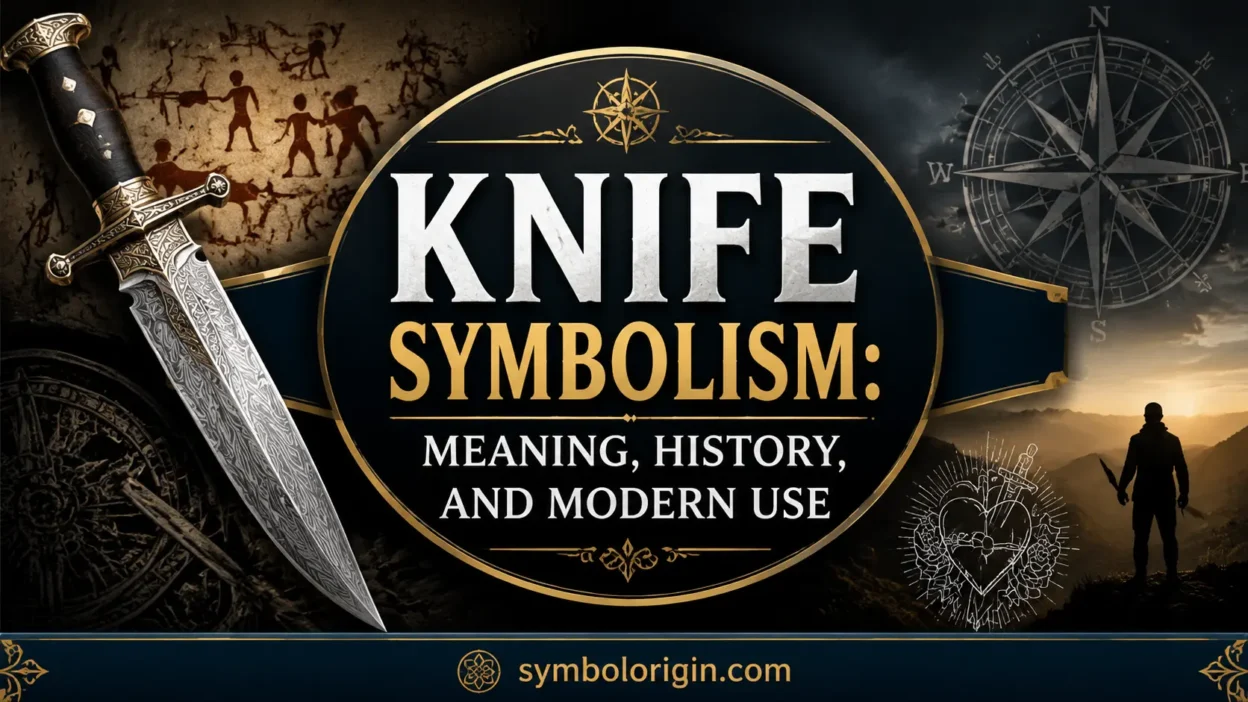
A knife is more than a simple tool. Across cultures and generations, it has represented survival, protection, skill, change, and personal power. Knife symbolism reflects the many ways humans understand an object that can both create and separate, protect and harm, prepare food and represent conflict.
From ancient stone blades to modern pocket knives, the knife has remained connected with human life. People have used knives for cooking, hunting, craftsmanship, ceremonies, and outdoor activities. Because of this close relationship, the blade has gained meanings that go beyond its practical purpose.
In the United States, knives often represent independence, preparedness, and personal responsibility. A family pocket knife passed down through generations may symbolize tradition, while a knife tattoo may represent overcoming challenges or making a major life change.
The meaning of a knife depends on its context. A chef’s knife, ceremonial blade, survival knife, and decorative tattoo design may all carry different messages. Understanding these meanings reveals why this everyday object continues to appear in art, culture, and personal identity.
Quick Answer
Knife symbolism commonly represents protection, independence, survival, and personal transformation in modern American culture. Historically, knives have also symbolized craftsmanship, sacrifice, authority, and the balance between creation and destruction.
TL;DR
- Knives symbolize survival and personal strength.
- Ancient blades represented skill and protection.
- Americans often view knives as practical tools.
- Knife tattoos express identity and resilience.
- Religious traditions use blades in symbolic stories.
- Modern meanings depend on cultural context.
What a Knife Symbolizes in Modern Culture
A knife carries several symbolic meanings because of its unique ability to cut, shape, and separate. These actions connect the object with ideas about decision-making, change, and personal boundaries.
One of the most common meanings is protection. Throughout human history, people carried knives as tools for safety and survival. Today, many still associate knives with preparedness and the ability to handle difficult situations.
Another important meaning is transformation. Cutting something away can represent removing obstacles, ending an old chapter, or creating a new direction in life. This is why knives often appear in artwork connected with personal growth.
Knives can also symbolize skill and craftsmanship. A carefully made blade reflects patience, knowledge, and attention to detail. For chefs, artists, and collectors, a knife may represent dedication to a craft.
However, knives also have a contrasting meaning. Because they can cause harm, they may represent danger, conflict, or betrayal in certain stories and cultural settings.
The symbolism of a knife is not automatically positive or negative. Its meaning depends on how and why it appears.
Ancient Origins and Early Blade Symbolism
The symbolic importance of knives began with the earliest human tools. Ancient people created sharp stone blades for hunting, preparing food, building shelters, and protecting themselves.
Because survival depended on these tools, blades became associated with intelligence, adaptation, and human creativity. A person who could create a useful blade demonstrated important knowledge and practical ability.
Early metal knives later became symbols of craftsmanship and status. Skilled blacksmiths created blades that were not only functional but also artistic. Some weapons and ceremonial knives featured detailed designs that reflected cultural identity.
In many societies, special knives were passed between generations. These objects represented family connections, traditions, and important life experiences.
The knife’s earliest meanings were closely connected with survival, but over time, its symbolism expanded into ideas of honor, responsibility, and personal identity.
Knife Symbolism in Mythology and Folklore
Knives and blades appear in many myths and traditional stories because they represent moments of action and decision.
In folklore, a knife often appears when a character must overcome a challenge or make a difficult choice. The blade becomes a symbol of courage, preparation, or a turning point.
Some traditions viewed sharp objects as protective items. Because a knife creates separation, people sometimes connected blades with the idea of keeping danger away.
Other stories present knives as symbols of betrayal or conflict. A hidden blade in literature or mythology often represents secrecy, danger, or unexpected change.
This contrast makes knives interesting symbols. They can represent both creation and destruction depending on the story.
Knife Symbolism in American Culture
In the United States, knives have a strong connection with practical life, outdoor traditions, and personal independence.
Many Americans associate pocket knives with childhood memories and family traditions. A knife given by a parent or grandparent may represent trust, responsibility, and lessons passed between generations.
Outdoor communities often view knives as essential tools. Hunters, campers, and hikers use knives for practical tasks such as preparing food, cutting materials, and managing outdoor challenges.
In these settings, a knife usually symbolizes:
- Preparedness
- Self-reliance
- Practical knowledge
- Respect for traditional skills
At the same time, American movies, television shows, and news stories sometimes portray knives as symbols of danger. This creates two different cultural images: the knife as a useful tool and the knife as a threatening object.
The surrounding context determines how people interpret the symbol.
Knife Symbolism in Tattoos and Personal Identity
Knife tattoos are popular because they allow people to express personal experiences through a recognizable symbol.
A knife tattoo may represent overcoming hardship, protecting oneself, or moving forward after a difficult period. The blade often represents the ability to cut away negative experiences and create a new path.
Different tattoo designs create different meanings:
| Tattoo Design | Symbolic Meaning |
|---|---|
| Knife with flowers | Strength combined with beauty |
| Broken knife | Loss, change, or recovery |
| Dagger with heart | Love, emotional pain, or sacrifice |
| Knife with snake | Transformation and survival |
| Decorative dagger | Heritage and personal style |
A knife tattoo does not automatically represent violence. Many people choose these designs because they connect with ideas of resilience, independence, or personal transformation.
Emotional and Psychological Meaning of Knives
The psychological meaning of knives often comes from the human experience of cutting and separating.
People commonly use expressions such as “cutting ties” or “cutting through confusion.” These phrases show how blades became connected with emotional decisions.
A knife may represent:
Independence:
A person may see a knife as a reminder of self-sufficiency and practical ability.
Boundaries:
The sharp edge can symbolize protecting personal space or values.
Change:
Cutting away the past may represent growth and new beginnings.
Control:
A carefully handled blade can represent discipline and responsibility.
The emotional meaning depends on the person’s relationship with the symbol.
Color and Design Meanings of Knife Symbols
The appearance of a knife can influence its symbolic message.
| Design Feature | Common Meaning |
|---|---|
| Silver blade | Precision, honesty, craftsmanship |
| Black blade | Mystery, strength, protection |
| Gold details | Value, achievement, tradition |
| Red accents | Passion, sacrifice, intensity |
| Wooden handle | Heritage and connection |
Artists and designers often combine knives with other symbols to create specific messages. A flower may soften the image, while a skull may create a darker interpretation.
Knife Symbolism in Religion and Spiritual Traditions
Knives appear in several religious stories and traditions, often connected with sacrifice, devotion, and moral choices.
In some religious contexts, a knife represents a difficult test or moment of commitment. The focus is often not the blade itself but the decision and meaning behind its use.
Ceremonial blades may represent transformation, responsibility, or a connection between physical actions and spiritual beliefs.
Because religious interpretations vary widely, a knife may carry sacred meaning in one community and a completely different meaning in another.
Knife Symbolism in Art, Fashion, and Media
Knife imagery remains common in modern creative expression because it creates strong visual impact.
Artists use knives to explore themes such as:
- Survival
- Conflict
- Personal change
- Human choices
- Strength
In fashion, knife designs may appear on clothing, jewelry, and accessories. Often, these designs focus on style rather than literal meanings.
Movies and television frequently use knives as storytelling symbols. A blade may suggest danger, mystery, courage, or survival depending on the character and situation.
In video games and fantasy art, knives and daggers often represent speed, strategy, and specialized abilities.
Knife Symbolism in Survival and Outdoor Traditions
For outdoor enthusiasts, knives often symbolize preparation and connection with nature.
A survival knife represents the ability to handle challenges with limited resources. It reflects practical knowledge and confidence.
Many outdoor traditions emphasize responsible use. A knife is viewed as a tool that supports exploration rather than an object of aggression.
Family traditions also play an important role. A well-used knife can become a reminder of shared experiences, skills learned, and memories created.
Common Misunderstandings About Knife Symbolism
Because knives can be dangerous, people sometimes misunderstand their symbolic meaning.
A common mistake is assuming every knife symbol represents violence. In reality, many knife images represent craftsmanship, survival, or personal growth.
Another misunderstanding comes from popular media. Movies often exaggerate the threatening side of knives for dramatic effect.
Context matters. A kitchen knife, hunting knife, ceremonial blade, and tattoo design may look similar but communicate very different ideas.
Understanding the background prevents unfair assumptions about the symbol.
How Knife Symbolism Has Changed Over Time
The meaning of knives has evolved alongside human society.
Early humans viewed blades mainly as survival tools. Later cultures connected knives with craftsmanship, tradition, and status.
Today, knives represent many different ideas depending on the situation. They can symbolize cooking, family history, outdoor skills, artistic expression, or personal transformation.
The object has remained meaningful because humans continue to connect it with important experiences: creating, protecting, changing, and surviving.
Frequently Asked Questions About Knife Symbolism
What does a knife symbolize spiritually?
A knife may symbolize transformation, sacrifice, protection, and important life decisions in spiritual contexts. Its meaning depends on the specific tradition and belief system.
What does a knife tattoo symbolize?
A knife tattoo often represents strength, survival, personal change, or overcoming challenges. The meaning depends on the design and the person wearing it.
Is a knife symbol positive or negative?
A knife symbol can represent both positive and negative ideas. It may symbolize protection and creativity but can also represent conflict or danger.
What does a broken knife symbolize?
A broken knife often represents change, loss, recovery, or the end of a difficult period. Many people interpret it as a sign of resilience.
Why are knives important in American culture?
Knives are connected with cooking, outdoor activities, craftsmanship, and family traditions in the United States. They often represent practical skills and independence.
What does a knife with flowers symbolize?
A knife with flowers often represents the balance between strength and beauty. It can show that toughness and sensitivity can exist together.
Conclusion
Knives have carried many meanings across human history because they represent both practical ability and deeper human experiences. They can symbolize protection, independence, craftsmanship, transformation, and personal identity.
In modern America, knife symbolism continues to appear in tattoos, outdoor traditions, art, fashion, and storytelling. While some people associate knives with danger, many others see them as reminders of skill, resilience, and personal growth.
Like many symbols, the meaning of a knife depends on context. A blade can represent different ideas for different people, making it one of the most complex everyday objects in human culture.