
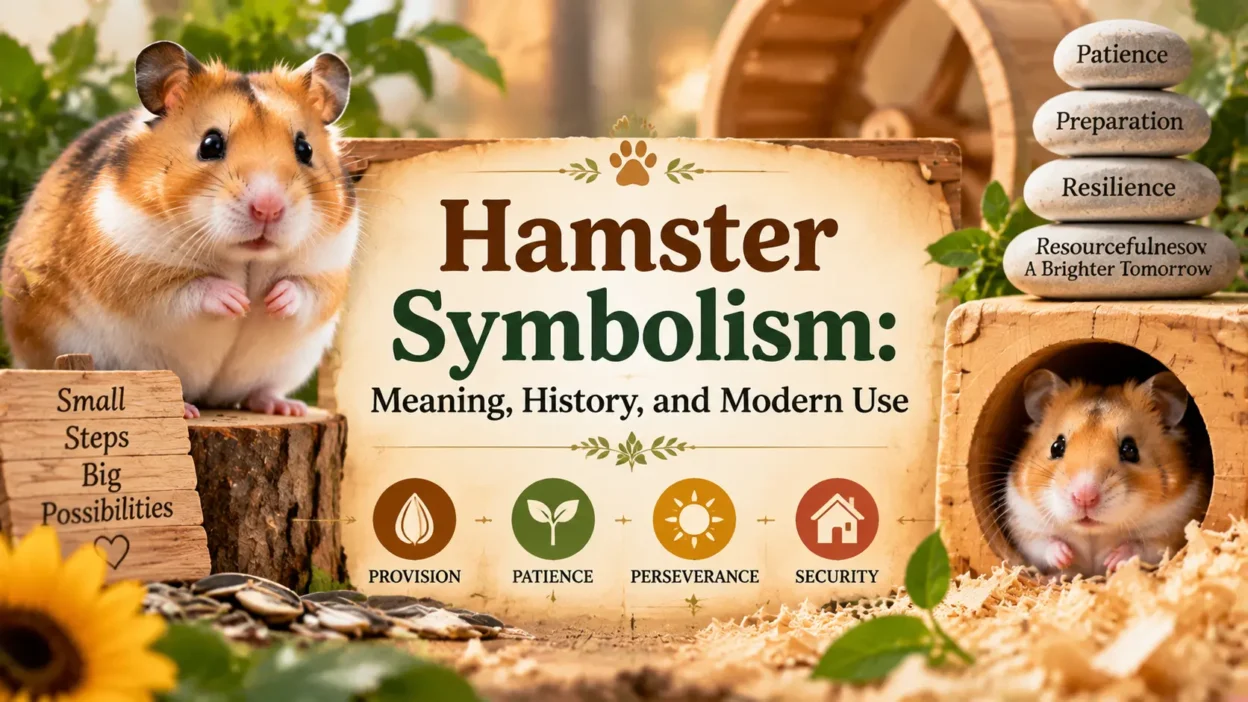
Small, gentle, and often kept as beloved companions, hamsters have become more than household pets in modern culture. Hamster symbolism reflects ideas of comfort, curiosity, preparation, independence, and the simple joys of daily life. Although hamsters do not have the same ancient symbolic role as animals like lions, wolves, or eagles, their modern meaning has grown through human relationships with these small creatures.
People often connect hamsters with cozy homes, emotional companionship, and a peaceful lifestyle. Their habits of collecting food, creating nests, and exploring their surroundings have also shaped symbolic interpretations related to planning, security, and personal growth.
Understanding hamster symbolism helps explain why this small animal appears in pet culture, artwork, online communities, gifts, and personal expressions. Its meaning is usually connected to everyday experiences rather than traditional mythology.
Quick Answer
Hamster symbolism commonly represents comfort, companionship, curiosity, and careful preparation in modern American culture. It is also associated with creating a safe home, enjoying simple pleasures, and adapting to changing environments.
TL;DR
- Hamsters symbolize comfort, care, and companionship.
- Their habits represent preparation and resourcefulness.
- Americans often associate them with childhood memories and pets.
- Hamsters appear in digital culture as cute personality symbols.
- Their symbolism focuses on everyday happiness and resilience.
What a Hamster Represents as a Symbol
Hamsters are small rodents known for their round bodies, soft fur, cheek pouches, and active behavior. They are commonly kept as pets in homes across the United States because of their manageable size and gentle nature.
As a symbol, the hamster often represents qualities people notice in these animals:
- Comfort: Their small size and calm appearance create feelings of warmth and safety.
- Curiosity: Hamsters constantly explore tunnels, toys, and new surroundings.
- Preparation: Their habit of storing food connects them with planning ahead.
- Independence: Unlike some pets that require constant attention, hamsters often have their own routines.
- Adaptability: They adjust to different environments when properly cared for.
Unlike symbols based on ancient legends, hamster meanings mostly come from observation, human attachment, and modern relationships with pets.
Core Meanings of Hamster Symbolism
Comfort and Emotional Connection
One of the strongest modern meanings of the hamster is emotional comfort. Many people remember hamsters as childhood pets that provided companionship and a sense of responsibility.
In American households, small pets often play an important role in teaching children empathy and caregiving. A hamster can symbolize the bond created through feeding, cleaning, and caring for another living creature.
Because hamsters are associated with gentle behavior, they often appear in designs, illustrations, and products meant to create a feeling of warmth and friendliness.
Curiosity and Exploration
Hamsters are naturally curious animals. They investigate new objects, move through tunnels, and interact with their surroundings.
This behavior has influenced their symbolic meaning. A hamster can represent:
- curiosity about life
- willingness to explore
- learning through experience
- discovering new environments
In modern culture, the hamster is sometimes used as a symbol for people who enjoy small adventures rather than dramatic changes. It represents finding interest in ordinary moments.
Preparation and Resourcefulness
One of the most recognizable hamster behaviors is storing food in their cheek pouches. This natural habit has created an association with planning and saving resources.
Symbolically, hamsters can represent:
- thinking ahead
- managing resources carefully
- creating security
- preparing for future needs
This meaning connects with a common human desire for stability. People often value the idea of being prepared rather than acting without planning.
However, this symbolism can also have a humorous side. The image of a hamster collecting too much food is sometimes used to describe people who save unnecessary items or over-prepare.
Historical Origins of Hamster Symbolism
Unlike many animals found in ancient myths, hamsters have a relatively recent relationship with humans. Wild hamsters originated in parts of Europe and Asia, especially regions with dry grasslands and agricultural areas.
The word “hamster” comes from an older German term connected with storing or hoarding. This connection reflects the animal’s natural habit of collecting food underground.
Early human views of hamsters were mostly practical rather than symbolic. Farmers and researchers observed their behavior, habitats, and relationship with crops. Symbolic meanings developed later as hamsters became more common as pets.
During the 20th century, hamsters became popular household animals, especially after the Syrian hamster was introduced widely as a companion animal. Their role changed from a wild creature studied by humans to a familiar symbol of friendship and domestic comfort.
Hamster Symbolism in the United States
In the United States, hamsters are primarily viewed through the lens of pet ownership and popular culture. They are often connected with childhood, family life, and emotional companionship.
American interpretations commonly include:
| Context | Meaning in the USA | Common Associations | Notes |
|---|---|---|---|
| Pet ownership | Care and companionship | Family, childhood, responsibility | One of the most common meanings |
| Home decor | Comfort and friendliness | Cozy spaces, warmth | Often used in cute designs |
| Online culture | Humor and personality | Memes, cartoons, characters | Frequently represents everyday struggles |
| Personal gifts | Affection and kindness | Friendship, encouragement | Common among younger audiences |
Hamsters rarely represent authority or power in American symbolism. Instead, they represent smaller, personal experiences such as happiness, routine, and emotional connection.
The Emotional and Psychological Meaning of Hamsters
Animals often become symbols because humans attach feelings to their appearance and behavior. Hamsters are especially connected with emotional ideas because of their small size and harmless appearance.
Psychologically, hamster imagery can create feelings of:
Safety
A small animal living in a comfortable enclosure can represent a protected environment. Many people associate hamsters with creating a peaceful personal space.
Happiness Through Simple Things
Hamsters are often shown enjoying basic activities such as running on wheels, exploring tunnels, or collecting food. These behaviors can represent finding satisfaction in ordinary experiences.
Responsibility
For children, caring for a hamster can be an early lesson in patience and commitment. The animal may symbolize personal growth through caregiving.
Individual Personality
Each hamster has different behaviors and habits. Because of this, people sometimes use hamster symbolism to represent individuality and unique personality traits.
Hamster Symbolism in Tattoos and Personal Style
Although hamster tattoos are less common than designs featuring wolves, birds, or butterflies, some people choose hamster imagery for personal reasons.
A hamster tattoo may symbolize:
- love for a childhood pet
- appreciation for small joys
- a playful personality
- comfort and emotional memories
- resilience in difficult situations
Some people choose cartoon-style hamster tattoos because they represent humor and a lighthearted approach to life.
The meaning depends strongly on personal experience. For one person, a hamster may represent a favorite pet; for another, it may represent enjoying a calm and simple lifestyle.
Hamster Symbolism in Pop Culture and Digital Culture
Hamsters have gained a unique place in modern entertainment because their appearance naturally creates feelings of humor, friendliness, and innocence. Unlike many symbolic animals that appear in legends or traditional stories, hamsters became culturally important through pets, cartoons, online communities, and social media.
In American pop culture, hamsters are often portrayed as:
- cheerful companions
- small characters with big personalities
- symbols of everyday struggles
- representations of cute and relatable behavior
One popular example is the use of hamster imagery in internet memes. The “running hamster” idea is sometimes used to describe people who feel busy, repeat daily routines, or keep working toward goals. This connects with the common phrase about being on a “hamster wheel,” which describes a repetitive lifestyle where someone keeps moving without making major progress.
However, this modern expression is not always negative. Some people also view routine as comforting because predictable habits can provide stability and organization.
Hamsters in cartoons and animated media are usually designed to appear friendly and approachable. Their small size allows creators to portray them as characters that represent kindness, humor, and emotional warmth.
Cross-Cultural Meanings of Hamsters
Hamsters do not have a major symbolic role in most ancient religious systems or mythologies. Their symbolic meanings developed mainly through observation and modern relationships with pets.
However, different cultures may interpret hamsters through broader ideas connected to small animals.
European Associations
In parts of Europe, hamsters were historically known as burrowing animals that collected and stored food. Their behavior influenced associations with:
- saving resources
- preparation
- survival skills
Their connection with underground homes also relates to ideas of privacy and creating a secure personal space.
Asian Perspectives
In many Asian countries, hamsters became popular companion animals during the growth of modern pet culture. They are often associated with:
- cuteness
- affection
- companionship
In some East Asian popular culture, small animals are frequently used in character design because they communicate friendliness and emotional warmth.
Indigenous and Traditional Symbolism
Unlike animals such as bears, eagles, wolves, or turtles, hamsters generally do not hold major traditional spiritual meanings in Indigenous North American symbolism. Their importance is mainly connected with modern domestic life rather than ancestral traditions.
Positive and Negative Interpretations of Hamster Symbolism
Like many symbols, the hamster can have different meanings depending on context.
Positive Symbolism
Positive interpretations include:
Care and Compassion
Because hamsters depend on human care as pets, they can represent kindness and responsibility.
Adaptability
Hamsters adjust to different living environments when their needs are met. This can symbolize flexibility during life changes.
Persistence
A hamster running on a wheel may represent dedication and continued effort toward a goal.
Comfort
Their small size and gentle appearance often create feelings of relaxation and emotional safety.
Negative Symbolism
Some interpretations focus on less positive aspects.
Repetition and Routine
The phrase “running on a hamster wheel” can symbolize repetitive work, exhaustion, or feeling trapped in daily responsibilities.
Excessive Saving
Because hamsters store food, they may sometimes represent collecting too much or difficulty letting go.
Smallness or Feeling Overlooked
In certain contexts, a hamster may represent feeling insignificant compared with larger or more powerful figures.
These meanings depend on the situation. The animal itself is not negative; the interpretation comes from human experiences connected to its behavior.
Hamster Symbolism in Dreams
Dream interpretations involving hamsters vary widely because dreams are personal experiences rather than fixed messages.
A hamster in a dream may be associated with ideas such as:
- wanting more comfort and security
- managing personal responsibilities
- preparing for future challenges
- paying attention to small details
Different situations may change the interpretation:
A Friendly Hamster
A calm hamster may represent companionship, happiness, or emotional comfort.
A Running Hamster
A hamster running continuously may reflect feelings about busy routines, repeated tasks, or personal goals.
A Lost Hamster
A missing hamster may symbolize concerns about losing something important, such as comfort, stability, or a personal connection.
Dream symbolism should be viewed as personal reflection rather than a universal prediction.
Modern Uses of Hamster Symbolism
Today, hamsters appear in many forms of personal expression and design.
Home Decor
Hamster illustrations are often used in:
- children’s rooms
- playful artwork
- stationery
- cozy interior designs
Their image creates a friendly atmosphere and is often connected with warmth and happiness.
Fashion and Accessories
Hamster designs appear on:
- clothing
- bags
- phone cases
- jewelry
- collectible items
These designs usually communicate a playful personality rather than a traditional symbolic belief.
Social Media
Online, hamster images are popular because they are easy to connect with emotionally. They are often used to express:
- humor
- tiredness from daily routines
- excitement
- cute reactions
The animal’s expressive face makes it effective for digital communication.
Gifts
Hamster-themed gifts are commonly given to:
- pet lovers
- children
- friends
- people who enjoy cute designs
These gifts often represent affection, encouragement, or shared memories.
Common Misunderstandings About Hamster Symbolism
Because hamsters are popular online, some meanings become exaggerated or misunderstood.
Hamsters Are Not Ancient Spiritual Symbols
Unlike animals found in mythology or religious traditions, hamsters do not have a long history as sacred symbols in most cultures.
Most hamster symbolism comes from:
- pet relationships
- modern media
- observed behavior
- personal experiences
The “Hamster Wheel” Meaning Is Only One Interpretation
Many people associate hamsters with repetitive work because of the phrase “hamster wheel.” However, this is only one modern expression.
The same animal can represent:
- preparation
- comfort
- curiosity
- companionship
depending on the context.
Cute Does Not Mean Meaningless
Some people assume small animals have less symbolic value than larger animals. In reality, symbols often gain importance from emotional connections rather than physical size.
A hamster may carry strong personal meaning because of memories, relationships, or experiences.
How Hamster Symbolism Has Changed Over Time
The meaning of hamsters has evolved significantly.
Originally, hamsters were mainly viewed as wild animals with interesting survival behaviors. Humans noticed their ability to store food and create underground shelters.
Later, as hamsters became popular pets, their symbolic meaning shifted toward:
- friendship
- responsibility
- family connection
- emotional comfort
In the digital age, hamsters gained new meanings through memes, cartoons, and online communities. They became symbols of relatable human experiences, including busy schedules, persistence, humor, and everyday challenges.
This evolution shows how symbols change as human relationships with animals change.
Hamster Symbolism Compared With Other Small Animal Symbols
Hamsters share some meanings with other small animals but also have distinct associations.
| Animal | Common Symbolism | Difference From Hamster |
|---|---|---|
| Mouse | Adaptability, cleverness | Often linked more with survival and intelligence |
| Rabbit | Growth, fertility, luck | More connected to nature and reproduction |
| Squirrel | Preparation and saving | Stronger association with gathering resources |
| Guinea Pig | Gentleness and companionship | More connected with social behavior |
The hamster’s unique symbolism comes from the combination of comfort, independence, preparation, and playful personality.
Frequently Asked Questions About Hamster Symbolism
What does a hamster symbolize spiritually?
Hamsters do not have one universally accepted spiritual meaning. In modern interpretations, they are often connected with comfort, preparation, patience, and creating a safe environment.
What does a hamster represent in American culture?
In the United States, hamsters mainly represent companionship, childhood memories, responsibility, and simple happiness. They are strongly connected with pet ownership and family experiences.
What does a hamster tattoo symbolize?
A hamster tattoo may represent a beloved pet, playful personality, emotional memories, or appreciation for small moments in life. The meaning depends on the person’s own connection with the animal.
Is seeing a hamster considered a good symbol?
Many people view hamsters positively because they associate them with comfort, care, and happiness. However, some interpretations connect them with repetitive routines through the “hamster wheel” expression.
What does a hamster symbolize in dreams?
A hamster in dreams may reflect personal feelings about comfort, responsibilities, preparation, or daily routines. Dream meanings vary based on the dreamer’s experiences.
Why are hamsters popular in internet culture?
Hamsters are popular online because their appearance is cute, expressive, and easy to relate to. They are often used to communicate humor, emotions, and everyday situations.
Do hamsters have historical mythology?
Hamsters generally do not have major roles in ancient mythology. Their symbolic meanings developed mostly through modern pet culture and observations of their natural behavior.
Conclusion
Hamsters represent a form of symbolism built around everyday human experiences rather than ancient legends. Their meanings come from their behavior, their role as companion animals, and the emotional connections people create with them.
In modern culture, hamster symbolism is often connected with comfort, curiosity, preparation, and the value of small moments. While the image of a hamster wheel can represent repetitive routines, the animal itself also reflects patience, care, and adaptability.
The popularity of hamsters shows that even small creatures can carry meaningful associations. Their symbolism continues to grow through homes, art, digital culture, and personal memories.