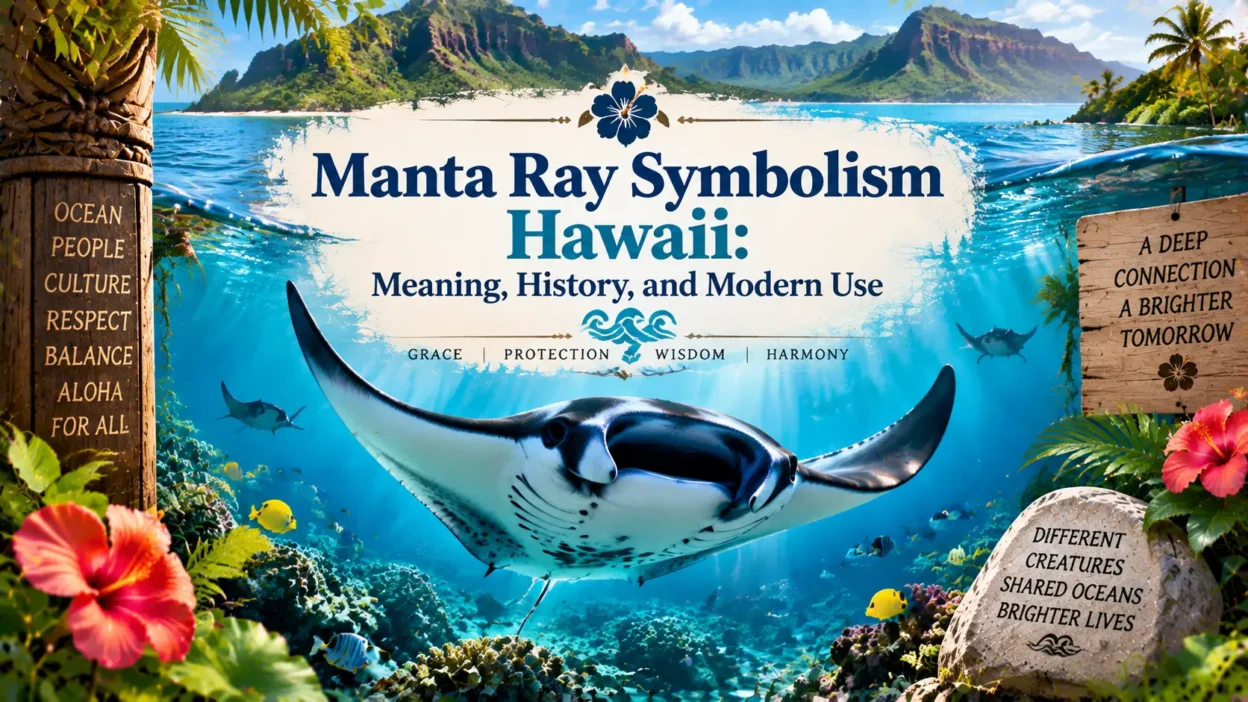
The ocean has inspired human cultures for thousands of years, and few sea creatures carry as much cultural importance as the manta ray. Manta ray symbolism Hawaii reflects ideas of protection, grace, wisdom, ocean connection, and respect for marine life. In Hawaiian culture, the manta ray is not simply an impressive ocean animal; it is connected with ancestry, storytelling, and the relationship between people and the natural world.
Manta rays are known for their enormous wingspan, gentle movements, and peaceful behavior. Unlike many large marine animals, they are not viewed as threats. Their calm presence has helped shape their symbolic role as creatures associated with harmony, guidance, and balance.
Today, manta ray imagery appears in tattoos, artwork, jewelry, conservation campaigns, and coastal design. For many Americans, especially those connected to Hawaii or ocean lifestyles, the manta ray represents a personal bond with nature and a reminder to protect marine ecosystems.
Quick Answer
Manta ray symbolism Hawaii commonly represents protection, harmony, wisdom, and a respectful connection with the ocean in modern American culture. In traditional Hawaiian interpretations, manta rays are also linked with ancestral connections, guidance, and the importance of living in balance with nature.
TL;DR
- Manta rays symbolize ocean harmony and peaceful strength.
- Hawaiian traditions connect manta rays with ancestry and guidance.
- Their graceful movement represents balance and adaptability.
- Americans often use manta rays in tattoos and art.
- Conservation gives the manta ray new modern meaning.
What the Manta Ray Represents in Hawaiian Culture
In Hawaiian traditions, the ocean is not viewed as a separate environment from human life. The sea provides food, stories, identity, and spiritual connections. Marine animals often hold special meanings because they represent relationships between people, ancestors, and the natural world.
Manta rays, known as hahalua in Hawaiian language, are associated with qualities such as protection and connection. Their large bodies moving silently through the water create an image of calm strength rather than aggression.
Many Hawaiian stories and traditions recognize ocean animals as possible forms connected to ancestors or spiritual guardians. These relationships are part of the broader Hawaiian concept of aumakua, which refers to ancestral spirits that may appear through animals or natural forms.
The manta ray’s symbolism comes from its behavior: it moves peacefully, travels long distances, and exists within the rhythm of the ocean.
The Physical Features That Shape Manta Ray Symbolism
A manta ray’s appearance strongly influences how people interpret its meaning.
The animal has:
| Feature | Symbolic Meaning | Common Associations | Notes |
|---|---|---|---|
| Wide wingspan | Freedom and openness | Exploration, movement | Inspired by its bird-like swimming style |
| Gentle movement | Peace and balance | Calmness, patience | Reflects non-aggressive behavior |
| Ocean habitat | Connection with nature | Water, emotions, life cycles | Represents marine environments |
| Long migrations | Journey and transformation | Growth, change | Linked with personal exploration |
Its wing-like fins often remind people of birds in flight, creating associations with freedom and spiritual movement. Its smooth underwater motion suggests patience, control, and harmony.
Ancient Roots and Early Hawaiian Ocean Symbolism
Hawaiian culture developed within a deep relationship with the Pacific Ocean. Before modern technology changed ocean travel, Polynesian communities depended on the sea for navigation, food, and communication between islands.
Animals of the ocean became part of traditional knowledge and storytelling. Sharks, turtles, dolphins, whales, and rays each developed their own cultural associations.
The manta ray gained symbolic importance because of its unusual appearance and peaceful nature. Its ability to glide through the water gave it an almost otherworldly presence, but interpretations remained connected to real observations of the animal.
Rather than representing domination over nature, manta ray symbolism often emphasizes cooperation with the ocean environment.
How Americans Interpret Manta Ray Symbolism Today
In the United States, manta rays are often associated with coastal living, environmental awareness, and personal transformation.
People may connect manta rays with:
- freedom and exploration
- emotional calm
- respect for marine ecosystems
- adventure near the ocean
- peaceful strength
For many Americans, especially those who visit Hawaii, manta rays represent memorable experiences such as night ocean encounters, diving, or snorkeling. The symbol can become a reminder of a meaningful place or life moment.
The manta ray also fits modern values around conservation. As awareness grows about ocean protection, many people view the animal as a symbol of protecting fragile marine environments.
Manta Rays as Symbols of Protection and Guidance
One of the strongest meanings connected with manta rays is protection.
This idea comes partly from Hawaiian cultural views of ocean animals as beings connected with ancestral relationships. A manta ray’s calm presence creates an image of a guardian that does not rely on force.
Unlike predators that symbolize power through strength, the manta ray represents protection through balance and awareness.
This makes it appealing in modern symbolism because many people associate true protection with care, patience, and responsibility rather than control.
Emotional and Psychological Meaning of the Manta Ray
Symbolism often reflects human emotions and personal experiences. The manta ray can represent several psychological themes.
Calm During Change
Because manta rays move smoothly through changing ocean currents, they are often viewed as symbols of adapting without losing balance.
Emotional Freedom
The open movement of the manta ray suggests letting go of restrictions and exploring new possibilities.
Inner Peace
Its quiet underwater movement creates associations with meditation, relaxation, and emotional stability.
Connection With Nature
For many people, the manta ray represents a desire to reconnect with the natural world.
These meanings are modern interpretations rather than universal rules. Individuals may choose the symbol based on their own experiences.
Manta Ray Symbolism in Tattoos and Personal Identity
Manta ray tattoos are popular among people who feel connected to oceans, travel, Hawaii, or marine conservation.
Common tattoo meanings include:
- respect for Hawaiian culture
- love of ocean life
- personal transformation
- peaceful strength
- memories of island experiences
The design style can also influence interpretation. A traditional Polynesian-inspired manta ray design may focus on cultural heritage and ancestry, while a realistic manta ray tattoo may emphasize nature, travel, or conservation.
People interested in Hawaiian-inspired tattoos should understand the cultural background and avoid using sacred designs without respect for their origins.
Manta Rays in Art, Jewelry, and Modern Design
Manta ray imagery appears in many forms of modern decoration.
Artists often use manta rays because their shape creates visually balanced designs. Their wide wings and smooth curves work well in paintings, sculptures, logos, and jewelry.
Common modern uses include:
- ocean-themed home decor
- beach-inspired fashion
- conservation artwork
- travel souvenirs
- marine education materials
In these settings, the manta ray usually communicates appreciation for the ocean rather than a specific spiritual meaning.
Cross-Cultural Meanings of Manta Rays
Although Hawaii has one of the strongest cultural connections with manta rays, other coastal cultures also recognize their importance.
Across different regions, manta rays may symbolize:
- movement across life’s journeys
- harmony with water
- freedom
- mystery of the deep ocean
- respect for marine creatures
Many island and coastal communities develop symbolic relationships with sea animals because ocean life influences daily survival and cultural identity.
However, meanings vary between communities. A symbol that carries spiritual importance in one culture may simply represent beauty or conservation in another.
The Role of Manta Rays in Conservation Symbolism
Modern manta ray symbolism has expanded because of environmental concerns.
Manta rays face challenges from fishing pressure, habitat changes, and human activity in oceans. Conservation groups and marine researchers often use manta rays as examples of why protecting ocean ecosystems matters.
The symbol now represents more than beauty. It can communicate:
- environmental responsibility
- respect for biodiversity
- sustainable relationships with nature
For many Americans, supporting manta ray protection represents a broader commitment to preserving marine life.
Common Misunderstandings About Manta Ray Symbolism
Because ocean symbols are often shared online, some meanings become exaggerated or disconnected from their origins.
A common misunderstanding is that every manta ray image has a universal spiritual meaning. In reality, interpretations depend on cultural background, personal beliefs, and context.
Another misunderstanding is confusing manta rays with stingrays. Although they are related animals, they have different physical features and cultural associations. Manta rays are generally recognized for their peaceful behavior and lack of the defensive tail spine associated with stingrays.
Respectful interpretation requires recognizing both cultural traditions and individual meanings.
How Manta Ray Symbolism Has Changed Over Time
Historically, manta ray symbolism developed from direct relationships between coastal communities and the ocean. People observed the animal’s behavior and connected it with ideas about nature, ancestry, and balance.
Today, the meaning has expanded. Many people encounter manta rays through tourism, photography, documentaries, tattoos, and conservation efforts rather than traditional cultural practices.
The symbol has moved from local ocean traditions into a broader global image of marine beauty and environmental awareness.
FAQ
What does a manta ray symbolize in Hawaiian culture?
In Hawaiian culture, manta rays are associated with ocean connection, guidance, and ancestral relationships. They are respected as part of the natural world rather than viewed only as animals.
What does a manta ray tattoo mean?
A manta ray tattoo can represent ocean love, freedom, transformation, cultural connection, or personal memories related to coastal experiences. The meaning depends on the person wearing it.
Are manta rays considered sacred in Hawaii?
Manta rays can hold important cultural meaning in Hawaiian traditions, especially through connections between animals, ancestors, and the natural environment. Specific meanings vary among families and communities.
What is the difference between manta ray and stingray symbolism?
Manta rays are commonly associated with peaceful movement, openness, and ocean harmony. Stingrays may carry different associations because of their defensive abilities and appearance.
Why are manta rays used in conservation symbols?
Manta rays represent ocean protection because they are vulnerable to environmental changes and depend on healthy marine ecosystems. Their image helps communicate the importance of protecting ocean life.
Do manta rays symbolize good luck?
Some people interpret manta rays as positive symbols connected with protection and guidance. However, beliefs about luck vary across cultures and personal traditions.
Conclusion
The manta ray carries meanings connected with peace, protection, ocean awareness, and respectful relationships with nature. In Hawaii, these interpretations are shaped by cultural traditions that recognize the close connection between people, ancestors, and the sea.
Today, manta ray symbolism Hawaii continues to appear in tattoos, art, travel memories, and conservation efforts. Its meaning remains strongest when it reflects genuine respect for the ocean and the communities that have long valued this remarkable creature.