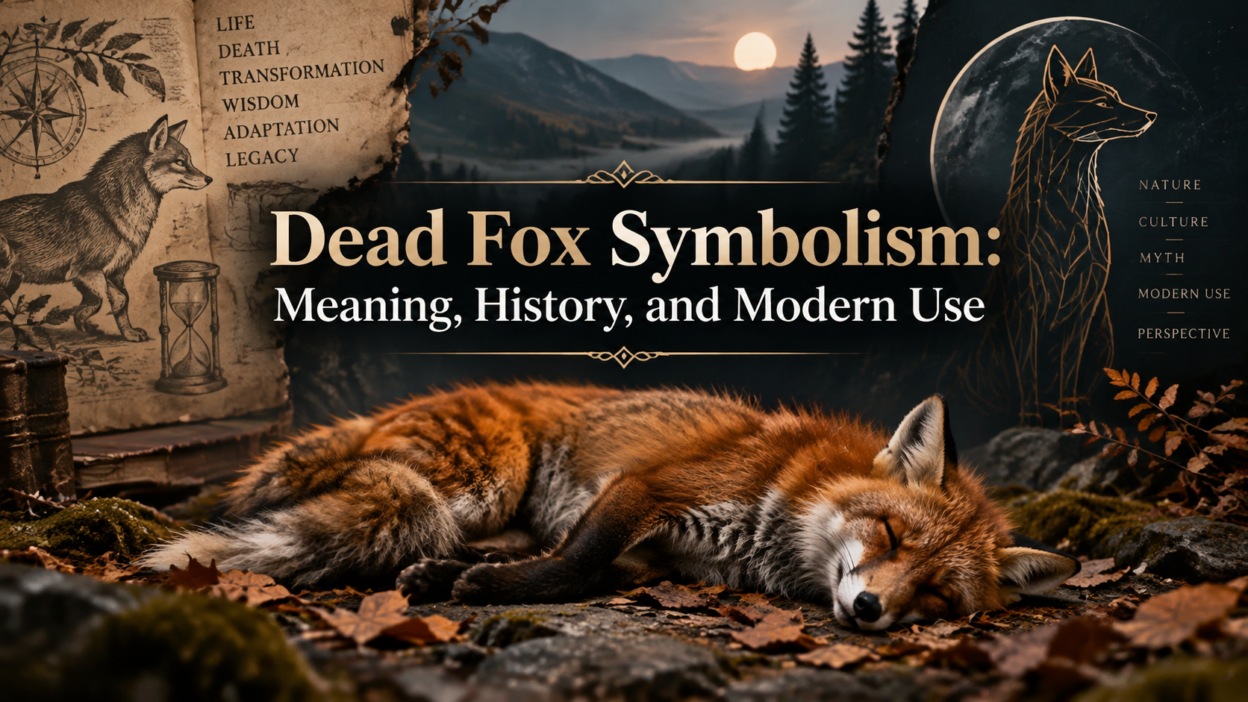
A fox is often associated with intelligence, adaptability, independence, and survival, but dead fox symbolism carries a different set of meanings. In modern American culture, a dead fox commonly represents the end of a clever strategy, the loss of adaptability, transformation after change, or a reminder of nature’s cycles. Historically, foxes have held complex meanings in folklore, where they could represent wisdom, trickery, survival, and the relationship between humans and the natural world.
Seeing a dead fox can create strong emotional reactions because foxes are admired for their beauty, alertness, and ability to survive in different environments. Whether encountered in nature, represented in artwork, or used in storytelling, the image often encourages people to think about endings, change, resilience, and the balance between life and death.
Quick Answer
Dead fox symbolism commonly represents the end of a strategy, transformation, and the natural cycle of life in modern American culture. Historically, foxes were linked with intelligence and cleverness in folklore, so a dead fox can symbolize lost wisdom, changing circumstances, or the closing of an important chapter.
TL;DR
- Dead fox represents endings, change, and natural cycles.
- Fox folklore connects the animal with intelligence and survival.
- Americans often view it as a symbol of transformation.
- A dead fox may represent lost opportunities or adaptation.
- Art and tattoos use it to express personal change.
What a Dead Fox Represents as a Symbol
A dead fox combines two contrasting ideas: the fox’s traditional meanings of intelligence and survival with the finality of death. Because foxes are known for their quick thinking and ability to adjust, their death can symbolize a moment when old methods no longer work or when a person must accept change.
In symbolic interpretations, a dead fox may represent:
- The end of a difficult period
- A change in personal identity
- The loss of cleverness or control
- Acceptance of nature’s cycles
- Moving beyond old habits
Unlike symbols that have one fixed meaning, a dead fox can represent different ideas depending on the situation. A wildlife photographer may see it as a reminder of natural balance, while someone using the image in art may connect it with personal transformation.
The Fox as a Symbol Before Death Is Considered
To understand the meaning of a dead fox, it helps to first understand traditional fox symbolism. Across many cultures, foxes have been viewed as intelligent, observant animals that survive through patience and awareness.
Common fox meanings include:
- Cleverness
- Independence
- Resourcefulness
- Caution
- Adaptability
Foxes are small predators that rely more on skill than strength. This created associations with strategy and intelligence. When the fox appears dead in symbolic imagery, these qualities may be viewed as interrupted, changed, or transformed.
The contrast between the living fox and the dead fox creates a symbolic message about the temporary nature of success, knowledge, and survival.
Ancient Roots and Early Fox Symbolism
Fox symbolism has existed for thousands of years in folklore, mythology, and storytelling. Different societies developed their own interpretations based on their relationship with the animal.
In European folklore, foxes were often portrayed as clever creatures that used intelligence to overcome challenges. Stories frequently showed foxes escaping danger through planning rather than physical power.
In some Native American traditions, foxes were connected with awareness, survival skills, and observation of the environment. However, meanings varied greatly among different nations and should not be treated as one universal belief.
In East Asian folklore, foxes sometimes appeared as supernatural beings capable of transformation. These stories often explored themes of intelligence, mystery, and the relationship between humans and the unseen world.
Because foxes were viewed as smart and adaptable, their death naturally became connected with ideas about losing power, completing a journey, or entering a new stage.
Dead Fox Symbolism in the United States
In the United States, a dead fox does not have one official cultural meaning, but people often interpret it through ideas connected with nature, wildlife, and personal symbolism.
Many Americans encounter foxes through:
- Rural landscapes
- Wildlife documentaries
- Outdoor activities
- Conservation discussions
- Art and literature
When someone finds a dead fox in the wild, the first reaction is usually practical rather than symbolic. It may represent the realities of wildlife, including disease, accidents, predators, or natural aging.
However, in symbolic contexts, Americans may connect the image with:
| Context | Meaning in the USA | Common Associations | Notes |
|---|---|---|---|
| Nature | Life cycle and environmental balance | Wildlife, seasons, ecosystems | Often viewed without superstition |
| Art | Change and reflection | Loss, beauty, transformation | Used for emotional expression |
| Tattoos | Personal growth after hardship | Endings, survival, identity | Meaning depends on the wearer |
| Folklore | Intelligence and strategy | Cleverness, awareness | Based on traditional stories |
| Dreams | Personal interpretation | Change, uncertainty | Not a fixed meaning |
Emotional and Psychological Meaning of a Dead Fox
The image of a dead fox can create feelings of sadness because foxes are often seen as graceful and energetic animals. Psychologically, symbols involving death frequently represent transitions rather than only physical endings.
A dead fox may represent:
Accepting Change
The fox survives by adapting, but its death reminds people that even adaptable beings experience change. The symbol can encourage acceptance when life moves in unexpected directions.
Letting Go of Old Strategies
Because foxes represent clever solutions, a dead fox may suggest that an old approach is no longer useful. It can represent the need to develop a new way of thinking.
Recognizing Vulnerability
Foxes are often admired for their intelligence, but they are still part of nature’s challenges. The symbol can remind people that strength and vulnerability exist together.
Reflecting on Mortality
Like other animal death symbols, a dead fox can encourage reflection on life’s temporary nature. It highlights the connection between all living things.
Dead Fox Symbolism in Folklore and Stories
Foxes have appeared in countless myths, legends, and stories because their behavior creates interesting human comparisons. Their ability to hide, hunt, and survive made them popular characters.
In many stories, the fox represents a character who wins through intelligence. A dead fox in storytelling can change that message by showing the limits of intelligence and strategy.
It may symbolize:
- A clever character’s downfall
- The consequences of deception
- The end of a survival journey
- A warning about overconfidence
Writers and artists sometimes use the image because it creates emotional contrast. The fox’s beauty combined with its death creates a powerful image about change and impermanence.
Cultural Interpretations of Dead Fox Imagery
Different cultures have viewed foxes through different lenses, and these traditions influence how people understand dead fox imagery today.
European Traditions
European folklore often connected foxes with intelligence and trickery. A dead fox could symbolize the failure of deception or the end of a clever plan.
Native American Perspectives
Some Indigenous traditions connected foxes with observation, wisdom, and survival. Interpretations differ between communities, but the animal was often respected for its relationship with the natural world.
East Asian Folklore
Fox figures in East Asian stories sometimes represented transformation and intelligence. A dead fox image may therefore connect with themes of change and the closing of a transformation process.
Modern Western Culture
Today, many people view dead fox symbolism through personal experiences rather than traditional beliefs. It is often connected with nature, environmental awareness, and emotional reflection.
Dead Fox Symbolism in Tattoos and Personal Style
Animal tattoos often represent personal experiences, identity, or values, and a dead fox tattoo can carry several different meanings depending on the person wearing it. Unlike a traditional fox tattoo that usually focuses on intelligence, independence, or cleverness, a dead fox design often adds themes of change, survival, and acceptance.
Some common interpretations of a dead fox tattoo include:
- A major life transition: The image may represent leaving behind an older version of oneself.
- Survival after hardship: The wearer may use the symbol to show that difficult experiences shaped their identity.
- Acceptance of impermanence: The tattoo can reflect an understanding that everything changes.
- A connection with nature: Some people choose the design because it represents wildlife, ecosystems, and the natural world.
Artists often combine dead fox imagery with other symbols, such as flowers, mushrooms, forests, skulls, or seasonal elements. A fox surrounded by autumn leaves may suggest the beauty of change, while a fox with flowers may represent renewal after loss.
In American tattoo culture, animal designs are rarely interpreted in only one way. The meaning usually comes from the person’s story, personal beliefs, and artistic choices.
Dead Fox Symbolism in Art and Design
Artists frequently use animal imagery to explore themes that are difficult to express with words. A dead fox can create a strong visual contrast because it combines elegance with vulnerability.
In paintings, illustrations, and digital artwork, a dead fox may appear as a symbol of:
- The relationship between humans and nature
- The temporary nature of beauty
- Environmental concerns
- Personal transformation
- Emotional reflection
The fox’s recognizable shape and colorful fur make it visually appealing, even when shown in a state of death. This contrast allows artists to discuss both beauty and loss.
In modern American design, dead animal imagery sometimes appears in:
- Nature-inspired home decor
- Alternative fashion
- Gothic artwork
- Fantasy illustrations
- Literary themes
However, many artists avoid presenting death only as something dark or negative. Instead, they may use it to show cycles of renewal, where endings create opportunities for new beginnings.
Dead Fox Symbolism in Dreams
Dream symbolism varies widely because dreams are influenced by personal experiences, emotions, and memories. A dead fox appearing in a dream does not have one universal meaning, but many people interpret it through common symbolic themes.
A dead fox dream may suggest:
A Change in How You Solve Problems
Because foxes are associated with intelligence and strategy, seeing one dead may represent a situation where an old solution no longer works.
The End of a Relationship or Situation
The image may appear during periods of emotional change, such as ending a friendship, changing careers, or moving into a new phase of life.
A Warning About Trust
Since folklore sometimes connects foxes with cleverness and deception, some people interpret a dead fox as the end of manipulation or hidden motives.
Personal Growth
A dream involving a dead fox may also represent leaving behind an older identity and developing new ways of thinking.
Dream meanings should be viewed as personal reflections rather than predictions. The emotions felt during the dream often provide more insight than the symbol itself.
Spiritual Interpretations of a Dead Fox
Many spiritual interpretations of animal symbols come from cultural traditions, personal beliefs, and individual experiences. A dead fox may be understood differently depending on someone’s spiritual background.
Some people view the symbol as representing:
Transformation
Death in symbolic traditions often represents change rather than only an ending. A dead fox may suggest that one stage of life has finished and another is beginning.
Wisdom Through Experience
Since foxes are often connected with intelligence, the image may represent lessons gained through challenges. The “death” of the fox can symbolize moving beyond old knowledge into a new understanding.
Balance With Nature
The symbol can also remind people that animals are part of natural cycles. Birth, survival, aging, and death are connected parts of the environment.
Releasing Illusions
Because foxes sometimes represent cleverness or disguise in folklore, a dead fox may symbolize seeing reality more clearly after a period of confusion.
These interpretations are personal and cultural rather than universal rules. Different spiritual communities may understand the image in different ways.
Positive and Negative Meanings of Dead Fox Symbolism
A dead fox may seem like a negative image at first, but symbolic meanings often include both difficult and hopeful ideas.
| Positive Meaning | Negative Meaning |
|---|---|
| Transformation after change | Loss of control |
| Acceptance of life cycles | Failure of a plan |
| Learning from experience | Missed opportunities |
| Personal growth | End of an important period |
| Connection with nature | Feelings of vulnerability |
The meaning depends largely on context. A person creating artwork may see the symbol as beautiful and meaningful, while someone encountering a dead animal unexpectedly may experience sadness.
Dead Fox Symbolism in Modern Culture
Modern American culture often approaches animal symbolism through personal expression rather than strict traditions. A dead fox may appear in different forms of media because it creates emotional depth.
Common modern uses include:
Books and Storytelling
Authors may use a dead fox as a symbol of a character’s transformation, a changing environment, or a moment of realization.
Movies and Television
Visual symbols involving animals are often used to create emotional atmosphere. A dead fox scene may communicate themes of survival, danger, or the impact of human actions on nature.
Social Media and Digital Art
Artists online sometimes use dead fox imagery because it combines beauty with emotional complexity. The image may represent grief, change, environmental awareness, or personal storytelling.
Home Decor
Nature-themed artwork may include fox imagery because foxes are popular symbols of wilderness and independence. When shown as a dead fox, the design usually appeals to people interested in darker, reflective, or artistic styles.
Dead Fox Symbolism and Environmental Awareness
In modern times, dead wildlife imagery can also connect with environmental conversations. A dead fox may remind viewers about the effects of human activity on ecosystems.
Possible environmental associations include:
- Habitat loss
- Road accidents involving wildlife
- Pollution
- Changes in animal populations
- Human responsibility toward nature
Unlike symbolic interpretations, these concerns are based on real ecological issues. For many people, seeing a dead wild animal creates awareness about the fragile relationship between humans and the environment.
The symbol can therefore move beyond personal meaning and become a reminder of conservation and respect for wildlife.
Common Misunderstandings About the Symbol
Because animal symbols often appear in folklore and online discussions, some meanings become exaggerated or misunderstood.
A dead fox does not automatically mean:
- Bad luck
- A supernatural warning
- A guaranteed future event
- A universal spiritual message
These interpretations depend on personal beliefs and cultural background.
In many cases, the simplest meaning is the most accurate: a dead fox represents an animal’s place within the natural cycle of life. Symbolic meanings develop from human experiences, stories, and emotions rather than from fixed rules.
How Dead Fox Meaning Has Changed Over Time
The meaning of fox symbolism has changed as human relationships with nature have evolved.
In older folklore, foxes were often viewed through survival and intelligence. They were characters in stories that represented cleverness, caution, and sometimes deception.
In modern America, foxes are often viewed more positively. Many people see them as beautiful wildlife animals connected with forests, rural areas, and environmental awareness.
The dead fox adds another layer by focusing on transition. Instead of only representing cleverness, it introduces ideas about endings, acceptance, and transformation.
Today, the symbol can represent both loss and renewal. It reflects a modern understanding that change is a normal part of life.
Frequently Asked Questions About Dead Fox Symbolism
What does a dead fox symbolize?
A dead fox commonly symbolizes change, endings, transformation, and the natural cycle of life. Because foxes are traditionally connected with intelligence and survival, the image can also represent the end of an old strategy or way of thinking.
Is seeing a dead fox a bad sign?
Seeing a dead fox is not considered a universal sign of bad luck. Many people interpret it as a natural event or as a personal symbol connected with change, reflection, or environmental awareness.
What does a dead fox tattoo mean?
A dead fox tattoo can represent personal transformation, overcoming hardship, acceptance of change, or a connection with nature. The meaning depends on the wearer’s personal experience and design choices.
Does a dead fox have spiritual meaning?
Some people view a dead fox as a symbol of transformation, wisdom gained through experience, or releasing old beliefs. Spiritual interpretations vary between individuals and cultures.
What does a dead fox symbolize in dreams?
A dead fox in a dream may represent the end of an old approach, a personal transition, or changing feelings about trust and problem-solving. Dream meanings depend on the dreamer’s emotions and life situation.
Why are foxes important in folklore?
Foxes appear in many folklore traditions because their behavior suggests intelligence, caution, and adaptability. Different cultures have interpreted them as clever animals, tricksters, or symbols of transformation.
Conclusion
Dead fox symbolism reflects the connection between intelligence, survival, change, and the natural cycle of life. While foxes traditionally represent cleverness and adaptability, their death introduces themes of endings, transformation, and acceptance.
In modern American culture, dead fox symbolism is often understood as a reminder that every stage of life changes. Whether seen in artwork, tattoos, stories, or nature, the image encourages reflection on growth, loss, and the ability to adapt when circumstances shift.
Rather than representing only sadness or negativity, the dead fox can be viewed as a symbol of transition — a reminder that endings can also create space for new beginnings.