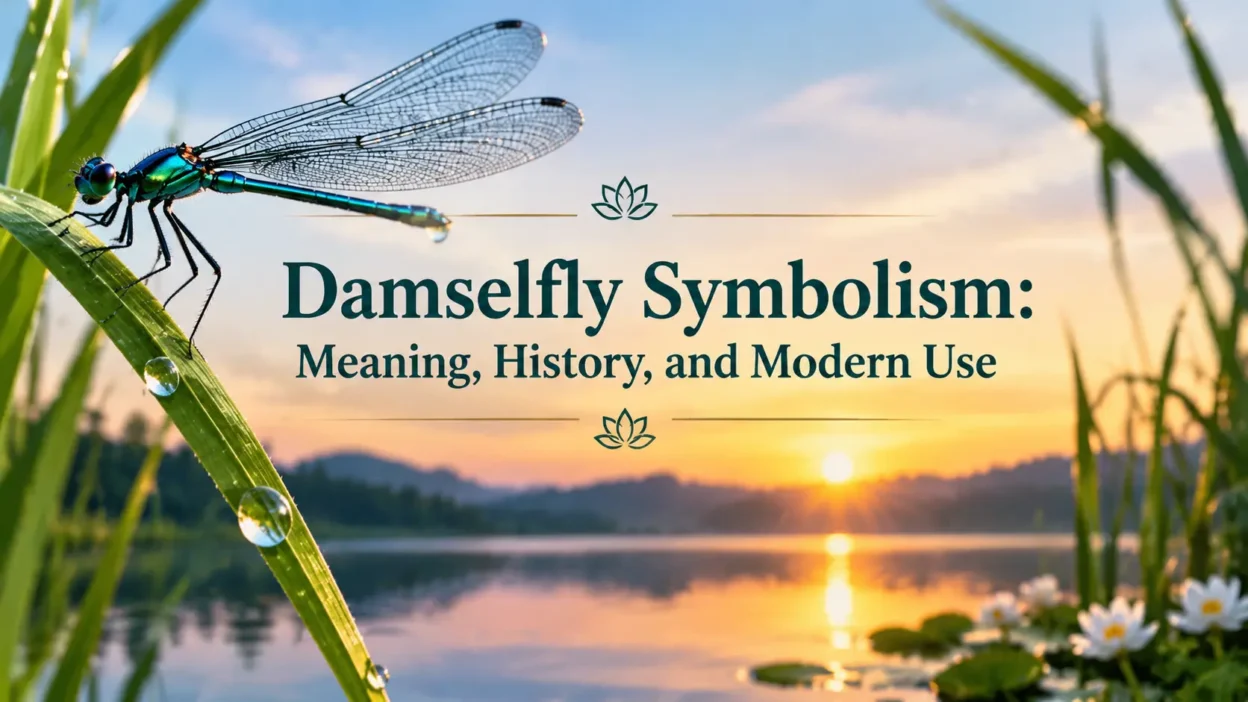
Damselfly symbolism often represents change, adaptability, emotional balance, and personal growth in modern American culture. This small freshwater insect is admired for its delicate appearance, graceful movement, and connection to natural environments. People often notice damselflies near ponds, lakes, gardens, and wetlands, where they have become a familiar sign of healthy ecosystems.
Unlike larger and more dramatic animals used in symbolism, the damselfly carries meaning through subtle qualities. Its ability to move between water and air connects it with transitions, flexibility, and the ability to adjust to new situations. Many people associate seeing a damselfly with moments of reflection, renewal, or a reminder to appreciate small changes in life.
Across different cultures, the damselfly has developed meanings connected to transformation, harmony, and awareness. In the United States, it appears in jewelry, artwork, tattoos, garden designs, and nature-inspired decorations because many people view it as a symbol of beauty, freedom, and connection with the natural world.
Quick Answer
Damselfly symbolism commonly represents change, emotional balance, and personal growth in modern American culture, especially in nature-inspired art, tattoos, and personal designs. Historically, damselflies have been associated with transformation, adaptability, and the connection between different stages of life in various cultures.
TL;DR
- Damselflies symbolize change and personal growth.
- Their life cycle represents transformation.
- Americans associate them with nature and balance.
- Many cultures connect them with water and renewal.
- Damselfly tattoos often express freedom and resilience.
What a Damselfly Represents in Nature
A damselfly is a slender insect related to dragonflies, but it has a lighter body, smaller wings, and a more delicate appearance. Damselflies usually live near freshwater environments such as streams, ponds, marshes, and lakes.
Their life begins underwater, where young damselflies spend months or even years as aquatic larvae before transforming into flying adults. This dramatic life change is one reason people connect damselflies with growth and personal development.
The movement of a damselfly also influences its symbolism. It can quickly change direction while flying, showing flexibility and the ability to respond to its surroundings. These natural behaviors have helped create associations with adjustment, awareness, and living through periods of change.
What It Commonly Means in the United States
In the United States, damselflies are usually viewed as positive symbols connected with nature, emotional clarity, and transformation. They do not have one official meaning, but many Americans interpret them through personal experiences and nature-based traditions.
Common meanings include:
| Context | Meaning in the USA | Common Associations | Notes |
|---|---|---|---|
| Tattoos | Growth and life changes | Strength, healing, identity | Often chosen after major life events |
| Home Decor | Peace and natural beauty | Gardens, relaxation, outdoors | Popular in nature-inspired designs |
| Jewelry | Personal transformation | Freedom, elegance, confidence | Often worn as meaningful accessories |
| Nature Encounters | Awareness and renewal | Fresh starts, mindfulness | Connected with outdoor experiences |
For many people, seeing a damselfly near water creates a feeling of calm and reminds them of the importance of adapting to life’s changes.
Ancient Roots and Early Symbolism
The symbolic meaning of damselflies developed from their connection with water, air, and transformation. Although dragonflies appear more frequently in historical records, damselflies share many similar associations because both insects belong to the same broader group.
Ancient cultures often paid attention to insects because their behaviors reflected natural cycles. The transformation from aquatic larva to winged adult was seen as a powerful example of change.
In some traditions, insects that moved between water and air represented connections between different parts of existence. Water was often associated with emotions, renewal, and hidden knowledge, while air represented movement, thought, and freedom.
The damselfly’s ability to exist in these two environments helped create symbolic ideas about balance and transition.
Damselfly Symbolism in Native American Traditions
Some Native American communities have connected dragonflies and similar insects with themes such as transformation, illusion, and change. However, meanings vary widely between tribes and should not be treated as a single shared belief.
In certain Indigenous stories, dragonfly-like insects appear as reminders that appearances can change and that people should look beyond what is immediately visible. Because damselflies and dragonflies move quickly and appear almost weightless, they have sometimes been connected with awareness and understanding.
Modern interpretations often borrow general ideas from these traditions, but it is important to recognize that Indigenous symbolism differs between cultures and communities.
The Connection Between Damselflies and Transformation
Transformation is one of the strongest meanings associated with damselflies. Their life cycle provides a clear natural example of change.
A damselfly begins life underwater before eventually leaving that environment and becoming a flying insect. This process mirrors human experiences such as growing older, changing careers, recovering from challenges, or entering new stages of life.
Because of this connection, many people choose damselfly images during important personal transitions. A damselfly can represent leaving behind an earlier version of yourself while accepting new possibilities.
The symbolism is not about becoming a completely different person. Instead, it focuses on adapting, developing, and recognizing growth that happens over time.
Emotional and Psychological Meaning of Damselflies
The damselfly is often connected with emotional balance because of its relationship with water. In symbolic interpretations, water frequently represents feelings, memories, and the inner self.
The insect’s movement above water creates an image of maintaining control while staying connected to emotions. This has made damselflies popular symbols for mindfulness, calmness, and emotional awareness.
People may connect with damselfly symbolism during times when they want to:
- Accept personal changes
- Find emotional stability
- Move forward after difficult experiences
- Create a stronger connection with nature
The meaning depends on personal interpretation, but many people view the damselfly as a reminder to remain flexible and present.
Why Damselflies Appear in Tattoos
Damselfly tattoos are popular because the insect combines delicate beauty with meaningful symbolism. Many people choose this design to represent personal journeys rather than simply its appearance.
Common meanings behind damselfly tattoos include:
- New beginnings
- Independence
- Inner strength
- Healing after hardship
- Appreciation for nature
- Personal transformation
Some people choose colorful damselfly tattoos because the insect’s wings allow for creative designs. Others prefer simple outlines because they represent elegance and simplicity.
Unlike symbols with fixed meanings, a damselfly tattoo often reflects the wearer’s own experiences and memories.
Damselfly Symbolism in Jewelry, Fashion, and Home Design
Damselflies have become common designs in jewelry, clothing patterns, artwork, and home decorations because they combine natural beauty with personal meaning. In the United States, people often choose damselfly designs when they want an object that represents change, freedom, or a connection with the outdoors.
Damselfly necklaces, rings, and earrings are often given as meaningful gifts during life transitions, such as graduations, new careers, or personal milestones. The insect’s light appearance makes it suitable for delicate designs, while its symbolic associations add emotional value.
In home decor, damselfly images frequently appear in garden decorations, wall art, stained glass, and nature-themed rooms. These designs often create a peaceful atmosphere by connecting indoor spaces with outdoor landscapes.
The popularity of damselfly designs also reflects a broader American interest in nature-inspired decoration. Many people use natural symbols to express personal values, memories, and appreciation for the environment.
Damselfly Meaning in Dreams and Personal Reflection
Dream interpretations are personal and vary between individuals, but damselflies are often viewed as symbols of change and awareness. When people dream about damselflies, they may connect the image with a period of transition or a need to adapt.
A flying damselfly may represent movement, freedom, or the desire to explore new opportunities. A damselfly near water may be interpreted as a connection between emotions and personal growth.
However, there is no universal meaning behind dreams. A person’s experiences, emotions, and cultural background influence how they understand symbols appearing in their dreams.
In modern American culture, dream symbolism is often used as a tool for personal reflection rather than a fixed prediction of future events.
Cross-Cultural Meanings of Damselflies
Different cultures have developed their own interpretations of damselflies and related insects. Since damselflies share many characteristics with dragonflies, some symbolic traditions overlap between the two.
In parts of Japan, dragonflies are associated with courage, success, and victory. While these meanings are mainly connected with dragonflies, similar insect symbolism has influenced how people view damselflies as graceful creatures connected with nature.
Some European folklore traditions connected dragonflies and related insects with transformation and mystery. Older stories sometimes viewed these insects with caution because of their unusual appearance and rapid movement.
In many modern cultures, negative associations have decreased, and damselflies are more commonly viewed as peaceful symbols of nature, balance, and renewal.
Damselfly Symbolism in Spiritual and Religious Interpretations
Damselflies do not have one universal religious meaning, but some spiritual interpretations connect them with ideas such as renewal, awareness, and personal change.
Because damselflies spend part of their lives underwater before becoming flying insects, some people view them as symbols of moving from one stage of existence to another. This interpretation often appears in personal spirituality and nature-based practices.
In some modern spiritual communities, seeing a damselfly may be interpreted as a reminder to accept change and remain open to new experiences. These beliefs are personal interpretations rather than shared religious teachings.
Traditional religions generally do not assign a central symbolic role to damselflies, but individuals may still use natural imagery as part of personal reflection and meaning-making.
Positive and Negative Associations of Damselflies
Damselflies are mostly connected with positive meanings today, but interpretations can vary depending on cultural background.
| Symbolic Aspect | Positive Meaning | Possible Negative Interpretation |
|---|---|---|
| Change | Growth and new opportunities | Fear of uncertainty |
| Movement | Freedom and flexibility | Lack of stability |
| Water Connection | Emotional awareness | Hidden feelings |
| Delicate Appearance | Beauty and peace | Fragility |
Most modern interpretations focus on positive qualities such as adaptation and appreciation of nature. Negative meanings usually come from misunderstanding the symbol or applying it in a different cultural context.
Common Misunderstandings About Damselfly Symbolism
One common misunderstanding is confusing damselflies with dragonflies. Although they are closely related insects, they have different physical features and behaviors.
Another misunderstanding is assuming that every damselfly sighting has a fixed spiritual message. Symbolism depends on personal beliefs, cultural background, and individual experiences.
Some online discussions present damselflies as having guaranteed meanings related to luck, predictions, or supernatural messages. These interpretations are personal beliefs rather than widely accepted cultural facts.
A balanced view recognizes the damselfly as a meaningful natural symbol while respecting different interpretations.
How Damselfly Symbolism Has Changed Over Time
The meaning of damselflies has evolved as human relationships with nature have changed. Earlier interpretations often focused on mystery because insects were less understood scientifically.
As people gained more knowledge about insect life cycles and ecosystems, damselflies became symbols of natural balance and environmental awareness.
Today, many Americans view damselflies through a combination of science, art, and personal symbolism. They represent the beauty of adaptation and the importance of protecting natural habitats.
Environmental awareness has also influenced modern interpretations. Because damselflies depend on clean freshwater environments, they can remind people of the connection between human actions and ecological health.
Damselflies in Modern American Culture
In modern American culture, damselflies appear in many creative areas, including:
- Nature photography
- Garden art
- Jewelry collections
- Tattoos
- Clothing patterns
- Social media artwork
- Environmental education
Artists often use damselfly imagery because its shape allows for detailed designs. The wings, colors, and thin body create opportunities for artistic expression.
The symbol also fits modern values that emphasize personal growth, wellness, and environmental connection. Many people are drawn to symbols that represent both individual experiences and appreciation for the natural world.
Unlike some symbols connected with specific groups or movements, damselflies remain broadly accessible and can represent different ideas depending on the person using them.
The Environmental Importance Behind the Symbol
Beyond symbolism, damselflies have an important role in ecosystems. They live near freshwater areas and help control insect populations by feeding on smaller insects.
Their presence can indicate the health of wetland environments because they depend on suitable water conditions during their early life stages.
For many nature lovers, the damselfly represents not only personal change but also environmental responsibility. Protecting habitats where these insects live helps preserve biodiversity and supports healthy ecosystems.
This connection between symbolism and ecology has made damselflies meaningful in conservation discussions and outdoor education.
Frequently Asked Questions About Damselfly Symbolism
What does a damselfly symbolize?
A damselfly commonly symbolizes change, adaptability, emotional balance, and personal growth. Many people connect it with life transitions because of its transformation from an aquatic larva into a flying insect.
Are damselflies considered lucky?
Some cultures view damselflies as positive signs connected with renewal and good changes. However, ideas about luck depend on personal beliefs and cultural traditions rather than a universal rule.
What does a damselfly tattoo mean?
A damselfly tattoo often represents transformation, independence, healing, and personal development. The meaning usually comes from the wearer’s own experiences and the reason they chose the design.
Is a damselfly a spiritual symbol?
Some people use damselflies as spiritual symbols connected with awareness, renewal, and emotional growth. These meanings are personal interpretations and are not part of one universal religious system.
What is the difference between damselfly and dragonfly symbolism?
Damselflies and dragonflies share many symbolic themes because they belong to the same insect group. However, damselflies are often associated with more delicate qualities, while dragonflies are more commonly linked with strength and courage.
Why do people use damselfly designs in home decor?
People often use damselfly designs in home decor because they represent nature, peace, and transformation. Their appearance also works well in artistic styles such as stained glass, garden decorations, and wall art.
Does seeing a damselfly have a special meaning?
Seeing a damselfly can have personal meaning for some people, especially during times of change or reflection. The interpretation depends on individual experiences rather than a fixed message.
Conclusion
Damselfly symbolism represents change, adaptability, emotional balance, and a connection with nature. Its meaning comes from the insect’s unique life cycle, graceful movement, and relationship with freshwater environments.
In modern American culture, damselflies appear in tattoos, jewelry, artwork, and personal designs because many people see them as reminders of growth and the ability to adjust through different stages of life.
Whether viewed as a natural wonder, an artistic symbol, or a personal reminder, damselflies continue to represent the idea that change can lead to new forms of growth and understanding.