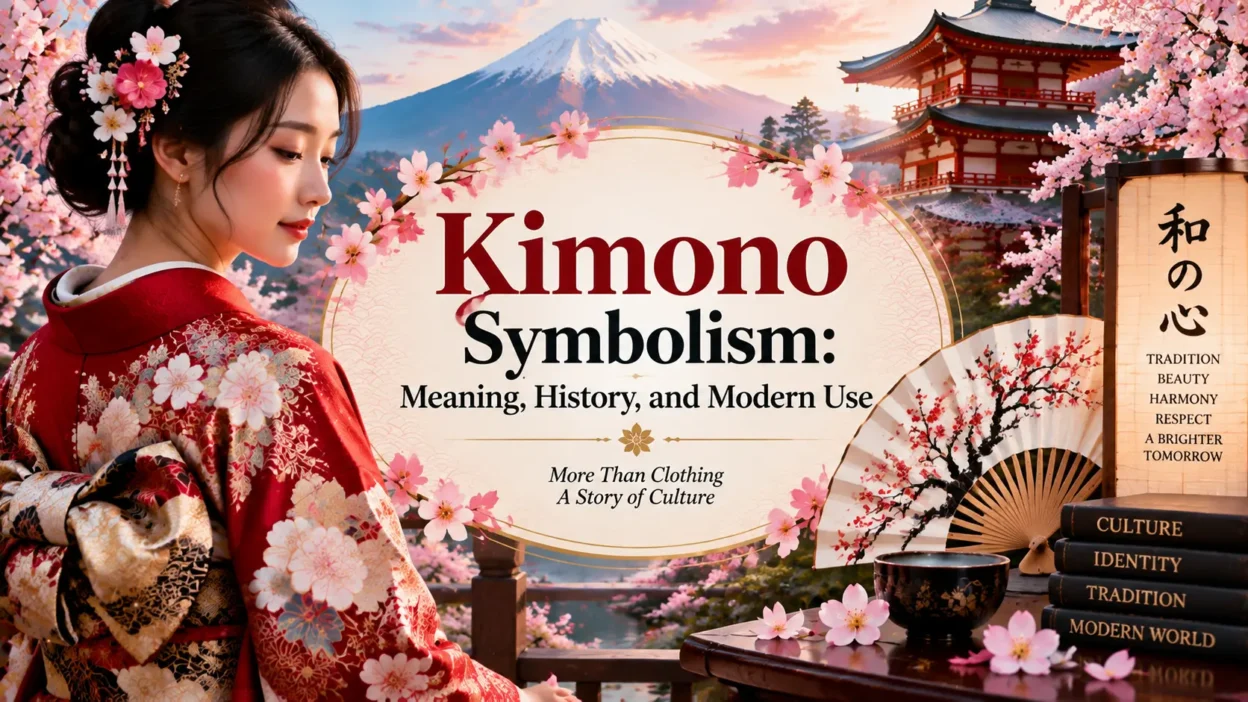
A kimono is more than a traditional Japanese garment; it is a visual language that communicates identity, status, season, celebration, and personal values. Kimono symbolism reflects ideas of harmony, beauty, respect, heritage, and connection between people and nature. From wedding ceremonies to modern fashion, the patterns, colors, and styles of kimono continue to carry cultural messages.
Although many Americans recognize the kimono as an elegant piece of Japanese clothing, its meaning extends beyond appearance. Every element, including fabric, color, design, and occasion, can represent specific ideas rooted in Japanese history and aesthetics.
Understanding kimono symbolism helps explain why this garment remains important in cultural events, museums, fashion design, and personal expression around the world.
Quick Answer
Kimono symbolism commonly represents Japanese identity, beauty, respect, and harmony with nature in modern American culture, especially through fashion, art, and cultural appreciation. Historically, kimono designs also expressed social roles, seasonal changes, family traditions, and important life events.
TL;DR
- Kimonos symbolize Japanese heritage, elegance, and cultural identity.
- Colors and patterns communicate emotions, seasons, and occasions.
- Traditional designs often connect people with nature.
- Americans view kimonos through fashion and cultural appreciation.
- Modern creators adapt kimono styles for new expressions.
- Some uses require cultural awareness and respect.
What a Kimono Represents Beyond Clothing
The word “kimono” literally means “a thing to wear” in Japanese, but the garment carries meanings far beyond its simple definition. A traditional kimono is created with careful attention to shape, fabric, and decoration. Its appearance can communicate information about the wearer’s age, marital status, social position, and the event being attended.
Unlike many modern clothing styles that focus mainly on trends, kimono design has historically followed principles of balance and symbolism. The garment creates a relationship between the person wearing it and the surrounding world.
Patterns of flowers, birds, waves, and seasonal plants are not random decorations. They often represent ideas such as renewal, longevity, love, good fortune, or respect for nature.
In Japan, wearing a kimono can express connection to family traditions and cultural memory. In the United States, the garment is often recognized as a symbol of Japanese artistry, craftsmanship, and cultural heritage.
Ancient Roots and Early Symbolism of the Kimono
The origins of the kimono developed from earlier Japanese clothing influenced by Chinese and Korean styles. During the Heian period (794–1185), Japanese clothing became more distinctive, with layered garments and carefully chosen colors becoming important parts of court culture.
Among nobles, clothing combinations communicated refinement and knowledge. Seasonal colors and fabric choices showed awareness of nature and artistic taste.
Over time, the kimono evolved from an everyday garment into a cultural symbol. During the Edo period (1603–1868), clothing regulations influenced what different social groups could wear. At the same time, craftsmanship grew, and textile artists developed complex dyeing and weaving techniques.
The garment became a place where artists expressed stories through visual designs. A kimono could represent family heritage, personal identity, and social traditions.
Core Meanings Associated With Kimono Symbolism
Several ideas appear repeatedly in the symbolic meaning of kimono:
| Context | Meaning in the USA | Common Associations | Notes |
|---|---|---|---|
| Traditional ceremonies | Respect and cultural heritage | Weddings, festivals, formal events | Often connected with Japanese traditions |
| Fashion and design | Artistic expression | Elegance, craftsmanship, creativity | Used by designers worldwide |
| Patterns | Connection to nature | Flowers, animals, seasons | Designs often carry cultural meanings |
| Colors | Emotional messages | Beauty, celebration, mourning | Meanings can vary by context |
| Family traditions | Identity and memory | Heirlooms, generations | Garments may be passed down |
The meaning of a kimono depends heavily on its design and situation. A wedding kimono communicates different ideas than a casual summer kimono.
Colors and Their Symbolic Meanings in Kimono Design
Color plays an important role in Japanese aesthetics. Traditional kimono colors often communicate emotions, seasons, and social meanings.
Red
Red is commonly associated with celebration, happiness, and vitality. It frequently appears in garments connected with young women, festivals, and joyful occasions.
In wedding clothing, red may represent good fortune and a positive future.
White
White has several meanings depending on context. In traditional Japanese weddings, white symbolizes purity and a new beginning. It can also appear in formal clothing connected with ceremonies.
Black
Black often represents elegance and formality. A black kimono with family crests can be worn during important events.
In some contexts, black is also associated with mourning traditions.
Blue
Blue is often connected with calmness, stability, and natural imagery such as water and sky. Indigo dye, known as “ai-zome,” has a long history in Japanese textile traditions.
Gold
Gold represents celebration, wealth, and prestige. Gold embroidery or patterns may appear on formal garments used for special occasions.
Nature as a Major Symbolic Language in Kimono Patterns
Nature is one of the strongest sources of kimono symbolism. Traditional Japanese design often reflects the changing seasons and the relationship between humans and the natural environment.
Cherry Blossoms
Cherry blossoms represent beauty, renewal, and the temporary nature of life. Their short blooming period became connected with appreciating meaningful moments.
Cranes
Cranes symbolize longevity and good fortune. They are especially common in wedding garments because they represent a long and successful life.
Chrysanthemums
Chrysanthemums are associated with nobility, longevity, and autumn. They also hold importance in Japanese cultural traditions.
Pine Trees
Pine symbolizes endurance because it remains green throughout winter. It is often linked with strength and long-lasting prosperity.
Waves
Wave patterns represent movement, resilience, and the continuing rhythm of life. They are common in designs inspired by the ocean.
These patterns show how kimono design transforms natural objects into cultural messages.
Kimono Symbolism in Japanese Weddings and Ceremonies
Ceremonial kimonos carry some of the strongest symbolic meanings. Japanese weddings often include traditional garments that represent family, commitment, and new beginnings.
A bride may wear a white kimono called a shiromuku during a traditional ceremony. The color represents purity and readiness to begin a new chapter.
Another style, the uchikake, is a highly decorative outer garment often featuring cranes, flowers, or other meaningful designs. These patterns communicate wishes for happiness, prosperity, and harmony.
For formal celebrations, kimono choices are carefully considered. The garment is not only clothing but also part of the ceremony’s visual storytelling.
Kimono Symbolism in the United States
In the United States, the kimono is often understood as a symbol of Japanese culture, craftsmanship, and artistic tradition. Many Americans encounter kimonos through museums, cultural festivals, fashion exhibitions, anime, films, and Japanese community events.
For some Japanese Americans, traditional clothing can represent family heritage and a connection to ancestral culture. Wearing a kimono during festivals, weddings, or cultural celebrations can become a way of preserving traditions across generations.
Outside Japanese communities, Americans often appreciate the kimono for its visual beauty and careful construction. Designers and artists frequently study kimono patterns, textile techniques, and the balance between simplicity and decoration.
However, understanding the garment requires more than viewing it as an exotic fashion item. A kimono has specific cultural roots, and its meaning changes depending on who wears it, why it is worn, and whether its history is respected.
Emotional and Psychological Meaning of the Kimono
Clothing often communicates identity, and the kimono is especially connected with personal and cultural expression. The garment can represent belonging, memory, and connection to tradition.
For many people, wearing a kimono creates a sense of connection with family history. A garment passed down from a parent or grandparent may carry memories of important celebrations and personal experiences.
The careful process of selecting colors, patterns, and accessories can also create a feeling of intentionality. Traditional kimono dressing requires attention to details, which reflects values such as patience, respect, and appreciation for craftsmanship.
From a psychological perspective, symbolic clothing can help people express parts of their identity that ordinary clothing may not communicate. A kimono may represent pride in heritage, admiration for Japanese culture, or appreciation for artistic traditions.
The Role of Kimono in Modern Fashion and Design
Although the kimono developed as traditional Japanese clothing, its influence continues in contemporary fashion. Designers around the world have borrowed elements such as wide sleeves, flowing shapes, layered structures, and textile patterns.
Modern versions of kimono-inspired clothing appear in:
- luxury fashion collections
- casual robes and jackets
- costume design
- home décor
- textile artwork
- photography
The appeal of the kimono often comes from its combination of structure and movement. The loose silhouette allows designers to explore comfort while maintaining an artistic appearance.
In the United States, many people wear kimono-style garments as fashion pieces rather than traditional clothing. These modern adaptations can celebrate Japanese design principles, but they may not carry the same cultural meaning as a traditional kimono worn in Japan.
Kimono Symbolism in Tattoos and Personal Expression
Kimono imagery sometimes appears in tattoo art, especially among people interested in Japanese aesthetics and traditional symbolism.
A tattoo featuring a kimono may represent:
- appreciation for Japanese culture
- elegance and beauty
- personal transformation
- connection to heritage
- interest in traditional art
Artists may combine kimono imagery with other Japanese symbols such as flowers, dragons, waves, fans, or cranes. Each element adds additional meaning.
However, a kimono tattoo does not automatically represent a traditional Japanese identity. The meaning depends on the person’s relationship with the symbol and the context in which it is used.
Respectful use usually involves understanding the cultural background rather than using the image only because of its appearance.
Religious and Spiritual Connections With Kimono Traditions
The kimono itself is not a religious symbol, but it appears in ceremonies connected with Japanese spiritual and cultural traditions.
In Japan, traditional clothing may be worn during events connected with:
- Shinto ceremonies
- Buddhist memorial services
- seasonal festivals
- family celebrations
The meaning comes from the event and cultural setting rather than the garment alone.
For example, colors and designs chosen for ceremonies may reflect ideas of respect, purity, remembrance, or celebration. The kimono becomes part of a larger cultural practice involving family, community, and tradition.
Common Misunderstandings About Kimono Symbolism
As the kimono has become internationally recognized, some misunderstandings have developed around its meaning.
One common misunderstanding is that every kimono carries a single universal message. In reality, meanings depend on factors such as pattern, color, occasion, and the wearer’s situation.
Another misunderstanding is treating all Japanese-style garments as identical. Traditional kimono, yukata, and modern kimono-inspired clothing have different histories and uses.
A third issue involves cultural appreciation versus cultural misuse. Wearing or displaying kimono-inspired designs is not automatically disrespectful. The concern usually comes when cultural elements are removed from their meaning, treated as costumes, or presented inaccurately.
Learning the history behind the garment helps people engage with it more thoughtfully.
How Kimono Symbolism Has Changed Over Time
The meaning of the kimono has evolved as Japanese society changed.
Historically, kimono could communicate social position, age, family connections, and formal roles. Clothing choices followed established traditions and rules.
During Japan’s modernization, Western-style clothing became common for everyday life, and kimono became more associated with ceremonies and special occasions.
Today, the kimono exists in several forms. Some people wear traditional garments for cultural events, while designers reinterpret kimono elements for contemporary fashion.
In global culture, the kimono has become both a Japanese heritage symbol and an example of how traditional art can influence modern creativity.
Kimono Symbolism in Art, Media, and Popular Culture
Kimonos frequently appear in movies, animation, photography, and visual art. Their distinctive shape and detailed patterns make them visually recognizable.
In American popular culture, kimonos are often associated with:
- Japanese history
- elegance
- traditional craftsmanship
- martial arts settings
- seasonal beauty
Media portrayals can introduce audiences to Japanese culture, but they can also simplify or stereotype traditions. Accurate representation usually considers the historical setting, purpose of the clothing, and cultural context.
Artists often use kimono imagery because it combines storytelling with visual design. A single pattern can communicate ideas about nature, emotion, or character.
Positive and Negative Symbolic Associations of Kimonos
| Symbolic Association | Positive Meaning | Possible Misinterpretation |
|---|---|---|
| Tradition | Heritage and cultural connection | Viewed only as an old-fashioned garment |
| Beauty | Artistic craftsmanship | Reduced to decoration alone |
| Nature | Seasonal awareness and harmony | Ignored cultural context |
| Elegance | Formal respect and refinement | Treated as a costume |
| Identity | Personal and family connection | Assumed to represent all Japanese experiences |
The same symbol can communicate different messages depending on the situation. Understanding context prevents oversimplification.
Why People Still Connect With Kimono Symbolism Today
The continued interest in kimonos comes from several qualities that remain relevant today. The garment combines visual beauty with cultural storytelling.
Many people appreciate the kimono because it represents careful craftsmanship in a world where clothing is often produced quickly. The attention given to fabric, design, and detail reflects values of patience and artistic skill.
For others, the kimono represents a connection between past and present. It shows how traditions can survive while adapting to new environments.
In the United States and other countries, interest in kimono symbolism often reflects a broader appreciation for cultural history, handmade art, and meaningful design.
Frequently Asked Questions About Kimono Symbolism
What does a kimono symbolize?
A kimono commonly symbolizes Japanese heritage, elegance, respect, and connection with nature. Its meaning can change depending on colors, patterns, and the occasion where it is worn.
What do kimono patterns represent?
Kimono patterns often represent ideas connected with nature, seasons, and human values. Flowers, animals, and landscapes may symbolize qualities such as longevity, beauty, prosperity, or renewal.
What does wearing a kimono mean in American culture?
In the United States, wearing a kimono may represent appreciation for Japanese culture, participation in cultural events, or interest in traditional fashion. The meaning depends on the wearer’s connection and the setting.
Are kimonos religious symbols?
Kimonos are not religious symbols by themselves. However, they may appear in ceremonies connected with cultural and spiritual traditions in Japan.
What does a kimono tattoo symbolize?
A kimono tattoo may represent admiration for Japanese art, cultural interest, beauty, tradition, or personal identity. The meaning depends on the individual and the additional symbols included.
Why are flowers common on kimonos?
Flowers are common because they connect clothing with seasonal change and natural beauty. Different flowers can represent different ideas, such as renewal, longevity, or celebration.
Is wearing a kimono considered cultural appropriation?
Wearing a kimono is not automatically considered cultural appropriation. Context, respect, understanding, and accurate representation influence how the use is viewed.
Conclusion
The kimono represents far more than a traditional piece of clothing. It carries ideas of Japanese heritage, artistic craftsmanship, respect, and connection between people and nature. Its colors, patterns, and styles communicate messages shaped by history and cultural traditions.
In modern society, kimono symbolism continues to appear in fashion, art, ceremonies, and personal expression. While the garment has gained worldwide appreciation, understanding its background helps people recognize its meaning beyond appearance.
The lasting importance of the kimono comes from its ability to preserve cultural stories while continuing to inspire new forms of creativity.