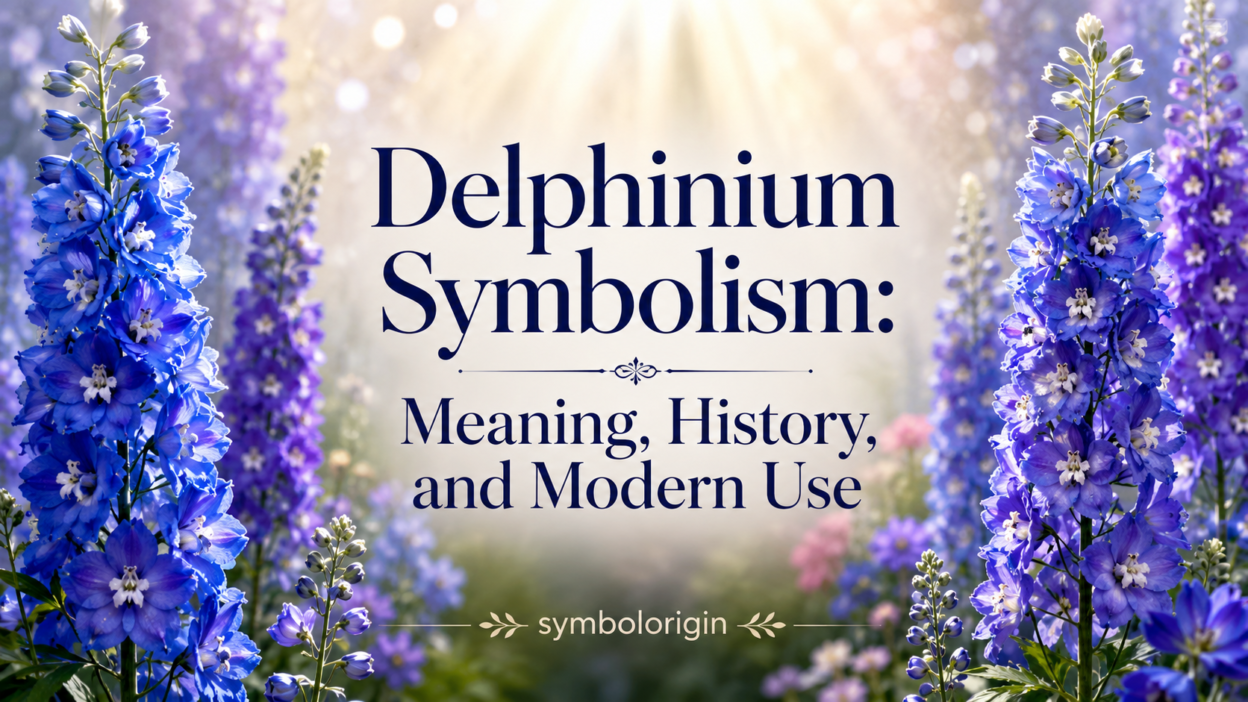
Delphiniums are recognized by their tall stems covered with blue, purple, pink, or white blossoms. In modern floral culture, delphinium symbolism centers on openness, hope, encouragement, dignity, and an optimistic outlook.
The flower’s height gives it a naturally uplifting appearance. Its blossoms rise above surrounding plants, which helps explain why contemporary arrangements often use delphiniums to communicate ambition, progress, or confidence about the future.
Older meanings are more varied. Greek legends connected larkspur-like flowers with loss and remembrance, while nineteenth-century flower dictionaries associated them with lightness, levity, and occasionally pride or fickleness. These layers make the delphinium suitable for joyful celebrations as well as thoughtful personal memorials.
Quick Answer
Delphinium symbolism commonly represents hope, openness, dignity, positive change, and an encouraging outlook in modern American culture. Historically, related larkspur flowers were also associated with lightheartedness, strong attachment, remembrance, and stories of grief from Greek tradition.
TL;DR
- Delphiniums commonly represent hope, openness, and positive change.
- Their tall stems suggest ambition, progress, and personal growth.
- Blue varieties often communicate dignity, calmness, and trust.
- Victorian flower books connected larkspur with lightness and levity.
- Greek legends introduced associations with grief and remembrance.
- Modern uses include weddings, tattoos, gifts, gardens, and memorials.
What Delphiniums Look Like
Delphiniums produce upright flower spikes lined with many individual blossoms. Most garden varieties appear in shades of blue and purple, although white, pink, lavender, and mixed-color cultivars are also grown.
Their blossoms often contain a contrasting central structure called a “bee,” which may be white, brown, black, or another color. From a distance, the dense flowers create a column of color rather than a rounded bloom.
Many perennial delphiniums flower in early summer and are used in garden borders or as tall cut flowers. Depending on the variety, their stems may require support because wind and heavy rain can bend them. Their commanding height is one reason florists use them to add movement and vertical emphasis to large arrangements.
This physical form strongly influences their modern interpretation. A flower that visibly reaches upward easily becomes a metaphor for improvement, aspiration, confidence, and moving beyond present limitations.
The Flower’s Core Symbolic Meanings
The delphinium’s most widely used modern meanings are positive:
- Hope and optimism
- An open heart
- Encouragement
- Dignity and grace
- Personal growth
- Strong emotional attachment
- Lightheartedness
These meanings do not form a single universal code. Floral symbolism changes according to culture, color, occasion, and the message chosen by the person giving the flowers.
An arrangement sent after a graduation might express ambition and confidence. The same flowers used at a memorial may represent remembrance, peace, and the continuing influence of the deceased. In a romantic bouquet, they can suggest sincere affection without carrying the intense passion traditionally associated with red roses.
Because delphiniums appear both formal and airy, they communicate admiration without feeling severe. They can honor achievement while preserving warmth and emotional accessibility.
How the Dolphin-Shaped Flower Received Its Name
The botanical name Delphinium comes from an ancient Greek word associated with dolphins. Early observers believed that part of the flower, particularly its unopened bud or projecting spur, resembled the shape of a dolphin.
The comparison may not be immediately obvious in a fully opened flower. It becomes easier to understand when examining the curved buds or the narrow spur extending behind each blossom.
This connection adds an indirect layer of symbolism. Dolphins are often associated in modern culture with intelligence, sociability, playfulness, and freedom. Those meanings are not part of the flower’s original botanical naming system, but some contemporary artists and tattoo wearers intentionally combine dolphin and delphinium imagery to emphasize joy, movement, or an open personality.
Greek Legends, Loss, and Remembrance
Several Greek stories have been attached to flowers now identified as larkspur or delphinium. One tradition connects the flower with Ajax, the warrior of the Trojan War who died after the armor of Achilles was awarded to Odysseus. According to later retellings, a flower rose from Ajax’s blood and carried markings resembling the letters of his name.
Another story concerns Hyacinthus, a young man loved by Apollo. After Hyacinthus was fatally struck by a discus, Apollo caused a flower to grow from his blood. Its markings were interpreted as “ai, ai,” an expression of grief.
The precise modern botanical identity of the ancient Greek hyakinthos is uncertain. It should not automatically be equated with the flower now sold as a hyacinth. Some historical interpretations identify it with a larkspur-like species instead.
These myths introduced themes that contrast with the flower’s cheerful modern image. They connect it with mourning, memory, honor, and the transformation of grief into something visible and beautiful.
For this reason, delphiniums can be appropriate memorial flowers. They need not symbolize death itself. More often, they communicate respect for a person whose character, courage, or influence continues to be remembered.
Victorian Flower Language and Its Conflicting Messages
Flower symbolism became especially fashionable in nineteenth-century Britain and later influenced American gift culture. Books known as flower dictionaries assigned emotional messages to individual plants, allowing bouquets to function as sentimental codes.
These dictionaries were not standardized. One book could assign a flower a positive meaning while another gave it a less flattering interpretation. The recipient needed to understand the particular convention being used.
Kate Greenaway’s nineteenth-century Language of Flowers listed larkspur as a symbol of “lightness” and “levity.” It assigned pink larkspur the meaning of fickleness and purple larkspur the meaning of haughtiness.
Modern floral businesses tend to emphasize more encouraging associations, such as an open heart, affection, dignity, opportunity, and joy. The change illustrates how flower meanings evolve rather than remaining fixed.
Victorian “levity” should also be interpreted in its historical context. It could suggest a cheerful, carefree temperament, but it could also imply a lack of seriousness. Today, people are more likely to understand the same quality as optimism, playfulness, or emotional lightness.
What Delphiniums Mean in the United States
In the United States, delphiniums usually appear as garden flowers, wedding flowers, birthday gifts, sympathy arrangements, and design motifs. Most Americans do not follow strict Victorian flower codes. Meaning is generally created by the occasion, color, accompanying message, and recipient’s personal associations.
The flower commonly communicates:
- Confidence in someone’s future
- Respect for personal achievement
- Hope during a difficult transition
- Sincere but gentle affection
- Appreciation for a graceful or generous personality
Delphiniums fit occasions involving movement from one stage of life to another. They may be given for a graduation, new job, retirement, relocation, recovery, engagement, or major personal decision.
Their tall form also suits public and ceremonial spaces. Large stems are often used in wedding arches, entry arrangements, altar flowers, and formal centerpieces because they create height without the visual heaviness of dense foliage.
Delphinium Colors and Their Common Meanings
Color symbolism is shaped by modern floral marketing, general color psychology, and older flower traditions. The following meanings are common interpretations rather than mandatory rules.
| Color | Common Meaning in the USA | Suitable Occasions | Important Note |
|---|---|---|---|
| Blue | Dignity, trust, calmness, hope | Graduations, encouragement, formal gifts | The flower’s best-known color |
| Purple | Admiration, elegance, distinction | Achievements, ceremonies, artistic gifts | Older texts sometimes linked it with pride |
| White | Purity, sincerity, remembrance | Weddings, memorials, new beginnings | Can feel celebratory or solemn |
| Pink | Affection, warmth, romance | Birthdays, friendship, romantic bouquets | Victorian meanings could be less positive |
| Lavender | Grace, imagination, gentle admiration | Creative milestones, decor, thoughtful gifts | Often chosen primarily for its soft color |
Modern florists commonly associate blue delphiniums with dignity and respect, pink with affection, purple with elegance, and white with innocence or a fresh beginning. These associations are useful when choosing a bouquet, but the sender’s message remains more important than any published color chart.
Why Blue Delphiniums Carry the Strongest Meaning
Blue is unusual among naturally occurring flower colors, which gives blue delphiniums a distinctive visual presence. Depending on the variety and lighting, their flowers may appear sky blue, cobalt, indigo, or blue-violet.
In American design, blue often communicates calmness, dependability, distance, reflection, or trust. Combined with the flower’s upward growth, it can suggest calm ambition: progress guided by confidence rather than aggression.
A pale blue arrangement may feel peaceful and reassuring. Darker blue stems can appear formal, dignified, and dramatic. For this reason, blue delphiniums work well in professional congratulations, remembrance arrangements, and ceremonies where admiration should be expressed with restraint.
The color can also represent openness. A blue delphinium bouquet may communicate, “I believe in your future,” “I respect what you have accomplished,” or “You can approach this change with confidence.”
Weddings, Commitment, and New Beginnings
Delphiniums are popular in garden-style weddings because their vertical stems bring height to arches, aisle arrangements, and reception installations. Blue varieties are also used as a natural interpretation of the traditional “something blue.”
Symbolically, the flower works well for marriage because it suggests openness and forward movement. It can represent two people entering a new phase while remaining emotionally honest and receptive to one another.
White delphiniums support themes of sincerity and a fresh beginning. Blue can represent trust and steadiness. Pink adds tenderness, while purple contributes ceremony and distinction.
Unlike roses, delphiniums are not limited to romantic symbolism. They can honor the broader transition represented by a wedding: the joining of families, the creation of a shared home, and confidence in an unwritten future.
Their scale also matters. A few stems can make an arrangement feel expansive, giving them a strong visual role even when they are not the central flower.
Birthdays, Graduations, and Encouragement Gifts
Larkspur and delphinium are widely presented as July birth flowers, although birth-flower lists vary and sometimes distinguish annual larkspur from perennial delphinium. Water lily is also commonly listed for July.
For a July birthday, the flower can represent an open, cheerful, and affectionate personality. A personal note can make the meaning more precise by connecting the flowers with the recipient’s confidence, creativity, humor, or generosity.
Delphiniums are also especially suitable for graduations. Their rising stems reinforce ideas of advancement and possibility, while their traditional associations with lightness keep the message from becoming overly formal.
As encouragement flowers, they can recognize effort rather than guarantee success. A bouquet might communicate support before an examination, interview, medical treatment, move, or important conversation.
They are less appropriate when the recipient is likely to interpret flowers romantically and that implication is not intended. In those cases, blue or white stems combined with greenery can create a more neutral message than pink varieties mixed with roses.
Emotional and Psychological Meaning
Delphiniums often communicate emotional expansion. Their open blossoms and upward structure suggest a person becoming more willing to trust, speak honestly, accept support, or imagine a different future.
This makes the flower relevant to periods of recovery and identity change. It can symbolize:
- Becoming emotionally available after isolation
- Recovering confidence after disappointment
- Choosing hope without denying difficulty
- Allowing joy to return after grief
- Developing a more open and generous outlook
The flower’s symbolism should not be treated as therapy or a diagnosis. Its value is expressive. It gives people a visual language for feelings that may be difficult to state directly.
Its mixture of delicacy and height also creates an appealing emotional contrast. The stems appear strong, but the individual blossoms remain soft and vulnerable. This combination can represent resilience that does not require emotional hardness.
Tattoos, Jewelry, and Personal Identity
A delphinium tattoo commonly represents hope, openness, aspiration, remembrance, or a July birthday. The intended meaning depends heavily on color, placement, accompanying objects, and the wearer’s personal story.
A tall stem may represent gradual growth or progress through several stages of life. A single blossom can mark one relationship or memory. Broken stems may signify interrupted plans, while new buds can suggest continuation after loss.
Blue designs often emphasize calmness, trust, or personal integrity. Purple may express individuality, artistic identity, or self-respect. White flowers can be used in memorial art, although white ink behaves differently across skin tones and may require special consideration from an experienced artist.
Delphinium jewelry and printed designs tend to communicate grace and natural elegance. In home decor, the flower works particularly well in cottage, botanical, romantic, and traditional interiors.
On social media, delphiniums are often used as visual shorthand for summer gardens, peaceful living, weddings, and personal renewal. These contemporary uses are aesthetic as well as symbolic; not every image carries a deliberate coded message.
Gardens, Wildlife, and a Sense of Place
In American gardens, delphiniums can represent care, patience, and aspiration because many varieties require attentive cultivation. They generally prefer fertile, well-drained soil and cooler summer conditions. Tall types may need staking, pruning, and protection from severe weather.
Their growing requirements give them an additional symbolic dimension. Success often depends on preparation and continued maintenance rather than a single act of planting. Gardeners may therefore see them as reminders that visible growth requires support.
Some Delphinium species are native to parts of the United States. Dwarf larkspur occurs in eastern woodlands, while other species grow in prairies, glades, mountains, or western landscapes. Garden hybrids, however, should not automatically be treated as native plants.
Their flowers can attract bees, butterflies, and hummingbirds, making them visually connected with movement and seasonal activity. That association reinforces ideas of liveliness, participation, and a garden coming fully into bloom.
Beauty, Toxicity, and Protective Boundaries
Delphiniums contain toxic alkaloids and should not be eaten. The ASPCA classifies Delphinium species as toxic to dogs, cats, and horses. Plant material should be kept away from pets, livestock, young children, food preparation areas, and decorative uses involving direct contact with food.
This fact creates a symbolic contrast between beauty and caution. A delphinium may look open and welcoming while still requiring firm boundaries.
That contrast can be meaningful in personal art. The flower can represent kindness without defenselessness, emotional openness combined with judgment, or the ability to remain gentle while protecting one’s well-being.
Toxicity should not be exaggerated into a sinister symbolic meaning. Delphiniums are primarily ornamental plants, and most modern bouquets use them positively. The practical risk matters when the plant is swallowed, mishandled around animals, or placed where accidental ingestion is possible.
Common Misunderstandings About the Flower
One common mistake is assuming that “delphinium” and “larkspur” always identify exactly the same plant. The names overlap in everyday use, but horticultural sources may use delphinium mainly for perennial Delphinium species and larkspur for annual plants historically placed in Consolida. Naming conventions are not always consistent.
Another mistake is presenting one symbolic definition as ancient and universal. Meanings such as hope, joy, dignity, fickleness, and pride come from different periods and systems. They should not be combined without explaining their context.
Color meanings are also frequently overstated. A white delphinium does not automatically communicate mourning, and a pink one does not necessarily imply romance. The occasion and accompanying message determine how the flowers are understood.
Finally, the flower’s Greek associations are sometimes simplified into a single legend. Multiple stories and uncertain plant identifications exist, so historical accounts should be described as traditions rather than settled botanical facts.
How Its Meaning Has Evolved
The delphinium’s meaning has shifted from mythology to sentimental flower language and then to modern lifestyle culture.
Greek traditions emphasized transformation after death, heroic memory, and grief made visible through a flower. Victorian dictionaries focused more on personality traits such as levity, lightness, fickleness, or pride.
Contemporary American meanings are generally more encouraging. Florists and gift companies emphasize hope, aspiration, positivity, dignity, and emotional openness. The flower’s appearance now influences its symbolism as much as inherited folklore does.
Delphinium received additional attention when 1-800-Flowers.com selected it as its 2026 Flower of the Year, describing it in terms of hope, elevation, and looking positively toward the future. This was a commercial designation rather than an official national emblem, but it reflects current interest in cool-toned flowers and encouraging milestone gifts.
The modern message is therefore not a rejection of older meanings. It is a reinterpretation. Lightness becomes optimism, height becomes aspiration, and ancient remembrance becomes a gentler way to honor someone’s lasting influence.
FAQs
Is delphinium a positive symbol?
Yes, overwhelmingly so in modern American use. It most often represents hope, openness, dignity, encouragement, and positive change. Older traditions included less flattering meanings like fickleness or haughtiness, but those readings are rarely intended in ordinary bouquets today — context and occasion carry far more weight than historical footnotes.
What does a delphinium tattoo mean?
A delphinium tattoo commonly symbolizes personal growth, emotional openness, remembrance, ambition, or a July birthday. The design details refine the meaning: a tall single stem often reads as steady progress through life stages, a broken stem can suggest interrupted plans, and new buds alongside older blooms can represent continuation after loss.
What does blue delphinium symbolize?
Blue delphinium commonly represents trust, calm confidence, dignity, and hope for the future. The shade matters — pale blue tends to communicate peace and gentle encouragement, while darker, more saturated blue feels more formal, dignified, and reflective, making it a natural fit for both congratulations and remembrance.
Is delphinium associated with death?
Not primarily, though it has historical ties to loss. Greek legends linked larkspur-like flowers with the deaths of Ajax and Hyacinthus, giving the plant a layer of mourning symbolism. In modern memorial arrangements, though, delphiniums are far more likely to express respect, remembrance, and the continuation of someone’s influence than death itself.
Are delphiniums appropriate wedding flowers?
Yes, and increasingly popular ones. Their associations with openness, trust, new beginnings, and forward movement suit the occasion well, and blue varieties offer a natural, literal option for the traditional “something blue.” Florists also value them for adding dramatic height to arches, aisle arrangements, and garden-style centerpieces.
What is the spiritual meaning of delphinium?
There’s no single established religious meaning attached to the flower. In personal spiritual practice, it’s often used to represent emotional openness, hope, aspiration, or a conscious decision to live with greater honesty and generosity — meanings drawn more from the flower’s shape and modern floral culture than from any fixed doctrine.
Are delphinium and larkspur the same flower?
The names overlap in everyday conversation, but botanically they can differ. Perennial species are typically called delphiniums, while some annual flowers marketed as larkspur are classified in a separate genus, Consolida. If precision matters — for a tattoo design or a garden planting — checking the botanical name is the more reliable approach.
What does delphinium symbolize as a birth flower?
As one of the birth flowers for July, delphinium is often used to represent an open, cheerful, and affectionate personality, along with a strong sense of ambition. Because July also lists larkspur and water lily depending on the source, the specific choice of delphinium can add its own emphasis on height, growth, and forward motion.
Can delphiniums be given for sympathy or a memorial?
Yes, and they’re a thoughtful choice precisely because their meaning isn’t primarily about death. Rooted partly in Greek legends of transformation after loss, delphiniums in a memorial setting tend to communicate ongoing respect and remembrance rather than grief alone — a way of honoring a person’s lasting influence rather than dwelling only on the loss.
Why do delphiniums represent hope specifically?
The association comes largely from the flower’s physical form: tall stems that visibly rise above their surroundings naturally read as ambition, progress, and looking toward what’s next. That visual language has been reinforced by modern floral marketing, which has steadily shifted the plant’s older, more mixed Victorian meanings toward a simpler, more encouraging message of optimism.
Conclusion
Delphiniums work as a symbol because their shape does the talking before any meaning gets assigned to them. A flower that visibly reaches upward, stem after stem, doesn’t need much explanation to read as hope, ambition, or forward motion — the plant is simply doing, physically, what those words describe emotionally.
What makes the symbolism worth knowing in more depth is everything sitting underneath that first impression. Greek legend ties the flower to loss transformed into something worth remembering. Victorian tradition saw lightness and levity where modern florists now see optimism. And the plant’s genuine toxicity is a quiet reminder that openness and vulnerability aren’t the same as being unguarded — a delphinium can be welcoming and still ask for careful handling.
Taken together, that’s a flower built for the moments life doesn’t hand us simple language for: hope that coexists with grief, confidence that hasn’t fully arrived yet, or affection offered without demanding anything back. Give a delphinium and the message underneath is rarely just “congratulations” — it’s closer to I believe this will keep opening upward, and I’m glad to watch it happen.