Transformation symbolism explores how people represent change, personal growth, renewal, and the transition from one stage of life to another. Across cultures, images such as butterflies, phoenixes, snakes, and the rising sun help express the experience of leaving an old identity behind and becoming something new.
In modern American culture, transformation symbols appear in tattoos, jewelry, artwork, literature, and personal rituals. They can represent recovery after hardship, a major life decision, emotional growth, or the courage to begin again. Their meanings depend on cultural background and personal experience, but they share a common theme: change can create new possibilities.
Quick Answer: What Does Transformation Symbolize?
Transformation commonly symbolizes personal growth, renewal, rebirth, adaptation, and the transition from one stage of life to another. Historically, myths and religious traditions have used images such as the phoenix, butterfly, snake, and moon to represent cycles of change, while modern interpretations often connect these symbols with healing, self-discovery, and new beginnings.
TL;DR
- Butterflies symbolize personal growth and the emergence of a new identity.
- Phoenixes represent rebirth and the ability to recover after hardship.
- Snakes symbolize renewal, shedding the past, and changing circumstances.
- The moon represents cycles, transition, and recurring opportunities to begin again.
- The rising sun symbolizes hope, fresh starts, and renewed direction.
- Transformation tattoos often commemorate milestones, recovery, or personal reinvention.
What Transformation Symbolism Really Means
Transformation is the process of changing in form, character, perspective, or circumstances. It can be physical, emotional, spiritual, or social. In symbolism, transformation often describes the moment when an existing condition gives way to something different.
A butterfly emerging from a chrysalis represents a visible change in form. A phoenix rising from ashes suggests recovery after destruction. A snake shedding its skin represents renewal while retaining its essential identity.
These images communicate different aspects of change:
- Growth: Developing new abilities, understanding, or confidence.
- Rebirth: Beginning again after a major ending.
- Release: Letting go of habits, beliefs, or identities that no longer fit.
- Adaptation: Responding to changing circumstances.
- Awakening: Seeing yourself or the world differently.
- Resilience: Continuing to grow after difficulty.
Transformation does not always mean becoming a completely different person. Sometimes it means recognizing existing strengths, changing an unhealthy pattern, or learning to approach life with a new perspective.
1. Butterfly Symbolism: Personal Growth and Metamorphosis

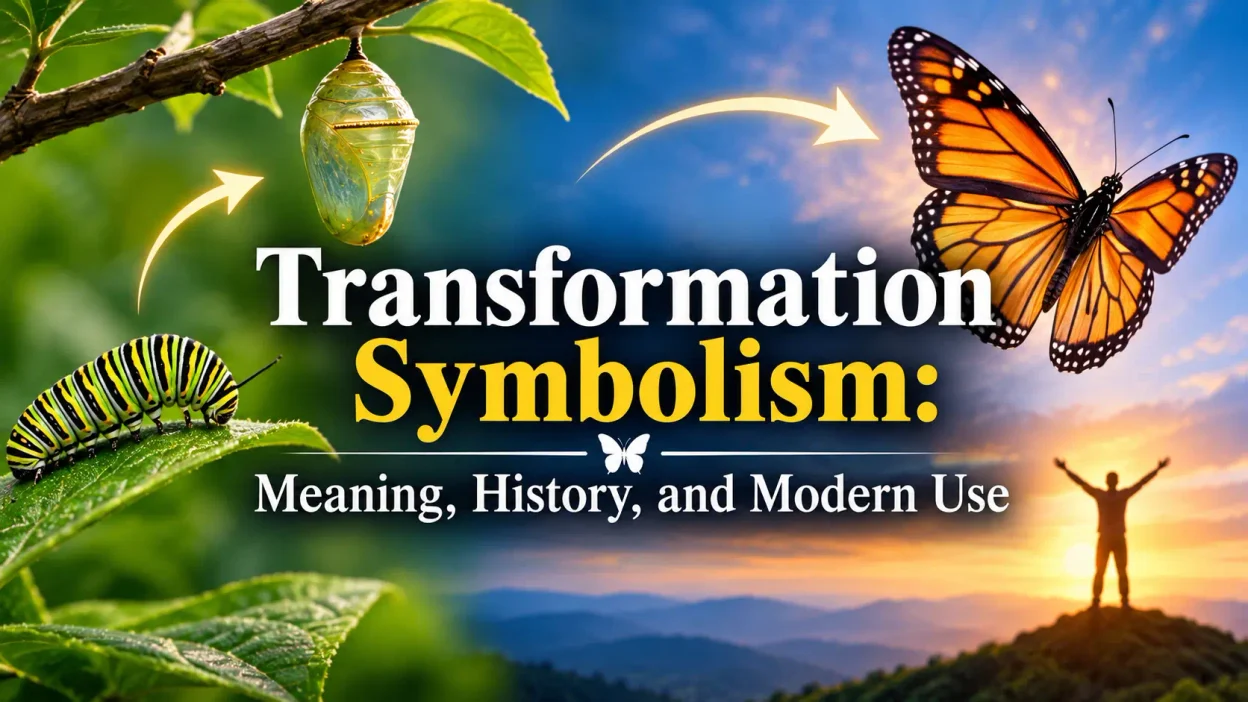
The butterfly is among the most recognizable symbols of transformation because its life cycle involves a dramatic physical change. It develops from an egg into a caterpillar, forms a chrysalis, and eventually emerges as an adult butterfly.
This process provides a natural metaphor for personal development. The caterpillar, chrysalis, and butterfly represent different stages of a journey rather than three unrelated identities.
In modern American culture, butterfly imagery commonly appears in tattoos, memorial artwork, jewelry, and designs celebrating personal milestones. Someone who has completed a difficult period of life may choose a butterfly to represent freedom, recovery, or a new sense of identity.
Butterflies have also carried associations with the soul and spiritual renewal in different historical traditions. Their meanings vary across cultures, so the image should not be assigned one universal religious interpretation.

York Museums Trust
+2
The butterfly is especially suitable for transformation that involves gradual growth, emotional development, and discovering possibilities that were not visible before.
2. Phoenix Symbolism: Rebirth After Hardship

The phoenix represents renewal, resurrection, and the possibility of beginning again after destruction.
In classical accounts, the phoenix is a mythical bird associated with an extraordinary lifespan and renewal. Its imagery later became important in Roman culture and early Christian writing, where it could represent continuity and resurrection. Over time, the phoenix developed into a widely recognized emblem of regeneration.
HISTORY
+1
Today, phoenix symbolism is especially relevant to people who have experienced major setbacks. It can represent rebuilding after a relationship ends, recovering from failure, changing careers, or creating a new direction after a difficult chapter.
Phoenix tattoos often communicate a willingness to acknowledge the past without remaining defined by it. The ashes represent what has ended, while the rising bird represents the possibility of moving forward.
Unlike the butterfly, which emphasizes development through stages, the phoenix emphasizes renewal after loss or destruction.
Its central message is that an ending does not necessarily prevent a new beginning.
3. Snake Symbolism: Shedding the Past

Snakes symbolize transformation because they periodically shed their outer skin as they grow. The animal remains itself, but its outer covering is replaced.
This physical process makes the snake an effective symbol of changing without losing one’s essential identity. A person may leave behind an outdated role, a harmful habit, or an old understanding of themselves while retaining the experiences that shaped them.
In different cultural traditions, snakes have been associated with renewal, healing, wisdom, danger, and deception. These meanings can coexist, and the interpretation depends on the particular story or tradition.
Experiential Itineraries
+1
In contemporary American tattoo culture, a shedding snake can represent personal reinvention, survival, or the decision to move beyond an earlier version of oneself.
The symbol also acknowledges that transformation can be uncomfortable. Just as shedding is a biological process rather than an instant change, personal growth may require time, patience, and the willingness to leave familiar patterns behind.
4. Moon Symbolism: Cycles and Changing Phases

The moon symbolizes cycles, transition, renewal, and the changing nature of experience.
Its visible phases provide a natural way to think about periods of growth, completion, rest, and new beginnings. A new moon may be interpreted as an opportunity to start something, while a full moon can represent culmination or visibility in modern symbolic practices.
Moon imagery is common in contemporary jewelry, tattoos, artwork, and personal decor. A sequence of lunar phases may express the belief that personal development is not a straight line: progress can involve change, pauses, endings, and renewed effort.
Historical lunar symbolism differs across religions and cultures, so specific meanings should be understood within their traditions rather than treated as universal.
For people navigating a major life transition, the moon offers a useful reminder that one difficult phase does not define an entire life.
5. Rising Sun Symbolism: Fresh Starts and Renewal

The rising sun represents renewal, hope, clarity, and the beginning of a new day.
Its symbolism comes from an ordinary natural event: darkness gives way to light, and the surrounding landscape becomes visible again. This makes sunrise an intuitive image for moving beyond confusion or uncertainty.
In modern American art and personal design, sunrise imagery often accompanies themes of recovery, optimism, and fresh starts. A sunrise tattoo might mark a major decision, a completed personal goal, or a commitment to approach the future differently.
However, sunrise symbols have specific national, religious, and cultural meanings in some contexts. Their interpretation depends on the imagery and setting.
As a personal transformation symbol, the rising sun is particularly appropriate for someone who wants to emphasize possibility rather than the pain of the past.
6. Dragonfly Symbolism: Adaptability and Perspective

The dragonfly can symbolize adaptability, change, awareness, and the ability to see circumstances from a different perspective.
Its life cycle includes an aquatic nymph stage before the winged adult emerges. That transition provides a natural connection with transformation, while the insect’s ability to fly in different directions makes it a fitting image of flexibility.
In contemporary design, dragonflies often appear in jewelry, garden artwork, decorative objects, and tattoos. People may choose the symbol to represent a period of self-discovery or the ability to adapt after an unexpected change.
The dragonfly is especially appropriate when transformation involves learning to respond differently rather than simply leaving something behind.
Its message is practical: growth often requires adjusting your perspective as circumstances change.
7. Snake and Butterfly: Two Different Types of Transformation
Although both animals represent change, their symbolism emphasizes different experiences.
| Symbol | Main meaning | Type of transformation |
|---|---|---|
| Butterfly | Growth and emergence | Developing into a new stage |
| Phoenix | Rebirth and renewal | Beginning again after hardship |
| Snake | Shedding and renewal | Releasing what has become restrictive |
| Moon | Cycles and transition | Moving through recurring phases |
| Rising sun | Hope and fresh starts | Beginning a new chapter |
| Dragonfly | Adaptability and awareness | Responding to changing circumstances |
The butterfly is a useful symbol for someone who feels they are developing a new identity. The snake may suit someone who wants to remain true to themselves while releasing outdated habits.
The phoenix is often more appropriate when a transformation follows a major loss, while the rising sun emphasizes the future and the possibility of starting again.
Choosing between these symbols depends on the story you want the image to communicate.
8. Transformation Symbolism in American Culture
In the United States, transformation symbolism often appears in stories about personal reinvention, independence, recovery, and overcoming adversity.
The idea of starting over is familiar in American culture. People may relocate, change careers, return to school, recover from setbacks, or redefine their goals at different stages of life. Symbols provide a visual way to express these experiences.
Butterflies and phoenixes appear in personal artwork and tattoos celebrating change. Mountains may represent difficult goals, while roads and open doors can symbolize new opportunities.
Transformation imagery also appears in films, novels, sports stories, and popular entertainment. A character who develops new abilities, confronts a former identity, or recovers after failure follows a familiar transformation narrative.
These images can be encouraging, but they should not imply that every difficult experience automatically leads to improvement. Change may involve uncertainty, grief, or setbacks as well as progress.
In this context, transformation symbolism is most useful when it acknowledges both the difficulty of change and the possibility of growth.
9. Transformation Across Cultures and Religious Traditions
Transformation appears in many cultural and religious traditions, but its meaning differs depending on the belief system.
In ancient Egyptian traditions, the benu bird was connected with solar associations and renewal. The later classical phoenix developed related themes of regeneration, while early Christian writers used the phoenix as an image of resurrection.
HISTORY
+1
Butterflies have also been associated with the soul, death, and rebirth in different traditions. In ancient Greek mythology, the figure of Psyche became connected with butterfly imagery, and the butterfly has continued to appear in art representing spiritual or personal change.
Yale National Initiative®
+1
In Chinese culture, butterfly imagery can carry associations with joy, longevity, and favorable occasions, depending on the context.
The Metropolitan Museum of Art
These examples show that transformation is not restricted to one religious or philosophical interpretation. It can refer to physical change, spiritual renewal, the continuity of life, or the movement from one social role to another.
When using a symbol from a particular tradition, it is important to understand its cultural context rather than assume that a modern interpretation reflects its original meaning.
10. Psychological and Emotional Meaning of Transformation Symbols
Transformation symbols can help people give meaning to experiences that are difficult to explain in words.
A person recovering from a setback may see the phoenix as a reminder of resilience. Someone who has outgrown a familiar role may connect with the snake shedding its skin. Another person may choose a butterfly to represent learning to accept a new identity.
These associations can support reflection in several ways:
- Recognition: A symbol can mark the point when someone acknowledges that life has changed.
- Release: It can represent the decision to stop repeating an unhelpful pattern.
- Identity: It can express how someone understands their developing sense of self.
- Motivation: It can serve as a reminder of a goal or commitment.
- Continuity: It can connect a person’s earlier experiences with their present identity.
A symbol does not automatically create emotional healing or personal growth. Its value comes from the meaning attached to it and the actions that follow.
Transformation also does not require rejecting everything about the past. Experiences that were difficult may still have taught valuable lessons, and a changed identity can retain important elements of the former one.
11. Transformation Symbols in Tattoos and Jewelry

Tattoos and jewelry allow people to carry transformation symbols as personal reminders.
Butterfly tattoos are often chosen to express growth or a new beginning. Phoenix tattoos can commemorate survival after a difficult period, while snake designs may represent releasing an old identity.
Moon-phase designs suit people who view change as cyclical, and sunrise tattoos often communicate optimism about the future.
Jewelry can serve a similar purpose on a smaller scale. A butterfly pendant, phoenix charm, or dragonfly brooch may be meaningful because of a personal memory rather than a widely recognized symbolic definition.
Before choosing a design, consider three questions:
- What change does this symbol represent in my life?
- Does its cultural or historical meaning fit my intention?
- Will the design remain meaningful after my circumstances change?
A personal symbol does not need to be complicated. Sometimes a simple image connected to an important experience communicates more than an elaborate design.
12. Transformation in Nature and Everyday Life
Nature offers many examples of change that inspire symbolic interpretations.
A seed becomes a plant, a tree loses its leaves and grows new ones, and a river changes course as the surrounding landscape develops. These processes can suggest growth, adaptation, patience, and the passage of time.
In everyday life, similar transformations occur when people learn new skills, develop healthier relationships, change their priorities, or adjust to unfamiliar circumstances.
A seed may represent potential before growth becomes visible. A tree in autumn may symbolize letting go, while fresh green leaves can suggest renewed energy.
These interpretations are metaphors, not fixed meanings. Their value lies in the connection between an observable natural process and a human experience.
Nature-based symbols can be especially useful for people who prefer understated imagery over mythical creatures or dramatic representations of rebirth.
13. Common Misunderstandings About Transformation Symbolism
Transformation symbolism can be misunderstood when a single meaning is treated as universal.
Transformation is not always rebirth. Some changes involve gradual development rather than starting again from nothing. A tree growing new branches, for example, can represent continued development rather than a complete break with the past.
Not every snake symbolizes renewal. Depending on the tradition, snakes can also represent danger, wisdom, healing, temptation, or deception.
The phoenix is mythical. Its symbolic value comes from the stories associated with it, not from a scientifically observed process of rebirth from ashes.
Change is not always positive. Transformation may involve loss, uncertainty, or consequences that require adjustment. A symbol can represent the transition itself without declaring every outcome beneficial.
Cultural meanings require context. The same image may have different meanings across religions, communities, and historical periods.
Understanding these distinctions makes transformation symbolism more accurate and personally meaningful.
14. How to Choose the Right Symbol for Transformation
The most suitable symbol depends on the kind of change you want to express.
If your experience involves developing confidence or discovering a new identity, a butterfly may fit. If you are rebuilding after a major setback, the phoenix may communicate your experience more directly.
A snake can represent releasing habits while preserving your essential identity. The moon can reflect recurring periods of change, while the rising sun can emphasize a hopeful new beginning.
Consider the emotional tone you want the symbol to carry. Some people prefer images of strength and survival; others want something peaceful that represents patience and acceptance.
You can also choose a symbol based on a personal association. A tree connected with childhood memories may be more meaningful to you than an animal traditionally associated with transformation.
Ultimately, the best symbol is not necessarily the most famous one. It is the image that accurately reflects your experience and the direction in which you want to grow.
Frequently Asked Questions
What is the most common symbol of transformation?
The butterfly is one of the most widely recognized symbols of transformation because it changes from a caterpillar into an adult butterfly. It commonly represents personal growth, new beginnings, and the development of a new identity.
What animal symbolizes transformation?
Butterflies, snakes, and dragonflies are common choices. Butterflies represent metamorphosis, snakes suggest renewal through shedding, and dragonflies can represent adaptation and changing perspective.
What flower symbolizes transformation?
The lotus is often used to represent growth, renewal, and spiritual development. Its emergence from muddy water provides a natural metaphor for developing through difficult circumstances, although its religious and cultural meanings vary.
What tattoo represents transformation and new beginnings?
Butterflies, phoenixes, rising suns, and moon phases are popular choices. A butterfly emphasizes growth, a phoenix represents renewal after hardship, and a rising sun suggests the beginning of a new chapter.
What does a phoenix symbolize spiritually?
The phoenix is commonly associated with resurrection, renewal, and the continuation of life after an ending. Its spiritual interpretation differs across historical and religious traditions.
What does a snake shedding its skin symbolize?
A shedding snake often represents renewal, personal growth, and releasing an identity or situation that no longer fits. Because the snake remains the same animal, it can also suggest changing while retaining one’s essential identity.
Can transformation symbolism have a negative meaning?
Yes. Transformation may involve loss, uncertainty, disruption, or the ending of something familiar. Some symbols also have conflicting meanings across cultures, so their interpretation depends on the context.
Conclusion
Transformation symbolism gives visible form to the experience of change. Butterflies represent growth, phoenixes suggest rebirth after hardship, snakes express renewal, and the moon and rising sun offer images of cycles and fresh beginnings.
These symbols have different histories and cultural associations, but each can help communicate a particular experience of becoming, releasing, or beginning again.
The most meaningful transformation symbol is one that reflects the change you are actually experiencing. Whether it appears in a tattoo, a piece of jewelry, a work of art, or a personal reminder, it can serve as a way to recognize the past while making room for what comes next.