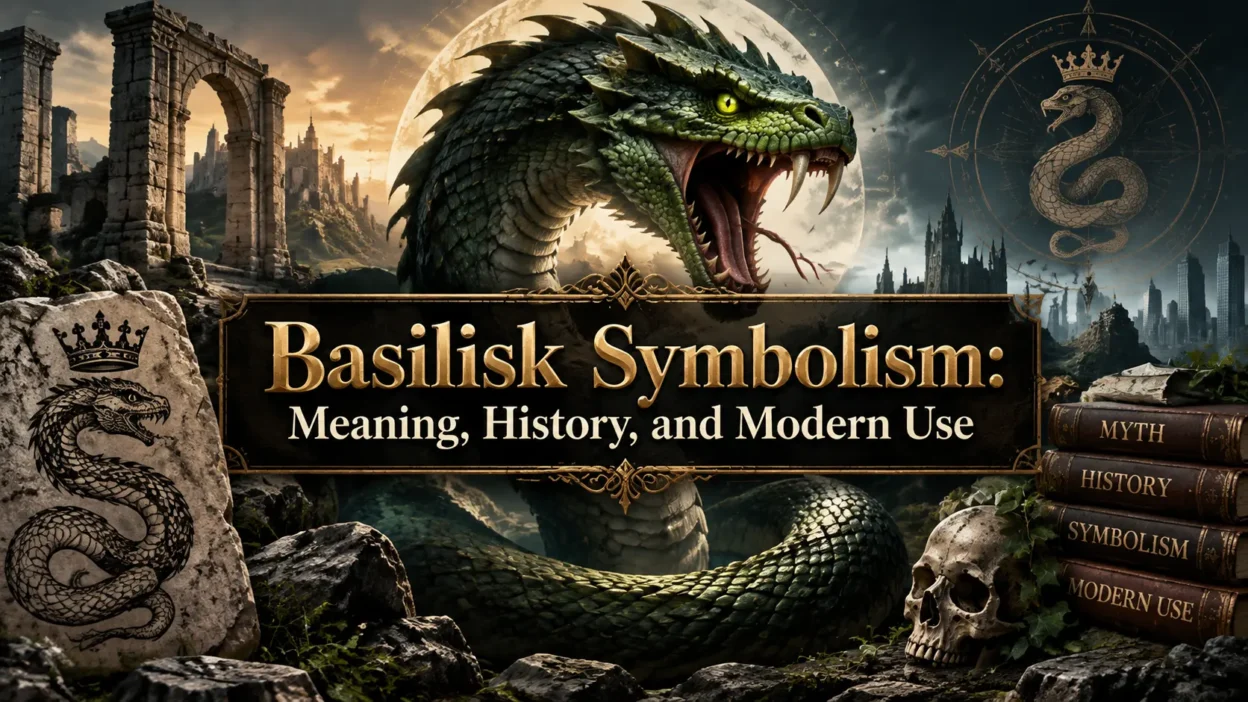
The basilisk is a legendary creature often described as a serpent-like monster with deadly abilities, sometimes shown with a crown-like head or the features of a rooster and snake. Basilisk symbolism represents danger, hidden threats, power, fear, and the struggle between good and evil. Although the creature comes from ancient European folklore, its meaning continues to appear in books, movies, games, tattoos, and modern fantasy culture.
Unlike many symbols connected to nature or animals, the basilisk exists mainly in mythology rather than the physical world. Its symbolism developed from human fears of poisonous creatures, unexplained dangers, and forces that seemed impossible to control. Over time, different cultures transformed the basilisk from a frightening monster into a symbol used to explore pride, destruction, protection, and personal challenges.
In modern American culture, the basilisk is usually understood as a fantasy symbol rather than a religious or everyday image. People often connect it with fictional villains, dark fantasy artwork, and stories about overcoming powerful enemies. Understanding its history helps explain why this unusual creature still attracts attention today.
Quick Answer
Basilisk symbolism commonly represents danger, hidden threats, and destructive power in modern American culture, especially in fantasy, tattoos, and storytelling. Historically, the creature was linked to fear, poison, evil forces, and the belief that certain dangers could destroy without direct contact.
TL;DR
- Basilisks symbolize danger, fear, and hidden enemies.
- Ancient folklore portrayed them as deadly serpent creatures.
- Medieval traditions connected them with evil and temptation.
- Americans mainly view basilisks through fantasy culture.
- Tattoos often represent strength and personal battles.
- Modern stories use basilisks as symbols of challenges.
What Is a Basilisk and What Does It Look Like?
A basilisk is a mythical creature that appears in European folklore and classical writings. Its appearance changed across different periods, but it is usually described as a dangerous serpent or a hybrid creature combining snake and bird features.
Early descriptions often presented the basilisk as a small but extremely deadly serpent. Later medieval artwork frequently showed it with a rooster’s head, a snake’s body, wings, and a crown-like marking. The crown-like feature came from the belief that the basilisk was the “king” of serpents.
The creature became famous for its supposed ability to kill through its gaze. Legends claimed that looking directly into its eyes could cause immediate death. Other stories described its breath, venom, or presence as equally dangerous.
Today, most people encounter the basilisk through fantasy novels, video games, movies, and artwork. Modern versions may appear larger and more dramatic, often resembling a giant snake or dragon-like monster.
What Basilisk Symbolism Commonly Represents Today
In modern interpretations, the basilisk is mainly associated with danger and hidden power. Because folklore described it as a creature that could destroy without physical contact, it became a symbol of threats that are difficult to predict or escape.
One major meaning is hidden danger. The basilisk represents situations, people, or forces that appear small or unnoticed but carry serious consequences. This idea connects with human fears about betrayal, deception, and unexpected problems.
Another meaning is destructive power. The basilisk’s deadly abilities make it a symbol of uncontrolled strength. In stories, it often represents an enemy that requires courage, intelligence, and preparation to defeat.
The creature can also symbolize personal fears. A basilisk may represent an internal struggle, such as facing anxiety, anger, pride, or other challenges that seem overwhelming.
| Context | Meaning in the USA | Common Associations | Notes |
|---|---|---|---|
| Fantasy stories | Dangerous enemy or challenge | Monsters, battles, heroes | Common in books and games |
| Tattoos | Strength against fear | Protection, courage, survival | Often chosen by fantasy fans |
| Art and design | Dark imagination | Mystery, power, danger | Used for dramatic visuals |
| Folklore studies | Ancient fears | Myths, legends, warnings | Represents cultural beliefs |
Ancient Roots and Early Basilisk Legends
The earliest ideas connected to the basilisk developed in ancient Greek and Roman traditions. Writers described a deadly serpent called the basiliskos, a name that came from a Greek word meaning “little king.” The title reflected the belief that this creature ruled over other snakes.
Ancient accounts described the basilisk as a small but terrifying animal. Some stories claimed it could kill with its venom, while others described its deadly stare. These legends reflected ancient concerns about poisonous snakes and unfamiliar animals.
As these stories spread through Europe, the basilisk became more symbolic. People began using the creature to represent invisible dangers and forces that threatened human safety.
During the Middle Ages, the basilisk became connected with moral and religious ideas. Writers often used it as an image of evil, temptation, and sin. The creature’s ability to kill with a glance made it a powerful metaphor for harmful influences that could affect people without physical violence.
Basilisk Symbolism in Medieval European Culture
Medieval Europe gave the basilisk some of its strongest symbolic meanings. During this period, animals and mythical creatures were often used to explain moral lessons, religious ideas, and human behavior.
The basilisk became associated with evil because of its deadly nature. Religious writers sometimes compared it with destructive forces that could harm the soul. Its poisonous breath and deadly eyes represented corruption, temptation, and spiritual danger.
Artists included basilisk-like creatures in manuscripts, church decorations, and symbolic artwork. These images reminded viewers that danger could exist in unexpected forms.
The creature also represented pride. Because legends described the basilisk as a “king” among serpents, some interpretations connected it with arrogance and the dangers of excessive power.
The Basilisk as a Symbol of Fear and Hidden Threats
Fear is one of the strongest themes connected with the basilisk. Unlike ordinary predators, the legendary creature did not need physical strength alone to defeat enemies. Its imagined abilities made it dangerous from a distance.
This idea explains why the basilisk became a symbol of unseen threats. It represents problems that cannot always be recognized immediately, such as deception, corruption, or hidden conflict.
In psychological interpretations, the basilisk can represent fears that people avoid confronting. Like the mythical creature that could destroy through its gaze, personal fears can feel powerful when ignored.
Modern storytelling often uses this symbolism by creating basilisk-like characters as tests for heroes. Defeating the creature becomes a way of showing bravery, wisdom, and emotional growth.
Basilisk Symbolism in the United States
In the United States, the basilisk is mainly understood through fantasy, literature, entertainment, and creative design rather than traditional everyday symbolism. Most Americans encounter the creature through fictional worlds where monsters represent challenges, enemies, or forces that heroes must overcome.
The basilisk’s meaning in American culture often depends on context. In fantasy stories, it usually represents a dangerous opponent with unusual abilities. In artwork, it can represent darkness, mystery, or imagination. In personal symbolism, some people view it as a reminder to face fears instead of avoiding them.
Unlike symbols such as the eagle, dove, or rose, the basilisk does not have a widespread national or cultural role in the United States. Its meaning comes more from mythology and storytelling traditions. This makes it a flexible symbol that people can interpret based on personal interests.
Fantasy communities especially use the basilisk as a symbol of overcoming impossible challenges. A character who defeats a basilisk is often proving courage, intelligence, and determination rather than simply winning a physical fight.
Basilisk Symbolism in Tattoos and Personal Style
Basilisk tattoos are usually chosen by people who connect with themes of strength, survival, transformation, or overcoming fear. Because the creature has a threatening appearance, it often appeals to those who enjoy darker artistic styles or mythical imagery.
A basilisk tattoo may represent:
- Facing personal fears
- Protecting oneself from danger
- Strength during difficult times
- Independence and resilience
- Interest in mythology and fantasy
The design style can change the meaning. A realistic snake-like basilisk may emphasize danger and power, while a fantasy version with detailed scales, wings, or a crown may focus more on imagination and mythology.
Some people choose basilisk imagery because they identify with misunderstood creatures. Although folklore presents the basilisk as dangerous, modern fantasy often explores monsters as complex beings rather than purely evil figures.
In tattoo culture, mythical creatures frequently allow people to express personal stories. A basilisk can symbolize a difficult experience, a personal battle, or the ability to survive situations that once seemed overwhelming.
Basilisk Symbolism in Books, Movies, and Pop Culture
Modern entertainment has helped keep the basilisk recognizable. Fantasy writers often use the creature because its traditional abilities create dramatic conflicts.
One famous example appears in fantasy literature where a basilisk is portrayed as a giant serpent capable of killing through its gaze. This version helped introduce the creature to younger audiences and strengthened its association with magical worlds.
Video games also frequently use basilisks as enemies, bosses, or legendary creatures. In these settings, they often represent a powerful obstacle that players must defeat through strategy and skill.
Popular culture usually presents the basilisk as a symbol of:
- A dangerous challenge
- Ancient knowledge
- Forbidden power
- A test of courage
- The unknown
The creature’s continued appearance in entertainment shows how mythology can adapt to modern storytelling. While ancient people viewed the basilisk as a warning about danger, modern audiences often view it as an exciting fictional challenge.
Cross-Cultural Meanings of the Basilisk
Although the basilisk is strongly connected with European folklore, similar ideas appear in other cultures. Many societies created legendary creatures that represented danger, chaos, or powerful forces beyond human control.
Ancient Greek and Roman traditions focused on the basilisk as a deadly serpent. These stories reflected concerns about poisonous animals and the dangers of the natural world.
Medieval European traditions expanded the creature’s meaning by connecting it with moral struggles. The basilisk became an image of evil, temptation, and destructive behavior.
In broader mythological traditions, serpent-like creatures often have mixed meanings. Some snakes represent wisdom, renewal, and healing, while others represent danger or deception. The basilisk belongs more strongly to the second category because its identity centers on destruction.
Modern audiences often separate the creature from its older moral meanings. Today, many people see it as a fantasy symbol rather than a representation of actual evil.
Emotional and Psychological Meaning of the Basilisk
The basilisk can be understood as a symbol of fear and confrontation. Because legends describe it as something that must be approached carefully, it represents situations where courage and preparation are necessary.
Psychologically, the creature may represent fears that seem larger than reality. People often experience personal “basilisks” in the form of challenges, worries, or obstacles that feel impossible to defeat.
The idea of a deadly gaze also carries symbolic meaning. It suggests the fear of being judged, exposed, or harmed by something seen clearly. In this way, the basilisk can represent the uncomfortable emotions connected with vulnerability.
At the same time, defeating a basilisk represents personal growth. Stories often show heroes overcoming the creature through intelligence rather than brute force, suggesting that problems can be solved with awareness and patience.
Basilisk Symbolism in Art and Design
Artists have used the basilisk for centuries because its unusual appearance creates strong visual impact. The combination of snake, bird, and mythical features allows artists to explore themes of danger, imagination, and power.
In medieval artwork, basilisk images often appeared alongside other mythical creatures. They served as reminders of moral lessons and the dangers of corruption.
Modern artists use basilisk imagery in:
- Fantasy illustrations
- Game designs
- Book covers
- Logos
- Dark-themed artwork
- Collectible designs
The creature’s dramatic appearance makes it popular in visual storytelling. Its scales, sharp features, and unusual body structure create a sense of mystery and intensity.
In home decor or personal collections, basilisk designs are usually chosen by people interested in mythology, fantasy, or gothic aesthetics rather than traditional symbolism.
Religious and Moral Interpretations of the Basilisk
The basilisk has appeared in some religious writings and interpretations, especially within medieval Christian traditions. Writers often used dangerous creatures as symbols for spiritual problems, and the basilisk became associated with evil influences.
Its deadly nature made it a metaphor for sin, temptation, and destructive behavior. Some religious interpretations viewed the creature as an example of how harmful forces could appear attractive or hidden before causing damage.
However, the basilisk itself is not a central religious symbol in Christianity or other major religions. Most religious connections come from historical interpretations rather than official beliefs.
Today, many people view these meanings as part of folklore history rather than active religious symbolism.
Common Misunderstandings About Basilisk Symbolism
Because the basilisk comes from legends, many modern interpretations mix historical meanings with fantasy ideas. This can create confusion about what the creature originally represented.
One common misunderstanding is that the basilisk always symbolizes evil. Historically, it was often connected with danger and destruction, but modern interpretations can also focus on courage, survival, and overcoming challenges.
Another misunderstanding is that all snake symbolism applies to the basilisk. While snakes can symbolize healing or transformation in many cultures, the basilisk specifically developed around ideas of threat and deadly power.
It is also important to separate folklore from reality. The basilisk is a mythical creature, not an actual animal. Its symbolism comes from human imagination, storytelling, and cultural beliefs.
How Basilisk Meaning Has Changed Over Time
The meaning of the basilisk has changed significantly from ancient times to the modern era.
In ancient stories, the creature represented fear of poisonous animals and unexplained dangers. Medieval writers added moral meanings, turning it into a symbol of evil and temptation.
Modern culture has transformed the basilisk into a fantasy figure. Instead of only representing destruction, it now represents challenges, adventure, and the excitement of imaginary worlds.
This evolution shows how symbols are not fixed. Their meanings change as societies create new stories and connect old images with modern experiences.
Today, the basilisk can represent both danger and determination. It reminds people that frightening challenges can also become opportunities for courage and growth.
Basilisk Symbolism Meaning Table
| Context | Symbolic Meaning | Modern Interpretation | Example Use |
|---|---|---|---|
| Ancient folklore | Death and danger | Fear of unknown threats | Mythological stories |
| Medieval symbolism | Evil and temptation | Moral warnings | Religious artwork |
| Fantasy culture | Challenge and power | Heroic battles | Games and novels |
| Tattoos | Strength and survival | Personal struggles | Body art |
| Modern design | Mystery and imagination | Dark fantasy style | Artwork and collectibles |
Frequently Asked Questions About Basilisk Symbolism
What does a basilisk symbolize?
A basilisk commonly symbolizes danger, hidden threats, and destructive power. In modern interpretations, it can also represent overcoming fears and facing difficult challenges.
What does a basilisk tattoo mean?
A basilisk tattoo often represents strength, survival, courage, or interest in mythology. Some people choose it as a symbol of defeating personal struggles.
Is the basilisk a religious symbol?
The basilisk is not a major religious symbol, but medieval Christian writers sometimes used it as an image of evil, temptation, and spiritual danger.
Why is the basilisk considered dangerous?
Folklore describes the basilisk as dangerous because of its legendary abilities, including a deadly gaze and poisonous effects. These ideas developed from ancient fears about snakes and hidden threats.
Does the basilisk symbolize evil?
Historically, the basilisk was often connected with evil and destruction, especially in medieval traditions. Modern fantasy may portray it more broadly as a powerful creature or challenge.
What does a basilisk represent in fantasy?
In fantasy stories, a basilisk often represents an ancient enemy, a difficult test, or a powerful force that characters must overcome.
Conclusion
The basilisk began as a creature of ancient legend associated with fear, poison, and hidden danger. Over centuries, its meaning expanded through folklore, religious interpretations, and storytelling traditions.
Today, basilisk symbolism is mostly connected with fantasy, personal strength, and the challenge of confronting fears. In American culture, it appears mainly in creative spaces such as books, games, tattoos, and artwork.
Although the basilisk remains a mythical creature, its symbolism continues because it represents a familiar human experience: facing something frightening and finding the courage to overcome it.