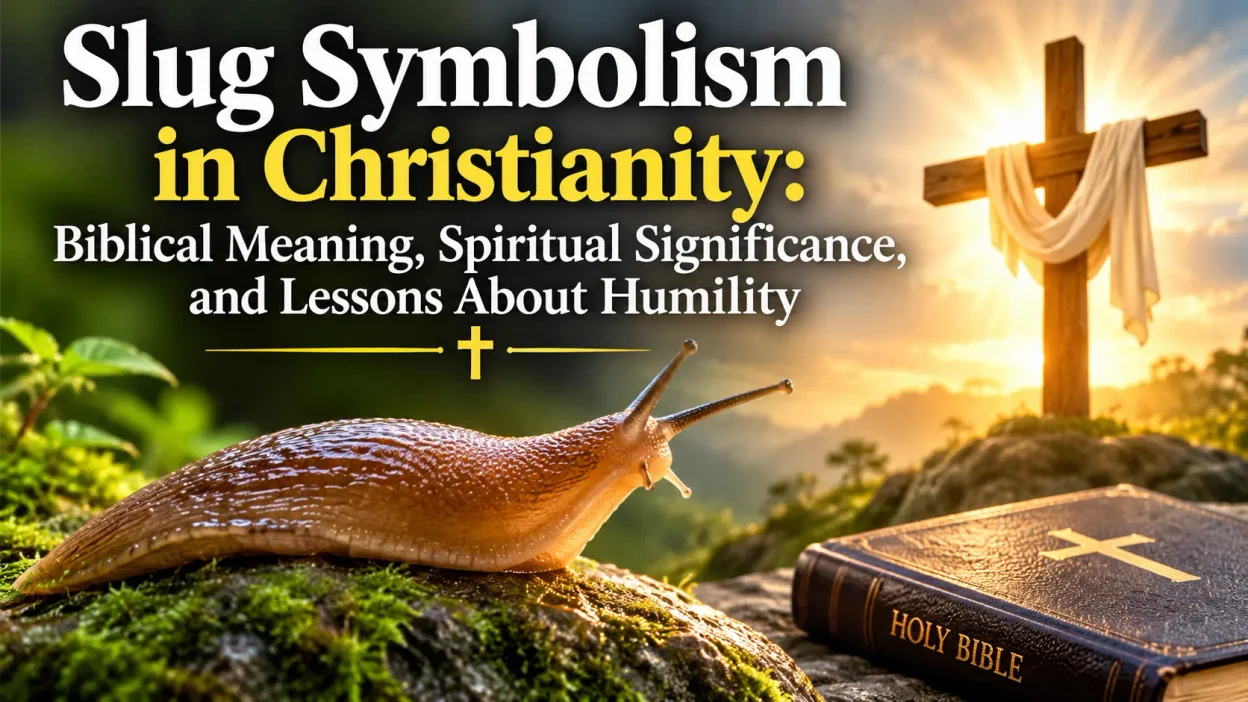
Slugs may seem like ordinary, unremarkable creatures, but their unique characteristics can inspire meaningful spiritual reflections. Their slow movement, soft bodies, and preference for damp, hidden environments offer interesting metaphors for human vulnerability, patience, humility, and personal growth.
Slug symbolism in Christianity is best understood through broader biblical principles rather than a specific religious definition. The Bible does not directly establish slugs as symbols of sin, evil, punishment, or divine messages. However, Christians may reflect on their natural characteristics to consider important lessons about faith, dependence on God, perseverance, and the value of creation.
For example, a slug’s slow movement can remind believers that spiritual development takes time. Its vulnerable body may illustrate the importance of recognizing human limitations and depending on God’s grace. Its small size can also encourage humility and appreciation for creatures that people often overlook.
In this guide, we explore the possible spiritual meanings of slugs, relevant biblical teachings, dream interpretations, and the difference between scriptural references and modern symbolic beliefs.
What Does a Slug Symbolize in Christianity?
Slugs do not have an established symbolic role in Christian doctrine or a clearly defined meaning in Scripture. Nevertheless, their physical characteristics can inspire several reflective interpretations.
The most common symbolic associations include:
| Symbolic Meaning | Possible Christian Lesson |
|---|---|
| Humility | Avoid pride and appreciate every part of God’s creation. |
| Patience | Trust God’s timing instead of demanding immediate results. |
| Vulnerability | Recognize human weakness and depend on divine grace. |
| Perseverance | Continue doing what is right despite difficulties. |
| Self-examination | Look honestly at personal attitudes and behavior. |
| Spiritual growth | Understand that developing faith takes time and effort. |
| Creation | Appreciate the purpose and interconnectedness of living things. |
These meanings are interpretive rather than direct biblical teachings. They provide ways to reflect on Christian values without assigning supernatural significance to an ordinary animal.
1. Slug Symbolism of Humility
Humility is a central value in Christianity. It encourages believers to recognize their limitations, treat others with respect, and avoid becoming overly proud of their achievements.
A slug’s small size and unassuming appearance can serve as a metaphor for this virtue. It is not a powerful-looking creature, yet it has a place within the natural world.
The Biblical Importance of Humility
Matthew 23:12 teaches that those who exalt themselves will be humbled, while those who humble themselves will be exalted.
This teaching emphasizes that genuine greatness is not measured by appearance, wealth, social position, or personal recognition. Instead, humility involves having a sincere attitude toward God and other people.
The Spiritual Lesson
Reflecting on a slug may encourage believers to consider questions such as:
- Do I treat people with respect regardless of their status?
- Am I willing to admit when I am wrong?
- Do I judge others by their appearance?
- Do I appreciate the small and overlooked things in life?
The deeper lesson is that humility does not mean considering yourself worthless. It means recognizing your limitations while remaining grateful, respectful, and open to spiritual growth.
2. Slugs Symbolize Patience and Trust in God’s Timing
One of the most noticeable characteristics of a slug is its slow movement. This makes patience one of the easiest symbolic lessons to associate with it.
In Christian life, patience involves remaining faithful when answers, opportunities, or personal improvements do not arrive immediately.
Learning to Accept a Slower Process
Modern life often creates pressure to achieve results quickly. People may become frustrated when their plans take longer than expected or when their prayers seem unanswered.
However, spiritual growth is not always immediate. Developing faith, strengthening character, and overcoming difficult habits can require time and consistent effort.
James 5:7–8 encourages believers to be patient, using a farmer waiting for valuable crops as an example. Just as a harvest requires time, personal and spiritual development cannot always be rushed.
What a Slug Can Teach About Patience
A slug’s gradual movement can serve as a reminder that progress does not have to be fast to be meaningful.
This reflection may be helpful when someone is:
- Waiting for an answer to prayer.
- Recovering from a difficult experience.
- Working toward an important goal.
- Learning to overcome a harmful habit.
- Developing a stronger relationship with God.
The spiritual message is to remain committed and patient rather than allowing delays to destroy hope.
3. Slugs Symbolize Vulnerability and Dependence on God
Unlike snails, which generally have an external shell, slugs have soft bodies without a prominent external shell. This makes them a possible metaphor for vulnerability.
Human beings also experience vulnerability through emotional struggles, physical limitations, uncertainty, and difficult circumstances.
Understanding Human Weakness
Christianity teaches that people are not completely self-sufficient. They need God’s guidance, grace, and strength.
In 2 Corinthians 12:9, Paul describes God’s grace as sufficient and explains that divine power is made perfect in weakness.
This passage offers an important lesson: recognizing weakness does not necessarily mean failure. It can encourage a person to seek help, develop humility, and rely more deeply on God.
The Spiritual Meaning of Vulnerability
The image of a soft-bodied slug may inspire reflection on:
- Accepting personal limitations.
- Seeking guidance during difficult times.
- Recognizing the need for spiritual support.
- Developing trust instead of relying entirely on personal strength.
- Understanding that vulnerability is part of being human.
The lesson is not that believers should become helpless. Rather, it is that genuine strength can include acknowledging when support is needed.
4. Slugs Symbolize Perseverance Through Difficulties
Although slugs move slowly, they continue navigating their surroundings. This characteristic can represent perseverance and the importance of taking small steps toward meaningful goals.
Christian perseverance involves remaining committed to faith and doing what is right, even when circumstances are uncomfortable or results are difficult to see.
Small Steps Can Lead to Meaningful Growth
Spiritual development often happens through ordinary decisions rather than dramatic experiences.
For example, a person may strengthen their faith by:
- Praying regularly.
- Reading and reflecting on Scripture.
- Practicing forgiveness.
- Showing kindness to others.
- Helping people in need.
- Choosing honesty in difficult situations.
Galatians 6:9 encourages believers not to become weary in doing good, because they will reap a harvest if they do not give up.
Continuing Despite Obstacles
A slug’s slow movement can serve as a metaphor for someone who keeps going despite challenges.
The lesson is simple: progress does not have to be impressive to be valuable. Remaining faithful and making consistent efforts can matter more than achieving immediate results.
5. Slugs Symbolize Spiritual Awareness and Self-Examination
Slugs often live in damp, shaded environments and may remain hidden beneath leaves, stones, or other objects. Their association with concealed places can inspire a metaphor about examining the less visible parts of human behavior.
In Christianity, self-examination involves looking honestly at one’s thoughts, motives, habits, and actions.
Looking Beyond Outward Appearance
A person’s outward behavior does not always reveal their inner intentions.
Matthew 23:27–28 criticizes religious hypocrisy by comparing outward appearances with inner corruption. The passage emphasizes that genuine righteousness involves inner honesty rather than simply appearing good to others.
Examining Your Heart
A slug can serve as a personal reminder to consider:
- Are my intentions sincere?
- Do my actions reflect my beliefs?
- Am I holding on to resentment or jealousy?
- Do I hide habits that need to change?
- Am I willing to admit and correct my mistakes?
This interpretation is a modern reflective analogy, not a biblical teaching specifically about slugs.
Its value comes from the broader Christian principle that spiritual growth requires honesty and a willingness to improve.
6. Slugs and the Christian Reflection on Sin
Some modern symbolic interpretations associate slugs with unpleasantness, dampness, or decay. These associations may inspire reflections on harmful habits, temptation, and the importance of spiritual discipline.
However, it is essential to understand that the Bible does not identify slugs as symbols of sin or evil.
Understanding Sin Through Scripture
In Christianity, sin refers to thoughts, attitudes, and actions that go against God’s will.
Romans 3:23 teaches that all have sinned and fall short of God’s glory. This emphasizes human imperfection and the need for God’s grace.
Rather than assigning sin to a particular creature, Christians are encouraged to examine their own behavior and seek forgiveness.
A Reminder to Avoid Harmful Habits
The association between slugs and unpleasant environments can be used as a metaphor for habits that gradually damage personal or spiritual well-being.
Examples may include:
- Dishonesty.
- Jealousy.
- Bitterness.
- Greed.
- Selfishness.
- Unforgiveness.
The important lesson is not that slugs are spiritually evil. Instead, their appearance may prompt personal reflection about the choices and habits influencing one’s life.
7. Slugs and the Beauty of God’s Creation
Christianity teaches that the natural world is part of God’s creation. This perspective encourages believers to appreciate life, recognize the value of living things, and develop a sense of responsibility toward the environment.
Although slugs are not always admired, they have an ecological role.
Every Creature Has a Place
Psalm 104 celebrates God’s provision for living creatures and the natural world. It describes the diversity of creation and the relationship between living things and their environments.
Slugs contribute to ecosystems by feeding on decaying plant material, fungi, and other organic matter. Some species help recycle nutrients and contribute to the natural decomposition process.
Their ecological role provides an opportunity to reflect on how different organisms contribute to the balance of nature.
Appreciating the Overlooked
People often judge creatures according to their appearance. Animals that seem unattractive or insignificant may be ignored or disliked.
However, a Christian reflection on creation can encourage a different perspective: something does not need to appear beautiful or impressive to have a place in the natural world.
The spiritual lesson is to develop gratitude, respect, and appreciation for the many forms of life around us.
8. Slugs Symbolize Gradual Spiritual Growth
Slugs develop gradually as they grow, although they do not undergo the dramatic metamorphosis associated with butterflies.
Their natural development can inspire a metaphor for spiritual maturity.
Growth Takes Time
Christian spiritual growth involves developing qualities that reflect a more loving and faithful character.
Galatians 5:22–23 describes the fruit of the Spirit, including:
- Love.
- Joy.
- Peace.
- Patience.
- Kindness.
- Goodness.
- Faithfulness.
- Gentleness.
- Self-control.
These qualities are not necessarily developed overnight. They require reflection, practice, and a willingness to change.
Becoming a Better Person
A slug’s gradual movement can symbolize the slow process of becoming more spiritually mature.
People may need time to overcome negative attitudes, develop better habits, and strengthen their relationships with others.
Prayer, Scripture, experience, repentance, and consistent effort can all contribute to this process.
The lesson is that spiritual growth is often a journey rather than a single event.
9. What Does Seeing a Slug Mean in a Christian Spiritual Context?
Seeing a slug does not automatically mean that God is sending a message, warning, or prediction. The Bible does not establish a specific spiritual meaning for encountering one.
Nevertheless, someone may use the experience as an opportunity for personal reflection.
| Experience | Possible Personal Reflection |
|---|---|
| Seeing a slug in the garden | Appreciate the small details of God’s creation. |
| Finding a slug near your home | Consider patience and everyday responsibilities. |
| Watching a slug move slowly | Reflect on perseverance and God’s timing. |
| Seeing a slug after rain | Appreciate renewal and the natural world. |
| Seeing several slugs | Reflect on the interconnectedness of living things. |
| Finding a slug indoors | Consider practical responsibilities and your surroundings. |
These interpretations are personal reflections, not established biblical signs.
If you encounter a slug, it is perfectly reasonable to understand its presence as a natural event rather than searching for a supernatural explanation.
10. Slug Symbolism in Christian Dreams
Dreams about slugs can have different personal meanings depending on the dreamer’s emotions, experiences, and circumstances.
The Bible includes accounts of meaningful dreams, but it does not provide a specific interpretation for dreaming about slugs. Therefore, modern interpretations should be approached thoughtfully rather than treated as definite spiritual messages.
Here are some possible reflective meanings.
Dreaming of a Slug Crawling
A crawling slug may represent a situation that seems to be progressing slowly. It could encourage patience with a personal goal, relationship, or responsibility.
Dreaming of a Slug in Your House
This dream might reflect concerns about personal boundaries, household responsibilities, or an issue that needs attention.
Dreaming of Many Slugs
Seeing several slugs may represent feeling overwhelmed by small difficulties that have accumulated over time.
Dreaming of Killing a Slug
This could symbolize a desire to remove an unwanted habit, resolve a difficulty, or regain control over a situation.
Dreaming of Touching a Slug
Touching a slug may encourage reflection on vulnerability, discomfort, or the willingness to face something you have previously avoided.
Dream interpretations are subjective. A dream should not automatically be considered a message from God, a warning, or a prediction of future events.
11. Slugs vs. Snails in Christian Symbolism
Slugs and snails are closely related animals, but they have noticeable physical differences.
Snails generally have external shells, while slugs lack a prominent external shell. This difference can inspire different modern symbolic interpretations.
| Feature | Slug | Snail |
|---|---|---|
| Physical appearance | Soft-bodied, without a prominent external shell | Soft-bodied, generally with an external shell |
| Movement | Slow and gradual | Slow and gradual |
| Common modern association | Vulnerability, humility, and perseverance | Protection, patience, and security |
| Possible spiritual reflection | Dependence on God and acceptance of weakness | Personal boundaries and the value of protection |
Neither slugs nor snails have a clearly established symbolic meaning in the Bible. Their characteristics can inspire personal reflection, but these interpretations should not be confused with Christian doctrine.
12. Biblical Verses That Connect With Slug Symbolism
Although the Bible does not directly establish slug symbolism, several passages discuss the spiritual qualities that people may associate with this creature.
These verses provide a scriptural foundation for reflecting on humility, patience, perseverance, weakness, and creation.
| Bible Verse | Relevant Christian Lesson |
|---|---|
| Matthew 23:12 | Humility and avoiding pride |
| James 5:7–8 | Patience and waiting faithfully |
| 2 Corinthians 12:9 | God’s strength in human weakness |
| Galatians 6:9 | Perseverance in doing good |
| Galatians 5:22–23 | Developing spiritual character |
| Psalm 104 | Appreciating God’s creation |
| Proverbs 16:18 | Understanding the danger of pride |
| Romans 3:23 | Recognizing human imperfection |
These passages do not mention slugs directly. They are relevant because they discuss broader Christian principles that can be used for personal reflection.
13. Are Slugs Considered Unclean or Evil in Christianity?
Slugs are not specifically identified as evil creatures in the Bible.
Some people may connect slugs with biblical discussions of unclean animals, but it is important not to make claims that Scripture does not support.
Leviticus 11 describes animals considered unclean under the dietary regulations given to ancient Israel. However, the chapter does not specifically establish slugs as spiritual symbols or identify them as evil.
Christian traditions also differ in how they understand the continuing application of Old Testament dietary laws.
From a Christian perspective, an animal’s appearance does not make it morally evil. Slugs are living creatures within the natural world, and negative human reactions to them should not be confused with biblical teaching.
Frequently Asked Questions About Slug Symbolism in Christianity
1. What does a slug symbolize in Christianity?
Slugs do not have a specific biblical meaning. However, modern Christian reflection may associate them with humility, patience, vulnerability, perseverance, and dependence on God.
2. Are slugs mentioned in the Bible?
The Bible does not establish a direct symbolic role for slugs. Although Scripture discusses many animals and aspects of the natural world, it does not assign slugs a particular spiritual meaning.
3. Are slugs a sign of good luck or bad luck in Christianity?
Christianity does not teach that seeing a slug brings good or bad luck. A slug is a natural creature, and its appearance should not automatically be interpreted as a supernatural warning or blessing.
4. What does seeing a slug mean spiritually?
Some people interpret seeing a slug as a reminder to practice patience, humility, and perseverance. These meanings are personal spiritual interpretations rather than universal Christian beliefs.
5. Does a slug symbolize sin?
The Bible does not identify slugs as symbols of sin. Some modern interpretations use their association with unpleasant or decaying environments as a metaphor for harmful habits and the need for spiritual self-examination.
6. What does a slug symbolize in a Christian dream?
A slug in a dream may encourage reflection on slow progress, vulnerability, personal difficulties, or patience. However, there is no fixed biblical interpretation of slug dreams.
7. Are slugs considered unclean animals in the Bible?
Slugs are not specifically named in the biblical dietary laws. Leviticus 11 discusses various unclean animals, but it does not establish a spiritual meaning for slugs.
8. What spiritual lesson can Christians learn from slugs?
Christians may use the slug’s slow movement and vulnerable body as reminders of patience, humility, perseverance, and dependence on God. These are reflective lessons rather than formal biblical symbolism.
9. Does a slug symbolize transformation?
A slug can represent gradual development in modern spiritual interpretations. Its natural growth may serve as a metaphor for the ongoing process of spiritual maturity.
10. Is seeing a slug inside the house a spiritual warning?
There is no biblical teaching that a slug entering a house is a spiritual warning. Slugs commonly enter damp environments while searching for moisture or food. Any spiritual meaning assigned to the experience is personal.
11. What does a slug symbolize in a garden?
A slug in a garden can inspire reflection on patience, nature, and the importance of small creatures. It also has a practical ecological role in breaking down organic material and contributing to nutrient cycling.
12. What is the difference between slug symbolism and biblical teaching?
Biblical teaching comes directly from Scripture, while slug symbolism generally involves modern interpretations inspired by the animal’s physical characteristics and behavior. Keeping these categories separate helps avoid presenting personal beliefs as established Christian doctrine.
Conclusion
Slug symbolism in Christianity offers an opportunity to reflect on humility, patience, vulnerability, perseverance, and the value of God’s creation. Although slugs do not have a specific symbolic role in the Bible, their natural characteristics can inspire meaningful lessons when viewed through broader Christian principles.
Their slow movement can remind believers that spiritual growth takes time. Their vulnerable bodies can illustrate the importance of recognizing human limitations and relying on God’s grace. Their small size can also encourage humility and appreciation for the creatures that people often overlook.
Ultimately, the Christian significance of a slug does not come from a fixed biblical definition. It comes from the personal lessons people may draw through Scripture, faith, self-reflection, and an appreciation of the natural world.